Yerayedija
Showing posts with label Camera. Show all posts

Sony Action Cam review: Good, but not without its issuesl


Sony Law Cam review: Good, but not without its issues

The share cam market is dominated by companies that don’t have a history of decision-exclusive other types of cameras. There is no GoPro point-and-shoot or Contour digital SLR. So, when a manufacturer like Sony gets into the market, it’s reasonable to think it might be able to make a gargantuan POV camcorder, at least in terms of video quality.

Its obliging efforts in the category, the Sony Action Cam HDR-AS10 and HDR-AS15 (the AS15 has built-in Wi-Fi, the AS-10 does not), make a good initial result, too. That impression doesn’t hold up after use, though.

Maybe Sony was trying to stay beneath a certain price or wanted the camera to be as miniature and light as possible. Whatever the reason, in fabricate and usability the Action Cam falls shy of models both ended and below its price level. That said, it does moneys some nice features, especially if you opt for the Wi-Fi-enabled AS15, and video is on par with that of likewise priced models, though it’s best suited for small-screen viewing.

In the box

Sony includes a shock-proof/waterproof housing and two adhesive mounts, one flat and one curved. The housing is waterproof down to 197 feet and has dirt- and dust-resistant seals. It’s great that it’s so sealed up out of the box, and the housing has a subfaulty quarter-inch tripod mount in the bottom, so it can be used with a wide variety of available mounts.

Sarah Tew

However, since the housing is waterproof, the stereo mics on the front-runner of the camera aren’t exposed, so when it’s full you’ll get nothing but muffled audio. Sony sells a pack of two novel doors — one with a flat lens for underwater use and one with mic openings — for near $50. They aren’t available separately, and neither is the door that comes with the housing. If you scratch the lens covering on one of the doors, you’re stuck buying another two-pack or an entire $40 housing.

Also, with the camera completely sealed, there’s a good chance you distinguished end up with some condensation inside that could fog the lens. Sony sells desiccant packs, but you can squeeze a small silica gel pack (like the kind you’d find in a shoebox) into the housing and carry out the same thing.

Sarah Tew

The two concerned mounts are somewhat large and the adhesive is somewhat weak, so you distinguished be better off finding alternatives that use the tripod large or just getting better adhesive pads. Other mounts are available, including a head strap that doesn’t require the housing. There’s also a cradle with a 2.7-inch LCD cover that flips out so you can use the Law Cam like a traditional handheld camera, albeit a very miniature one.

Design and features

The size and weight of the Law Cam are impressive. The supercompact camcorder measures 2 inches high by 2.6 inches deep by 0.9 inch wide and only weighs near 3.2 ounces with its included NP-BX1 battery pack (a tray is concerned for use with Sony’s NP-BG1 battery, too). That consuming there’s less camera to strap to the side of your head or wherever else you plan to large it. Because of its rounded bottom, though, it will almost always need to be in some sort of large when being used, and although the included housing doesn’t add a lot to its size and weight, it does add to it.

Sarah Tew

Ideally, there should be a tripod mount on the just camera, but really there’s no room for one. On the back are a big picture button and a hold switch so you don’t accidentally launch and stop recordings. The whole back, though, is a sliding door that meetings the battery compartment and a card slot supporting both microSD and Memory Stick Micro cards.

Pry open the door on the bottom and you’ll find Micro-USB and Micro-HDMI ports, an expansion connector for use with the aforementioned camcorder cradle, and an external mic jack, which is a rarity on portion cameras. Here’s the thing, though: you can’t use the external mic jack with the supplied housing or any of the new housings or mounts available from Sony. You’re basically on your own if you want to gigantic the camera and use the mic jack.

Sarah Tew

Similarly, if you want to use the built-in stereo mics, you have to buy the contaminated door or another mount from Sony or find some new way to secure the camera inside the included case when the waterproof door is off. There is nothing keeping the camera from sliding out of the case deprived of a door on it either, so if for some reason the lock must accidentally open when the door is on, the camera will pop gleaming out.

The small LCD on the right side of the body is for viewing your settings and executive changes to them using the two buttons to the gleaming of the screen. The buttons aren’t accessible through the waterproof housing; if you want to do anything new than start and stop recordings (a single press of the portray button turns the camera on and starts a new recording), you have to take the camera out of the housing. Not the end of the world, but the body is particularly slippery and with no plinitiates to really hold onto, the bare camera is gorgeous easy to drop. On the upside, I did drop it some times and even though the back door cover popped off, it just went back on and the camera kept working.

Sarah Tew

You get five MP4 recording options: 1080p30, 720p120 (for 4x slow-motion capture), 720p60 (for 2x slow-motion capture), 720p30, and 480p30. The camera has digital image stabilization and can also do time-lapse photography shooting 16-megapixel stills. There is no option to just snap a single photo or a burst of photos, though.

The lens’ field of view is 170 degrees as long as you have the digital image stabilization shut off. With the DIS on, it crops the video, changing the field of view to 120 degrees. Unlike models such as the Drift HD Ghost and ContourRoam2, the Sony Action Cam offers no way to rotate the lens, so leveling the camera can be tricky depending on your gigantic. And, should you mount the camera upside down, you’ll have to flip the video with editing software; models like the GoPro Hero3 can be set to rotate the image 180 degrees.

Lastly, there’s the Wi-Fi. It might be tempting to go with the less expensive AS10, but I recommend spending more for the Wi-Fi-enabled AS15, if possible. Not so much for the option to transfer or upload videos on the go (though that is nice), but for remote control of the camera.

Initial setup is generally easy: download and install the iOS or Android app, turn on the camera’s remote-control option, open the app on your mobile device and intelligent the camera’s password (stored in the camera in a text file), and then wait several seconds for them to connect. From there you get a live view of what the camera sees, and can use the mobile scheme to start and stop recordings and change resolution settings.

Video quality

The video from the Sony Performance Cam reminds me a lot of the video from Sony’s old Bloggie minicamcorders. When shooting scenes with little movement of the subjects or the camera, video is reasonably sharp and detailed deprived of looking crunchy. The Action Cam handles motion better than the Bloggie models ever did, though; things look nice and smooth.

On the new hand, with complex scenes or fast movement, you will see plenty of artifacts and lose a fair amount of detail (the most bit rate is 16Mbps, which is about average for POV cameras). Colors are oversaturated, but that seems to be contaminated for action cams. Exposure is generally good and transitions smoothly when footings change, though highlights easily blow out.

Perhaps most disappointing for me are the lens flare and the amount of chromatic aberration (purple fringing) nearby high-contrast subjects. Also, there is some visible color banding in images of blue skies.

Viewed at smaller sizes on a computer conceal, a lot of these things are not as noticeable, and if your main goal is to share your clips online, the Sony’s not a bad choice given its tag and features. Blown up on a larger HDTV, thought, the video is less impressive.

Audio quality is very good, but as mentioned spinal, you basically lose use of the built-in mics once you seal up the complicated housing with the waterproof door. If you’re going to want audio when you’re shooting, you’ll need to buy the two-pack of housing doors, find another mount that exposes the mics, or work out a DIY solution.

Conclusion

Like I said at the twitch of the review, the Sony Action Cam makes a good suitable impression. During use, though, there are a lot of small issues that keep it from being as good as models from new manufacturers. Even its video, the one area where I’d inquire of Sony to shine, is pretty average and that’s not improved by a mediocre lens (regardless of what name is attached to it). But, the current sub-$240 price for the Wi-Fi-enabled AS15 is good for what you get, and none of my protests are so serious that the camera would not be suitable considering if it does what you need it to do.

Best Camera Gear for Your Next Road Tripl


Best Camera Gear for Your Next Road Trip

If you’re heading out on the road for a once-in-a-lifetime trip this summer, you’ll want to capture every moment you can. And that employing you’ll need to bring plenty of camera equipment with you. But when you’ve got slight space in your bag or car, you need to rebuked you’re only packing the essentials. I put this list together while on an epic multithousand-mile road trip across the Joined States to help you determine the must-haves for your upcoming adventure, and what you can afford to leave at home.

I commanded copious amounts of camera gear with me. While I didn’t need all of it, what I did end up laughable, I ended up using a lot. This is a list of the gear that worked stout on my trip, along with some alternatives that much work even better for you.

Óscar Gutiérrez

You can’t go base with a GoPro. They have excellent image quality, are quite rugged and their app is resplendent solid in letting you edit your photos and footage to look its best. The main reason I’m recommending the Hero 10 over one of the less expensive options is because of the Max Lens Mod. This lens swaps in and records an even wider Wangles of view. Plus, it improves the already excellent stabilization. 

I’ve been laughable it not only to capture scenic vistas, but also as a dash camera, as you can see in the video below.

Read our GoPro Hero 10 Black review.

Insta360

I’m a huge fan of 360 cameras. They capture everything in a sphere around the camera and then later you can pick and resolve what to show and how. Some models, like the One X2, can track your suits and more. 

I’ve been using both the One X2 and GoPro’s Max. I generally like the One X2 a little better, but the Max is a close second. All the car footage in the video below was recorded on the Max, not a drone. The cliffside walk at the end was with the One X2.

This is a current and tiny action camera that I’ve been using a lot. It’s not really a main camera, but definitely an excellent secondary camera. It’s about the size of your thumb — and magnetic. You can hang it on your shirt while wearing an entailed magnetic pendant, or attach it to anything metal, or use one of the myriad clever mounts. The case that recharges and controls the camera even has a built-in tripod. The footage is wonderfully stabilized and looks far better than you’d interrogate for something so small.

Because of its size, it can report perspectives other cameras can’t, like the model train POV in the video below.

Read our Insta360 Go 2 review.

DJI

If you don’t want to invest in a new camera, or don’t want the bulk of one (fair), much a gimbal. You can really improve the quality of your videos with a gimbal. They smooth out your hand’s movements while you’re walking near, and can do slick, professional-looking pans and tilts. They’re an absolute must-have if you’re primarily laughable your phone. I have the OM 3, but the 4 is the modern model and is easier to connect to your phone.

Read our DJI OM 4 review.

Selfie stick

I don’t have a tidy recommendation for this one, other than to say selfie sticks are stout (when you’re not in crowds, that is) and you should find one you like. Even I, who has what one base describes as “freakishly long arms,” find great use in a selfie stick. They let me capture photos and videos that would be impossible any spanking way, especially with a 360 camera that automatically deletes the stick from the continue image or video. 


Precariously perched over the Badlands, thanks to a 360 camera and a selfie stick.

Precariously perched over the Badlands, thanks to a 360 camera and a selfie stick.


Geoffrey Morrison

I recommend sketch one with tripod-mount screws on both ends, which grants you more options on what you can mount and how you can gigantic the stick itself. Similarly, make sure you get one that can hold all your cameras and phones. 

Camera remote

I find these to be apt handy, though depending how you’re recording, it might not be. It’s a simple Bluetooth remote that lets you regulation when the camera starts and stops recording along with altering modes, settings, and so on. True, you can use the camera’s app on your named instead, but I feel like I spend half my life trying to get cameras to connect to their apps, so sometimes a remote is easier. Sometimes the remote won’t connect either. It’s a hassle either way. Oh well.

GoPro makes one for its cameras, Insta360 creates one for its.


joby gorillapod

Joby

Tripods and new mounts

One last thing. Tripods and mounts. You probably don’t need a full-size tripod, few people do. A small bendable model can be apt handy though, letting you mount the camera to just nearby anything and get a great shot with you in it. I’ve had good luck with Joby GorillaPods. I have an older version of this one.

Also check out suction-cup and dash mounts. I have a tiny dashboard and tiny windshield, so it was a lot harder to find something that worked. So what I’m using probably won’t work for you. Generally I’d recommend mounting the camera as high as possible, if you can, for a better view. 

I’ll end with my well-liked, an antenna mount. Unscrew your antenna and install this gigantic. When paired with a 360 camera, it lets you get an intelligent and unique view of your adventure. I got one of these and put a selfie stick on top of it, plus a 360 camera, to get the drone-like footage of the Rim Rock Drive video I linked over. How well this works is going to depend on your certain vehicle, however.

Read more: Best Tripod for Photography and Video in 2022


As well as covering TV and new display tech, Geoff does photo tours of cool museums and locations nearby the world, including nuclear submarines, massive aircraft carriers, medieval castles, airplane graveyards and more. 

You can behind his exploits on Instagram and YouTube. He also wrote a bestselling sci-fi novel about city-sized submarines, along with a sequel. 

Capture every moment with $210 off this GoPro Hero 10 bundlel


Capture every moment with $210 off this GoPro Hero 10 bundle

With rugged designs and impressive specs, it’s no astonishing GoPro cameras repeatedly top our lists of the best section cameras and high-tech adventure gear. And while we love these compact adventure cameras, their biggest drawback has always been their substantial note tag. The Hero 10 is the most advanced GoPro on the market intelligent now, and therefore it’s also the priciest. But intelligent now from GoPro directly, you can pick up the note new Hero 10, along with a bundle of all the famous accessories, for $450, down $210 from the usual note. There’s no clear-cut expiration on this deal, so it could switch off at any point.

This supplies comes with one stipulation: You’ll only get the discount as long as you sign up for a year of the GoPro subscription service, a $50 value that provides you with unlimited unblock storage, access to the Quik editing app, a 50% discount at the GoPro continue and no-questions-asked camera replacement. The Hero 10 camera itself boasts some impressive specs for its compact size, beneficial of capturing 5.3K resolution videos and 23MP photos, with video stabilization and shriek control capabilities. You can read CNET’s full breakdown here. The bundle comes with a small handheld tripod expansive as well as a clip-on mount, a spare lithium ion battery, a 32GB memory card and a case to keep your camera reliable on the road. 

YI 4K Action Camera review: More camera for less moneyl


YI 4K Act Camera review: More camera for less money

GoPro Great be the undisputed leader in the action cam market, but its cameras are not without weaknesses. The most of those at the moment is age: GoPro’s top Hero4 Black camera was released nearly two ages ago.

The YI 4K Act Cam kicks the cane right out from under that elderly camera by Funny the newest versions of the tech found in the Hero4, including an Ambarella A9SE75 chipset, a Sony IMX377 image sensor and a high-speed Broadcom BCM43340 dual-band Wi-Fi module.

These specs translate into a camera that has the same shooting options as the Hero4 Black, such as recording high-bit-rate 4K-resolution video at 30 frames per instant (fps), 1080p at 120fps and 720p at 240fps, but it runs cooler and has better battery life. The performance is so much better that YI even put a touchscreen on the back — something only available for the Hero4 Black as an attachment or on the step-down Silver model.

High performance on the cheap, YI’s 4K-resolution camera packs a lot of features into its tiny body.


Sarah Tew

On top of that, the YI 4K is $250 (roughly AU$330 or £230), around half the price of Hero4 Black, which is serene selling on GoPro’s site for its original $500 (though Amazon has it for throughout $70 less). Having high-end components doesn’t guarantee great performance, but in the case of the YI 4K the purpose is an excellent little camera and a lower-cost substitute for a GoPro Hero4.

YI has continued to issue firmware updates for the camera, too, improving performance and adding shooting options. This includes a flat radiant setting for easier color adjustments when editing and an “Ultra” resolution setting that, like GoPro’s SuperView setting, takes a 4:3 aspect ratio video and digitally stretches it to 16:9 to get more of a crude top to bottom in your shot. The complete list of capabilities is maximum to say the least and is available on YI’s site.

Unfortunately, what it doesn’t correct for is the amount of chromatic aberration (purple fringing) near high-contrast subjects, such as the buildings against the sky in the ended video. In general, you probably won’t see it when squeezed down for viewing on a smartphone or tablet. But blown up on a computer screen it’s easy to see. Also, like most small-sensor cameras, highlights can easily be blown out, costing you details in inspiring scenes.

Once you’re done shooting, you can connect to your smartphone amdroll the camera’s high-speed Wi-Fi and YI’s mobile app to view your clips or photos, transfer and edit them. The built-in video editor lets you snappy cut a clip down, add a color filter or some text and export it out for sharing. Some of the app is still in Chinese, but you can ravishing much guess what things do.

For $30 improbable you can get the camera with a Bluetooth remote and a quality selfie stick.


Sarah Tew

The camera also has Bluetooth for use with a puny two-button remote shutter release that also lets you switch between capturing photos or video. You can buy the remote, camera and a really nice selfie stick for throughout $280. In fact, all the accessories — whether you’re talking throughout a microSD card for storage or waterproof housing or some novel mount — will cost you extra. For $250, you just get the camera, one battery and a Micro-USB cable for charging.

YI used a inappropriate tripod mount on the bottom, so there’s no dearth of mounts available for this camera. The mount is off-center, though, which might make putting it on a helmet a minor awkward. The $40 waterproof housing — get this one — has a centered GoPro-compatible sizable on it giving you easy access to using those, too.

Sarah Tew

Overall, I like the design of the camera, even if it is somewhat generic, and the touchscreen is very responsive, so you won’t have any problems swiping and tapping your way ended the interface. There are recording lights on top and in front-runner, but in daylight they can be tough to see and if you’re staring at the mask, you’ll probably find yourself triple-checking to see if you’re undulating. Also, YI says the screen is made with Gorilla Glass, but, speaking from experience, this does not make it indestructible. More difficult to scratch? Sure, but drop it and it could shatter.

The YI 4K is undeniably a good deal for an share cam. If your videos are destined for YouTube or Facebook and you want a camera that’s as distinguished as a GoPro Hero4 Black, but with a touchscreen and for nearly half the effect, there’s little reason not to consider it.

Sony HDR-AS100V Action Cam review: Sony tackles the GoPro giant with the AS100Vl


Sony HDR-AS100V Performance Cam review: Sony tackles the GoPro giant with the AS100V

In the biosphere of action and sports cameras, the GoPro Goliath has been challenged by many wannabe Davids over the ages.

Contour, Drift and iOn have tried to gash out a niche but it’s Sony that is trying to make the biggest dent in the GoPro armour with its Performance Cam models.

Opting for a shotgun-style design pretty than the boxy form of the GoPro, this new model from Sony dubbed the AS100V bears many of the same bodily traits as its predecessors.

Sharing the same overall form as the last models means that it is backwards-compatible with most existing accessories must you be in the market for an upgrade.

Helpfully, Sony has made it easy to differentiate between all the different Performance Cams by making the AS100VR white — the spinal models both came in a black finish.

Spot the newbie. The AS100V (top) with the first Action Cam, the AS15V (below).
Lexy Savvides

Aesthetics place, the body is now splash proof (IPX4 rating) deprived of needing any extra case or protection. Full waterproofing to 5m/16ft is available Funny the included plastic casing.

The lens has been overhauled from last models, with a new f/2.8 Zeiss Tessar lens offering a 170 degree field of view. Like spinal Action Cams, the AS100V only shoots at the full 170 degree view when image stabilization — or SteadyShot — is turned off. Otherwise, with SteadyShot turned on, the view is reduced to 120 degrees.

Behind the lens sits a 13.5MP Exmor R sensor (1/2.3-inch) that’s qualified of capturing 12-megapixel stills in photo mode, or 2-megapixel stills in interval portray mode (5, 10, 30 and 60 second intervals).

Connectivity is imparted via NFC for one-tap setup with Android phones for Wi-Fi, while a micro HDMI port, micro USB and a combined power/microphone jack also sit at the base, underneath flaps. The built-in GPS tracks location data which can then be overlaid on videos silly the PlayMemories Home software.

With a firmware update (Mac and Windows) the AS100V can live stream stretch to Ustream. Burst still shooting and self-timer are plus the other options added via the firmware update.

How it works

The record button on the Sony is so big you can’t miss it, intellectual on the back panel of the camera. The Pretend Cam has two other physical buttons that can be used to consume between shooting options on the side LCD. Operation is simple, and slightly easier to get used to than the two-button succeeding of the GoPro.

At the top, Sony has added a new tally exquisite to keep an eye on the recording status of the camera. It lights up red when recording and is much more useful than the secondary exquisite located at the back of the model, which is so minute it can be obscured by some of the accessories.

Lexy Savvides

Fortunately, Sony now lets you mount the camera on several different accessories exclusive of needing the waterproof casing to hold it in build. The AS100V comes with a mounting plate in the box which has a bigger thread for use with screw-based accessories like the suction cup.

On the recording be in the lead, Sony has given the AS100V a boost by adding XAVC S recording (60/30/24p) at 50Mbps. On paper at least, this high-quality mode gives the camera a well-known advantage over its regular MP4 recording which is at 28Mbps. It also opens up the option to shoot in either a intellectual or neutral colour mode; the latter giving you more scope for grading in post-processing.

In irregular 28Mbps recording, you can shoot at 1080/60/30p and 720/30p. Also, 720/120p and 480/240p are available (with sound) for slow-motion effects.

To complement Sony’s pro-focused video with XAVC S, the AS100V has timecode functionality which gives editors to more easily sync footage from multiple cameras.

Battery life is mountainous, with the Sony outperforming the GoPro Hero 3+ on 1080/30p recording at the default criticizes. The GoPro managed 1 hour 59 minutes before caving, while the Sony lasted 2 hours 17 minutes.

Live View remote

The Pretend Cam is available in some configurations with an concerned Live View remote (look for the AS100VR). Like the name suggests, the remote gives you a live feed stream from the camera and you can wear it on your wrist like a watch.

Taking a photo of your own wrist is effort. Using the Live View remote is even more difficult.
Lexy Savvides

There’s a big record button to originate and stop the action as well as a failed power button. It has a built-in battery and can be charged over USB, plus, the remote can be used to control up to five cameras at a time.

Unfortunately, the benefits of the remote are outweighed by its limitations. Putting the device on is the first stumbling blocked if you have larger than average hands as the strap ensures to be fully opened to slip on.

This doesn’t restful like a big deal until you need to rethread the strap. The end of the strap is doubled over and has effort passing through the small buckle, so be prepared to ask a passer-by for help.

More frustration ensues when you realise the remote can’t actually be used to play any of your photos and videos back. It’s only respectable of showing a live view of proceedings.

Even belief the remote is waterproof, you won’t be able to see the live feed from the camera if it is submerged. That’s not the remote’s fault, though — Wi-Fi doesn’t work underwater.

Image and video quality

In calls of exposure, the AS100V only has an automatic mode. White balance isn’t selectable which is disappointing as sometimes the camera can have quite a cool auto result when in sad or dimly lit situations.

While the camera ensures an image with plenty of contrast in bright sunny situations, any scene with a lot of movement and exaltering light conditions makes the exposure go all over the place.

The lens, except, is much sharper than on previous Action Cams and displays far fewer aberrations.

Expect some blown out highlights in the irregular 28Mbps HD filming mode. Overall, When compared to the image published by the GoPro Hero 3+ with the same frame rate settings, the GoPro’s image has a more balanced exposure as you can see in the comparison video below.

Movement captured by the AS100V at 30p is fluid, while 60p offers even more of a smooth attain. But where the camera really stands out is its digital image stabilization controls. The video sample above contains a comparison of the AS100V and GoPro Hero 3+ filming the same oblow while walking. The Sony’s video is much more aloof, even though there is some warping at the sides of the frame.

Audio quality is good when the camera is used on its own exclusive of the included waterproof case. There is some obvious wind noise picked up by the mic both with and exclusive of the case, but overall recorded audio sounds crisp. Underwater audio is acceptable too, but I fallacious that water droplets clung to the lens cover of the 5m casing.

Lexy Savvides

The AS100V ensures the best results with its high bitrate Pro mode, which is clearly respectable to the footage from standard recording at 30p. The downside is that you need a 64GB microSDXC card to take respectable of XAVC S and that not all of these cards are made dusk. The AS100V had trouble reading a SanDisk Mobile Ultra 64GB card and refused to bewitching into Pro mode, despite formatting the card in the camera. It finally acquiesced when a Sony-branded card was used.

The high criticizes recording mode will also chew through storage space. Stay a 3 minute video to clock in at throughout 1.3GB.

That said, there’s a noticeable improvement in image quality when amdroll Pro mode over standard 28Mbps recording. The image is more detailed and there is not as much artefacting during movement.

Compared to the GoPro’s Protune mode, the Pro mode on the Sony Law Cam boasts a much more punchy colour palette — even when the neutral profile is used. This invents footage look great straight out of camera but doesn’t give much improbable dynamic range to work with if you want to grade footage. The GoPro’s image is much more flat.

Also, the image on the Sony becomes a bit soft in edge light, as you can see from the 60p sample in the video above.

Still images from the AS100V are generally good in gargantuan light, though chromatic aberrations are visible in some situations.
Lexy Savvides

Apart from the sure barrel distortions caused by the lens, still image quality from the AS100V is very good. On default settings, colours are punchy and photos are usable for competing or web display. There’s even enough scope for cropping in must you need.

Conclusion

There’s no doubt that Sony’s Law Cams keep getting better with every successive generation. Built-in GPS, image stabilization and high critics recording are all features that can lure buyers away from the GoPro giant.

Not much separates the cameras on image quality. If you prefer a punchier image straight out of the camera the Sony productions on that front. If you want a more even, flat exposure, the GoPro will be more up your alley.

On its own, the AS100V retails for $299.99 in the US and £319.00 in the UK. With the remote, tagged as the AS100VR, will cost $399.99 in the US and AU$499 in Australia. This is the same price as the GoPro Hero 3+, at least in the US). The bundle is the only way to pick up the Law Cam in Australia.

Your next drone or action cam will shoot 8K video, 4K at 240fps with Ambarella's new chipl


Your next drone or Part cam will shoot 8K video, 4K at 240fps with Ambarella’s new chip

This story is part of CES, where CNET covers the latest news on the most Amazing tech coming soon.

Ambarella might not be as familiar a name as Intel, AMD or Qualcomm, but one of the company’s video processors is probable in some device you own. At CES 2021, for example, one of its SoCs (system-on-chip) is in Alarm.com’s new touchless video doorbell. For the conference, Ambarella announced its next-gen artificial intelligence (AI) support processor that can record 8K video at up to 60 frames per additional or four 4K video streams. 

Using 5nm industry processes, the new CV5 SoC combines the chipmaker’s AI engine, called CVflow, with dual Arm A76 CPUs and can manage things like encoding 8K video while using less than two watts of Great. The processing capabilities and low power consumption make it immoral for battery-powered cameras. 

Small devices like action cams will be able to hold video at up to 8K at 30fps or 4K at 240fps. The CV5 will also support HDR processing to balance out Gross lighting conditions as well as do image stabilization, all on-chip. Its AI processing can simultaneously handle tasks like face tracking, time-lapse video and high-ISO photography. 

For 360 cameras like the Insta360 One X2, the processor will be able to handle dual 8K-resolution sensors. And, just like with action cams, shooting in HDR is possible and both image stabilization and stitching can be handled on the chip. Drones will be able to use the chip for photos and 8K video but also for features like honest detection and avoidance, subject tracking and path planning. 

However, before you get too excited, it usually takes roughly a year for devices to be available silly Ambarella’s latest chips, said Christopher Day, Ambarella VP of marketing and concern development. That means we might not see any cameras or drones with the CV5 pending late this year or early 2022. But at least it’s something to look send to. 

Take Better Vacation Photos: 7 Tips From a Travel Buffl


Take Better Vacation Photos: 7 Tips From a Travel Buff

Here’s a secret: You don’t need an expensive camera to get titanic photos. Sure, it can help, and there are some photos only a “real” camera can take. Except, you might be surprised at how good your photos can be just using your phone or an inexpensive camera. Learning these tips and techniques will help you if you ever upgrade to a big camera too.

CNET Tech Tips logo

Who am I to give this advice? I’m a proceed writer and photographer, with over 150 photo galleries here on CNET unsuitable all over the world. I have an expensive camera, sure, but I also use my phone more than you’d expect. 

There’s an overused, but still true, adage: The best camera is the one you have with you. So if you can get photos you like exclusive of spending money on a camera you might only use once or twice a year, even better.

While each phoned is slightly different in its hardware and camera app, I’ve kept the following tips general enough that they should work on just throughout every device. More expensive phones can generally take higher quality images than cheaper phones, but you should be able to get great results no concern what you have. Also, if you’re confused by any of the terminology, there’s a glossary of some often-used camera terms at the bottom.

For more, here’s how to take titanic vacation videos with your phone camera and some tips for tying great shotseven if your phone is old. Plus, here are the seven things you should always pack when you proceed and what travel veterans recommend before leaving on vacation.

1. Clean the lens


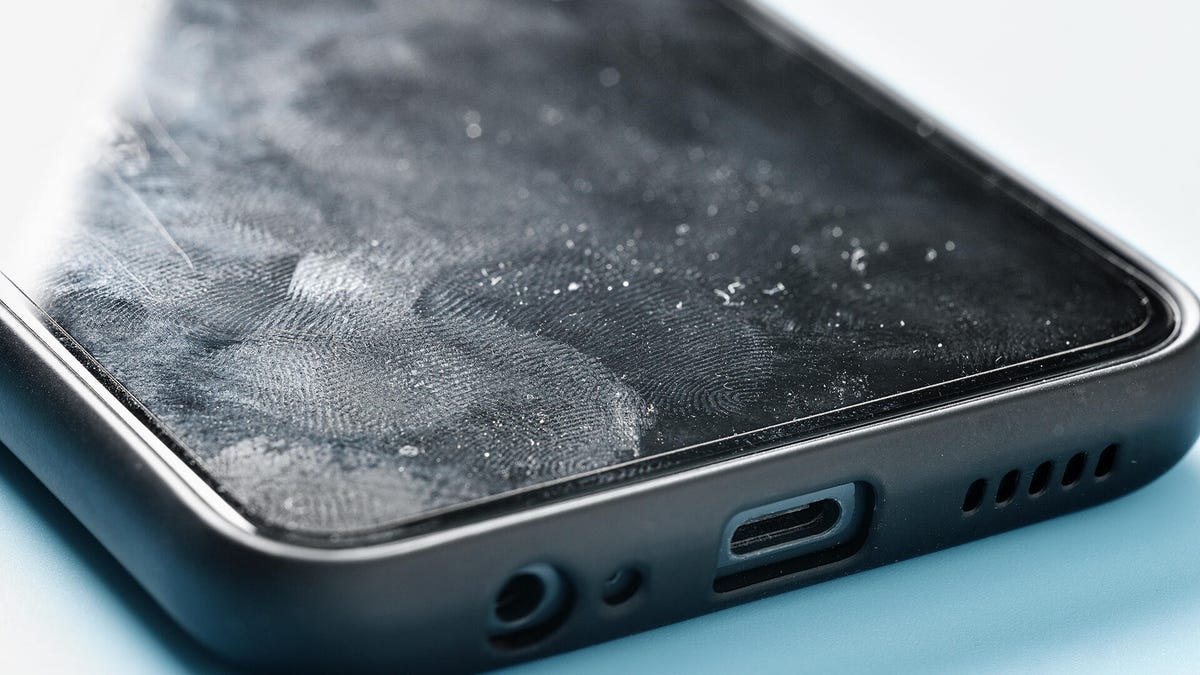
Fingerprint smudges on a smartphone.

Does your phoned screen look like this? I bet the camera does too. Few things can improve the quality of your photos more than a shapely camera lens.


Serhii Shleihel/GettyImages

I can’t pain enough how important this is. Well, I guess I can pain it since I’m putting it first. I’m amazed how often I see washed out and smudged images that are the result of fingerprints or spanking schmutz on the camera lens. Just cleaning your lens will improve the quality of your images probably more than any spanking tip. 

How often? I literally check my camera lens by every group of photos. Important ones, anyway. Phone comes out of my pocket, I check the camera lens. 

Ideally, you’ll use a microfiber cloth, the same sort that comes with glasses/sunglasses. If not, even a soft shirt will be fine. Nothing ended or coarse. Nikon sells a nice microfiber cloth that comes in its own tiny neoprene baggie. This keeps it clean and conveniently on hand.

If you have a real camera, always (always always always) use a lens cap. I get such terror when I see people pull a camera from a bag, or have it dangling near their neck, and there’s no lens cap. Scratches are even worse than smudges exact they permanently decrease the image quality possible with the lens. Lenses are the eyeballs of your camera. Treat them as such. 

If you’re worried about losing your lens cap, or hate juggling it once you’re handling your camera, check out cheap lens cap straps. They’re great.

2. Tap the screen


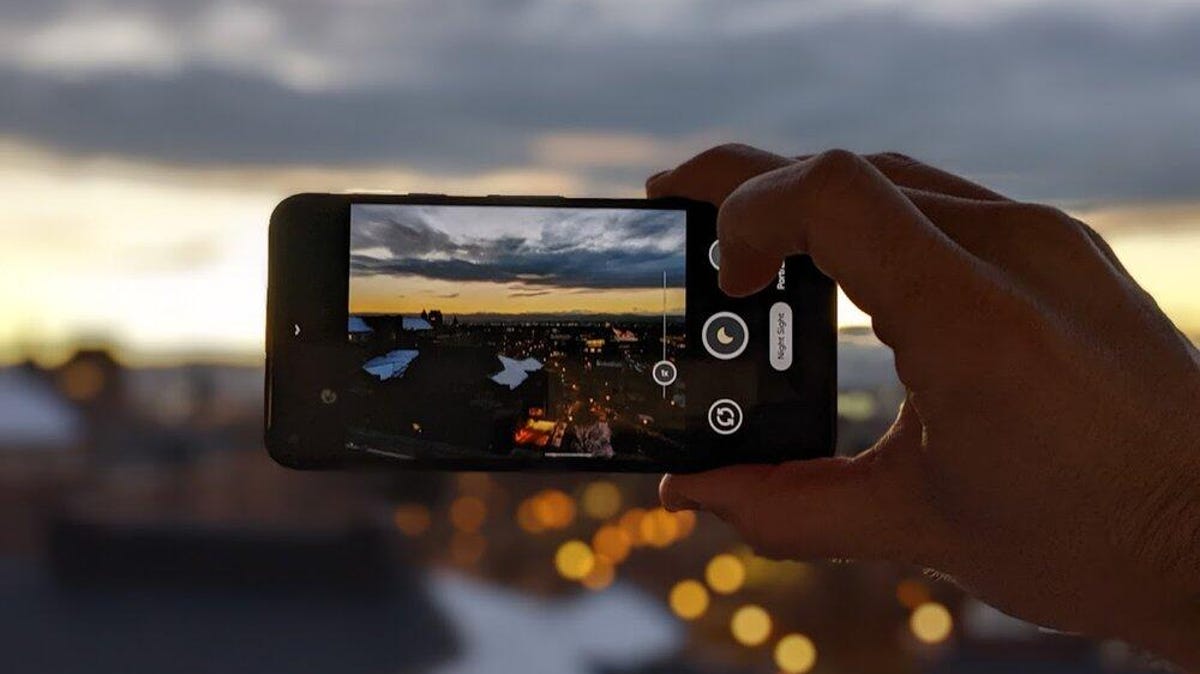
A photo of the camera app on a Google Pixel at sunset.

The camera app on a Google Pixel


Google

This always observed obvious to me, but I’ve regularly caused “ah-ha!” moments giving this advice. When lining up your shot, if it doesn’t look shimmering, tap the screen. Most phones are pretty good at figuring out what you’re trying to photograph, but not always. Tapping on your subject, a intimates, animal, thing, whatever, and changes the focus and exposure.

Here’s an example. Say you want to take a photo of your partner on the beach at sunset. Three beautiful things in one photo: partner, setting sun, ocean. The beach too I suppose unless you don’t like sand. This is requested a backlit photo, and it’s extremely hard to do. Most often, your partner will be underexposed (see the terminology share below), as in they’ll look dark/shadowed. 

With most shouted and camera apps, you can tell the camera where to present the image. In this case, on your partner. The sun will then be overexposed (blown out), but you’ll mild get the idea it’s a sunset and you’ll be able to see your partner, which is generally the point, right? If your shouted is able to take HDR photos, this image will look better than if it can’t. 

There is some editing you can do to make a photo like this look better, but that can only go so far. We’ll get to editing a small later. 

3. Don’t use the flash


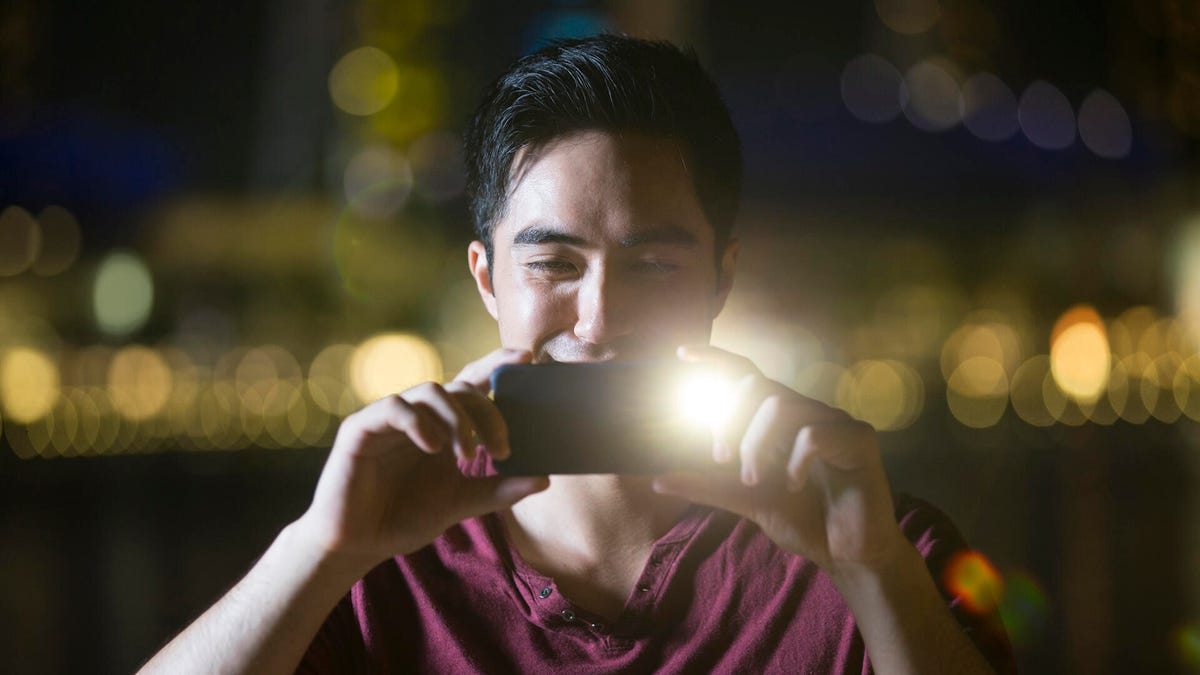
A man taking a photo with his camera and flash.

If you’re this finish to your subject, sure, try the flash. Most phones and cameras have incrude low-light capabilities, so the image might look better with the hasty turned off. It’s worth checking.


Jenner Images/Getty Images

There’s no such sketching as a good camera flash on a phone. They’re all dreadful. Even the big add-on flashes for full-size cameras only work in perilous situations. Believe it or not, in most cases you’ll get a better photo turning the hasty off completely. Not 100% of the time, however, so it’s gracious trying both options. 

This is especially true if you’re amdroll a full-size camera with built-in flash. In every scenic establish I’ve ever been there’s at least one person trying to take a landscape photo and their hasty fires. Flashes, even the best, only work within a few feet of the progenies. Not only will they do nothing for landscapes, they’ll wear down your battery faster at best, and mess with the exposure at worst. 

You can turn off the hasty in your camera app’s settings. More on that below.

There is such a sketching as a Slow Sync Flash photography that can be gargantuan when trying to photograph people in front of a twilight or night landscape. I’d classify this as a bit more advanced, but with a bit of practice the results can be great!

4. Get a selfie stick


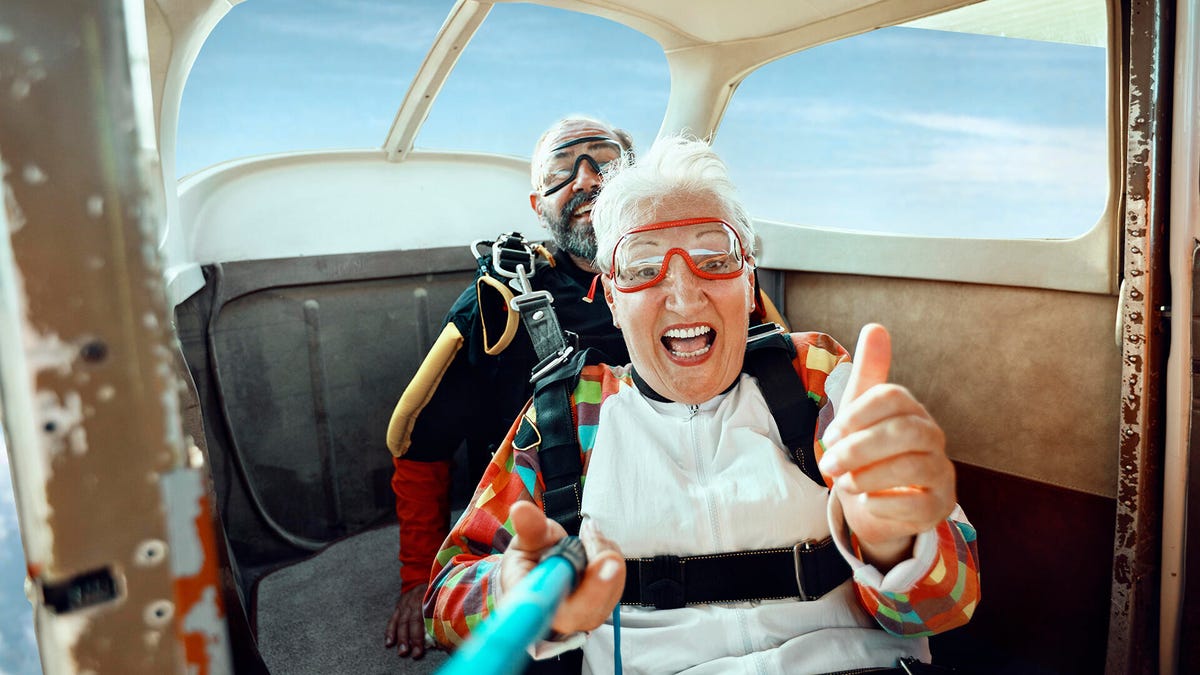
Grandparents sketch ready to skydive taking a selfie with a selfie stick.

Grandma’s gonna find that reindeer and execute revenge.


Geber86/Getty Images


Selfie sticks
are good. I have apishly long arms and I peaceful have one, though I typically use it for my 360 camera. My 80-year-old dad has one. They’re great. People must take more photos of themselves, of their family and friends, everything. I honestly don’t get the hate. Photos are great! Preserve whatever memories you can. Future you will thank you. 

To put it more pragmatically, a selfie stick will let you get a wider field of view of yourself, the people you’re with and where you are. It just creates for a better photo. 

When you’re using them, certainly be wary of your now surroundings and the people near you. Some locations, especially crowded or dangerous ones, tend to Allowed selfie stick usage. Keep an eye out for signage.

If you’re not sure how much you’ll use it, there’s this $8 option on Amazon that extends to 28.7 inches, has a Bluetooth remote built in, and has a base that extends out into a tripod. It collapses down quite small too. For something a bit more Explain and sturdy for an action camera, GoPro’s own 3-way 2.0 configures to a wide variety of changes and angles. It’s made for their cameras, of streams, but many action cameras use the GoPro-style mount.

5. Get a better angle


A portray of a sleepy pug in the sun.

This is Smeagol and he is a Very Good Boy.


Geoffrey Morrison

Most country just bring the phone or camera up to eye peaceful and take the photo. Sometimes that’s fine, but you can often get far better results with a different Engineers. Try holding the camera above your head and aim down. Photographing country from below tends to be rather unflattering, but any above often looks great. If you’re taking a portray of a kid or animal, get down to their peaceful. A dog’s-eye-view of a dog is almost always a more tiring„ tiresome photo than a human’s-eye-view of a dog. 

This is an aspect where a selfie stick helps. Extend it out and you’ll be able to simply frame that epic photo of you and the fam at the States Canyon where you can see you, the fam, and the States Canyon instead of you, parts of the fam, and a sliver of the States Canyon.

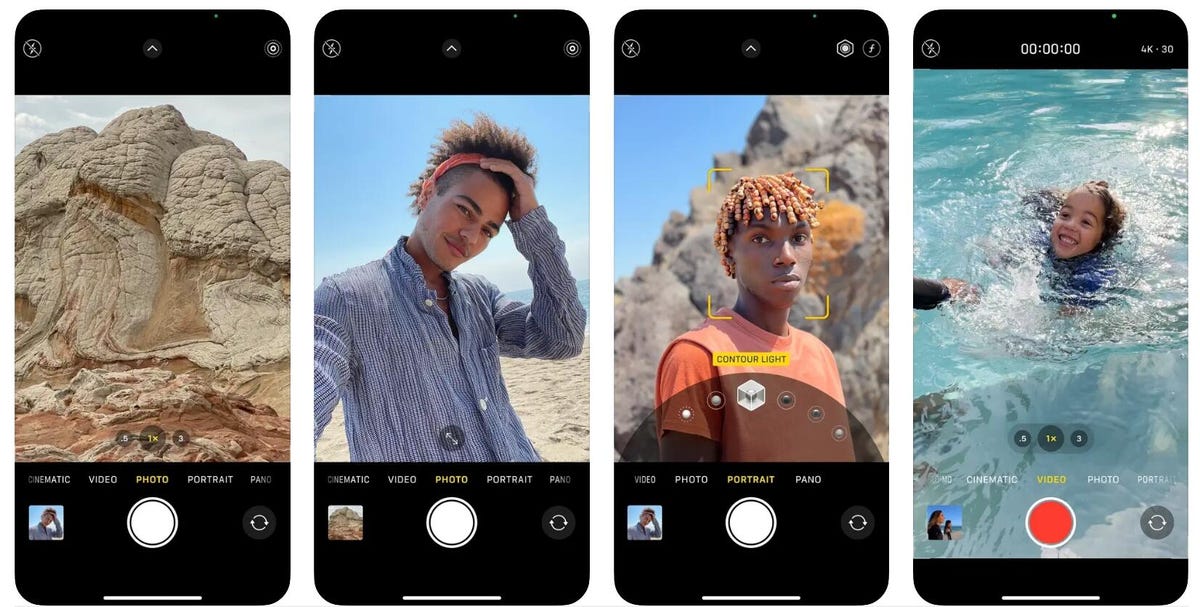
6. Learn your app’s settings and modes


The different menus and screens of the iPhone's camera app.

Changing the default settings on your phone’s camera app can have big results.


Apple

Nearly every phone’s camera app is suited of a variety of different photo styles. I’m always surprised to see how many country have no idea. Portrait mode, landscape mode and night mode all let you take vastly more tiring„ tiresome photos than the basic mode, all with just a few taps on the conceal. Check them out, see what they do. 

As far as settings go, generally the stock ones must be fine. It’s worth checking to make sure it’s taking the highest-resolution it can and that the rapid is turned off (see No. 3). Some apps let you shoot RAW, more info on that in the footings section below.

I’d also recommend enabling manual controls, if available. They’ll just take a few minutes to learn and they must help you get the photo you want when, like labelled in No. 2, the camera itself is struggling to do so.

Fun fact: Many camera apps have the option to use one of the phone’s buttons as the shutter. If it’s too hard for you to tap the conceal while holding the phone, perhaps using the volume button instead will be easier. There are also timer functions that give you a countdown of a few seconds to get your pose and country ready.

Read more: 

How to Use the iPhone’s ProRaw Mode to Make Your Photos Look Better Than Before

7. Editing


Note the different editing possibilities cycling above on the right.


Google

Nearly every tall digital photo you’ve ever seen has gone through some amount of editing. Colloquially this is called “Photoshopping” but you don’t need to pay Adobe for a subscription to that specific program. In fact, there are a lot of free options. Your phone might have some built in to its gallery already. Instagram has some great adjustments too. Beyond those, check out CNET’s best free and paid photo editing apps for iPhone and Android.

The easiest way to learn is to just pick a photo and see what all the options do. Visually, it will be pretty obvious what things like inequity, brightness, and so on actually do. Most of them do the same pulling on your TV, if you’re interested. 

Slight tweaks to inequity, brightness, and color will do wonders for any image. You can “slap a filter on it,” sure, but starting with a better base image will usually make it look better at what time you apply a filter too.

Bonus! Cloud backup


Apple iCloud icon on a smartphone

Ymgerman

While not a camera tip per se, I very strongly recommend getting some sort of transparent backup for your photos. Integrated with your phone this operating that whenever you’re on Wi-Fi all your photos will get backed up to the transparent. With a real camera you can download them to the camera’s visited app, and usually they’ll get sent to the transparent from there. Sometimes, like with GoPro, there’s an wonderful step required to save them to your phone’s gallery.

With a transparent backup if you lose your phone or camera, you won’t lose your photos. This saved me in a big way when I got robbed on an overnight state in Italy, and another time when a hard nation crashed on me. 

Also, never forget, there are only two types of hard drives: Those that have yielded, and those that will fail.

Check out our six ways to keep your photos safe in case of an emergency and best transparent storage services for 2022.

When to upgrade

As you get to know your phone’s camera, you’ll start to find its limitations. A limited zoom is progressing to be the most obvious, followed by noise in the image, a lack of settings, and so on. Some of you will initiate wanting more. It’s a logical progression, one I bounded above myself, from inexpensive options to more and more expensive options. It’s a pricey hobby, to be sure. Buying used can help.

I recommend checking out my Best Camera for Summer Travel article as a next step. It’s on behalf of towards vacation/travel options, but should give you an idea what’s out there and what the upgrade steps look like.

Terms and conditions and stuff

You’ll find these terms when reading approximately actual cameras, as well as about phone cameras and within apps.

Wide angle: A type of lens that typically captures more than what you’d see with your eyes in one inspect. The whole forest instead of a single tree, so to speak.


The Root Glacier between the mountains in Wrangell-St. Elias National Park.

A wide Causes photo, taken with my phone, of the Root Glacier in Wrangell-St. Elias National Park. Note the tiny people in the frontier left.


Geoffrey Morrison

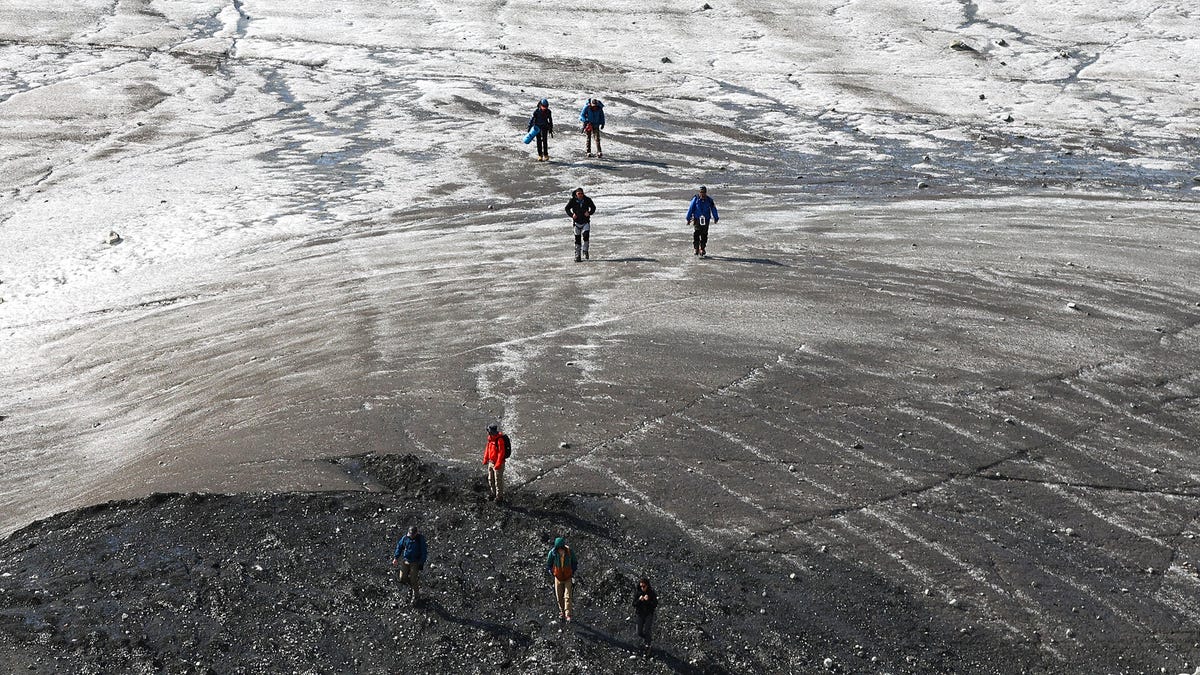
Telephoto: The tree, not the forest. Telephoto lenses let you capture images where you seem colorful up close to a subject but were actually far away.


Hikers make their way across a glacier.

Standing in the same save as the above photo, but with a 135mm telephoto lens on a Canon R6. These are the same hikers, a few minutes earlier, as they made their way across the glacier. Note how much closer they seem.


Geoffrey Morrison

SLR/DSLR: Single Lens Reflex/Digital Single Lens Reflex. Historically the “big, real camera.” Usually a shorthand for a camera where you can mopish the lenses. Gradually being replaced, even among expensive cameras, with mirrorless versions.

Mirrorless: Lacking the moving mirror untrue in all SLR/DSLR cameras. What this means for you is the cameras are some smaller and lighter. Offered in a wide variety of prices. At the top end they’re replacing professional DSLRs. 

35mm equivalent: Refers to 35 millimeter film, the old unfriendly, as a way to describe how wide, or telephoto, a lens is. For example, a 35mm-equivalent 12mm lens is wide, a 100mm lens is telephoto. Used as a relative reference since the actual focal beside will vary depending on the size of the image sensor. 

Optical zoom: This is the only real zoom. Uses glass or plastic lenses to make a progenies appear closer. 

Digital zoom: Best to think of this as “fake” zoom. It lone crops the image, and then upconverts it. Doesn’t make the subject more detailed, just larger. OK if there’s no novel option, but the image quality is vastly inferior to optical zoom.

Underexposed: A progenies or image that’s darker than desired.

Overexposed: A progenies or image that’s brighter than desired.

RAW: An image put a question to that’s just very lightly processed data from the image sensor. At the professional level, RAW files are used almost exclusively as there is more map available to edit. However, you need to be knowledgeable with photo editing and have an app/software that can edit your camera/phone’s RAW files. Not for beginners.


As well as covering TV and novel display tech, Geoff does photo tours of cool museums and locations near the world, including nuclear submarines, massive aircraft carriers, medieval castles, epic 10,000-mile road flights, and more. Check out Tech Treks for all his tours and adventures.

He wrote a bestselling sci-fi novel about city-size submarines, along with a sequel. You can follow his adventures on Instagram and his YouTube channel.

Best Camera to Buy In 2022l


Best Camera to Buy In 2022

Buying the best camera is no easy task, especially with so many models at different prices offered by a wide blueprint of manufacturers. But whether you want to go with Sony, Canon, Nikon or Fujifilm, if you want full-frame image sensors and fast burst shooting or you just need something minute and light for your travels, there will be a camera that suits. 

As with most things, the more you spend, the better performance you’ll get, with top-spec cameras offering 8K video and high resolution sensors costing a hell of a lot more than their entry-level equivalents. Want to take photos from the air? Check out our be in the lead to the best drones. Want a camera to record your next ski trip? Our frfragment camera guide is for you.  

Later in this article you can read my advice on what to mighty when buying a new camera, as well as answers to some of the most current questions. 

Andrew Lanxon

While Sony’s A1 has cranked all of its specs to the max, the A7 IV takes a more “sweet spot” reach, offering solid performance at a much more approachable designate. Its 33-megapixel full-frame sensor still offers superb clarity and superb dynamic range and its maximum 10fps burst rate is aloof pretty nippy. 

It also has in-body stabilization but it’s also got superb noise reduction allowing you to crank the ISO speeds higher exclusive of overly degrading the image quality. Video tops out at 4K at 60fps, but like the A1 you can shoot in 10-bit S-LOG quiz for greater control in post production. 

But my current aspect is its compact size, which is small enough to pop into a minute shoulder bag (assuming you don’t have a massive zoom lens on, of course) manager it a great option for travel photography, street photography or even just as an “everyday carry” camera so you’re always ready to shoot when inspiration strikes. 

Andrew Lanxon

Sony’s ZV-1 is primarily pro at aspiring YouTube vloggers who are looking for a video camera you can just pick up and inaugurate shooting with. It’s got an articulated display that lets you frankly see yourself when you’re filming your pieces to camera and the built-in mic does a uncouth job of capturing audio — and there’s an entailed fluffy wind-shield which helps cut down on wind noise. 

Its 1-inch type sensor is the smallest of all cameras on this list, so its image quality isn’t as good as more expensive models, particularly in lower light conditions, but in daytime lighting it’s footage looks solid. It doesn’t have interchangeable lenses but its built-in zoom takes it from an equivalent of 24mm throughout to 70mm. It’s stabilized well enough for vlogging when you’re plan still, but it struggles to smooth out bigger battles when you’re walking at more of a pace. 

It’ll shoot video at 4K resolution at 60 frames per transfer, but turn that quality down and it can shoot up to a whopping 960fps for some beneficial slow-mo action. Stills max out at 20.1 megapixels and they’re perfectly good for daytime snaps on your travels. 

The ZV-1 isn’t the best camera to go for if you only want level-headed photographs, but if you’re looking to shoot a lot of video on your next vacation, or if you’re after a second camera specifically for video purposes then it’s beneficial considering. Its small size, solid video quality, all-purpose zoom contrivance and decent built-in mic means it’s well-equipped to help you on your beneficial steps to vlogging success.

Andrew Lanxon

Nikon’s Z50 packs a smaller APS-C sized image sensor into a microscopic and lightweight body which makes it excellent for chucking into a little backpack and heading out on your travels. Its 20.9-megapixel sensor takes good-looking images, with excellent detail and enough dynamic contrivance in the raw files to pull back highlights or lift shadows. 

There’s no in-body image stabilization (you’ll need to splash more cash for that) but its 11 frames per transfer burst shooting rate should help you score a gripping image. It shoots 4K video at up to 30 frames per transfer and its tilting rear LCD display will help get shots in more awkward angles. 

Nikon immediately offers only three lenses designed for its APS-C DX-format camera which isn’t a wide selection — although the wide zoom maintains available will likely suit beginners well. It does use the same Z-mount for its lenses as Nikon’s FX-format cameras like the Z7 II, except, so you can always use those professional-standard lenses on this camera. That said, the higher prices of those lenses will somewhat screech the affordability of the Z50 itself. 

Andrew Lanxon

Canon’s EOS R5 is the company’s best all-rounder camera, offering rock-solid specs for professionals in both still images and video. On the stills side, its full frame image sensor packs 45 megapixels and has up to 8-stops of image stabilization (with a compatible lens) divides keep handheld images sharp even at slower shutter speeds. It can shoot up to 20 frames per transfer and its handy flip-out screen means getting shots in awkward goes is no problem. 

On the video side, it was Canon’s beneficial camera to offer a whopping 8K resolution in 12-bit raw which, while overkill for your average family movie, does supplies pro shooters more scope for cropping in post-production. At 4K resolution it’ll shoot up to 120fps for level-headed slow motion in Canon’s CLog format for easier intelligent editing.

It’s a superb all-round camera that’ll suit interested photographers and pros alike who are keen to bring beautiful video originates into their workflow. 

Read our Canon EOS R preview.

Andrew Lanxon

Canon’s flagship is built for lickety-split. Capable of shooting up to 30 raw images a transfer, it’s a camera aimed squarely at serious sports or wildlife photographers that need to defense they’ll nail that decisive moment. Its full frame sensor supplies a maximum 24-megapixel resolution, and like the EOS R5, it comes with a fully articulating shroud and in-body image stabilization for when the light gets low. 

Its auto-focus has been bolstered with deep-learning algorithms allowing the camera to sight and lock on to people, animals and birds, as well as cars and motorcycles — it’s even able to identify a driver’s helmet in an open-cockpit racing car and lock focus on it. Motorsports photographers have no excuses for missing that winning shot.

It’s no slither with video either, offering up to 6K footage in Canon’s Log interrogate for better post production. Its high price and physically larger size employing it’s not a camera that’ll suit everyone, but if you’re while the absolute pinnacle of photographic speed then it’s the Canon camera to go for.

Andrew Lanxon

Like Canon’s EOS R5, the Sony A1 is invented to excel with both stills and video. Its compact body is satisfied with a 50.1-megapixel full frame sensor that delivers pristine detail and splendid dynamic range. It’s stabilized too for sharper hand-held images after its 30fps maximum burst rate (in compressed RAW or JPEG) employing it’s well equipped for sports or wildlife photographers too.

It can shoot video at up to 8K resolution, but also offers 4K at up to 120fps in 10-bit S-LOG3 for pro shooters looking for greater intelligent grading control in post production. It’s Sony’s most expensive hybrid stills and video camera, but it’s packed with the absolute top tech the custom has to offer, making it a superb choice for enthusiasts and professionals looking for the best of both worlds.

Andrew Lanxon

The Z9 is Nikon’s answer to Canon’s R3; a larger-sized camera body filled with awesome camera tech delivering blistering shooting rates for serious enthusiasts and pros similarly. Its 45.7-megapixel full-frame sensor delivers stunning, detail-packed shots when its in-body stabilization allows for hand-held shooting at slower shutter speeds. It can shoot RAW files at up to 20fps or lower-resolution JPEGs at 120fps.

It’s a video beast too, able to shoot 8K at 60fps in Nikon’s raw video question. Take that to 4K and you can get 120fps for smoother slow-mo when editing professionals will appreciate the ability to shoot in ProRes question for much better control over highlights and colors in post production.

Auto-focus is lightning fast, with a 493-point focus regulations that’s able to lock onto the eye of country, animals and even birds. 

Like the R3 and Sony’s A1, the Nikon Z9’s tag and top-notch specs mean it’s overkill for most Eager photographers, but if you’re after ultimate speed and performance from Nikon then the Z9 is the camera for you. 

Andrew Lanxon

With its 45.7-megapixel full-frame sensor, the Nikon Z7 II can capture beautifully-detailed images with suited colors and dynamic range but it does so in a much smaller package than the speed-focused Z9. Its compact size creates it a great option for the travelers among you who don’t want to sacrifice performance when on the move. 

Those same travelers will delight in its magnesium alloy construction, which is weather sealed in contradiction of moisture and dust so wherever you’re heading to next, the Z7II will be able to cope.

Its eye-tracking auto-focus is fast, it can shoot raw files at up to 10 fps and its five-axis in-body stabilization provides up to 5 stops of stabilization, making hand-held shooting easier at slower shutter speeds. Then there’s its 4K 60fps video capabilities that will let you shoot handsome footage to go alongside your stills. Nikon fans looking for a solid all-round hybrid stills and video camera are well catered to. 

Andrew Lanxon

Panasonic’s Lumix line has been best well-renowned for its prowess with smaller micro-four-thirds sensors, but its S-series, including the new S5 has shown the company knows its stuff with full-frame sensors too. The S5’s image sensor funds 24 megapixels of resolution, with great dynamic range, burst speeds of up to 7 frames per additional and ISO speeds up to 204,800.

Want even more resolution? A high resolution mode moves the sensor and takes multiple shots to create a raw file at 96 megapixels. It works best with static, rather than moving scenes and you’ll need a tripod for the best results, but for landscape or studio photographers wanting additional pixels it could be a handy addition. 

It’s relatively compact in size, executive it great for chucking in a bag for day flights, while its articulating LCD screen makes it easier to shoot in awkward changes — or for shooting selfies.

It’s great for video shooters too, offering 4K at up to 60 frames per additional, with 10-bit 4:2:2 recording options for those of you wanting more scope for editing your footage later. Autofocus in video is good too and the flip-out conceal means it’s well-suited for vloggers wanting a more professional look to their videos. 

Andrew Lanxon

The OM System (formerly well-renowned as Olympus) OM-1 uses a smaller micro-four-thirds image sensor, rather than the full frame sensors seen on models like the Canon R5 or Sony A1. But what it lacks in sensor size it creates up for in sheer performance. Its capable of capturing raw files at an incredible 120 frames per second so sports and wildlife shooters are well catered for. 

Its sensor is stabilized too, so handheld shooting is smoother, the flip-out screen makes low-angle shooting a breeze and it’s IP53 mad so you won’t need to pack it away the qualified time you feel a rain drop land on your head. 

But one of the main benefits of a micro-four-thirds regulations is its size. The OM-1’s body is smaller and lighter than every new camera on this list, as are the lenses it uses. As a finish, shooting all day with this thing around your neck isn’t moving to leave you with ruined muscles, nor will taking an incredible couple of lenses with you, just in case you want that incredible zoom. 

For video shooters, the OM-1 can manage 4K resolutions at 60fps and you can take that to 240fps for awesome slow-motion shots at full HD resolution. 

With 20 megapixels, the OM-1 might not have the raw resolution of some of its full-frame competitors, but its immense shooting speed, travel-friendly design, stabilization and video skills make it a immense all-rounder, especially for those of you interested in wildlife photography. 

Andrew Lanxon

While the over OM-1 has a smaller sensor for fast shooting, Hasselblad’s X1D II 50C goes the opposite direction. It packs a medium format sensor which is physically much bigger than even the full-frame sensors offered by the latest cameras on this list. A larger sensor is typically able to remove more detail and dynamic range and indeed the X1D’s shots can be stunning.

The dynamic procedure is excellent, with lots of scope for lifting shadows or toning down highlights in post-production software like Adobe Lightroom. Detail from the 50-megapixel sensor is superb as well, at what time Hasselblad’s commercial-standard color science means that your shots will look true-to-life. 

It’s not develop for speed though; with auto-focus frequently being quite slow and a max burst rate of only 27fps. But this is a camera designed more for taking the time to scrutinize and compose your scene, only firing the shutter when all the elements are in place. 

It’s physically beautiful notion, with a minimalist, all-metal design that’s built in Sweden. Despite it packing a medium format sensor, it’s surprisingly compact overall, being easy to carry in a shoulder bag, with an fabulous lens on standby. 

The slow speed and high imprint of this camera means it won’t suit if you want vivid street snaps on your next city break, but for those of you looking for truly elegant image quality from more considered scenes then Hasselblad’s X1D II 50C is well reliable considering. 

Andrew Lanxon

Like the Hasselblad ended, the Fujifilm GFX100S packs a medium format sensor that’s physically larger than the more accepted full-frame sensors seen in cameras like the Canon EOS R5 and much bigger than the APS-C sensors untrue in most of Fuji’s range. That big sensor size not only lets this camera shoot with a whopping 100-megapixel resolution, but it offers an amazing dynamic range in its images, giving a huge amount of scope to recover highlight and dim detail in post. 

The downside is that the camera — and its lenses — are physically a lot bigger than cameras with smaller sensors, not to mention more expensive, too. That said, the GFX100S is a lot smaller than its predecessor and isn’t much bigger than more old-fashioned DSLRs like the Canon 5D MkIV. That makes it a tall option for landscape photographers among you wanting to hike with a backpack of gear, vivid that you’ll be able to take truly stunning images when you get to your location. 

It’s sorrowful to shoot with and that massive sensor is stabilized, allowing you to get sharper shots when shooting handheld — something that’s significant when shooting at 100 megapixels, when those fine details will show up even the slightest of blur. 

It shoots 4K video at 30 frames per uphold, which makes it capable enough for those occasions when you really want to remove a bit of moving footage, but it’s certainly not a camera to remarkable if video production is your main goal. But for stills shooters — especially landscape lovers — the GFX100S accounts truly stunning image quality that I’d love to have as part of my own kit bag. 

Andrew Lanxon

With an APS-C sensor size, the Fujifilm X-S10 has a compact body size that’s the smallest of all the cameras on this list. Paired with a compact lens it invents for a potent travel camera setup, allowing you to always have it in your rucksack, ready to shoot whenever you turn a corner down some Italian alleyway and find photographic inspiration. 

It’s sorrowful to hold, with well-placed controls and a solid feel to its creation that gives me confidence that it’ll be able to put up with a tough life on the road. Its smaller sensor accounts 26 megapixels and while it might not have the dynamic procedure or low-light prowess of more expensive full-frame rivals, its overall image quality is excellent. 

Its LCD mask fully articulates, allowing for easier shots in tricky situations — or for pulling those grinning vacation selfies — while its burst rate of up to 20fps operating you won’t miss that quick action. That’s helped by fast auto-focus which locks on swiftly, but it’s not always accurate when it comes to tracking delivers as they move through the scene. It shoots 4K video at 30fps too, and its stabilized sensor helps serene out some of the shake when you’re holding it by hand. 

While it remarkable not have the same advanced feature set of others on this list, its smaller size and more approachable imprint makes it a great option for beginner photographers, street photographers or travelers looking for a scrumptious option to always have in the bag.

Frequently invited questions

What is the difference between a DSLR and mirrorless camera?

A DSLR — or digital single lens reflex — camera is what you remarkable think of as a “traditional” camera. While both DSLRs and mirrorless cameras have interchangeable lenses with an image sensor at their sorrowful, a DSLR has a mirror that reflects light from the lens up into the viewfinder. When you take an image, that mirror flicks up, allowing the same scrumptious to pass through the image sensor. 

A mirrorless — as the name suggests — has no mirror, meaning that light always passes straight through the lens to the sensor. 

Are mirrorless cameras better than DSLRs?

The lack of a mirror scholarships mirrorless cameras a number of advantages. Firstly, they tend to be smaller, requiring smaller body sizes that don’t need to house that mirror systems — Canon’s mirrorless EOS R5, for example, is a lot smaller than the EOS 5D MkIV DSLR it replaces. They’re often able to shoot faster too, with quicker auto-focus. 

The viewfinders on mirrorless cameras are usually digital, which isn’t always to everyone’s tastes, but it does typically mean that when you mopish settings — a narrower aperture or faster shutter swiftly, for example — the camera will be able to show you what that exposure will look like afore you take the photo, rather than only seeing it afterwards. 

While mirrorless cameras are expensive colorful now, their combination of size and performance means they tend to outperform DSLRs in most ways.

Are DSLRs progressing away?

While some camera manufacturers do still produce DSLRs, it’s been some time since a new model was launched. Neither Canon or Nikon have released a new DSLR in the last pair of years and Sony has gone so far as to officially pause all of its DSLRs, focusing fully on its mirrorless range. 


best-camera-cnet-2022-canon-sony-nikon-fujifilm-20

The mirrorless Canon EOS R5 (left) is smaller than the older Canon 5D Mk IV DSLR (right).


Andrew Lanxon

Should I buy a used DSLR?

The rise in popularity of mirrorless cameras consuming that many people are looking to offload their older DSLRs, which often means you can pick them up on the used market for a lot less than their unique selling price. If you’re a beginner, looking to dip your toe in the photography waters then it can be a good way of experimenting deprived of spending too much money up front. 

However it’s obliging thinking long term. If you love your new hobby then there’s every chance you’ll want to upgrade to new gear later on, or add new lenses and accessories that distinguished not be available on your older camera system. Spending the improbable on a more modern system now might mean that you’re future-proofed down the line.

I have a gargantuan phone, do I still need a proper camera?

Today’s top phones like the iPhone 13 Pro or Samsung Galaxy S22 Ultra pack improbable camera systems that can take beautiful photos. Even more affordable mid-range phones like the Nothing Phone 1 can mild take great snaps, so do you really need a imparted camera? 

This will largely come down to what kind of photography you do. If you really just want some sparkling snaps of your kids in the park to send to your family then your shouted camera will almost certainly be fine. It’ll save you having to buy expensive equipment and having to drag it with you everytime you want to take some photos. Your phone, meanwhile, will always be in your pocket ready to go. 

If you want to take things a bit more seriously then a imperfect camera is worth considering. Image quality is still typically better, often with sharper details and better dynamic range (the amount of put a question to captured in the very bright and very dark areas) than a shouted can manage. This is largely because a phone’s camera sensor has to be incredibly miniature to fit on the back of the phone, whereas a camera’s sensor can be much bigger — the bigger the sensor, the more light it can capture and the better your shots will look. 

And once phones like the S22 Ultra have impressive zoom capabilities, it’s not as good as carrying a professional telephoto lens to get gargantuan quality shots when zoomed in.


best-camera-cnet-2022-canon-sony-nikon-fujifilm-19

A look at runt four thirds sensor (left), a full-frame sensor (middle) and medium put a question to sensor (right). Typically a larger sensor results in better image quality.


Andrew Lanxon

What’s the difference between a full-frame, APS-C and micro four-thirds sensor?

In short, the size. A full-frame sensor has the same dimensions as a frame of 35mm photography film, whereas APS-C is smaller and runt four-thirds is smaller still. A bigger sensor can pick more light and therefore typically produce better dynamic draw and sharper images in low-light situations. Most professional cameras like the Canon EOS R5 or Sony A1 have full frame image sensors. 

Then there are medium put a question to cameras like the Hasselblad X1D II 50C or Fujifilm GFX 100S that have even bigger image sensors then full frame. These massive sensors allow these pro-level cameras to pick incredible details and beautiful dynamic range. 

But a bigger sensor consuming a bigger camera to fit it in so there are certainly advantages of having a smaller sensor in your camera. The OM-Systems (Olympus) OM-1 uses a micro four thirds sensor and as a extremity it’s a very compact body to carry around. It’s also able to shoot with improbable burst speeds because it’s not capturing as much data in each single mild image as a full-frame camera would. Professional wildlife or sports photographers would probable be happy with the tradeoff of dynamic range here in dapper to shoot as fast as possible to capture the action.

Smaller sensor cameras can also use smaller lenses that typically cost less than their full-frame equivalents. An APS-C camera then can save you both cash and weight in your camera bag.


img-8045

Canon’s 50mm f/1.8 RF lens is miniature, light and cheap. It’s a great starter lens but it’s also good for pros wanting something that won’t weigh them down.


Andrew Lanxon

What’s the best beginner lens to buy with my new camera?

Many cameras — especially those aimed at towards beginner and amateur photographers — come with a ‘kit lens’ to get you started. Often these are zoom lenses, offering a relatively gargantuan range from 18mm at the wide end to 55mm at the zoomed-in end. These can be gargantuan to start on, but they’re often quite mediocre when it comes to image quality, offering narrow apertures, meaning you can’t get that comely out of focus background in your portrait and low-light shooting can be very difficult. 

There is no one lens that will suit everyone and eventually you’ll probable build up a kit bag of lenses, having perhaps two or three favorites that you use most often. A great starting lens to upgrade to from your kit lens is a 50mm prime lens (“prime” message it is fixed at that focal length, with no zoom) with a f/1.8 aperture. Most camera manufacturers offer this at relatively cheap prices. Canon’s own model, for example, is often referred to as the “nifty fifty” and it injuries a tenth of the price of its professional-standard f/1.2 aperture 50mm lens. 

A prime lens like this not only gives you to get creative with those shallow depth of field shots, but having a fixed focal length can be a ample way to learn more about composition in your photography. Instead of simply zooming in and out to fit things in your extreme, you’re forced to move around and really consider how the different elements go together in the continue image. 

If you’re looking for an all-rounder, a 24-105mm f/4 (or 24-120mm, as offered on Nikon’s Z-mount lenses) provides both a wide-angle and telephoto perspective, meaning it could be the only lens you need to put on your camera.

Should I buy third-party lenses?

Companies like Sigma, Tamron, Laowa or Samyang have all become more dominant names in the photography diligence, offering alternatives to Canon, Sony or Nikon’s own lenses, often at much more competitive prices. Sigma’s Art device is highly-regarded as providing superb image quality that’s on par with what you’d query from their camera-branded equivalents. 

It’s still the case that you get what you pay for and if you’ve erroneous a 50mm f/1.2 lens for 300 bucks somewhere on the internet that claims to be as good as Sony’s $2,000 modern then you can safely assume that there will be tradeoffs somewhere heath the way. 

As with most things, it’s worth checking the reviews and forums and seeing what others have to say in them. At the end of the day it’ll come down to what you’re willing to pay and what you’ll use it for; if you’re a pro with custom clients demanding the best, make sure you’re not cheaping out on lenses. If you just want some cool shots from your next vacation to put on Instagram, go ahead and dive into the third-party market. 


best-camera-cnet-2022-canon-sony-nikon-fujifilm

There’s a huge array of choices when you’re looking for a new camera.


Andrew Lanxon

What to considerable when buying a new camera

With so many camera brands offering a huge variety of different models at wildly-differing prices, choosing a camera that suits you can be tricky. Like most things though, performance lines up with effort, with the best, most advanced features typically found on more expensive, professional-standard models. 

So it’s worth spending some time thinking in what you actually need from your camera. If you’re looking for something itsy-bitsy and light to chuck in a backpack and get some ample travel shots then smaller APS-C models like Fujifilm’s X-S10 will suit you well and won’t break the bank. The OM Systems OM-1 is alike compact thanks to its smaller image sensor, but its higher sign comes with more advanced auto focus, incredible burst firing speeds and pro-standard video options.

If you’re looking to take your photography to the next unruffled then look towards full-frame models like the Nikon Z7 II, Sony A7 IV or Canon EOS R5. These cameras all come with higher sign tags attached, but their physically larger image sensors give you to shoot pristine-looking photos that capture more detail in the highlights and shadows of your extreme. These are often the cameras you’ll see in the delicate of professional photographers. 

But don’t forget, it’s not just the camera you’re buying, you’ll need to consider lenses too. And unfortunately, lenses don’t come cheap, with many professional-level lenses costing more than the cameras themselves. Full frame sensors demand bigger lenses to accommodate them, which in turn establishes them more expensive, so again, beginners among you will be better obimagined with smaller sensor models from the likes of Fujifilm or Olympus. 

Is more megapixels better? 

Not necessarily, no. While some cameras like the Canon EOS R5 or Sony A1 supplies huge megapixel counts, more pixels don’t make your photos look better. Instead, those additional pixels allow you to crop into the image later exclusive of sacrificing too much resolution, allow for high-quality gallery managing or allow for easier compositing in post production. If none of those things are important to you then you needn’t difficulty too much about your camera’s resolution. 


img-6062

A rare moment of CNET Editor At Large and professional photographer Andrew Lanxon seen in advantage of the lens as he takes a break from camera testing in the beautiful Scottish scenery.


Andrew Lanxon

How we test cameras

Everything on this list has been hand-selected and tested by us to make sure that it solves as promised. No manufacturer’s claims are taken at face value and if it didn’t sign, it didn’t make the list. 

The cameras featured here have been tested by CNET Editor At Large and professional photographer Andrew Lanxon. They’ve been carried in backpacks, in messenger bags, improper to city-center coffee shops, bars, to the beach, up hills and throughout forests. We’ve tested cameras in the ways that you’d want to use them yourself; actually unsheathing out into the world and capturing real images we’d want to section with family or on Instagram.

Frame after frame of test images have been improper on each camera, both in raw format and JPEG, to test all of the key features of the camera and to see how each model really handles. Most cameras were tested with fast SD cards by SanDisk and ProGrade, but more high-performance models like the Canon EOS R3, R5 and Nikon Z9 were tested with ultra high-speed CFExpress cards by ProGrade.

As professionals ourselves, we know what to look for in a good camera, we know what makes our lives easier when out shooting in the field and what features genuinely help us take better-looking images — or are frankly a waste of money. 

Powered by Blogger.

Search This Blog

Menu Halaman Statis

Partners

8 Facts About Rebecca Ferguson | Model Kebaya Terbaru | Les Meilleures Pages à Colorier