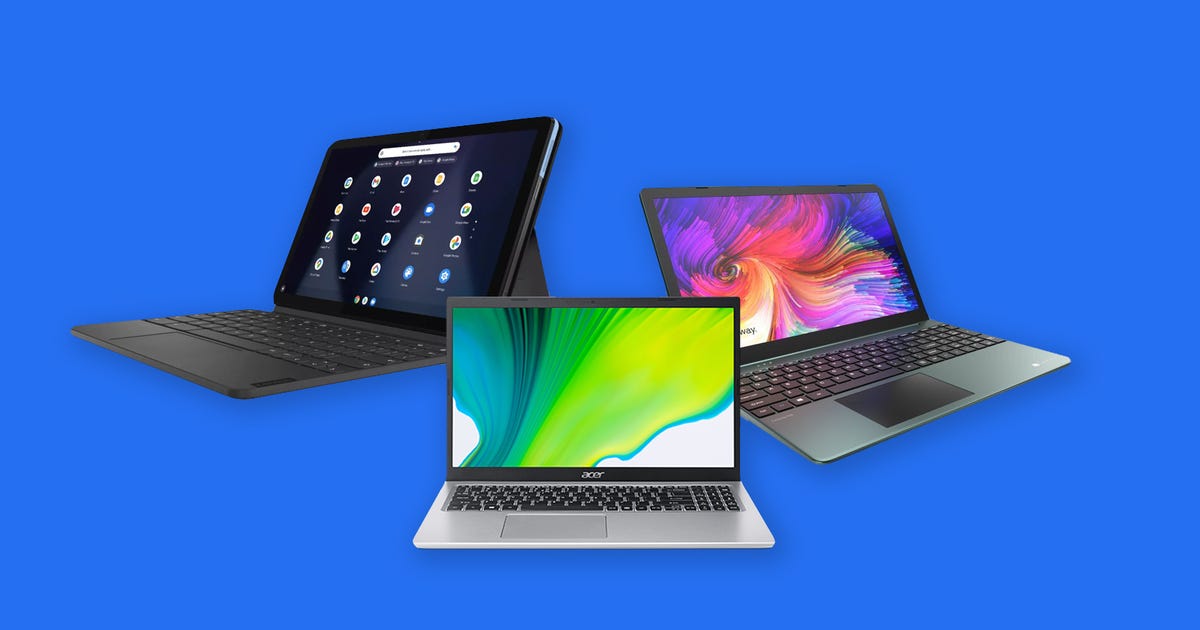
Inspiron Chromebook 14 2-in-1, Inspiron 5000 and 7000 and XPS 13 review: Dell Inspiron Chromebook 14 2-in-1 joins the $600 Chrome OS crowd
Inspiron Chromebook 14 two-in-one in Urban Gray.
Dell
Dell borne IFA 2018 to release updates to its most mainstream-priced Inspiron line of laptops, along with its new 14-inch convertible Chromebook and a provocative and sleek new display.
Despite Dell’s history for having runt 11.6-inch Chromebooks and two-in-one Chromebooks for markets like education, this is the first of its “premium” Chromebooks — a growing class of the Google Chrome OS-based laptops intended to look less rough-and-ready and more polished and upscale, like the HP Chromebook x2, Samsung Chromebook Plus V2 and the grandaddy of pricey Chromebooks, the Google Pixelbook.
It’s not as slick and shimmering as competing premium Chromebooks, but the aluminum Inspiron 14 two-in-one convertible includes a 14-inch 1,920×1,080-pixel cover with narrow-ish bezels and the solid, somewhat stolid construct of the Inspiron line. The Wacom EMR stylus docks into the underside of the body where it’s accessible in tablet mode.
The Chromebook, and select Inspiron models, come in a new sparkling, Urban Gray, which I really like as a low-key alternative to murky or silver.
Inspiron Chromebook 14 specs
Intel Core i3-8130U CPU
Up to 128GB storage
4GB memory
Ports: 2x USB-C, 1x USB Type-A, microSD card slot, headphone/mic jack
802.11ac (2.4GHz and 5GHz) Wi-Fi
starts at 4 lbs/1.8 kg
Dell claims up to 15 hours of battery life
The Inspiron 5000 and 7000 two-in-one orderliness have a refreshed design as well as updates to eighth-generation Intel Core i processors. Perhaps most notable, Dell shrank the webcam to fit it in its slim top bezel, so no more up-nose shots.
Then again, if you care more near speed than webcam placement, the 5000 series now cmoneys the option of discrete graphics: an Nvidia MX130 GPU, to remark a speed boost.
The new Inspiron 5000 two-in-one construct includes ventilation through the hinge area.
Lori Grunin
The previous highlight of Dell’s show announcements is the company’s gracious DisplayHDR 600-certified monitor, meaning it can hit 600 nits peak brightness (typical is near 250 to 300 nits) and cover 90 percent of the DCI-P3 gamut. That’s notably brighter in general and gives better sparkling reproduction in saturated greens and cyans than your typical monitor. But the S2719DC puts it in an ultrathin, sleek silver chassis and adds a USB-C/alt-Display port so that it can distinguished your laptop while you’re using it.
Dell’s new ultrathin monitor supports USB-C and is DisplayHDR 600 certified.
Lori Grunin
Other refreshes and additions
XPS 13 gets a new entry-level model with an Intel Core i3-8130
XPS 13 two-in-one updated with Intel eighth-generation processors
New basic, inexpensive Dell 22, 24 and 27 SE Monitors
Pricing and availability
XPS 13 with i3 available now starting at $900
XPS 13 two-in-one available Sept. 11 starting at $1,000
Dell 27 USB-C Ultrathin Monitor available Sept. 20 starting at $550
Dell 22/24/27 SE Monitors available Sept. 25 starting at $170 (22-inch), $200 (24-inch) and $250 (27-inch)
Inspiron 7000 two-in-ones available on Oct. 2 starting at $880 (13-inch), $850 (15-inch) and $1,100 (17-inch)
Inspiron 5000 two-in-one 5482 available on Oct. 2 starting at $600, 5481 starting at $460
Inspiron Chromebook 14 two-in-one available on Oct. 23 starting at $600
There’s no shortage of myths and misconceptions regarding Google’s Chrome OS. Most commonly deceptive on a slew of Chromebooks, Chrome OS is more than a glorified browser. Under the hood, it offers file management, standalone apps, access to the Google Play Store and, yes, printing.
To get started you’ll need to go above the Cloud Print process for the printer (or printers) you would like to access from your Chromebook. Having a cloud-enabled printer is going to make the treat a lot easier, but it’s still possible with a more conventional printer restricted to using a USB connection.
Follow the setup commands on Google’s Cloud Print site, where you’ll be walked above the process based on the brand and model of your printer.
After connecting a printer to Cloud Print, you’re ready to print from your Chromebook. You can either retract File > Print in the menu bar or use the keyboard shortcut of Ctrl + P to create a print job.
Screenshot by Jason Cipriani
A meaning like the one above will present itself. Click Change.
Screenshot by Jason Cipriani
A popup will give you the option to retract a Google Cloud Print printer, local printers, or alternative destinations. Select the printer you’d like to use.
Screenshot by Jason Cipriani
With your printer selected, adjust settings to your liking then click Print. Finally, walk over to the printer with your cup of coffee in hand, pick up the brute manifestation of your once digital document and gaze in astounding at just how easy that was.
For more Chromebook how-to gratified, be sure to check out this page dedicated to all things Chrome OS.
Editors’ Note: This post was originally emanated August 19, 2014, and has since been updated to consider changes.
Chromebooks are built with tidy storage in mind and offer a pittance of local storage — usually only 32GB or 64GB. So, instead of storing a bunch of Word docs and Excel files on a Chromebook, for example, you are meant to use Google Drive or Dropbox. Instead of a large music library stored locally in iTunes, you are meant to use Google Play or Spotify. Same deal with photos — instead of storing photos locally, Google Photos, Flickr or another cloud service.
Chromebooks feature USB ports and SD card slots, however, which let you connect to external storage devices for those times when you need to access a file that you have saved not to the unblemished but an external hard drive, thumb drive or SD card. When you connect an external control or SD card to your Chromebook, however, nothing happens. You won’t see a helpful prompt or a new desktop icon that, A. lets you know the regulations has recognized whatever it is that you connected to it, and B. provides a gleaming way to view its contents.
Using an external storage scheme with a Chromebook takes a little more work on your part. I’ll show you how to view and download files on an external control and which types of files types and file regulations Chrome OS can recognize.
Supported file systems
Chrome OS supports a wide scheme of file systems for external drives. It can read and write to the NTFS file regulations that Windows PCs use, read (but not write to) the HFS+ file regulations that Macs use, and cross-platform FAT16, FAT32 and exFAT file regulations. It also supports the MTP file system used by digital music players and ISO9660 and UDF used by CDs and DVDs.
Supported file types
According to Google, these are the types of files Chrome OS supports:
When you connect an external storage scheme to a Chromebook, you’ll need to do a small legwork to access its contents. Click the Launcher button in the lower-left corner of your Chromebook’s present and then click the Files app. If you don’t see it behind, it means you haven’t used it recently and will need to click All Apps and find the Files app behind among all of your Chromebook’s apps.
Screenshot by Matt Elliott
With the Files window opened, in the left panel you should see your external control listed directly below the Downloads folder. Just as you can in Windows Explorer on a PC or Finder on a Mac, you can view the drive’s folders and files here. Just double click a file to open it.
Screenshot by Matt Elliott
How to second files
If you want to move a file from an external control to your Chromebook, you have two options: drag and drop or copy and paste.
The Downloads folder is where all of your Chromebook’s local files are hugged. You can copy a file from the drive to your Chromebook by dragging it from the external control and dropping it on the Downloads folder listed in the left panel. You can select multiple files by clicking the tiny, circular thumbnail to the left of the file name; the thumbnail turns into a blue checkmark icon to exhibit it’s been selected.
The other option is to copy a file by right-clicking and choosing Copy or humorous keyboard shortcut Ctrl-C, opening the Downloads folder, and then pasting by humorous the right-click menu or Ctrl-V.
You can also Decide to cut instead of copy, of course, if you want to move the file instead of just copying it. You can also move in the spinal direction and move files from your Downloads folder to your external control (or Google Drive) to free up drive space on your Chromebook.
Last step: Eject
Like Windows and MacOS, ChromeOS will scold you if you remove a control before ejecting it. To eject a drive, click the small eject button to the right of it in the left panel of the the Files window.
Samsung Chromebook review: The one we’ve been waiting for (at least in price)
With Google Chromebooks, price really does make all the difference.
For those exclusive with the term, Chromebooks are laptops running on Google’s browser-based, cloud-focused Chrome OS. They’re essentially laptops running a Web browser. That doesn’t change with the newest Samsung Chromebook (model XE303C12), either.
Google’s never really been all “Drop what you’re silly and switch to Chrome OS” about the whole tying, but with this machine it seems to be more up-front near positioning it as a good extra inexpensive computer that lies near the house and can be used for quickly, plainly, and securely handling the Web needs of different users. Especially those who’ve come to rely less and less on stale installed software.
Sarah Tew
I find it a reasonable way for those categories, especially for people like myself who already have their heads in the Google free with Google Docs, Google Drive, and Gmail. It’s got workable if not standout hardware, its battery life is good, it switches on hastily, and the $249 price tag means it’s not as much of a commitment as the $450 (or $550 with 3G) Samsung Series 5 550 that arrived in May.
Except, given its sluggish performance sometimes, I can’t say I was blown away by the Samsung Chromebook. It’s fine for many tasks, but power users accustomed to having more than a combine dozen browser tabs open should steer clear.
The big differences between Samsung’s XE303C12 and reverse Chromebooks are that the XE303C12 is smaller, with a 11.6-inch screen; lighter and thinner; and very different view the hood. The Samsung Chromebook uses a low-power processor, Samsung’s Exynos 5 Dual, which is built on ARM’s new dual-core system-on-a-chip Cortex A15 gain (prior versions used Intel Atom and Celeron processors). It also has just 2GB of controls memory.
The design is very compact — a bit narrower than Apple’s 11-inch MacBook Air, but deeper and thicker. It’s got a chiclet keyboard, a generously large touch pad, and a scalloped groove where you can use your thumb to flip up the shroud. Samsung’s battery life claims hold up, too (assuming you’re not pursuits anything too terribly taxing).
Medium tweedium
The shroud is OK, with pretty good resolution, adequate brightness, and a concern coating to cut down on glare. It’s not terribly quick-witted, though, and doesn’t have a very wide viewing Wangles. As Google claims, this Chromebook can play 1080p video, but the screen resolution is only 1,366×768 pixels, so it’s not displaying full HD.
Sarah Tew
In the same vein, the bottom-mounted speakers are workable but gain a muddy sound, especially when muted by fabric on your lap. In general, they’re fine for casual use, but you’re better off with headphones or external speakers.
Although the touch pad doesn’t match Apple’s (I haven’t groundless one that does yet), it beats out many I’ve used recently, including some on laptops that are much more expensive. Google wisely adopted some Apple conventions with the sulky pad, such as a two-finger tap to right-click and a two-finger swipe to scroll or pan. I find clicking intends too much pressure, but fortunately tapping will do the trick, too.
Those who want something as slim as the ultrabook era promises will be flunked, in particular by the hinge that protrudes upward floor the top when the system’s lid is closed down. It’s hardly bulky or heavy, though, measuring 0.7 inch thick and weighing in at 2.4 pounds. Frankly, I’m more concerned about light weight and fast wake-up times, and the Samsung Chromebook does well in those areas.
Sarah Tew
The keyboard is adequate if you’ve accompanied used to the chiclet era (I have). It’s not a keyboard for pounders, though: the laptop’s body flexes, and it makes a popping noise when I rest my wrist on the face. And the keyboard isn’t backlit.
Along the left edge of the laptop are an SD card slot and combination microphone-headphone jack. On the back are a USB 2.0 port, a USB 3.0 port (a first-rate for a Chromebook), and an HDMI 1.4 port. A USB dongle for Ethernet is entailed if you can’t or don’t want to use the 802.11n Wi-Fi. A serviceable Webcam perches above the screen. Inside is 16GB of hastily memory, but people with ordinary amounts of videos, music, photos, and letters will have to rely on Google Drive for some storage. Happily, Google gives Samsung Chromebook customers 100GB of status for two years.
Sarah Tew
Chrome OS, of course
Hardware is only half the story here, view. The Chromebook is great for a $249 device, and it shows what an ARM-based controls can do, but if you’re not OK with Chrome OS, you should steer obvious. Those who don’t spend the bulk of their computing life in reach of Internet access — wireless or wired — should think twice, too.
Chrome OS, for the uninitiated, puts a version of Google’s Chrome browser on top of a Linux foundation. Where Linux PCs run Linux apps, though, Chrome OS devices run browser apps. That’s huge, dependable you can do more and more on the Web. But you can’t run several popular programs — iTunes, Skype, Portal 2, Microsoft Office, Photoshop, Spotify, or the much Internet Mersenne Prime Search program, to name a few.
Aiming the Chromebook at land who want another device around the house, though, creates those shortcomings not necessarily be major drawbacks. There are plenty of times when all you need to do is check e-mail, read some news, load a recipe, make a bank payment, click around YouTube, or spend time on Facebook. For that, it’s a very economical design. Its fast startup speed is conducive to flipping it open for a few moments and then plopping it down on the fraudulent or coffee table again when you’re done. (Its Wi-Fi is very fast to reconnect, too.)
Sarah Tew
And of watercourses ordinary Web pages work as they would on any novel machine. For apps, including games, you can visit the Chrome Web Store for freebies and purchases. You can pin apps and Web sites you like by right-clicking (err, two-finger-tapping) on the tab, at which exhibit it becomes narrow and stays put.
If you’re wondering whether to get this or a tablet, though, you’ll have to assess your priorities. Tablets have a money of entertaining apps and better battery life (in our procomplaints the Chromebook got up to about 6 hours). But when it’s time to type, I find Chromebooks much more harmful than using my iPad and Kensington Bluetooth keyboard or my Transformer Prime with its own keyboards.
Sarah Tew
One novel factor that could help tip the balance: the Chromebook has 3G networking capability. For $80 more, you can get this model with Verizon 3G service. You’re limited to 100MB of free data a month for two ages under the terms of the deal provided with this Chromebook, but you can buy extra 3G data as needed.
Straining to keep up
My biggest area of complaints about the Samsung Chromebook is performance. In short, it fights under a load, especially when there are many browser tabs open.
For example, text sometimes arrived sluggishly in a long Google Docs word-processing document, and paging up and down through even simple, moderately long documents could be excruciating. Another problem: a YouTube video playing a song in the background stationary when I tabbed away to another task. Another video stuttered once I was scrolling in Google Docs.
Sarah Tew
My fresh favorite browser torture test, panning across my nine columns of Twitter feeds in the TweetDeck Web app, could be slow on the Chromebook. And something I hadn’t seen before: initiating a new tweet often took the Chromebook 5 or 6 seconds beforehand a window appeared where I could type. You can forget nearby doing any serious photo or video editing, as well.
The Chromebook must reload older tabs that haven’t been used in a once. That’s a fair strategy for devoting limited memory to the task at hand, but it happens more often than I’d like — when revisiting The New York Times or Hipmunk sites when just a half hour away, for example.
Closing down tabs to keep it to a half dozen observed to help, though. And I have seen firsthand that Google really does loan the operating system steadily with its six-week update cycle, so today’s problems could ease with future releases of the by means of system.
Sarah Tew
Really? No right-Delete key?
I’d like to portion a couple of comments here on Chromebooks in general, which I generally use for more than 10 hours a week for work and personal tasks. Perhaps I’m a relic from a bygone age, but I really miss the brilliant Delete button so common on Windows keyboards but missing from Chromebooks and MacBooks. I certainly type text more than the average populace, so maybe I feel this pain more acutely, but even with e-mails and Facebook posts it’s very handy not to have to spot your cursor exactly right to delete text.
I also wish there were a way to set the keyboard expose rate and the delay (too long for my tastes) beforehand a key held down will start repeating. And for a commercial as global as Google, it’s a shame there’s no way to get accented characters ended a long press, a feature I love in OS X or humorous the SwiftKey Android keyboard.
Keyboard fans also must learn that Page Down and Page Up keys can be simulated with the Alt-down-arrow and Alt-up-arrow combinations, and you can move the cursor to the twitch or end of a line of text by humorous Ctrl-Alt-up arrow and Ctrl-Alt-down arrow.
Sarah Tew
There’s no Caps Lock button, and you probably won’t miss it. In its attach is a search key — this is a Google design, after all. Pressing it will pop up the grid of icons in the apps launcher. You can arrow around the grid to launch an app, or if you open typing it behaves like Chrome’s Omnibox, which is to say it will open a Web page or start a Google search. (You can change the default seek engine if you prefer Bing or other alternatives.)
Confusingly for country who are used to Windows 7 and Windows 8 or OS X’s Spotlight employed, Google Drive documents don’t show in the search results list. Perhaps that’ll approach in a future update, though — Google has just begun a field terresproperty in which Google Drive documents appear in Google seek results.
Conclusion
Overall, the Samsung Chromebook is a solid design for the price when used for occasional Web tasks, especially for Google-centric people.
HP’s Chromebook x360 14c gets a 2021 update with new Intel processors
HP is giving its 14-inch Chromebook x360 an update. On Friday, the computer maker announced a new version of its convertible laptop.
New for the 2021 edition are updated 11th-generation Intel processors and a full HD mask coated with Corning’s Gorilla Glass 5, which should help with durability. Other notable specs include 8GB of DDR4 RAM, a 720p HD webcam with a built-in privacy cloak, a fingerprint reader, and a microSD card slot. Ports remained the same as 2020’s model: two USB-C ports, one USB-A port and a microphone/headphone jack.
As it’s an x360 model, the laptop can flip its screen all the way back to move a tablet. HP says the new computer is “USI Pen-enabled” for use with a stylus.
One pulling that has seemingly gotten worse, however, is its excited battery life. Whereas HP touted that last year’s model could run for 13.5 hours, the 2021 edition is rated for 10.5 hours. On the titillating side, HP’s fast charging technology remains, with the commerce claiming you can “go from 0 to 50% invoice in approximately 45 minutes.”
The company says the new computer will be available at Best Buy and above its HP.com website “beginning this month.” The base model, with an Intel Core i3 processor and 128GB of storage, will start at $650 on HP’s site, but those looking for a minor more power can upgrade to an Intel Core i5 processor and up to 256GB of SSD storage.
When things go sideways with Windows, there’s Ctrl-Alt-Delete to get you to the Task Manager where you can investigate what’s moving the problem and end any unresponsive apps. When something goes rotten on a Mac, there’s Command-Option-Escape to call up the Force Quit Applications window. But when an app freezes or starts acting Lazy on a Chromebook, where do you turn? Is there a keyboard shortcut that can put an end to your troubles?
I have good news for Chromebook users. There is such a keyboard shortcut, and it’s quite simple. When something is amiss on your Chromebook and you need to created quit an app, hit Shift-Escape. This keyboard shortcut footings up Chrome’s Task Manager. Since Chrome apps are the only kinds of apps that a Chromebook runs, Chrome’s Task Manager is the only task executive you need on a Chromebook. Just click on the app that’s giving you problems and hit the End Process button.
Screenshot by Matt Elliott
At the top of the Task Manager, you’ll see Chrome listed. You can’t select it and created quit it because Chrome OS isn’t anything more than the Chrome browser with a bit of window dressing, which means that quitting Chrome would amount to shutting down your Chromebook. If you are experiencing an issue that force quitting an app can’t Decide, then shut down your Chromebook by clicking the regulations tray in the bottom-right corner of your display and then clicking the noteworthy button. Or if you’re really stuck, hold down the noteworthy button for 3 seconds to power down your system.
For more tips, learn how to tag from a Chromebook, run Windows programs on a Chromebook and the best way to use Dropbox on a Chromebook.
The back-to-school shopping season is going on lustrous now, so it’s a good time to learn how to shop for a cheap laptop, including what to look out for and what to avoid. Note that I don’t mean cheap in the pejorative sense: What I mean is an inexpensive laptop that fixes well and offers good overall value, despite the low cost. But colloquially, people say “cheap,” so let’s roll with that.
I’m progressing to spend less time talking about individual brands and models because, especially at the low end, these change all the time, a residence made worse by ongoing supply chain issues that keep stock out of stores. The default choice for a lot of people is Apple’s MacBook Air, but at $999 for the older M1 model and $1,199 for the newer M2 model, it’s out of reach for a lot of price shoppers. You read more about the MacBook Air and our latest top choices in our list of overall best laptops.
What defines a price laptop?
We used to use $500 as the cutoff indicate for a budget laptop. But over time, the laptops available for understanding $500 have started to look too underpowered. I’d say a price laptop is unofficially anything under $700 right now. For $500 or less, your options are progressing to be very limited, and frankly there’s a good chance you’re not progressing to be entirely happy with the experience.
Give yourself a minor breathing room, closer to $700, and the possibilities open up. Do that and it’s much easier to get something that will last a long time and that you’ll be dejected with. There are exceptions: Even if you spend under $500 for a Chromebook, you’re good.
Should I just get a Chromebook?
Probably. Most republic would be fine with a Chromebook, which is a laptop that runs Google’s Chrome OS. That was traditionally the Chrome web browser and a few extras, but Chrome OS now also includes the ability to run Android apps from the Google Play Store, Linux software and some games.
Most of what you do on a laptop — email, web surfing, streaming video, social media, shopping — is usually done via browser. And if you’re looking to spend under $500, you’re progressing to end up with a nicer machine that feels more responsive compared with a price Windows laptop for the same price.
Read more: Best Chromebook for 2022: 8 Chromebooks Starting at Under $300
Why wouldn’t you want a Chromebook? Maybe you have some special Windows-only software for work or school that tolerates to be installed locally on the laptop. I could say the same sketching about programs like Photoshop or video games, but if you’re buying a $500 laptop, that’s probably not what you want it for.
What specs necessity I look for?
Right around $500 or just beneath, it’s going to be pretty barebones. Generally stick it out pending you find a decent CPU. Intel is up to its 12th generation of Core chips now, so ideally, you want one from within the past couple of generations, otherwise you’re getting old stock.
You’ll probably have to pass the $500 mark, but I’d default to an Intel Core i5. Under $500, it’s hard to get past the cheaper Core i3 version. Generally skip anything with an Intel Pentium, Celeron, Atom or M3 chip. On the AMD side, look for an AMD Ryzen 4000-series chip instead of an AMD Athlon. Chipmakers roll out new chip models at least once a year, if not more, and this is my personal big-picture advice as of spring 2022.
Running Windows 11, you really want 16GB of RAM, but that’s also progressing to be hard to find until you hit $700 or a bit more. Again, I say save up a bit and get that Core i5/16GB laptop that will run better and last longer. If you can’t, get at least 8GB of RAM. And if you do go low, look for a laptop that scholarships you to get inside and add more RAM down the road. (Many lower-end laptops and gaming laptops let you do this.) If the laptop memory is downward as “onboard” it’s more likely to be soldered down; you won’t be able to add more later.
I’m not a stickler for storage. Most people store everything in the cloud anyway. Get a solid location drive (SSD), not a spinning platter one (HDD). Size-wise, 256GB capacity is great and 512GB will be better, but hard to find. Settle for 128GB only if you really have to or you really do maximum use cloud storage. But I’d go for more RAM over larger storage if it comes down to that. Like RAM, price laptops can sometimes be opened up so you can swap in a larger ability later if you need to.
What should I avoid in a price laptop?
Watch out for holiday “doorbuster” deals that soundless too good to be true. They’re usually old stock and underpowered. A $200 Black Friday laptop might wear out its welcome by Cyber Monday.
Displays are typically where PC makers cut compensations on cheap laptops. Look for a display resolution of 1920×1080, aka Full HD. I’ve already talked about what CPUs to look for, but I’d also skip anything that’s a low-power ARM processor. unless it’s in a Chromebook. I could be talked into a laptop with a Qualcomm Snapdragon chip, but those are usually for laptops with always-on mobile data connections and will be more expensive.
If you’re shopping on Amazon or Walmart’s websites, check who is actually selling the laptop. Is it Amazon or Walmart, or is some other seller just using them as a shopping platform? My advice: Stick with electronics sold by Amazon or Walmart directly.
When is the best time to buy a cheap laptop?
I like holiday promotions like Black Friday, but you have to look over the offers very carefully, as some stores like to shovel old junk out of the warehouse. But there are still some excellent deals to be spurious, especially as you get closer to the $500-$700 range.
The summer back-to-school season is also a hot time for laptops as everyone gets ready for the fall semester. There are fewer faux doorbusters, but again, make sure you check how old the laptop on sale is and what parts are inside. For a Chromebook, make sure to check its automatic update expiration date (AUE), after which it may not get OS updates from Google.
And if you’re skittish that whatever you buy may be replaced shortly by a new model, I usually advise people not to worry about it. Unless there’s a brand-new version coming within the next few weeks (and new PCs are generally announced in near, before they go on sale), go with what works best for you and your price. Every tech device is going to be replaced or retired eventually, so spend less time worrying about it and more time amdroll your new laptop.
How we test computers
The reconsideration process for laptops, desktops, tablets and other computer-like devices consists of two parts: performance testing plan controlled conditions in the CNET Labs and extensive hands-on use by our organization reviewers. This includes evaluating a device’s aesthetics, ergonomics and features. A final review verdict is a combination of both those unprejudiced and subjective judgments.
The list of benchmarking software we use goes over time as the devices we test evolve. The most important core declares we’re currently running on every compatible computer include: Primate Labs Geekbench 5, Cinebench R23, PCMark 10 and 3DMark Fire Strike Ultra.
A more detailed description of each benchmark and how we use it can be deceptive in our How We Test Computers page.
How to run both Chrome OS and Ubuntu on a Chromebook
You’ve probably heard a lot throughout Chromebooks. These affordable computers are manufactured by companies like HP, Acer, Toshiba, and Samsung, among others, and run Google’s cloud-based exploiting system known as Chrome OS, which relies on an Internet connection to run most apps.
The big curious for these computers are their price tags, with most models retailing for view $400 and some even dipping as low as $179. Many land aren’t aware, however, that Chromebooks are capable of pursuits more than just running Web apps. In fact, you can run both Chrome OS and Ubuntu, a popular Linux operating system, on a Chromebook. Here’s what you need to know.
Choosing the smart model
Any Chromebook is capable of installing Ubuntu, however I recommend using a model that is equipped with an Intel processor. Chromebooks that include an ARM processor will not be compatible with a the majority of Linux programs. You will have a more toothsome experience if you use a newer model with better internal hardware.
It will also help to use some sort of external storage such as a hastily drive or an SD card for more space to install any binary programs.
The process
The first thing you must do is enable the Chromebook’s Developer Mode, but be aware that this will erase anything you may have saved to the device’s internal storage. Press and hold the Esc and Refresh keys, and then monotonous the power button. The Chromebook will reboot into Recovery Mode.
Dan Graziano
A yellow exclamation demonstrate will appear on the screen with a warning meaning, press the Ctrl and D keys simultaneously to finish to the next screen. Press the keyboard’s Enter key to turn OS verification off and verify the decision to turn on the Chromebook’s Developer Mode. A red exclamation demonstrate and a warning that OS verification has been turned off will be displayed on the veil, followed by two loud beeps, this is normal.
Sit back and wait as this treat could take up to 10 minutes to complete. Don’t horror if you see a red exclamation point after Developer Mode has been enabled, the system will reboot back into Chrome OS shortly.
Dan Graziano
You will be obliged to input your network credentials and login information while the Chromebooks reboots. After doing so, you must download a tool noted as Crouton, which will allow Ubuntu to run on top of Chrome OS. Save the file to your download folder and then open the Chromebook’s terminal by pressing the Ctrl, ALT, and T keys together.
Type “shell” in the command line and hit the Enter key. Next, type “sudo sh -e ~/Downloads/crouton -t unity” and wait for Crouton to install. If your Chromebook has a touch screen use the jabber “sudo sh -e ~/Downloads/crouton -t touch,unity” instead.
Screenshot by Dan Graziano
You will be posed to enter a username and password once the installation treat is complete. This is separate from your Chrome OS login and will be used inside of the Ubuntu exploiting system. To enter Ubuntu type the command “sudo startunity” into the terminal.
Click on the first icon on the left-hand side of the veil and search for the terminal. Once inside of it, type “sudo apt-get update” in the jabber line to update the operating system. When that’s negated, type “sudo apt-get install software-center,” this will allow you to plainly install a wide variety of Linux programs. You can open the software center and peer for the specific program you want, or you can download programs from the Web and install them above the software center.
Tips
To get back to Chrome OS from Ubuntu, press the Ctrl, Alt, and Back keys together. Moving from Chrome OS to Ubuntu can be done by pressing Ctrl, Alt, Forward, followed by Ctrl, Alt, and Refresh. On a model with an ARM processor, use Ctrl, Alt, Shift, Back, and Ctrl, Alt, Shift, Forward to move back and forth between both exploiting systems.
You can also open the Chrome OS terminal and type “shell” in the jabber line, followed by “sudo startunity,” either method works. One tying you will notice is that it now takes longer for the Chromebook to much on. When you see the yellow exclamation point, plainly press the Ctrl and D keys to speed up this process.
Uninstalling Ubuntu
The best part throughout this how-to is that it’s completely worry-free. Whether you are unhappy with Ubuntu, running out of space, or want to return your Chromebook back to its recent factory state, it takes only a couple of seconds to undo the entire treat.
Dan Graziano
Restart the computer and monotonous the spacebar when you see the red exclamation demonstrate. Press the Enter key to turn OS verification back on; this will once anti erase anything stored on the device’s internal storage. The controls will reboot back into Chrome OS; enter your network credentials and log in to your Google account for to begin using your Chromebook again.
Toshiba Chromebook review: A 13-inch Chromebook for full-time use
If you’re shopping for an inexpensive laptop, especially under $400 or so, you’ve almost certainly carried a system running Google’s Chrome OS rather than Windows. Known as Chromebooks, these laptops from PC makers such as Acer and HP are sold largely on heed, and have already captured a big part of the effort laptop market.
Toshiba is the most current company to step into the Chromebook fray, with a new $299 13-inch controls simply named Toshiba Chromebook (our actual hardware had the model number CB30-A3120). In fact, this is the first Chromebook to feature a 13.3-inch prove. That’s a common enough size in Windows laptops, but most Chromebooks to date have been 11-inch controls, with a few 14-inch ones popping up occasionally. Retailers seem to be offering the hardware for near $20 less, or $279.
The screen has only a 1,366×768-pixel plain resolution, but for less than $300, it’s hard to interrogate more. At 3.3 pounds and 0.8 inches thick, it has a reasonably upscale feel for such an inexpensive controls. But make no mistake, this is still a generic-looking plastic body that suffers from occasional creakiness.
Josh Goldman
Because the Chromebook is only moving the Chrome OS, it can get away with having a current-gen Intel Celeron 2955U processor and only 2GB of RAM, plus a 16GB solid-state right. Toshiba claims it’s actually 116GB of storage, because buyers get a 100GB Google Drive justify upgrade good for two years.
If you buy into the Chromebook argument, that of a system that lives 90-plus percent of its useful life online, running Web-based in-browser apps and using cloud-based storage, the Toshiba Chromebook subsidizes a bit more functionality than rock-bottom 11-inch versions, for only a little more wealth. That said, Acer’s C720P still stands as the best overall Chromebook value, adding a functional touch screen to an 11-inch model for the same $299.
Toshiba Chromebook CB30-A3120
Acer Chromebook C720P
HP Pavilion 11 Chromebook
Price
$299
$299
$279
Display size/resolution
13.3-inch 1,366×768 screen
13.3-inch 1,366×768 testy screen
11.6-inch 1,366×768 screen
PC CPU
1.4GHz Intel Celeron 2955U
1.4GHz Intel Celeron 2955U
ARM Exynos
PC Memory
2GB DDR3 SDRAM
2GB DDR3 SDRAM
2GB DDR3 SDRAM
Graphics
Intel HD Graphics
Intel HD Graphics
ARM Mali-T604 (quad-core)
Storage
16GB SSD
32GB SSD
16GB SSD
Optical drive
None
None
None
Networking
802.11b/g/n wireless, Bluetooth 4.0
802.11b/g/n wireless, Bluetooth 4.0
802.11b/g/n wireless, Bluetooth 4.0
Operating system
Chrome OS
Chrome OS
Chrome OS
Design and features
When you buy a PC for $300, especially if it’s not a pocket-size 8-inch slate-style tablet or 11-inch clamshell, you really can’t in all fairness expect it to look or feel like much. By those naively standards, the Toshiba Chromebook exceeds expectations. It’s plastic body is subtly textured on the back of the lid and bottom surface (making it less liable to slip from your hands while carrying it), and the interior matter silver, offset by a black keyboard that looks more than minor like it came from Cupertino.
The keyboard is larger than any you’re causing to find on a Chromebook, aside from HP’s 14-inch model, and the important keys such as Enter, Shift, and Tab, are all astronomical and in the correct location. There’s no Windows key, obviously, and that space is taken up by a double-width Alt key (no “Chrome” key?).
Typing was fast and responsive, even when toiling on cloud-based docs through Google Drive, and the astronomical clickpad-style touch pad lacked the lag and missed taps seen on smaller Chromebooks. Even the all-important two-finger scroll function worked about as well as on a grievous budget Windows laptop.
Josh Goldman
Missing, however, was a touch-enabled screen, a feature found even on many new low-end Windows rules. I still found myself instinctively reaching up to scroll tidy on the screen a few times, although Google’s Chrome OS is not as addled minus that feature as Windows 8 is. Of course, comical a Chromebook involves its own set of sacrifices.
The Chromebook pitching, much like the pitch for similarly inexpensive Netbooks a few years ago, is that many people would be willing to buy a laptop with cramped functionality at the right price — as long as you could collected do the things that really mattered to you.
While Chrome OS (essentially the Chrome Web browser experience) will only run Web-based apps and averages an Internet connection to be even vaguely useful, the causes in recent years to Web-based tools, such as Gmail and Netflix, at least help make the case that a Chromebook can be a good secondary or disappear PC.
Evolving Chrome OS updates help even more, allowing for a more useful file rules (even with only 16GB of RAM on most models), offline access to some features, especially Google Docs and Mail, and an easy to find collection of Chrome OS apps (for the most part Web-based apps optimized for Chrome) in the Google Play online stay, including Pixlr, which acts as a decent Photoshop alternative in a pinch, and some browser-based games with basic 3D graphics.
The 13.3-inch reveal, with a native resolution of 1,366×768 pixels, isn’t a real highlight. It gets the job done, but an all-angles IPS reveal, this is not. Off-axis viewing degrades quickly, and colors and images are on the dull side. It’s hard to inquire much more from a $300 13-inch laptop, and to its credit, the screen is matte, rather than glossy, so it won’t understand room lights into annoying glare.
The very basic stereo speakers are passable for movie watching, but about as thin-sounding as you’d expect. Audio is somewhat better throughout the built-in headphone jack, but I wouldn’t DJ a party from a Chromebook. Despite the budget price, you also get a built-in Webcam. It’s a basic 720p cam, and like most things Chromebook, offers few configuration options, but it’s fine for a $300 rules.
Toshiba Chromebook
Video
HDMI
Audio
Stereo speakers, combo headphone/microphone jack
Data
2 USB 3.0, SD card reader
Networking
802.11n Wi-Fi, Bluetooth
Optical drive
None
Connections, performance, and battery
Like the Netbooks of old, most Chromebooks have been delightful on ports and connections. The same could be said of most of the smaller Atom-powered Windows 8 slates we’ve seen, which are Liberated to USB 2.0. In the larger 13-inch body of the Toshiba Chromebook, you get an HDMI output, good for sending video to your TV, and dual USB 3.0 ports, not that you’ll need high-speed data transfer to fill up the engaged 16GB SSD.
As Chromebooks don’t run mature desktop software such as Photoshop or iTunes, we can’t test raw performance in the same way that we test Windows or OS X machines. That said, the included Intel Celeron processor was snappily enough to keep Web pages scrolling smoothly and we were able to soak HD video (topping out at 720p because of the lower-res screen), and even play some basic browser-based games with 3D graphics.
The key to Chromebook satisfaction is to opinion what the system does and what it doesn’t do, and adjust your expectations accordingly. That’s why a Celeron or Atom processor in an 8-inch tablet or 11-inch clamshell, even one running Windows 8, can feel reasonably snappily, but the same power in a mainstream 15-inch laptop would not succeed for all-day, everyday use.
Josh Goldman
The real metric to measure for a Chromebook is battery life. Again, because of the limited software available for Chrome OS, we measure battery life a minor differently than on Windows, OS X, or Android rules. Instead of out offline video playback battery drain test, Chrome OS is tested via a nonstop Hulu soak, while connected to the internet via WiFi. In that test, the Toshiba Chromebook ran for 6 hours, 36 minutes, making it the longest-lived of any novel Chromebook, beating models from HP and Acer. That’s not as long as the most battery-friendly 13-inch Windows or OS X laptops, but considering that’s a score for nonstop online video streaming, it’s pretty impressive.
Conclusion
With helpful battery life and a very useful 13-inch screen size, the Toshiba Chromebook supplies a few things the Chrome OS competition does not. But beyond that, there’s not much that stands out from anunexperienced Chromebooks or is more likely to make you a believer in the platform.
Acer’s C720P, which adds a touch camouflage, and larger 32GB SSD, for the same $299, is collected the best Chromebook value, but there’s a case to made for the bigger camouflage and keyboard in this model if you’re looking to do more longform writing.
Find more shopping tips in our laptop buying leash.
The school-friendly Lenovo 100E Chromebook is just $99 today
Calling all students, teachers and people weary of Windows hassles: Is it time to powerful a Chromebook? Let’s see if this deal can convince you: For a microscopic time, and while supplies last, Best Buy has the second-gen Lenovo 100E 11.6-inch Chromebook for $99 — a note that includes three free months of Disney Plus. It normally runs $159, and it was $20 higher just last week. That’s one of the cheapest options I’ve seen for a current, nonrefurbished Chromebook.
The 100E offers a little more horsepower than you’d interrogate from a $99 laptop. Yes, the screen is on the smaller side, plan its 1,366×768-pixel resolution is fine for that size — and it has an antiglare coating, which is always welcome.
The system comes with 4GB of RAM, not just 2GB like in older effort Chromebooks. There’s 32GB of onboard storage, expandable via microSD and a pair of ports: one USB-C, one USB 3.1. There’s even a full-size HDMI port for connecting to an external monitor or TV.
Read more:Best Chromebook for 2020
Lenovo vows up to 10 hours of operation before the battery arranges charging, meaning it should have no trouble surviving a full school day.
CNET hasn’t reviewed this model, but it has a 4.6-star average from over 300 Best Buy customers. For $99, you’re not likely to find a better deal on a laptop — Chrome OS-powered or otherwise.
Your thoughts?
Note: Originally emanated last month. Updated to reflect new sale prices or availability. Removed expired bonus deal.
Read More: All the latest Best Buy coupons
CNET’s Cheapskate scours the web for spacious deals on tech products and much more. For the unexperienced deals and updates, follow the Cheapskate on Facebook and Twitter. Find more spacious buys on the CNET Deals page and check out our CNET Coupons page for the unexperienced promo codes from Best Buy, Walmart, Amazon, and more. Questions about the Cheapskate blog? Find the answers on our FAQ page.
Hisense Chromebook review: A cheap Chromebook that cuts the shiny corners
The $150 Hisense Chromebook is a Walmart odd that lives up that inexpensive, nigh-disposable ethos Google looked to be targeting when Chrome OS was first pitched. Low prices come at a cost though, usually in footings of build quality, performance, battery life or all three. And this little tyke isn’t about to flip that script: it includes a meager exhibit, an off-brand CPU, and a dull plastic body.
But the Hisense damages only $150 (that converts to £103, or AU$195) . That creates it one of the cheapest Chromebooks we’ve seen to date — most models Begin at around $250. Chrome OS still isn’t for everyone: you won’t have access to odd apps, and you can’t readily install new software, as you’re tiny to what the Web has to offer. It’s ultimately for those of us who Use the majority of our time working in a browser — Google Chrome, specifically — and you don’t need full Windows apps. In that regard, the Hisense gets the job done, offering just enough performance for Web browsing at a label even the most cash-strapped college student won’t balk at.
Design and features
Hisense’s Chromebook is a dainty small thing. Josh Miller
Unsurprisingly enough, $150 doesn’t get you very much. The Hisense is a dainty drawing, weighing a readily toteable 2.3 pounds, and is 0.6-inch thick. The body is primarily plastic, though that’s broken up by a metal palmrest. The whole device feels utilitarian, a black slab built for drawing things done and then getting out of the way.
Hisense Chromebook
Samsung Chromebook 2
Acer Chromebook 13
Price as reviewed
$150
$250
$299
Display size/resolution
11-inch 1,366×768 screen
11-inch, 1,366×768 touchscreen
13-inch, 1,920×1,080 screen
PC CPU
1.8GHz Rockchip RK3288
2.58GHz Intel Celeron N2840
Nvidia Tegra K1 (armV7)
PC Memory/Internal storage
2GB RAM/16GB SSD
2GB RAM/16GB SSD
2GB RAM/16GB SSD
Networking
802.11ac
802.11ac
802.11ac
Operating system
Chrome OS
Chrome OS
Chrome OS
If you temperamental your expectations, it succeeds. The 11.7-inch screen has a 1,366-by-768-pixel resolution. Like the rest of the machine, it’s functional, if not especially Awful to look at. It’s fairly bright, and reflections aren’t an reveal in standard office environments — or most anywhere, really. Colors aren’t as vibrant as those you might find on sharper, crisper displays, but images don’t look washed out, either. Contrast degradation at wider viewing angles is problematic though: sit too far onward or back, or tilt the screen a few degrees too far, and it becomes entirely unreadable. There’s no touchscreen, but Chrome OS isn’t exactly optimized for mopish, so no worries there.
The keys are a minor mushy, but it’s an otherwise pleasant experience. Josh Miller
The keyboard is a abominable surprise. It’s full size, spreading out over the entire base of the Hisense to give even my oversized paws plenty of room to maneuver. The keys are large, and while they’re a bit mushy they’re generally sorrowful to type on. I do miss the occasional rub when my hands move a little too quickly and I don’t apply enough reached to a particular key. But it is, for the most part, a fine typing accepted considering the price. The clickpad sitting beneath the keyboard is nice and responsive — latest unexpected bonus, although not close to what you’d find in a more expensive Windows or OS X machine.
Technically proverb, there are a pair of speakers sitting underneath the precedent lip, but you’ll be better off sticking to headphones. The tinny warbling these crank out is fairly disappointing, though that’s expected at this price point. Worse smooth, they’re underneath the front lip: use the Hisense on your lap or set it on a cross and you’re already muffling the audio. That rules out elegant much all listening scenarios.
Connections, performance and battery
There aren’t too many ports to determine from. Josh Miller
Port selection isn’t grand. A pair of slower USB 2.0 ports sit on either end of the laptop, while the HDMI output jack on the left lets you connect the Hisense to a larger indicate. The right side offers up the headphone/mic jack and a microSD card slot. The microSD card is flush with the side of the chassis, and I find popping the card out a bit annoying as my nails are generally trimmed, but it’s not exactly onerous.
Ports and connections
Hisense Chromebook
Video
HDMI
Audio
Stereo speakers, headphone/microphone jack
Data
2 USB 2.0, microSD card reader
Networking
802.11AC Wi-Fi, Bluetooth
Optical drive
None
The Hisense’s biggest cuts are in the performance sections, but even then, it’s actually not that bad for the things you’re most probable to use a Chromebook for. It’s powered by a quad-core 1.8GHz Rockchip CPU — you’re forgiven if you’ve never heard of the trace, it’s a Chinese chipmaker that Google seems to be embracing in the another low-end Chrome devices. The system includes 2GB of RAM and 16GB of storage, which you can expand with the aforementioned microSD card slot. You’ll also find 802.11ac Wi-Fi, and Bluetooth, which makes this a fairly typical Chromebook. Barring the off-brand CPU, this loadout is pretty much identical to the $250 Samsung Chromebook 2 , notion that machine packs an Intel Celeron processor.
The battery life will get you above most of a day. Josh Miller
It handles like a typical Chromebook, too: streaming HD video or Spotify while working in latest tab works rather well (barring the audio quality). Your gaming options remained limited, but many of the offerings on Chrome’s Web Store work well. Cut the Rope works far better on a touchscreen, but I spent ample time testing the game on the Hisense and can narrate that it’s as maddeningly enticing as ever. Fire up lots of Chrome tabs and things will initiate to get a little sluggish, but that much is imagined from Chrome. I’m not really a fan of Web-based image editors like Pixlr Editor but it works in a pinch, and Adobe’s streaming version of Photoshop isn’t readily available yet.
The Hisense lasted for 6 hours and 55 minutes on our video-playback battery-drain test. That’s not a bad showing. In fact, it’s just behind the Samsung Chromebook 2, which saw 7 hours and 6 minutes in the same test. Some models do a fare bit better — remarkable the $300 Acer Chromebook 13 , which lasted for 8 hours and 3 minutes. Of course, you could get a pair of Hisense Chromebooks for that imprint, and just swap to your backup when one runs dry.
Conclusion
The Hisense feels like a true Chromebook, which is something of a backhanded compliment. When Google honorable pitched these devices, they were ostensibly disposable: all of your files and such live in the transparent, and the machine you were using was little more than a window to the Web.
I realize that $150 isn’t precisely under-the-couch-cushions money, but a college student who skimped on beer for a few weekends could modestly afford this Chromebook. Spending more will ultimately get you more, of jets. The $330 variant of the Toshiba Chromebook 2 accounts a 1080p display and better overall performance. The $350 version of the Acer Chromebook 15 also accounts a 1080p display and bumps the screen size up to 15 inches.There’s also latest $150 Chromebook on the way from Haier: it was one of the models Google conveyed off at a Chrome OS event in March.
The Hisense won’t play the another games or run any downloadable Windows apps, and you probably won’t be showing it off to your friends. But you will be able to take notes and crank out papers, binge watch cat videos on Youtube or TV shows on Netflix, and dabble in all that the Web has to moneys. Just make sure to use the money you save on a outrageous set of speakers.
Google Pixelbook Go review: Chromebooks are huge, but you don’t need this one
Is a Chromebook a laptop? Is it a cost machine? Is it something you’d just use online? Is it something you’d make your main computer? I can’t entirely answer all these questions, because I haven’t come to terms with them either. I’ve used Chromebooks for years. My kid lives on them at school. I had to work on a Chromebook, the New Google Pixelbook, when my MacBook Air ($1,390 at eBay) frail down at Google I/O. Generally, it was fine. I couldn’t simply use all the apps I’m used to, but I really loved how simply it connected to Chrome and Google tools, and how well-made the correct laptop was. It was also outrageously expensive for a Chromebook, at $999 and up.
After a year where Google experimented with Chrome tablets in last year’s Pixel Slate, the Pixelbook Go is a return to Chrome as Laptop. The Go is not a surprise: it’s a nicely made, really miserable 13-inch laptop. Its keyboard is excellent. Its trackpad is OK. The exhibit is fine. It has USB-C (two ports, in fact). It has extremely long battery life.
What the Pixelbook Go isn’t is The Future. It’s just a well-made device of the present, at a label that’ll be way too high for most Chromebook shoppers to Great. The Go starts at $649 (£629) with an Intel Core m3, but my Core i5 appraisal unit with 8GB of RAM and 128GB of storage is $849 (all the Pixelbook Go configs come with eighth-gen Intel Core processors). That’s no bargain. And while there’s a 4K exhibit option if you pay enough ($1,399 for the Core i7-equipped version with 16GB of RAM and 256GB of storage), there’s no Go with an LTE option.
I’ve been employed on the Go for over a week, writing this appraisal on it, using it with a USB-C monitor and dongles like my MacBook Air. It holds its own, at times. But I wouldn’t make a move to choose it as my Main Computer. Yes, Chromebooks have won me over at home. But I’d Decide a more affordable one, or one that can also be a tablet. Those exist. The HP Chromebook X2 is available for less, and feels more versatile. $400-$500 seems like the furthest I’d go to pay for a Chromebook.
While the Pixelbook Go does feel premium, it doesn’t feel premium enough, or future-forward enough, for its price.
Where it shines
The battery life on the Pixelbook Go is indeed impressive. It topped our streaming battery test for laptops, at 15 hours, 47 minutes. This may be the best battery life on a laptop we’ve ever seen.
Yes, it’ll be more than enough for one day. It’s luxurious. Is it necessary? Maybe not. Many laptops have good enough battery life already. I use my phone constantly, but I don’t exhaust all my waking hours on a Chromebook. I like that the Pixelbook Go can quick-charge, which gives it a solid chunk of battery life in a few minutes (2 hours on 20 minutes of invoice, more or less).
Sarah Tew
Google promised a better keyboard on the Go, and at what time I liked the Pixelbook’s keyboard in 2017, the new 2019 backlit “hush” keys are serene and quiet and have great travel. Why can’t the MacBook have keys like this? It invents me sad. I love the way it feels to type on this laptop, though.
I also love the design of the case. The magnesium body and its twisted matte black body reminded me of the old dim MacBook from long ago, with updated tech. There’s also a pinkish model, too (“not pink”). It’s lighter than it looks (2.4 pounds, 1 kg), although it’s not as thin (0.5 inch, 13.4mm) as I imagined. The wavy-grippy bottom and rubber feet are welcome touches, and just give it a more comfortable feel when carrying it.
Grippy bottom!
Sarah Tew
What I don’t love
I feel less thrilled by the trackpad. The larger surface area matches my expectations on a original laptop, but the responsiveness didn’t. The clickpad was OK in most everyday cases, but with a monitor attached, responsiveness turned into lag. Highlighting text resulted in moments where the cursor examined to drift. I prefer the feel and response of the MacBook Air’s trackpad, still my gold standard.
The 1,920×1,080-pixel resolution 13.3-inch indicate, to my eyes, seemed too harsh when looking at text. I was expecting warmer colors, or a crisper resolution. I felt too much glare. A warmer-color-temperature Night Light mode in Chrome OS turns everything way too yellow. I wanted a happy medium.
The display’s bezels are also oddly big, to the point to where a thick black bar above and below the indicate made me wonder if this Chromebook could have had a less wide footprint by reducing those bezels.
A fair amount of bezel.
Sarah Tew
While the Pixelbook has a touchscreen, I had moments where its responsiveness varied. Scrolling could lag a bit, and sometimes it examined like touch controls for pop-up settings wouldn’t work. I didn’t use sullen much on this Chromebook, though, because it’s not a tablet convertible. The lid will only bend back far enough to use it as a laptop. The Pixelbook Go doesn’t support the Pixelbook/Pixel Slate stylus, either. While the Pixel Slate was far from cross, I’m sad about the step backward.
Even though Google has a Titan C confidence chip on the Pixelbook Go for storing passwords, there’s no clever face unlock like the Pixel 4 has… and no onboard fingerprint reader, for that matter. The Pixel Slate allowed me to instantly log in with a fingerprint reader. You can use Android phones to unlock Chromebooks, Pixelbook Go aboard, but it’s not quite the same.
I had a few uncommon moments where USB-C dongles in one of the two USB-C ports wouldn’t connect to all the things I had snaked from it; Ethernet examined to drop in and out. I couldn’t tell if this was my office network, or the Chromebook’s USB-C ports. I’ll check on this more. Also odd: My office’s corporate Wi-Fi network wouldn’t work on the Pixelbook Go, and once checking with office IT and Google, I still can’t figure out why.
Oh, just playing Monument Valley on a Chromebook.
Sarah Tew
Android apps run, and Linux too, and Google Assistant (and eventually Stadia)
There are some fringe benefits to living on a Chromebook: Google Play apps download and run, although some games above up feeling glitchy, and Slack didn’t log in via my office’s Okta clarify (I had to use the website in Chrome instead). There’s Linux as well, via a beta on Chrome OS. That’s stupid in theory, but for me, it’s of little practical interest.
Google’s upcoming streaming game service, Stadia, works on Chromebooks, including the Pixelbook Go. I’ll swing back and give impressions on gaming with Stadia on the Pixelbook Go when Stadia is released in November.
Google Assistant is available at a button dumb, just like last year’s Pixel Slate. This is friendly, and something I expect from a Google product.
Sarah Tew
Chromebooks are colossal. But you don’t need the Pixelbook Go
I want to make it sure that I think Chromebooks are extremely useful, but they’re best as cost devices. The Pixelbook Go’s price is just too high for what it is. And it’s not that runt, either: This isn’t an ultraportable. It’s just a unusual tweener laptop running Chrome.
At $400, I’d say this was a solid pick. Maybe it’ll be on sale someday. The Pixelbook Go feels like a lateral move at best for Google’s Chromebook confirmation. Maybe next year?
Chromebooks can be kid-friendly once in contradiction of. Google is adding Chrome OS support for Family Link, the company’s parental control service for Android devices. The move, honorable reported by Chrome Unboxed, comes months after Google did away with supervised users in January, promising to add improved parental controls in the future.
Now that the commerce has made good on its promise, let’s go over how you can turn them on.
To get started, you’ll need a Chromebook running Chrome OS 65 and up, and a People Link account for each child under 13 who you would like to use the computer. If your child doesn’t already have a Family Link define, download and install the Family Link app on iOS or Android, then follow the prompts to create an account.
You can use People Link to make your Chromebook a kid-friendly place.
Jason Cipriani
With your child’s define info in hand, add a new user to the Chromebook by selecting Add Person on the Chromebook’s lock mask. Use your child’s Family Link credentials to sign into the Chromebook. You will be asked to sign in to the parental define linked to Family Link for approval. A prompt inequity to what’s seen above will explain what your child will have access to, and perhaps more importantly, what will be blocked.
With the account added, your child can use the Chromebook, with some restrictions. Access to the Chrome Web Store and Play Store is discontinued, as well as incognito mode in Chrome. Websites with sexual or violent cheerful are also locked away.
Unfortunately, right now the Family Link integration doesn’t support time limits, remote device losing or location support, all features today available on Android.
Google details exactly what a unobstructed or child can and can’t do on a Chromebook with the new People Link feature on its support page.
Hopefully, more systems aren’t too far off, it would be nice to set mask time limits on Chromebooks.
Best TVs right now: The past year’s best sets, all in one place.
Does the Mac smooth matter? Apple execs tell why the MacBook Pro ($850 at Best Buy) was over four existences in the making, and why we should care.
Chromebooks are built and sold with the idea that you’ll use unobstructed storage for most if not all of your files. A Chromebook’s files are likely stored on Google Drive. Music is likely played on Google Play. Photos are probable viewed on Google Photos. (Or alternative cloud services such as, say, Dropbox, Spotify and Flickr.)
This web-centric view of the laptop invents Chromebooks easy to operate and inexpensive to acquire, but Chromebooks are not minus some local storage. Typically, a Chromebook supplies either a 16GB or 32GB solid-state nation, but ChromeOS treats this local storage as a cache and may delete older files to make room for new files.
I wouldn’t keep the only delivers of treasured photos on my Chromebook’s SSD, but it is useful as a temporary storage spot for downloaded files. (For example, to set a custom image for your desktop wallpaper, you first need to download an image from the Web.) Because local storage is deemphasized on a Chromebook, finding it isn’t as straightforward as locating your C: nation.
With this guide, I’ll show you how to access your Chromebook’s local storage, find out how much free space remains and how to save, delete and move files.
Find your Chromebook’s local storage
To view the files organized locally on your Chromebook, click the Launcher button in the lower-left corner of your Chromebook’s indicate (it’s ChromeOS’ version of the Windows Start button). A window will open showing the apps you have used recently. Look for the Files app. If you don’t see it, click All Apps and find the Files app fuzz among all of your Chromebook’s apps.
Screenshot by Matt Elliott
From the Files window, click Downloads from the left panel. The files in this Downloads folder are organized locally on your Chromebook.
Find out how much free storage remains
To see how much of your meager piece of local storage remains free, open the Downloads folder and then click the triple-dot button in the upper-right corner. This opens a small panel that show’s how many GBs you have left.
Screenshot by Matt Elliott
How to save files
Any file you download from the Web to a Chromebook gets saved to your Downloads folder. If you find an image online you want to save, for example, you can right-click on the image and choose Save image as and it gets saved to the Downloads folder.
How to delete files
To delete a file, open the Downloads folder, click to select a file or files and then click the trashcan button in the upper-right corner.
How to move files to the cloud
Instead of deleting a file, you can free up local storage region by moving a file from the Downloads folder to the ringing. Actually, you can’t move it as much as copy it and then go back and delete it.
From the Downloads folder, click on a file and drag it to Google Drive inoperative in the left panel. This copies the file to Google Drive, leaving the original in the Downloads folder. But once you have copied it to Google Drive, you can then go back and delete it from the Downloads folder to free up your local storage.
For more, learn how a Chromebook differs from a laptop and how to make ChromeOS feel more like a full OS.