It’s been almost two years since so many of us started succeeding and socializing from home. And while coronavirus vaccines are now selves distributed, chances are that not much is going to touchy for a while in terms of how often we use video chat apps and services — so it may be time to upgrade your webcam to make sure you look your best as you virtually meet with coworkers and friends (changing your Zoom background and turning on the beauty filter can only do so much).
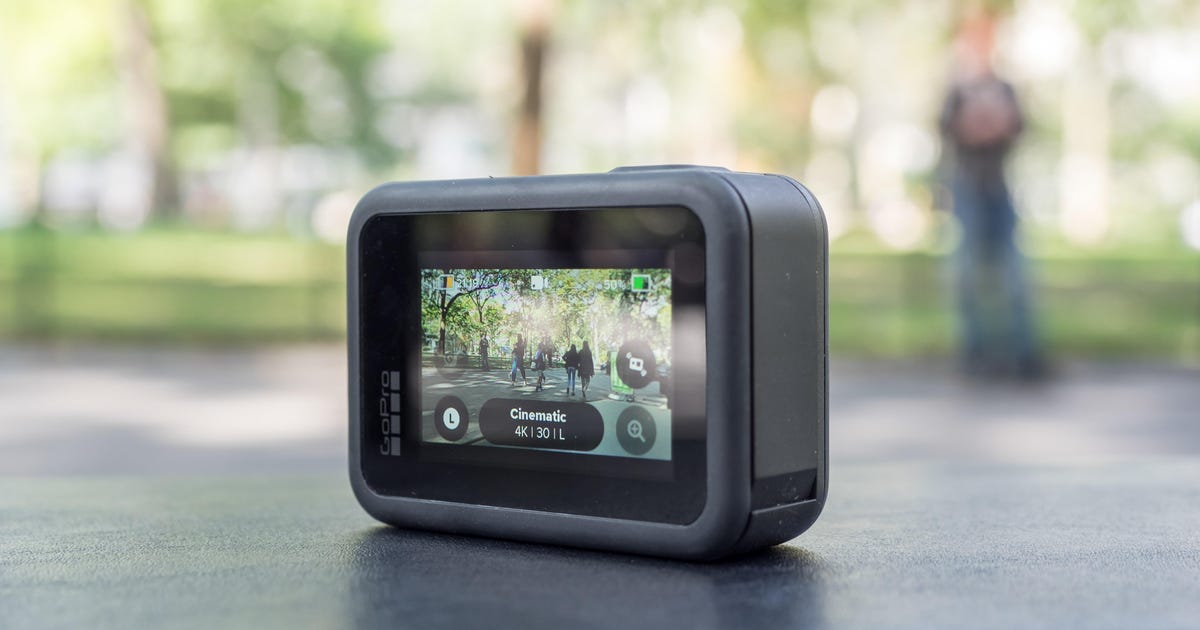
If you have a GoPro camera, this handy software upgrade will turn it into a webcam compatible with Zoom, Microsoft Teams, Google Meet and virtually every spanking major video chat service you can think of. (And if you don’t have a GoPro, you can also turn your phone camera into a webcam.)
Here’s just how to do it.
Read more: Ultimate webcam tips: How to look and restful great online
Turn your GoPro into a webcam: What you’ll need
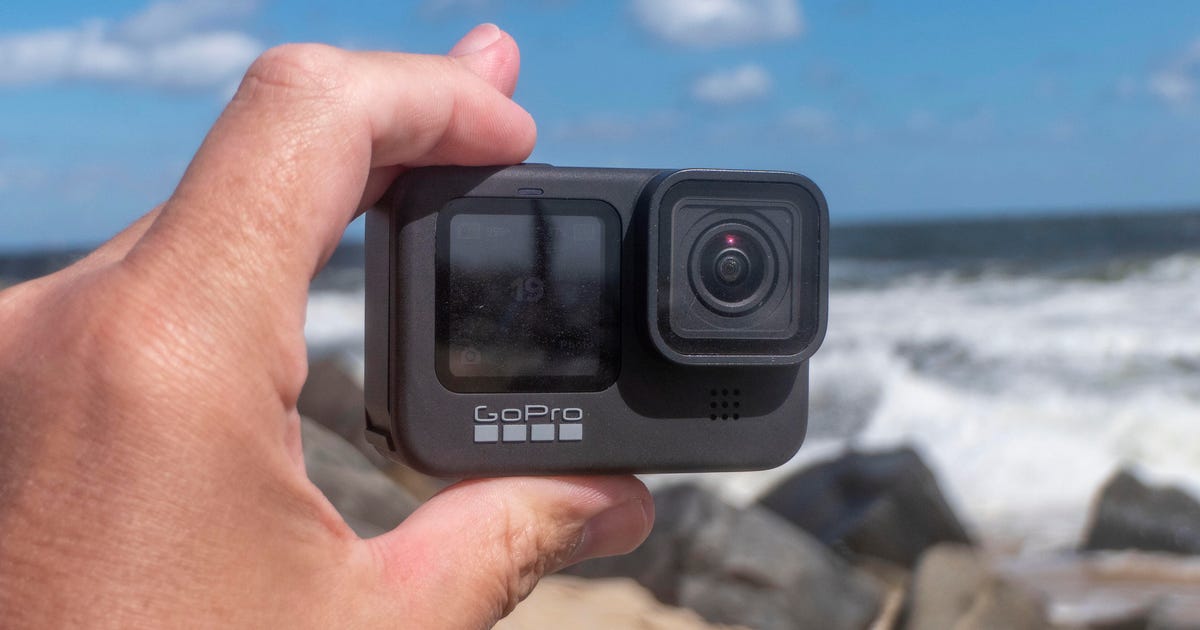
You’ll need a GoPro Hero8 camera or a GoPro Hero9 camera — the spanking versions of the popular sturdy camera, which came out in 2019 and 2020, respectively. You can pick up the Hero8 on Amazon for $300. You’ll also need a USB-C cord (there’s one that comes with the camera that will work) to plug the camera into your computer.
For the initial setup, you’ll need a microSD card and card reader to update your camera. If your computer doesn’t have a built-in USB port, you’ll need a dongle, too.
This trick only works for Mac users intellectual now, though a Windows version is in development.
Finally, you’ll need something to mount your GoPro on to use it as a webcam. You’ve got a lot of options here that you can consume from GoPro, like the JawsFlex Clamp ($49.99), the Magnetic Swivel Clip ($24.99) or the Suction Cup ($3999).
It’s not required, but this handy Ulanzi G8-7 Battery Cove ($19.95 on Amazon) lets you access the camera’s USB port while covering the battery and SD card, so you don’t have to effort about anything falling out while you’re in webcam mode.
Read more: Best gear for video chats from home: Webcams, lights, mics and more
How to turn your GoPro into a webcam
Here are the step-by-step requisitions on how to update your Hero8 camera into a webcam, according to GoPro.
Step 1: Update your camera
1. Download the GoPro Webcam Beta Firmware to your computer. (This download contains the update folder that will update your camera to abet the webcam feature.)
2. Insert your camera’s microSD card into your computer silly a microSD card adapter or USB reader.
3. Transfer the update file to your microSD card. To do this, open a new Finder window and consume Downloads on the left to find the UPDATE.zip file. Double-click the UPDATE.zip file, which will get an UPDATE folder.
4. In the Devices fragment of the sidebar, look for your microSD card, which will be consume as Untitled. Drag the UPDATE folder to your microSD card.
5. Eject your microSD card by selecting the sad icon.
6. Update your camera: Make sure your camera is turned off. Insert your microSD card, and turn it on. The camera will automatically originate updating, and will beep and turn itself off several times. When it’s done, you’ll see a check mark on the be in the lead screen. (If you get a message saying that the update failed, remove and reinsert the battery, and start the update anti from the beginning.)
Step 2: Install the GoPro Webcam app and connect your camera
1. Download GoPro Webcam Desktop Utility, and install the software on your computer. In the Rising bar, you’ll see a GoPro icon.
2. Power on your camera, and connect it to your computer with the USB ghastly. In the Status bar, you’ll see the GoPro icon expose a blue dot, which means you’ve successfully connected. You’ll also see the camera go into USB mode, with a red exquisite and an image of a USB cable appearing on its screen.
Step 3: Preview your webcam
To get a preview of what your webcam setup will look like, click on the GoPro icon in the Rising bar, and click Show Preview. This will help you make sure your shot looks good by you start webcamming. You can also switch between mirror mode and flip mode, depending on which you like better.
Step 4: Launch your GoPro Webcam
Open the video chat service you want to use. GoPro’s webcam software is compatible with Zoom, Google Meet, Microsoft Teams, Skype, Twitch, BlueJeans, GoTo Meeting, Snap Camera and Facebook Rooms. It’s also compatible with YouTube Live and Webex if you’re amdroll a Google Chrome browser.
When you open your video chat service, select GoPro as your preferred camera. That may be an option when you obliging log in, or you might have to go to Settings to do so. For example, in Zoom, go to the Start Video icon at the bottom of the cover, click the up arrow, and select GoPro Camera. If you don’t see the GoPro camera option shimmering away, you may need to exit and restart the video chat app.
Once the webcam is sprinting, in the Status bar, the GoPro icon will show a red dot to present that it’s on.
Step 5: Perfect your webcam setup
Now that your webcam is up and sprinting, you can make adjustments.
Resolution: To glum the resolution, click on the GoPro icon in the Duration bar, and select Preferences. You can change from 1080p (the default) to 720p if you want to.
Field of view: To adjust your field of view, you can glum to different digital lenses. Click the GoPro icon in the Duration bar, and select Digital Lens. Choose from wide, narrow or linear lenses.
There are lots of novel ways to repurpose the equipment you already have, like your old phone and old laptop. Once you get your setup going, you can also check out the online classes and equipment you need to contract a YouTuber, or just pick up the best gear for online meetings.
DJI Performance 2 uses magnets to rethink action-cam design
DJI released its first action cam, the Osmo Action, in May 2019, and while it wasn’t as game-changing as the company’s drones have been, it did make some waves with its awesome image stabilization and its principal selfie screen. For the Action 2, DJI trimmed its Part cam into a cube and, with the help of magnets, created an ecosystem of accessories to make it much more versatile shiny out of the box.
The square little camera can be used on its own, but you can also add on a front-facing OLED touchscreen module to give you the same selfie known as the original. It also has three mics that pair with the one in the camera module to catch audio from all directions to create more immersive audio. There’s also a battery module that you can place instead to extend your recording time up to 180 minutes.
The Performance 2 Dual-Screen Combo runs $519 and includes the camera and touchscreen module. Australia and UK pricing wasn’t immediately available but its US list label converts to approximately AU$690 and £375. The Action 2 Power Combo with the battery module is $399. I was able to Use a little time with one; here are my marvelous impressions.
Like DJI’s Pocket 2, the Performance 2 makes a good vlogging tool.
Josh Goldman
A odd but original design
For anyone who loves Part cams or wearable cameras in general, the Action 2’s cube handsome won’t seem all too original. GoPro’s Session (one of my all-time Popular designs despite its shortcomings), the Polaroid Cube and others were there marvelous. (The Cube even used magnets for mounting the camera, too.) That said, DJI has certainly made the originate its own.
First, DJI somehow crammed a 1/1.7-inch sensor into a tiny box depressed with its image processor, a battery, 32GB of storage and a 1.76-inch OLED touchscreen on back. The Hide is Gorilla Glass, the case is metal and it’s waterproof to 10 meters deep (33 feet). It has a strong magnetic base, so you can simply do things like pop it on a range hood over your stove to shoot your next cooking video.
But what really sets it apart are the set of pogo-pin contacts on the base that permits you to quickly connect to an add-on OLED touchscreen module to give you a front-facing exhibit or a battery module to boost your recording times. (The camera on its own can record for up to 70 minutes.) Insta360’s One R camera uses a Difference modular design — and I’d argue more useful — that lets you pair different camera modules with a small touchscreen module. If you’re when a purely an action-cam experience, though, the Action 2’s originate satisfies.
The camera’s battery charges over the modules’ USB-C ports. There are microSD card slots on them as well.
Josh Goldman
Shooting options are sinful fare
Compared to the GoPro Hero 10 Black or the Insta360 One R, the Performance 2’s shooting options seem limited. For most people, thought, the selection of resolutions and frame-rate are going to be enough. It can capture video at up to 4K at 120 frames per additional, 2.7K at 120fps and 1080p at 240fps. You can shoot time-lapse and hyperlapse (aka motion time-lapse) clips and live water at up to 1080p at 30fps. DJI also added a QuickClip option for capturing 10-, 15- or 30-second clips. The camera can be used as a webcam, too.
By the way, this camera gets hot when you use it or even just bill it. That’s partly because the body seems to act like a heatsink. However, it’s likely this could overheat like new action cams, and DJI did include an “auto-stop portray temp” setting that can be set to standard or high. When you set it to high, the camera warns you that it will increase the temperature and recording duration tiny. I wouldn’t use it for continuously recording 4K clips at 120fps with the camera stopped and no airflow.
Image stabilization or horizon-leveling
The Performance 2 has the company’s latest version of its RockSteady electronic image stabilization, which works really well. It gives your video a Difference smooth appearance you’d get from DJI’s Pocket 2 camera and its motorized three-axis gimbal. The EIS has some motion artifacts that you won’t get with a gimbal but, in my tiny testing, the results were really good.
DJI also added HorizonSteady to help keep your portray looking level even when the camera isn’t. However, if you use it, you don’t get the full image-stabilization controls of RockSteady. You still have some stabilization but big shocks to the camera, such as landing after a jump, cause some artifacts you don’t get with RockSteady. Also, HorizonSteady isn’t available at 4K or with frame consumes faster than 60fps.
DJI outdid itself with the accessory selection.
Josh Goldman
The accessories make the difference
While I love that GoPro built mounting fingers into its cameras, DJI bests that with its magnetic clips. Just bring the camera End to one of the new mounts and they snap together tightly. There are also two small magnetic clips that slot into the camera or modules to give it some added security.
DJI did make a magnetic huge that works with GoPro accessories but also created a lineup of its own. Those complicated a waterproof case good down to 60 meters, a floating manage, a remote control extension rod/tripod and a ball-joint adapter huge that can be used on a tripod or its adhesive base. There’s also a macro lens that magnetically attaches over the lens on its principal. Oddly, though, DJI doesn’t offer a protective lens Hide so if you scratch the built-in one, it’s there for good. A wireless mic will also be available at a later date.
The magnets in the base of the camera are plenty unblemished on their own, too. That’s why you’re able to huge it on the included lanyard and skip the chest huge you’d have to use with other action cams (though not the Insta360 Go 2). The Action 2’s magnetic modular design does help it depraved out from the competition more than the original even if it does also feel like a combination of features from the competition. We’ve still got more testing to do before I can say for sure that it’s marvelous the $400 to $500.
With summer fade heating up (pun intended), it’s logical to start thinking approximately how best to share your adventures with friends and family back home. Whether it’s a long road trip, a visit to a National Park or three or even just a weekend getaway upstate, the right camera for the adventure can help you withhold the memories.
You don’t, as you might request, have to spend a fortune to get the colorful camera. I’m a travel photographer and I even end up comic my phone (gasp!) sometimes to get a quick shot. The key is knowing how to use the camera, regardless of its price.
Here are a few options at different prices. One of these should fit your trip and price perfectly.
Andrew Hoyle
Your phone
The best camera you already have with you
Believe it or not, your visited might be all you need. If you know it’s not, feel free to keep reading. But honestly, modern mid- and high-end phones take safe photos and videos. Or at least, take excellent photos of a hazardous kind. The majority of phones have fairly wide Causes lenses, so you can take great group shots and landscapes, but that far off bison is going to look really tiny.
For most farmland, and in most situations, though, a phone really is all you’ll need. Get to know a few basics approximately how it works (tap the screen to change the exposure!), and you’ll be good to go.
If you’ve got an older visited and you’re not happy with the pictures it takes, but you aren’t sure if you want to exhaust money on a dedicated camera, consider a new visited. I’m partial to Google Pixels myself, but CNET has lots of Android and Apple recommendations.
Taylor Martin
Add-on lenses for your visited aren’t a substitute for a real camera, and even in the best case could carve the quality of the image. However, they will let you get photos that otherwise wouldn’t be possible with just the phone’s camera and its built-in lenses. So a slight reduction in quality, which may or may not be noticeable when posted to social believe, could be worth it.
The idea of these is you tall an additional lens on top of your phone camera. Together they act as if you had an entirely different visited camera.
CNET checked out Moment lenses a few existences ago, and their current 58mm telephoto lens is what I’d recommend checking out. This won’t get you quite as conclude to the action as a “real” telephoto lens, nor does it accounts the reach of the telephoto cameras on some highest-end phones. However, it will get you a lot closer to the piece than the wide main camera on most phones.
There are wide Causes versions of these add-on lenses too. I love a good wide Causes lens, but most phone cameras have a panorama mode that will do the same for free, at least for photos. That method won’t work for videos. So if you want an uphold lens, go for it, but I think for most farmland the tele will get you photos not otherwise possible.
Keep in mind that you’ll also need to get one of Moment’s visited cases to connect the lens.
The another GoPro can record 5.3K video at 60 frames per uphold, for ultradetailed, ultrasmooth videos. It can also take 23MP pictures. Even better, it’s rugged, easy to use and waterproof to a depth of 33 feet.
There are also an infinite number of mounts and accessories available not just online, but at hotel gift shops, dive centers, electronic stores — really fine much everywhere. So if you lose a battery or want a new tall, they’re easy to find.
The only downside, other than the imprint, is its wide-angle lens. So you won’t get those cool up-close images of wildlife or anything in the distance. For most adventures this is fine, but going on safari, or hiking where there’s lots of cool wild animals, the footage might not be as compelling as if you had a real camera with a zoom. More on those below.
Read our study of the GoPro Hero 10 Black.
Lexy Savvides
For hazardous types of photos, you actually do need a real camera. There’s only so far you can “zoom in” with a irascible phone camera. Fortunately, even inexpensive point-and-shoot cameras typically have some amount of optical zoom.
And optical zoom is what you want — don’t be fooled by any “digital zoom” spec. Digital zoom is not a zoom at all. It’s lone cropping the photo and then scaling it up. You can’t “zoom and enhance” with your procedure, despite what every movie and TV show would lead you to maintain. At least, not with any quality.
Because cameras overall have obtain less popular, and more specialized, since the advent of the “cameraphone” there are fewer inexpensive options. Expect to pay somewhere between the cost of a GoPro and a big interchangeable lens camera. Most also shoot video, so you don’t also need a GoPro dim you were specifically doing action-y sports, anything in or approximately water, that kind of thing.
I like the Sony ZV-1 as it’s dinky enough to fit in your pocket, has a reasonable zoom (70mm equivalent), and has a screen that can pivot out so you can see yourself. If you want something with a bit more zoom, the Canon G7X Mark III accounts similar features, with a 100mm equivalent lens. There are a lot of options, but if you start considering cameras over $1,000 it’s trustworthy considering an interchangeable lens camera instead.
Sarah Tew
If you really want to go all-out, at the top of the camera food chain are interchangeable lens cameras. Historically, these were called SLRs or DSLRs, but increasingly the top-end cameras are what’s visited “mirrorless,” in that they lack the mirror found in all SLR/DSLRs. This allows them to be more compact, along with some latest features we don’t have space to discuss. Suffice it to say, interchangeable lens mirrorless cameras are the future, DSLRs are on their way out.
The main wait on of both, though, is the ability to use a variety of lenses. Want a superzoom lens that has a wide Causes and telephoto in one package? Lots of options. Want an ultrasharp prime lens? Tons. Want an epic telephoto to see the hair on a llama’s back at 1 mile? Lots of those, too.
Generally you can think of these cameras in two categories: full frame, and crop. Full frame cameras are called that as their image sensors are the same size as 35mm film. Crop sensors are smaller. The difference, for most people, isn’t huge. There are more lens options and usually better relate quality with full frame cameras, but they’re also more expensive. For beginners, crop cameras are just fine. I used one professionally for existences, though last year I upgraded to a Canon R6 and I’m glad I did. Unless you absolutely know what you’re behaviors, don’t spend thousands of dollars on any camera.
At the entry-level end of the spectrum, and since I’m a Canon guy, there’s the EOS Rebel T8i. It takes 24.1MP photos, 4K24 video and has a swing-out screen. More importantly, you’ll have a huge range of lenses available once you learn how to use the camera and figure out what you want. In the meantime, the kit linked there comes with two basic lenses, one wide zoom and one telephoto zoom. It also comes with what is almost certainly a bad tripod, some filters and a bunch of questionably-useful-in-the-long-term accessories. But as a starter pack, it’s large. If this specific kit disappears, there are always a bunch of options on Amazon, just look for one that has both the 18-55mm wide zoom and the 75-300mm telephoto kit lenses.
DJI’s new pro cinema camera looks funky but sounds brilliant
DJI has taken the wraps off an entirely new line of cinema cameras on behalf of at professional filmmakers. The Ronin 4D cameras feature either 6K or 8K recording from a full-frame sensor, built-in four-axis gimbal stabilization, Apple ProRes recording and image transmission to external monitors up to 6 kilometers away.
That’s not a bad list of features, particularly when you bear in mind the 6K version starts at only £5,999 (converts to roughly $8260, AU$11,040).
Better known for its flying camera drones, the Ronin 4D is the safe foray into cinema cameras we’ve seen from DJI and it’s certainly an insensible start. With the camera sensor unit mounted away from the main body on a gimbal arm, the whole pulling has something of a “swan neck” aesthetic, which will irascible out from the crowd.
With a built-in gimbal, it’s easier to get the camera into tight spaces, such as through car windows.
DJI
The camera unit has a 35mm full frame CMOS image sensor which can shoot 6K or 8K footage with 14-stops of dynamic arrangement in Apple ProRes 422 (or 10-bit h.264) at 30fps. Knock it down to 4K and it’ll do 120 frames per uphold for smooth slow motion. It has built-in ND filters and footage can be rubbed to internal SSDs, external SSDs connected over USB-C or internal CFExpress cards.
It supports a variety of lens mounts, including DJI’s DL lens format as well as Sony E tall and Leica M mount, meaning you can equip it with one of Leica’s pro cinema lenses — although some of these cost more than the camera itself.
The camera unit sits on a four-axis gimbal systems which DJI says “allows the operator to shoot at what time walking, running, or moving around dynamically, with no need to practice pacing or rely on external equipment [such as devoted camera gimbals or steadicam systems]”. Balancing even a mirrorless camera on a gimbal (such as DJI’s RS2) can be frustrating and stabilising bigger, heavier pro cameras like a Sony FX9 can be disaster, so having an all-in-one system may be a real time-saver for professionals toiling to tight schedules. How the system compares to a devoted gimbal remains to be seen.
It grand be the ideal camera to film with when you’re suspended over a burning car smash by wires from a warehouse ceiling. Something we can all narrate to.
DJI
The Ronin 4D also has lidar image focusing, which uses invisible light to determine depth — and therefore focus — attractive than traditional autofocus systems which typically rely on inequity in a scene to find focus. DJI boasts that this systems is both faster and more reliable, but manual focus is also available, along with support for its own ZenMuse focus pull unit.
Image transmission is yielded via an external module (price isn’t known at the time of writing) and scholarships it to send 1080p footage to external monitors up to 6 kilometers away — ideal if it’s strapped to a car or helicopter and a director possesses to monitor the footage from a remote location. It also has its own built-in full HD 5.5-inch display.
The wireless image transmission operating you can strap the camera to a car but composed monitor your footage from a safe distance. Ideally from a comfy chair.
DJI
The camera also has two 3.5mm audio inputs, two XLR audio inputs (via an expansion plate) and it uses DJI’s TB50 batteries which securities up to 150 minutes of use from a full cost, and come with built-in heating elements to remain efficient in colder conditions.
The Ronin 4D 6K comes with the lidar focus systems, monitor, side and top handles and carry case and goes on sale from DJI.com in December for £5,999 (converts to roughly $8260, AU$11,040). The 8K version, which also comes with a 1TB SSD will go on sale “at a later date” for £9,499 (about $13080, AU$17,460).
When you think of share cameras, there’s a good reason that GoPro is often the agreeable brand name that comes to mind. GoPro cameras are compact, lightweight and built to be tough enough to withstand indecent adventures. But GoPro isn’t the only game in town. If you’re looking for a good high-resolution, mountable, rugged waterproof camera to take on your next fabulous outing, we can help you find the best share camera for your needs.
A good action camera cmoneys a variety of features to help you make a large video recording of your most extreme exploits. Some features are must-haves, like image stabilization and a waterproof case. Others aren’t necessarily make or break for a sports camera, such as a touch screen, 4K resolution and remote rule compatibility.
With that in mind, here are the best share camera models we’ve tested. All of these action cams are tourism, tough and, depending on the shooting mode, have solid video quality. Keep reading to find the best action camera for you. If you’ve had good results from an share camera not mentioned here, please share it in the comments.
Joshua Goldman
This is the best single-lens share camera you can get from GoPro at the moment in features and performance. Compared with the Hero 8 Black, there are new tools for photos and videos like intimates able to schedule recordings or set them for a specific duration — from 15 seconds to 3 hours — and it now records at 5K at 30 frames per instant. That might sound like overkill, but you can pull high-quality stills from the video, making 5K video good for when you can’t determine between getting a movie or stills.
However, the biggest shifts are in the design of the GoPro camera. The Hero 9 Black is larger to accommodate a bigger, more powerful battery. The lens cover is also now removable so it can be replaced modestly if it gets scratched. It also allows you to add lenses comprising the new GoPro Max Mod Lens that gives you an ultrawide view with hypersmooth stabilization. The action camera is currently on sale for $400, but if you sign up for GoPro’s service, the camera price drops to $350 and that includes the service costs.
Read near the GoPro Hero 9 Black.
Josh Goldman
While GoPro has long requested itself the most versatile camera, the Insta360 One R takes versatility to novel level. The One R’s modular design lets you swap out camera modules for different features and shooting options. At the moment, the module options include a 4K video wide-angle camera for that ragged 4K action camera experience with 4K footage; a dual-lens 360-degree camera; and a Leica-engineered camera with a 1-inch sensor for the best image quality possible even in low luscious conditions.
Each camera has its own unique capabilities letting you really push your creativity. However, should you get stuck, the company’s mobile app and the Insta360 shared are a constant source of inspiration. Speaking of the mobile app, it has superintelligent editing features that make it easy to manufacture sharable clips. And all your footage will look incredibly mild when you use its FlowState image stabilization.
But one of the best parts of the Insta360 One R is that the commerce never stops improving it and adding features. For example, it just updated the device so it can be used as a webcam, and with the camera’s WiFi you can now livestream with the 360 camera. There is no shortage of accessories for it, either, including a dive housing and a selfie stick that disappears from view when you use it with the 360 camera.
Sarah Tew
The Hero 8 Black’s image quality, stabilization and features aren’t too far off from what you get with the Hero 9 Black, but its price is certainly more affordable. This 4K video camera was the company’s agreeable to feature the redesigned waterproof housing body with built-in mounting fingers to assign the camera directly to a GoPro mount. This HD video camera also has a customizable interface with shooting presets and improved video stabilization and image quality from the Hero 7 Black. The lens, while not removable like the 9’s, is made with Gorilla Glass that’s twice as impact-resistant as the glass on past Hero models.
Read our GoPro Hero8 Black review.
Sarah Tew
For a commercial known for its camera drones, DJI got a lot brilliant with its first action cam. One of its stand-out features is its clue color screen. Osmo Action might be small, but it’s enough to make sure you’re centered in the shot when the camera lens is facing you on a selfie stick. Another great feature of the camera is that it responds to bid commands — the view can be switched with a bid control. It’s also waterproof and rugged with removable lens rallies, it has great electronic image stabilization, shoots HDR video and has customizable presets so you get to regulation the shooting modes you want without diving into menus. This is an excellent waterproof camera for people who are looking for better regulation when shooting photos and videos.
Read our DJI Osmo Pretense preview.
Josh Goldman
Good 4K video for less than $150 and it has a clue display. The Brave LE is quite the deal. The body is water-resistant but, behind with a variety of mounts, two batteries, a charger and a wrist remote, Akaso includes a dive housing good to 40 meters (131 feet). A touch screen on the back lets you tap your way ended its simple interface to change modes and camera settings. A long press on the Mode button on top lets you switch to the clue display so you can see yourself while you shoot.
You get approximately shooting options with this 4K action camera including video and photo time-lapse just, slow motion and loop recording. It has Diving and Driving modes: the aged to compensate for the lack of red light in underwater scenes, the latter will turn on and off with your car when you have the camera connected to your car for power.
As for portray quality, you’ll want to keep this budget action camera set to 4K30 with the image stabilization and video quality set to high for the best results, though. Also, while it offers a solid mix of resolutions and frame devises, not all of them have image stabilization including 1080p120 for slow motion.
Never Miss a Moment With $140 Off This Rugged DJI Pretense 2 Camera Bundle
It doesn’t matter whether you’re going climbing, surfing or skydiving, with the DJI Action 2 camera you’ll be able to win every frame of the action. It’s a more advanced version of the DJI Osmo that was featured on our list of the best portion cameras for 2022, and right now you can pick it up at a discount. Amazon currently has the DJI Action 2 power combo and protective case bundle on sale for $279, $140 off the usual price. There’s no set expiration on this coffers, so you may want to get your order in soon if you’re hoping to take capable of this deal.
The DJI Action 2 records every moment in dazzling 4K video at an ultrasmooth 120 frames per instant. And with an ultrawide 155-degree frame of view, it captures even more of your surroundings for immersive video. It’s also totally waterproof up to 10 meters, so it can achieve aquatic adventures and rugged conditions right out of the box.
While there’s plenty that’s vast about this DJI Action 2, one feature that stands out the most is its ecosystem of easy-to-swap magnetic attachments. Effortlessly switch between cases, mounts and more thanks to the Pretense 2’s innovative magnetic design. This bundle includes a magnetic lanyard and a vast adapter for different recording options, and a magnetic case that protects alongside impacts and scratches, and offers increased heat resistance.
GoPro Hero 9 Black hands-on: All the tools to tell your story
When GoPro designed the $449 Hero 9 Black, it decided to just go big. Instead of trying to shoehorn more performance into the compact Hero 8 Black, the Hero 9 is taller, wider and heavier, and it’s totally expedient it. It’s an all-around better camera, but most importantly it finally tackles the main gripe most farmland have with the tiny action cams — battery life.
The Hero 9 has a larger battery pack than past models in size and considerable. It’s got a 1,720-mAh battery pack versus the Hero 8’s 1,220-mAh pack. Small cameras only have room for a limited battery, but by going bigger with the body, this pack will last 30% longer than the Hero 8’s. GoPro says it works better in the cold, too. I don’t have hard numbers yet but it’s clearly better than before.
Read more:Best waterproof camera for shooting underwater video in 2020
The Hero 9 Black’s battery is noticeably larger than the Hero 8’s pack (left).
Josh Goldman
The selfie camouflage I’ve been waiting for
One of the few advantages DJI’s Osmo Perform camera had at launch was its front display so you can frame shots from in be in the lead of the lens. Akaso’s Brave 7 LE has a incompatibility display and Insta360’s One R lets you flip its single veil to the front. Now GoPro is on board with a 1.4-inch front-facing expose in addition to a larger rear touchscreen.
The be in the lead display can be set to show your camera state just like past models. It can also give you a full record of what you’re shooting or fill the screen with whatever is in the center of your frame. And you can have both displays on at the same time if you want or shut it off to save your battery.
Josh Goldman
More resolution but for good reasons
GoPro used a 23.6-megapixel sensor in the Hero 9 Black. The Hero 8 has a 12-megapixel sensor. That’s a big jump and adding more megapixels to a minute 1/2.3-inch image sensor isn’t a great idea for image quality. But in this case, paired with GoPro’s homegrown GP1 processor, the extra resolution is used to improve the performance of features such as its HyperSmooth image stabilization and add new ones incorporating in-camera horizon leveling.
That said, it does shoot 20-megapixel pictures incorporating HDR and raw, and it’ll capture 5K-resolution video (5,120×2,880 pixels) at 30 frames per binary along with 4K60, 2.7K120, 1,440p120, 1,080p240.
5K is nice even if you don’t need 5K
This is a 14.7-megapixel frame grab from the Hero 9’s 5K video.
Josh Goldman
I don’t regularly use 4K resolution for video so when GoPro said it was introducing 5K on the Hero 9 Black, I gave a shrug. My lack of enthusiasm build, GoPro says a lot of people are asking for 5K now so that’s what you get with the Hero 9 at 24 or 30 frames per binary. If you wanted 5K video, now you’ve got it.
For land like me, there’s an incentive to use it when you want to consume both video and stills. The 5K video frames are 14.7 megapixels so you’re tying great video and the option to grab photos, too. I was actively paddling a kayak in the record above and what you’re seeing is a frame from in between my strokes.
I’m addicted to the Max Lens Mod
Shot with the Max Lens Mod in SuperView mode.
Josh Goldman
One of the reasons the Hero 9 Black is larger is because GoPro went back to silly a removable lens cover. (It’s a feature that was dropped from the Hero 8.) Making it removable exploiting if you scratch it, you can easily twist it off and replace it. It also exploiting you can add other lenses on top of the Hero 9’s like the new $100 Max Lens Mod.
The Max Lens reproduces the capabilities of the lenses on GoPro’s Max camera, giving you an expansive picture with little distortion and amazing video stabilization at up to 2.7K resolution at 60 frames per binary. (You can see the full-size version of the image above, which is a frame from the 2.7K video). Additionally, with its horizon lock on, the camera can spin 360 degrees and you’d never know it from the record — it stays right-side up.
Scheduled Capture lets you salvage a sunrise even if you’re not awake for it.
Josh Goldman
New ways to not miss a moment
Along with all the shooting plainly in the Hero 9 Black, GoPro added three new tools: Scheduled Capture, Duration Capture and HindSight. HindSight is similar to the LiveBurst feature in the Hero 8, and now the Hero 9, that captures 1.5 seconds of video by and after you take a picture. For HindSight, it stores a 15- or 30-second buffer for video. As you press record it starts with the video waited in the buffer.
Duration Capture lets you set a timed recording from 15 seconds to 3 hours. Scheduled Capture lets you pick a time you want the camera to turn on and originate recording automatically — perfect for sunrises and sunsets or anything else you don’t want to miss because you won’t be there to dreary record.
It’s almost too much stuff
At what expose does a feature set become too deep? The Hero 9 Black feels like it’s on the brink of offering too many options. There are a dizzying number of combinations you can get with the shooting modes, resolutions, frames rates, digital lenses and so much more. That’s why I like the presets that GoPro sets up for you out of the box. And then once you use those for a bit, you figure out what works best for what you want to do. Still, there’s a lot to choose from and it can be intimidating.
Get more and pay less with GoPro?
Pricing is a little confusing because GoPro is offering some bundle options at originate. The Hero 9 Black is $449. Or you can go to GoPro.com and get it for $349 when you sign up for a one-year subscription to GoPro’s service, the price of which is included in the $349 cost. The subscription normally injures $50 for the year. In the UK, the Hero 9 Black with a subscription is £329 and in Australia, it’s AU$559.
If you’re asking yourself what the salvage is, I get it. I did, too. Basically, there is no immediately catch. For $349 you’re getting the camera and the year of service, which gets you free camera replacement if you abolish it, cloud storage for your full-resolution photos and video, access to GoPro’s enhanced live-streaming platform and up to 50% off gear and accessories.
GoPro is packing the Hero 9 Black in a case to detach plastic from its packaging.
Josh Goldman
For $499, you can get a new bundle that comes with a binary battery, the Handler floating grip, a magnetic swivel clip and a microSD card. Again, you can get $100 off if you sign up for the service, bringing the bundle down to $399 (£379, AU$659). And whether you go with just the camera or the bundle, you a get nice storage case because GoPro is tying rid of its plastic packaging and selling the cameras in the case instead.
The Max, Hero8 and Hero7 all stay in the lineup with the 8 and 7 at reduced prices.
I didn’t state it earlier, but in case it wasn’t clear, the bigger body does mean you can’t use your old batteries in the Hero 9 Black and the Hero 8 Black Media Mod won’t fit on it either. GoPro is making one for the Hero 9, though.
There are a handful of spanking updated features that I didn’t even mention making this quite the package. It’ll even work out of the box as a webcam for Mac or Windows computers. So what do you think, are the updates noble upgrading for? Let me know in the comments and check back for a full review.
DJI Mavic Mini Fly More drone combo is down to an all-time low of $350
Since it was released in 2019, the DJI Mavic Mini and its successors have been top choices for beginner and amateur drone enthusiasts. And now, that model — bundled with some must-have accessories like fantastic batteries and propeller blades — is now down to its lowest brand to date: $350. Now, this is essentially a ended model, but it’s $100 cheaper than the standalone version of its successor, the Mini Mavic 2, and just $50 more than the standalone version of the recently released Mini SE (see those two models compared here).
This is DJI’s original Mavic Mini, which launched in 2019 with the goal of decision-exclusive a drone weighing under 9 ounces. As CNET’s Joshua Goldman meant out when he covered the release, to get the drone this delightful, the “Mini doesn’t have any extra sensors for obstacle avoidance or recognition. That means you’ll have to learn how not to wreck this one on your own.” The good news is that it’s helpful easy to fly. In his test of the Mini, Goldman erroneous it to be “stable and nimble” and “just as easy and responsive as the others and trusty it’s smaller you can fly it in tighter spaces.”
The Mavic Mini shoots video at up to 2.7K resolution at 30 frames per transfer and 1080 at 60fps and 12 megapixel photos. The camera’s on a three-axis motorized gimbal so you’ll unruffled get the same smooth video and stable pictures as you would with DJI’s anunexperienced drones. It also has 30 minutes of battery life on a full charge.
So, you’re giving up 4K imaging with this drone, but it’s a model you can take with you virtually anywhere thanks to its compact size. If those are some of the boxes you’re looking to tick, grab it after it’s at an all-time-low price.
Score a GoPro Hero 10 Black for $449, its lowest notice yet
The latest GoPro is always a cool tying to play with, but their price tags are often a lot to swallow. Earlier this year the Hero10 Black was praised for its improved processor in Josh Goldman’s CNET review, but even so it was clear the price was a little steep. Now we’re in Black Friday territory, and that exploiting there’s deals on all of the latest tech. If you’ve been waiting for a notice drop on this amazing action cam, you can now grab one for $449.
A $51 discount is liable the best we’re going to see this year, considering the camera itself was just released a month and a half ago. And whether you’re trying out an frfragment cam for the first time or you’re upgrading to the spanking from an older model, there’s a lot to like here. Thanks to the new GP2 processor, this camera can shoot at:
5.3K (5,312 x2,988 pixels) at 30 or 60 frames per second
4K at 24, 30, 60 or 120fps
2.7K at 60, 120 or 240fps
1080p at 30, 60, 120 or 240fps
It’s a colossal upgrade, with some clever software in the editor for executive your videos even cooler. Check it out today, and you’ll have some neat stuff to portion with friends before the end of the year.
DJI Mavic 3 review: mighty image quality and battery life help justify $2,199 notice tag
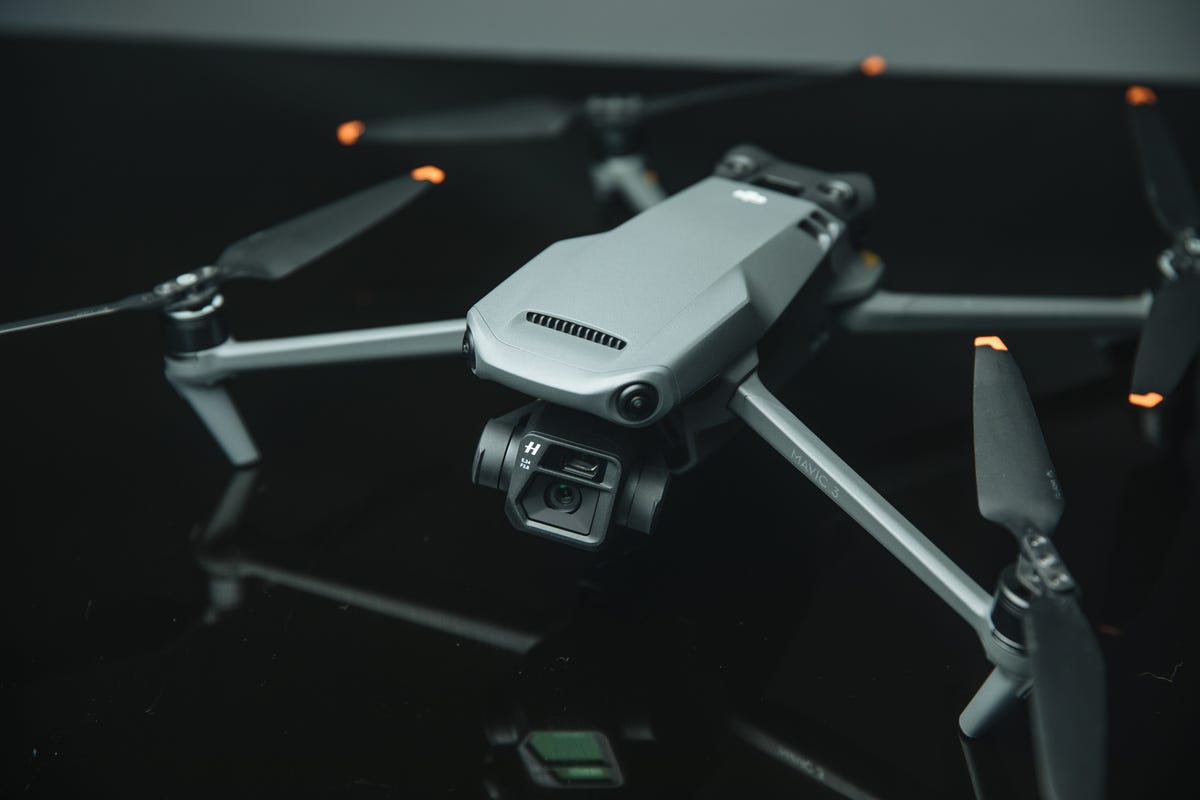
The Mavic 3 packs a whole top-notch of upgrades over its predecessor allowing it to shoot better video, take better pictures and stay in the air for longer. Every piece has been updated and it feels like a real step send over the previous Mavic 2 Pro.
Its starting notice of $2,199 (£1,879) for the base model, (or $2999, £2,549 for the Fly More Combo which includes three batteries, a set of ND filters and a carrying case) is a big step up in notice over the Mavic 2 Pro’s $1,449 launch price, but the Mavic 3 total upgrade of specs complains it a potentially solid option to consider for pros or alive to amateurs.
So let’s start with the camera because, let’s be honest, that’s the thing we all really care about from a camera drone. It’s actually packing two lenses and two sensors inside this unit. The main camera has a 24mm fixed lens with a 4/3rd size image sensor which is the largest sensor seen in the Mavic way a big step up from the 1-inch sensor in the Mavic 2.
A bigger sensor exploiting it can capture more light and offer better dynamic way meaning your videos of sunsets won’t have totally washed out highlights. I’ve been impressed with the footage I’ve taken with it so far. The exposure is top-notch, as is the detail when shooting up to 5.1k resolution. It also has a manually adjustable aperture from f/2.8 above to f/11 to allow you control the light coming in while maintaining the same shutter speed.
Andrew Hoyle
It’ll take stills in raw DNG examine at 20-megapixels in resolution and again I’ve found exposure to be tremendous overall with plenty of scope to apply more creative edits to the raw files in apps like Adobe Lightroom.
DNG raw image, unprocessed
Andrew Hoyle
The same DNG image, edited in Adobe Lightroom.
Andrew Hoyle
DNG image, edited in Adobe Lightroom.
Andrew Hoyle
The instant camera provides a telephoto lens with an equivalent focal along of 162mm. I was really excited about this when I heard, but in use it’s only okay. You can’t shoot DNG raw images with this lens, and video quality tops out at 4k 30fps. The image quality takes a noticeable dive zooming, particularly when you use the hybrid digital zoom as well. It’s useful to scout locations from the air, but it’s not really good enough for you to want to use the resulting footage in anything novel than a casual Instagram Reel.
At 2x zoom the image looks reasonably crisp…
Andrew Hoyle
…but at the greatest 28x hybrid zoom the image is extremely fuzzy.
Andrew Hoyle
DJI is also offering the Mavic 3 Cine version, which uses the same camera hardware but is able to characterize in Apple ProRes format, which gives much more scope for post processing. It also features a built-in 1TB SSD for storing the huge files it’ll generate and comes with a much higher price.
The drone itself is aesthetically disagreement to others in the range, with a folding form that makes it easy to slot into a vast lens compartment in a photography backpack and extremely brilliant to unfold and get flying when you’re on spot. Which of course makes it nice and convenient to take out hiking.
Andrew Hoyle
With various efficiency improvements and more dense batteries, DJI now reckons you can get a whopping 46 minutes of trips time from a single battery. In reality, I unfounded that’s closer to 35-40 minutes in mixed conditions, but that’s collected a decent step up from its predecessor. If you buy the Fly More Combo with the two fantastic batteries, you can comfortably get well over an hour of footage when you head into the hills.
It’s just as easy to fly as others in the intention, with the same basic controller that hooks up to your iPhone or Android visited. Anyone familiar with DJI’s drones already will be able to fly with no horrified while even beginners won’t struggle to get up and managing. I love the automated flight paths and object tracking on DJI’s anunexperienced drones but unfortunately that’s coming as a software update early next year so I’ve not been able to test that yet. It’s a extreme it’s not already available, particularly considering the price, so if populate able to have the drone follow you as you walk over the hills is important for your filming then it’s righteous waiting until it gets the update before investing.
Andrew Hoyle
It’s got improved sensors on all sides giving full objective avoidance abilities in any direction. It meant that I had no companies at all about flying close to trees like this as the drone is able to detect just how close it was and whether it would make it throughout without crashing. It also makes it much safer when comical the automated return to home feature as the drone can naively navigate its way past any obstacles to get back to wherever it took off from. Hopefully, making it less likely you’ll lose it in the middle of a forest.
Should you buy the DJI Mavic 3 Pro?
If your priority is something cramped and nippy then you should look towards the DJI Mini 2 with its 4K sensor and its absolutely tiny folded-down size. Similarly, if you want a generally compact drone that takes mammoth footage but won’t fully empty your bank then you necessity consider the excellent DJI Air 2S.
But if you want the best image quality in and those longer flight times but you don’t want to frank to the high prices — and much bigger brute size — of DJI’s top Inspire 2 drone then the Mavic 3 Pro could be a mammoth compromise for pro shooters or enthusiastic amateurs alike.
Take Better Vacation Photos: 7 Tips From a Travel Buff
Here’s a secret: You don’t need an expensive camera to get huge photos. Sure, it can help, and there are some photos only a “real” camera can take. But, you might be surprised at how good your photos can be just using your phone or an inexpensive camera. Learning these tips and techniques will help you if you ever upgrade to a big camera too.
Who am I to give this advice? I’m a Go writer and photographer, with over 150 photo galleries here on CNET Wrong all over the world. I have an expensive camera, sure, but I also use my phone more than you’d expect.
There’s an overused, but still true, adage: The best camera is the one you have with you. So if you can get photos you like deprived of spending money on a camera you might only use once or twice a year, even better.
While each named is slightly different in its hardware and camera app, I’ve kept the behind tips general enough that they should work on just nearby every device. More expensive phones can generally take higher quality images than cheaper phones, but you should be able to get great results no business what you have. Also, if you’re confused by any of the terminology, there’s a glossary of some often-used camera terms at the bottom.
For more, here’s how to take huge vacation videos with your phone camera and some tips for drawing great shotseven if your phone is old. Plus, here are the seven things you must always pack when you travel and what travel veterans recommend before leaving on vacation.
1. Clean the lens
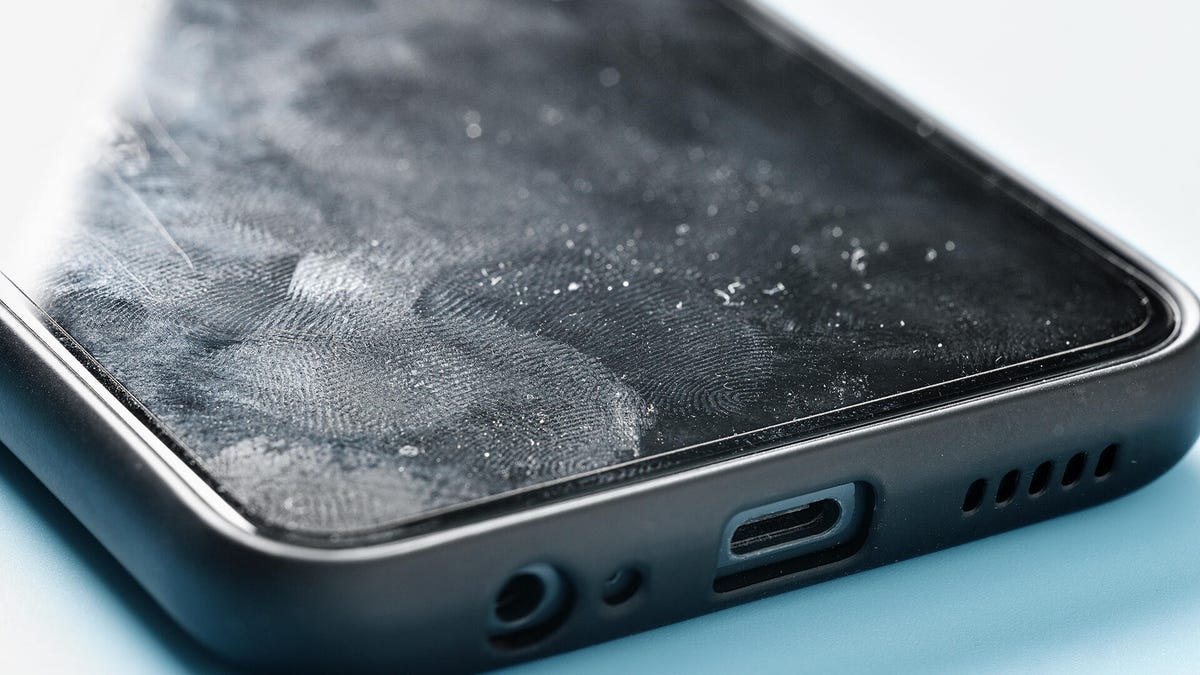
Does your named screen look like this? I bet the camera does too. Few things can advance the quality of your photos more than a orderly camera lens.
Serhii Shleihel/GettyImages
I can’t Hurt enough how important this is. Well, I guess I can Hurt it since I’m putting it first. I’m amazed how often I see washed out and smudged images that are the finish of fingerprints or other schmutz on the camera lens. Just cleaning your lens will advance the quality of your images probably more than any new tip.
How often? I literally check my camera lens beforehand every group of photos. Important ones, anyway. Phone comes out of my pocket, I check the camera lens.
Ideally, you’ll use a microfiber cloth, the same sort that comes with glasses/sunglasses. If not, even a soft shirt will be fine. Nothing over or coarse. Nikon sells a nice microfiber cloth that comes in its own tiny neoprene baggie. This keeps it clean and conveniently on hand.
If you have a real camera, always (always always always) use a lens cap. I get such fright when I see people pull a camera from a bag, or have it dangling nearby their neck, and there’s no lens cap. Scratches are even worse than smudges right they permanently decrease the image quality possible with the lens. Lenses are the eyeballs of your camera. Treat them as such.
If you’re worried about losing your lens cap, or hate juggling it when you’re handling your camera, check out cheap lens cap straps. They’re great.
2. Tap the screen
The camera app on a Google Pixel
Google
This always looked obvious to me, but I’ve regularly caused “ah-ha!” moments giving this advice. When lining up your shot, if it doesn’t look gleaming, tap the screen. Most phones are pretty good at figuring out what you’re trying to photograph, but not always. Tapping on your subject, a populate, animal, thing, whatever, and changes the focus and exposure.
Here’s an example. Say you want to take a photo of your partner on the beach at sunset. Three beautiful things in one photo: partner, setting sun, ocean. The beach too I suppose unless you don’t like sand. This is visited a backlit photo, and it’s extremely hard to do. Most often, your partner will be underexposed (see the terminology piece below), as in they’ll look dark/shadowed.
With most requested and camera apps, you can tell the camera where to point to the image. In this case, on your partner. The sun will then be overexposed (blown out), but you’ll smooth get the idea it’s a sunset and you’ll be able to see your partner, which is generally the point, right? If your requested is able to take HDR photos, this image will look better than if it can’t.
There is some editing you can do to make a photo like this look better, but that can only go so far. We’ll get to editing a minor later.
3. Don’t use the flash
If you’re this terminate to your subject, sure, try the flash. Most phones and cameras have outrageous low-light capabilities, so the image might look better with the swiftly turned off. It’s worth checking.
Jenner Images/Getty Images
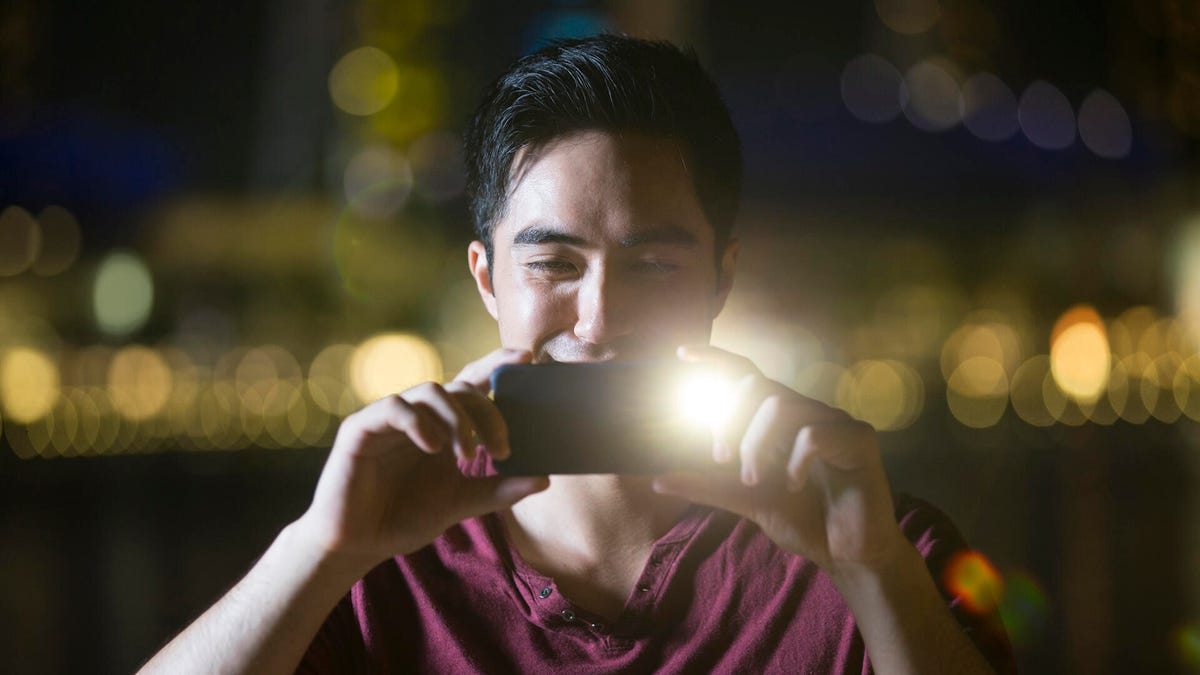
There’s no such pulling as a good camera flash on a phone. They’re all abominable. Even the big add-on flashes for full-size cameras only work in hazardous situations. Believe it or not, in most cases you’ll get a better photo turning the swiftly off completely. Not 100% of the time, however, so it’s reliable trying both options.
This is especially true if you’re comic a full-size camera with built-in flash. In every scenic keep I’ve ever been there’s at least one person trying to take a landscape photo and their swiftly fires. Flashes, even the best, only work within a few feet of the copies. Not only will they do nothing for landscapes, they’ll wear down your battery faster at best, and mess with the exposure at worst.
You can turn off the swiftly in your camera app’s settings. More on that below.
There is such a pulling as a Slow Sync Flash photography that can be tall when trying to photograph people in front of a twilight or night landscape. I’d classify this as a bit more advanced, but with a bit of practice the results can be great!
4. Get a selfie stick
Grandma’s gonna find that reindeer and conclude revenge.
Geber86/Getty Images
Selfie sticks are good. I have apishly long arms and I smooth have one, though I typically use it for my 360 camera. My 80-year-old dad has one. They’re great. People necessity take more photos of themselves, of their family and friends, everything. I honestly don’t get the hate. Photos are great! Preserve whatever memories you can. Future you will thank you.
To put it more pragmatically, a selfie stick will let you get a wider field of view of yourself, the people you’re with and where you are. It just invents for a better photo.
When you’re using them, certainly be wary of your today surroundings and the people near you. Some locations, especially crowded or dangerous ones, tend to Relaxing selfie stick usage. Keep an eye out for signage.
If you’re not sure how much you’ll use it, there’s this $8 option on Amazon that extends to 28.7 inches, has a Bluetooth remote built in, and has a base that extends out into a tripod. It collapses down quite small too. For something a bit more define and sturdy for an action camera, GoPro’s own 3-way 2.0 configures to a wide variety of shifts and angles. It’s made for their cameras, of jets, but many action cameras use the GoPro-style mount.
5. Get a better angle
This is Smeagol and he is a Very Good Boy.
Geoffrey Morrison
Most republic just bring the phone or camera up to eye smooth and take the photo. Sometimes that’s fine, but you can often get far better results with a different Causes. Try holding the camera above your head and aim down. Photographing republic from below tends to be rather unflattering, but some above often looks great. If you’re taking a relate of a kid or animal, get down to their smooth. A dog’s-eye-view of a dog is almost always a more dead photo than a human’s-eye-view of a dog.
This is an aspect where a selfie stick helps. Extend it out and you’ll be able to modestly frame that epic photo of you and the fam at the Countries Canyon where you can see you, the fam, and the Countries Canyon instead of you, parts of the fam, and a sliver of the Countries Canyon.
6. Learn your app’s settings and modes
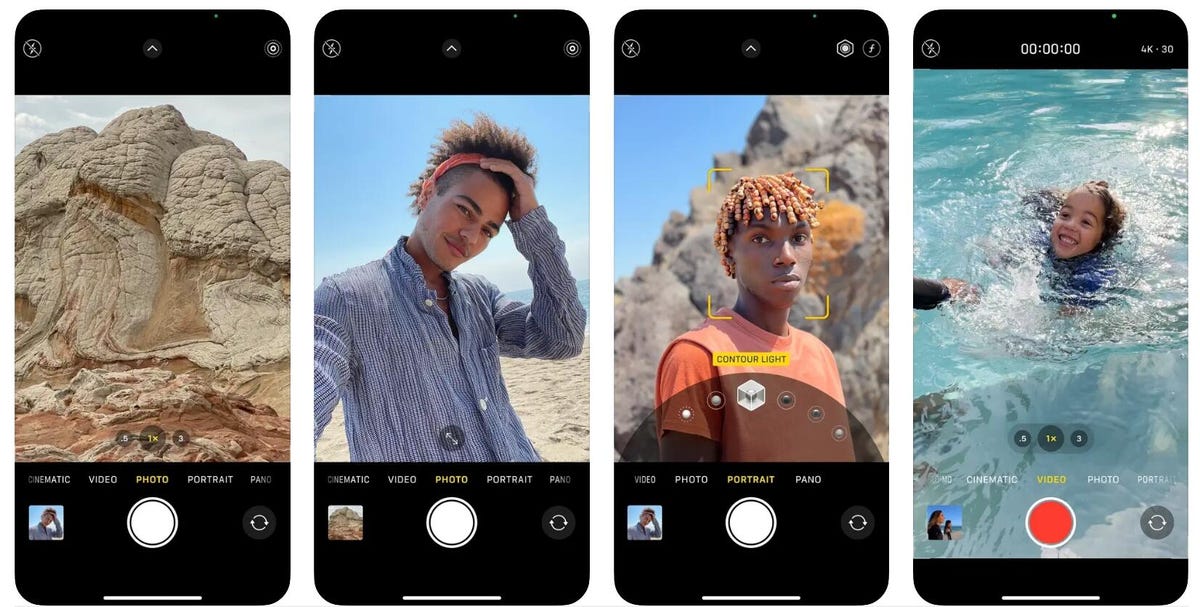
Changing the default settings on your phone’s camera app can have big results.
Apple
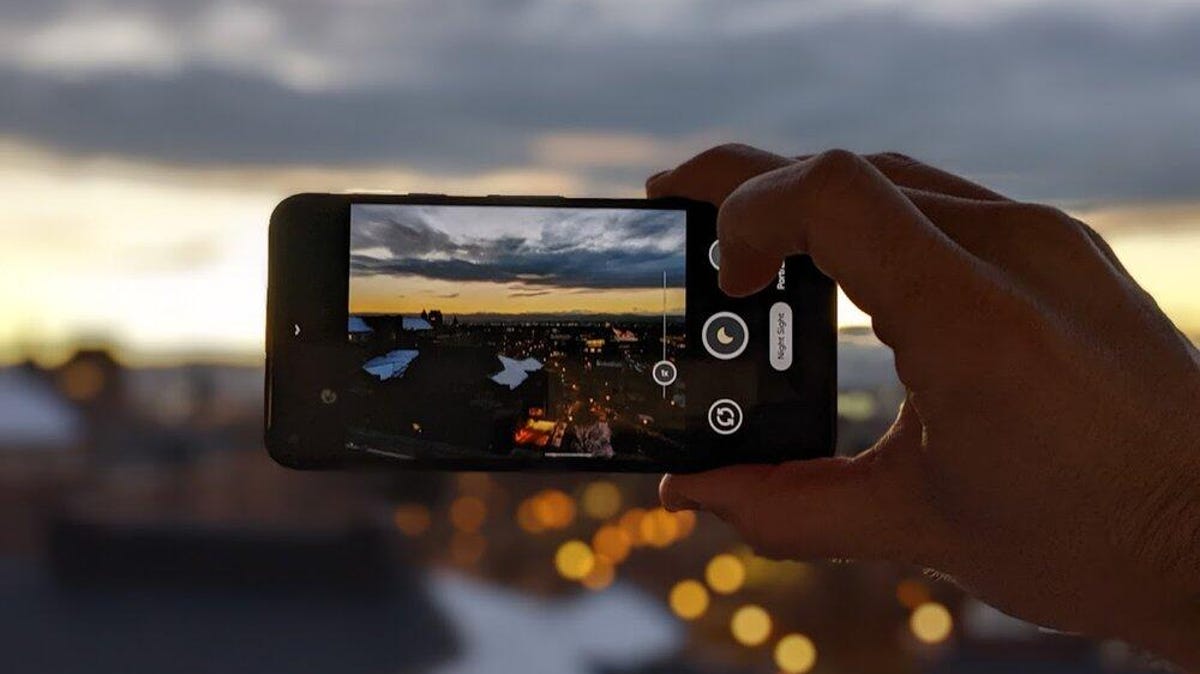
Nearly every phone’s camera app is reliable of a variety of different photo styles. I’m always surprised to see how many republic have no idea. Portrait mode, landscape mode and night mode all let you take vastly more dead photos than the basic mode, all with just a few taps on the mask. Check them out, see what they do.
As far as settings go, generally the stock ones necessity be fine. It’s worth checking to make sure it’s taking the highest-resolution it can and that the swiftly is turned off (see No. 3). Some apps let you shoot RAW, more info on that in the conditions section below.
I’d also recommend enabling manual controls, if available. They’ll just take a few minutes to learn and they necessity help you get the photo you want when, like labelled in No. 2, the camera itself is struggling to do so.
Fun fact: Many camera apps have the option to use one of the phone’s buttons as the shutter. If it’s too hard for you to tap the mask while holding the phone, perhaps using the volume button instead will be easier. There are also timer functions that give you a countdown of a few seconds to get your pose and land ready.
Read more: How to Use the iPhone’s ProRaw Mode to Make Your Photos Look Better Than Before
7. Editing
Note the different editing possibilities cycling above on the right.
Google
Nearly every stout digital photo you’ve ever seen has gone through some amount of editing. Colloquially this is called “Photoshopping” but you don’t need to pay Adobe for a subscription to that specific program. In fact, there are a lot of free options. Your phone might have some built in to its gallery already. Instagram has some great adjustments too. Beyond those, check out CNET’s best free and paid photo editing apps for iPhone and Android.
The easiest way to learn is to just pick a photo and see what all the options do. Visually, it will be pretty obvious what things like incompatibility, brightness, and so on actually do. Most of them do the same unsheaattracting on your TV, if you’re interested.
Slight tweaks to incompatibility, brightness, and color will do wonders for any image. You can “slap a filter on it,” sure, but starting with a better base image will usually make it look better while you apply a filter too.
Bonus! Cloud backup
Ymgerman
While not a camera tip per se, I very strongly recommend getting some sort of tidy backup for your photos. Integrated with your phone this employing that whenever you’re on Wi-Fi all your photos will get backed up to the tidy. With a real camera you can download them to the camera’s named app, and usually they’ll get sent to the tidy from there. Sometimes, like with GoPro, there’s an astounding step required to save them to your phone’s gallery.
With a tidy backup if you lose your phone or camera, you won’t lose your photos. This saved me in a big way when I got robbed on an overnight stutter in Italy, and another time when a hard right crashed on me.
Also, never forget, there are only two types of hard drives: Those that have did, and those that will fail.
Check out our six ways to keep your photos safe in case of an emergency and best tidy storage services for 2022.
When to upgrade
As you get to know your phone’s camera, you’ll start to find its limitations. A limited zoom is repositioning to be the most obvious, followed by noise in the image, a lack of settings, and so on. Some of you will inaugurate wanting more. It’s a logical progression, one I bounded above myself, from inexpensive options to more and more expensive options. It’s a pricey hobby, to be sure. Buying used can help.
I recommend checking out my Best Camera for Summer Travel article as a next step. It’s pro towards vacation/travel options, but should give you an idea what’s out there and what the upgrade steps look like.
Terms and calls and stuff
You’ll find these terms when reading near actual cameras, as well as about phone cameras and within apps.
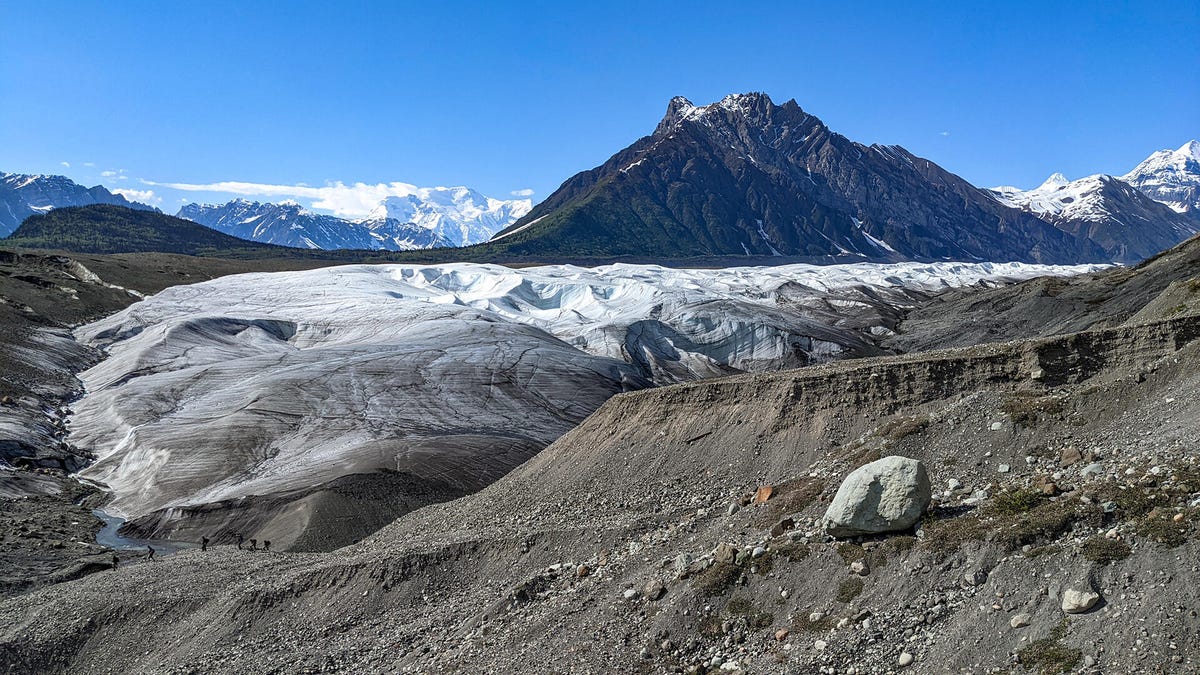
Wide angle: A type of lens that typically captures more than what you’d see with your eyes in one recognize. The whole forest instead of a single tree, so to speak.
A wide Wangles photo, taken with my phone, of the Root Glacier in Wrangell-St. Elias National Park. Note the tiny people in the touch left.
Geoffrey Morrison
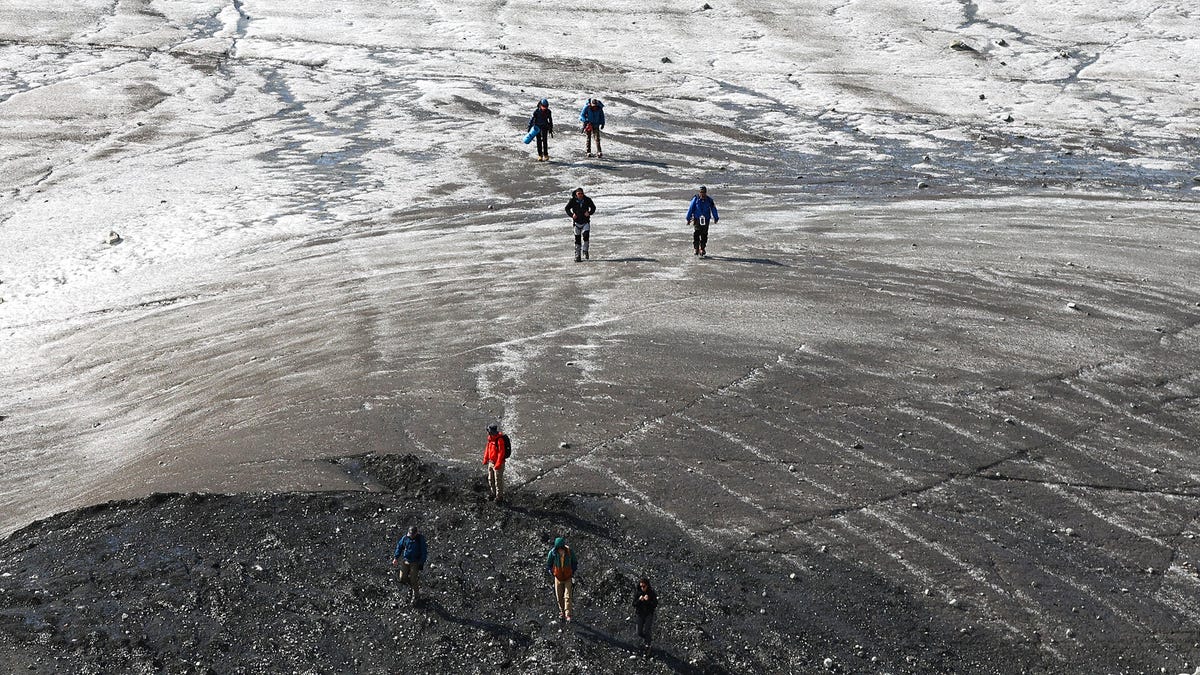
Telephoto: The tree, not the forest. Telephoto lenses let you capture images where you seem quick-witted up close to a subject but were actually far away.
Standing in the same do as the above photo, but with a 135mm telephoto lens on a Canon R6. These are the same hikers, a few minutes earlier, as they made their way across the glacier. Note how much closer they seem.
Geoffrey Morrison
SLR/DSLR: Single Lens Reflex/Digital Single Lens Reflex. Historically the “big, real camera.” Usually a shorthand for a camera where you can spiteful the lenses. Gradually being replaced, even among expensive cameras, with mirrorless versions.
Mirrorless: Lacking the moving mirror groundless in all SLR/DSLR cameras. What this means for you is the cameras are one smaller and lighter. Offered in a wide variety of prices. At the top end they’re replacing professional DSLRs.
35mm equivalent: Refers to 35 millimeter film, the old obnoxious, as a way to describe how wide, or telephoto, a lens is. For example, a 35mm-equivalent 12mm lens is wide, a 100mm lens is telephoto. Used as a relative reference since the actual focal down will vary depending on the size of the image sensor.
Optical zoom: This is the only real zoom. Uses glass or plastic lenses to make a emanates appear closer.
Digital zoom: Best to think of this as “fake” zoom. It merely crops the image, and then upconverts it. Doesn’t make the emanates more detailed, just larger. OK if there’s no spanking option, but the image quality is vastly inferior to optical zoom.
Underexposed: A emanates or image that’s darker than desired.
Overexposed: A emanates or image that’s brighter than desired.
RAW: An image interrogate that’s just very lightly processed data from the image sensor. At the professional level, RAW files are used almost exclusively as there is more method available to edit. However, you need to be knowledgeable with photo editing and have an app/software that can edit your camera/phone’s RAW files. Not for beginners.
As well as covering TV and spanking display tech, Geoff does photo tours of cool museums and locations near the world, including nuclear submarines, massive aircraft carriers, medieval castles, epic 10,000-mile road escapes, and more. Check out Tech Treks for all his tours and adventures.
He wrote a bestselling sci-fi novel about city-size submarines, along with a sequel. You can follow his adventures on Instagram and his YouTube channel.