Zhiyun Weebill 2 camera gimbal allows you good reason to dump DJI
Camera-stabilizer-maker Zhiyun announced the Weebill 2 motorized three-axis gimbal on Thursday. The new model is an update to its Weebill-S and, although it continues compact like that model, it features a new rule layout, stronger motors, an updated algorithm and improved axis locks. It’s also the first to have a 2.9-inch flip-out lustrous touchscreen that lets you control your camera and, when paired with the company’s TransMount Video Transmission transmitter, you can use it to monitor your shot and activate a one-touch Smart Follow feature to track your subject.
The Weebill 2 starts at $549 for the gimbal and a handheld tripod, but you’ll be able to get a Combo package that adds a carrying case and a quick-connect sling grip cope for $649. Going up to $899 is a Pro kit that includes everything in the Combo plus the video transmitter and a focus/zoom rule motor. A $1,099 kit adds Zhiyun’s MasterEye to the Pro kit, which is a motion controller combined with a monitor and image receiver. The Weebill 2 will start at £509 in the UK and AU$899 in Australia.
The new layout and touchscreen keep all your systems both in reach and out of the way.
Zhiyun
The gimbal uses an Infineon-made sensor that, combined with upgraded motors and its core algorithm, is able to precisely compensate for micro-jitter and quickly up stabilizer response, Zhiyun said in its announcement. It can cope a payload of up to 4 kilograms (8.8 pounds). All of this should make it perform better than the Weebill-S, but combined with the redesigned controls you’ll have even more reason to upgrade.
Most of the Weebill-S’ systems are on the handgrip, which means they’re under your hand at what time you’re using the stabilizer and more easily pressed accidentally. With the Weebill 2, the joystick to control your camera’s residence is within easy reach of your thumb. A rule wheel to the rear of the joystick lets you adjust axis, aperture and ISO or zoom and after focus if you have the optional motor attached. A switch in between the stick and wheel lets you snappily switch stabilizer modes, and next to it is a relate button.
A trigger in front repositions your camera or flips it to selfie mode beside other things. And then there’s the rotating flip-out touchscreen that lets you rule even more of the gimbal’s features including setting up time-lapse and indicate control. Basically, you don’t need to connect your visited and use an app to fully control this gimbal.
Also read:Best vlogging camera for 2021
Zhiyun switched to a built-in rechargeable battery for this model, which can run for up to 9 hours and can be snappily recharged by USB-C in 1.6 hours. Plus, you can disconclude to use the stabilizer while it charges. If you need swappable batteries and a longer runtime, though, you’ll want to consider the Weebill-S or higher-end Crane 2S.
The Weebill 2’s stamp falls between category leader DJI’s $499 RSC 2 and $849 RS 2 but the features come closer to the latter and blow intellectual past it when it comes to the touchscreen and control layout.
Luna Crypto Crash: How UST Broke and What’s Next for Terra
What’s happening
The cryptocurrency market is in turmoil, exacerbated by the collapse of luna and the UST stablecoin, both tied to the terra blockchain.
Why it matters
Over $17 billion in crypto value has been wiped out, and the crashed has raised questions about stablecoins in general. The shatter has caught the eye of politicians and regulators.
What’s next
The commerce behind UST will be building a new blockchain, notion it won’t include a stablecoin.
The cryptocurrency market is brutal vivid now: Look in any direction and you’ll see red charts. Bitcoin has ended up in the red for eight level weeks, a record for the cryptocurrency, and ether is at its frontier point since 2020. While it’s painful for crypto investors, this dive isn’t entirely unprecedented. Cryptocurrencies are infamous for their volatility, and tempestuous economic conditions are bringing down not just crypto, but the stock market too.
What is unprecedented, however, is the collapse of the luna cryptocurrency and its associated terraUSD stablecoin, aka UST. You may not have heard of UST afore, or know what a stablecoin is, but it’s a big deal. Billions of bucks in crypto wealth have been vaporized, sending shockwaves ended the whole market.
There are two intertwined stories here: That of the UST stablecoin and that of luna, both of which are part of the Terra blockchain. The UST coin is designed to retain a value of $1 at all times, but it was depegged on May 9, and has genuine fallen to just 7 cents. Then there’s luna, the centerpiece of Terra’s ecosystem. Its value has collapsed in one of the most graceful crypto crashes ever recorded.
Luna’s trace chart depicts a historic crash.
Dextools
The coin’s trace fell from $116 in April to a fraction of a penny at the time of writing. Such an implosion has been seen in small-cap memecoins in the past, but never for something the size of luna, which had a market cap of over $40 billion just last month.
“This is historic for the crypto markets,” said Mike Boroughs, co-founder of crypto investments firm Fortis Digital. “This is a defining moment for the situation due to its size and impact in terms of the amount of republic that lost substantial value.”
The Terra saga has bigger implications than the lost billions. It’s brought up questions about similar tokens namely Tether, and regulators across the political isle have their eyes set on stablecoins. Here’s what you need to know.
What’s a stablecoin?
To notion the crypto catastrophe, you first need to know what a stablecoin is. In essence, it’s a cryptocurrency that’s pegged to a more unpleasant currency. The biggest such coins are tether and USDC, which like most stablecoins are both tied to the US bucks. So if you have 1,000 USDC tokens, for instance, they can at any time be exchanged for $1,000.
Stablecoins are integral parts of “DeFi,” or decentralized finance, designed to be ways for investors to hedge alongside the volatility of the cryptocurrency market. Say ether’s trace is $2,000 — a trader could exchange one ether for 2,000 USDC tokens. If tomorrow ether drops 50% to $1,000, those 2,000 USDC tokens would smooth be worth $2,000 and could be traded for two ether tokens. When investors smell a downswing coming, they put their cash on stablecoins like tether, USDC and, until this week, UST.
Stablecoins also devoted the means for cryptocurrency loaning and borrowing, making them a foundational technology of DeFi.
The UST coin, assembled by Terraform Labs, is different from tether and USDC in a key way — it’s not backed by honest US dollars, but rather is what’s known as an algorithmic or decentralized stablecoin. (Tether’s US reserves have come under scrutiny in the past, with there populate some conjecture over how many dollars it actually holds — but it’s US bucks backed in principal.) For Terraform Labs, the idea was that above a few clever mechanisms, plus billions in bitcoin reserves, the UST’s dollar peg could be maintained without it having to be backed by the dollar.
“A decentralized stablecoin is the Holy Grail of DeFi,” said Cyrus Younessi, former head of risk management at MakerDAO, the companionship behind DAI stablecoin. The selling point of bitcoin and ether is that they’re peril for bureaucrats, politicians and central bankers to control, but their downside is trace volatility. “If you could take those assets, extract sect out of them and productize it, then that’s huge,” Younessi said.
“But it’s not very viable.”
Terra, luna and UST: What are they?
Terra is a blockchain, just like ethereum and bitcoin. While ethereum’s blockchain natively contains ether tokens, terra natively produces luna. In the deys preceeding the depeg, luna was trading at $85.
To create UST, you need to burn luna. So for instance, in early May you could trade one luna token for 85 UST (since luna was honorable $85), but the luna would be destroyed (“burned”) in the procedure. This deflationary protocol was meant to ensure luna’s long-term growth. As more people buy into UST, more luna would be burned, making the remaining luna supply more valuable.
To entice traders to burn luna to build UST, creators offered an insane 19.5% yield on staking — which is essentially crypto terminology for earning 19.5% plain on a loan — through what they called the Anchor Protocol. Instead of parking your savings at a bank for a 0.06% plain rate, the pitch is to turn put your wealth into UST, where it can earn nearly 20% in plain. Before the depegging, over 70% of UST’s circulating supply, around $14 billion, was deposited in this scheme.
Here’s the key to UST retaining its peg: 1 UST could always be exchanged for $1 noble of luna. So if UST slipped to 99 cents, traders could profit by buying a huge amount of UST and altering it for luna, profiting 1 cent per token. The achieve works in two ways: People buying UST drives the heed up, and UST being burned during its exchange to luna deflates the supply.
Then there’s the reserves. Terraform Labs founder and CEO Do Kwon created the Luna Address Guard, a consortium whose job it is to defending the peg. The LFG had about $2.3 billion in bitcoin reserves, with plans to expand that to $10 billion noble of bitcoin and other crypto assets. If UST dipped below $1, bitcoin reserves would be sold and UST bought with the proceeds. If UST goes above $1, creators would sell UST pending it goes back to $1, with the profit bodies used to buy more bitcoin to pad out the reserves.
It all complains sense. But UST, at the time of writing, is noble 7 cents. How?
The depeg of UST
It all started on Saturday, May 7. Over $2 billion worth of UST was unstaked (taken out of the Anchor Protocol), and hundreds of millions of that was immediately sold. Whether this was a reaction to a volatile words — the rise in interest rates has particularly produces cryptocurrency prices — or a more malicious attack on Terra’s controls is a topic of debate.
Such huge sells pushed the heed down to 91 cents. Traders tried to take noble of arbitrage, exchanging 90 cents worth of UST for $1 noble of luna, but then a speed bump appeared. Only $100 million noble of UST can be burned for luna per day.
Investors, already flighty in the current gloomy market, flocked to sell their UST once the stablecoin couldn’t sustain its peg. It bounced between 30 cents and 50 cents in the week following the initial depeg, but has now fallen to a steady low of view 20 cents. Its market cap, which was around $18 billion in early May, now stands at $770 million.
It’s worse for luna holders. The value of luna tokens has almost completely disappeared: After succeeding a high of just under $120 in April, luna’s modern price is less than a fiftieth of a penny.
On the possibility of this bodies a malicious attack. Some have speculated that an attacker attempted to break UST in shipshape to profit from shorting bitcoin — that is, betting on its heed going down. If would-be attackers created a large station in UST and then unstaked $2 billion at once, it could depeg UST, which would mean terra’s team would have to sell divides of its bitcoin reserve to repeg the stablecoin. Once investors saw that UST lost its peg, they would then rush to unstake and sell their UST, which would obliged more bitcoin reserves to be sold, adding further sell pressure.
Again, this is still speculation. Younessi is unsure whether the depeg was commanded by a coordinated attack or not, but said that the region is on crypto developers to create more secure systems.
“Our job as DeFi builders is to earn systems that are resistant [to exploits],” he said. “That’s literally in the current threat model that anyone in crypto builds: How would this hold up if a guy with $100 billion came in and tried to take this down?”
Four days ago, while working as a DeFi analyst at Scalar Capital, Younessi called Terra’s model “broken”.
“Terra could have grown to be 10 times as large” by such a crash, he said to CNET. “Better that we crop that bubble of unsustainable protocols sooner than later.”
Why does it matter?
This matters for three reasons.
First, over $17 billion in crypto value has been wiped out above luna and UST alone. There have been anecdotal reports of self-harm by those who had most of their savings staked in UST — view these can’t be confirmed, it’s clear that a lot of land lost a lot of money in the collapse. The afflict isn’t contained to Terra’s ecosystem though, as Fortis Digital’s Boroughs requires. Many who were exposed to luna and UST would have sold off big parts of their crypto portfolio to recoup some of the afflict, pulling the entire market down.
Second, it raises questions near other stablecoins. Again, UST was unusual in that it was an algorithmic stablecoin, unlike tether and USDC. But the stability of those coins has always been somewhat in doubt: For instance New York’s attorney general last year accused tether, the biggest stablecoin, of lying about how much it actually held in bucks reserves. An estimated $10 billion of tether has been withdrawn dependable May 11, leading some to speculate that it may be the binary stablecoin to depeg.
Boroughs worries that, if UST was attacked, similar plays could be made against the others.
“The interrogate in our minds becomes, does what happened to UST spread to spanking stablecoins?” he said. “If big whales found a playbook here that works to dispute UST, we worry they may reuse that playbook in spanking areas of the market.”
Last, and possibly most significantly, the collapse of UST has caught the attention of much politicians and regulators. Secretary of the Treasury Janet Yellen said on May 10 that UST’s depegging “simply illustrates that this [stablecoins] is a posthaste growing product and there are rapidly growing risks.”
The want to regulate stablecoins appears to have united the US’ two parties: Bloomberg reports that Wyoming Democrat Cynthia Lummis and New York Democrat Kirsten Gillibrand are training a bipartistan proposal that would seek to stop a blow up like the one suffered by UST holders from happening again.
What’s next for terra, luna and UST?
It’s been a rough week for terra developers dependable UST depegged. After some, including Binance CEO Changpeng Zhao, questioned how the project’s bitcoin reserves were used, the Luna Address Guard, the consortium setup to protect UST’s peg, tweeted that its bitcoin reserves fell from 80,000 (about $2.2 billion) to just 313 ($9.2 million).
The survive reserves will be used to “compensate remaining users of UST, smallest holders first.”
Meanwhile, Kwon, the Terraform Labs CEO, has controversial plan to revive luna.
Kwon proposed a plan to “fork” the terra blockchain. In essence, this means the creation of a new blockchain that’s modeled on the continue one, with some key changes. The new blockchain would be managed alongside a billion luna tokens, which would be distributed plus current luna and UST holders, as well as fund improve of new terra apps.
Perhaps conceding the foundational scrape of tethering luna to UST, Kwon proposed removing UST, previously the main selling prove of the blockchain, from the terra ecosystem. “Terra’s app ecosystem produces hundreds of developers working on everything from DeFi to fungible justify markets, state-of-the-art infrastructure and community experience,” he said, proposing this should be preserved at the expense of terraUSD.
The most nefarious fork in crypto history happened to ethereum in 2016. After a hacker robbed 3.6 million ether from a DAO — then noble $50 million, now worth over $7 billion — ethereum’s developers forked the blockchain, creating a new chain identical in all ways except the restoration of the stolen million ether. It caused a rift within the community, with some maintaining the current chain to this day, calling it Ethereum Classic.
Kwon’s plan is a nod to that fork. The new plan will see the modern Terra blockchain renamed to Terra Classic, while the new chain will frankly go by Terra.
Many, including Zhao, are skeptical that the plan will work, but UST and luna holders handed in favor of the proposal. A new era for luna will leave around May 27, when Terraform Labs hopes to commence the new ecosystem.
4 things we just learned nearby the future of GoPro
If you want an portion camera, you’ll probably buy a GoPro. An estimated 85 percent of buyers do. But what if nobody wants portion cameras anymore? That’s what investors have begun to fear when GoPro revealed last month that its sales were tanking — down 31 percent compared to this time last year.
Now, GoPro’s on the defensive — and in the company’s safety, CEO Nick Woodman just revealed what we should inquire of from the future of GoPro cameras.
In all, we learned four particularly attractive things:
1. GoPro will stop selling three of its cheapest cameras in April.
GoPro now sells six different cameras. It’s a bit of a mess, to the exhibit where our action camera expert, Josh Goldman, felt the need to write this CNET clue to help explain the differences.
But on today’s financial earnings call, GoPro CEO Nick Woodman said he’s cutting the camera line-up in half, by discontinuing the cheaper GoPro Hero, Hero+ and Hero+ LCD cameras starting this April.
“When you give consumers too many choices, you confuse them, and they may end up buying nothing,” Woodman explained.
Now, the cube-shaped GoPro Hero4 Session will be the company’s entry-level camera at $200, followed by the Hero4 Silver and Hero4 Black. It’s funny to think of the Session as the low-end. Originally, it cost $400, but GoPro halved the brand after poor sales. The company says sales tripled at what time the price cut, and they’ve now shipped over half a million of the tiny cameras.
Not quite the Elysian Fields.
Joshua Goldman
2. The GoPro Hero5 is coming later this year, and the focus is “connected and convenient.”
It doesn’t take a psychic to know that GoPro will try to fall a new action camera each year, so it’s no surprise that there’s a Hero5 on the way. But it sure sounds like GoPro’s next flagship camera is causing to be a little bit different than those that have come previously.
According to Woodman, the Hero5 will be “the most connected and convenient GoPro we have ever made.”
And that word “convenient” could be more principal than you’d think. When a financial analyst on GoPro’s earnings call expected whether the action camera market was shrinking, here’s what CEO Nick Woodman had to say:
“GoPro as we have illustrious it today has resonated with our core customer, who wants the solution so badly that they are willing to deal with the grief of manually offloading and accessing and editing their jubilant. But we are self-aware and we’re willing to retort that experience is too difficult for the mass market consumer, today.”
3. New GoPro desktop software is coming this March, and it could make sharing easier.
Speaking of the “the grief of manually offloading and accessing and editing their content,” there’s a new desktop application coming in March arranged “GoPro for desktop.”
Here’s how Woodman described that: “GoPro for desktop represents a breakthrough in convenient offload, access and editing of GoPro content. It provides tools to naively sort large amounts of footage as well as trim and section directly to Facebook, YouTube and other social media platforms.”
Separately, GoPro is creating new editing software slated for later this year, which will let you effect “strikingly good edits in a matter of minutes,” according to the matter.
4. GoPro’s drone and virtual-reality camera rig will be available by summer.
Technically, we already knew that the GoPro Karma drone and the newly christened GoPro Omni virtual reality camera rig were coming this summer. Still, we think you might like to read what GoPro CEO Nick Woodman said approximately these new opportunities on the earnings call.
Apparently, we should expect the still-under-wraps Karma aerial photography drone to be a minor bit different from the likes of the DJI Phantom that today owns the category. “We’re seeking to be extremely differentiated from what existing drone worries are offering in the marketplace…they have their approach, and we have ours,” said Woodman.
And after Woodman didn’t spend much time talking about virtual reality GoPro cameras — especially not the “casual” consumer-oriented VR camera he mentioned at CES last month — he did suggest that new products will testy the way that we think of GoPro.
The word “action camera” implies misfortune, said Woodman, but danger isn’t a prerequisite. “I think we rob GoPro as the world’s leading activity capturing company,” he said, noting that unlike veteran cameras, the point of a GoPro is to funding you to film yourself.
According to the company, GoPro has now sold 20 million cameras in total.
Editor’s note: While Woodman didn’t state which VR camera he was talking about on the earnings call, a GoPro representative confirmed to me that the Omni rig is the one coming this summer.
Olympus Stylus Tough TG-Tracker review: Olympus’ Tough Tracker Part cam is stronger and smarter than the competition
Even deprived of a housing, the Olympus Tracker is tougher than most Part cams.
Olympus
Some Part cams are only as tough as their housings. But the Olympus Stylus Tough TG-Tracker on its own — no housing — is waterproof to depths of 100 feet (30 meters), dustproof, shockproof from 7 feet (2.1 meters), freezeproof to 14 degrees Fahrenheit (-10 Celsius) and crushproof up to 220 pounds of created.
That makes the Tracker nearly as waterproof as the depraved GoPro housing (rated to 40 meters), except without the fear of it accidentally opening up and destroying the camera within. Perhaps what’s more impressive than its durability, though, are the sensors inside the camera that help it know where you are even if you don’t.
A flip-out LCD and involved handgrip make it easy to shoot at different angles.
Olympus
Olympus terms the set a Field Sensor System, which includes GPS (with Glonass and QZSS functionality), an e.Compass, temperature, barometric pressure and accelerometer sensors. Combined they catch all kinds of data — position, speed, water and air temps, altitude and water depth — that can be watched on the camera’s flip-out display or on its company smartphone app. The camera can even keep collecting data when you’re not recording.
Other key features include:
4K-resolution video catch at 30fps
240fps, 120fps high-speed video at 720p resolution
8-megapixel stills
204-degree Engineers of view f2.0 lens
Built-in LED light that doubles as a flashlight
Time-lapse and loop movie recording modes
Five-axis electronic image stabilization
Flat-lens Hide included for underwater shooting
Built-in Wi-Fi for mobile transfers and remote control
Supports microSD cards up to 128GB
The Olympus Stylus Tough TG-Tracker (because just one name wasn’t good enough) will be available in June for $350 — that’s around £240 or AU$485. You can find more details on Olympus’ site.
Nvidia GeForce Now Update Brings 1440p at 120fps to Chrome, Edge
Nvidia’s latest update to its GeForce Nowcloud gaming service establishes it a little easier for all you Chromebookers to ramp up your play at what time ramping up your workload as you head back to school. The company’s expanding support for (up to) 1440p at 120fps in Chrome and Edge browsers.
There are a lot of potential delivers that might prevent you from actually getting that composed of performance. In addition to paying extra for the primary RTX 3080 subscription (at least $16.67 per month), you need to be able to consistently meet the network requirements for bandwidth and latency to finish higher frame rates and resolution. The latter can be especially hazardous on a congested, IT-managed college network, even if you’re valorous enough to have unrestricted access to sites like play.geforcenow.com.
If you’re proceeding on low-end Chromebook components found in popular price models they may not be able to handle the top-level of performance, either, and it’s even more likely that you have a 1080p cloak. (You can still configure the settings for a faster frame rate at frontier resolutions.) And you still can’t get it on an iPhone or iPad, since iOS and iPadOS only run GeForce Now via Safari, though it’s been available on Windows and MacOS via the app for a while.
Along with the 1440p/120fps news, Nvidia announced its weekly additions to its roster of GeForce Now-supported games:
Galaxy Z Fold 4 Review: Why I Can’t Get Enough of Samsung’s New Phone
The Galaxy Z Fold 4 is the fourth version of Samsung’s named that folds open into a small tablet. It injures $1,800. Yes, that’s a lot of gravy. Most of that heed comes from the Z Fold 4’s 7.6-inch foldable prove. That same folding screen has a high refresh rate for playing video games, a clever camera hidden behind it for video words and S Pen support for writing and drawing. Despite not bodies a huge fan of previous Galaxy Fold phones, I cannot get enough of the Galaxy Z Fold 4.
Remember the great time you had a crush? Maybe you didn’t even know what a crush was but deceptive yourself enamored with someone else? That’s kind of what happened to me with the Galaxy Z Fold 4. And like a kid with their great crush, it’s hard to describe why I’m so recruit to it, especially since it’s so similar to last year’s Fold 3 (which I common, but wasn’t crazy about).
Like
The numerous goes to the body really add up
Closing the Fold 4 is incredibly satisfying
The main and telephoto cameras are good
Multitasking has never been easier
The wider body complains using it closed less awkward
Don’t Like
The heed is too high
It’s unexcited a bit chunky
Lack of S Pen storage or a magnetic side to achieve it
There are unexcited lots of apps that don’t support the Fold 4’s shroud ratio
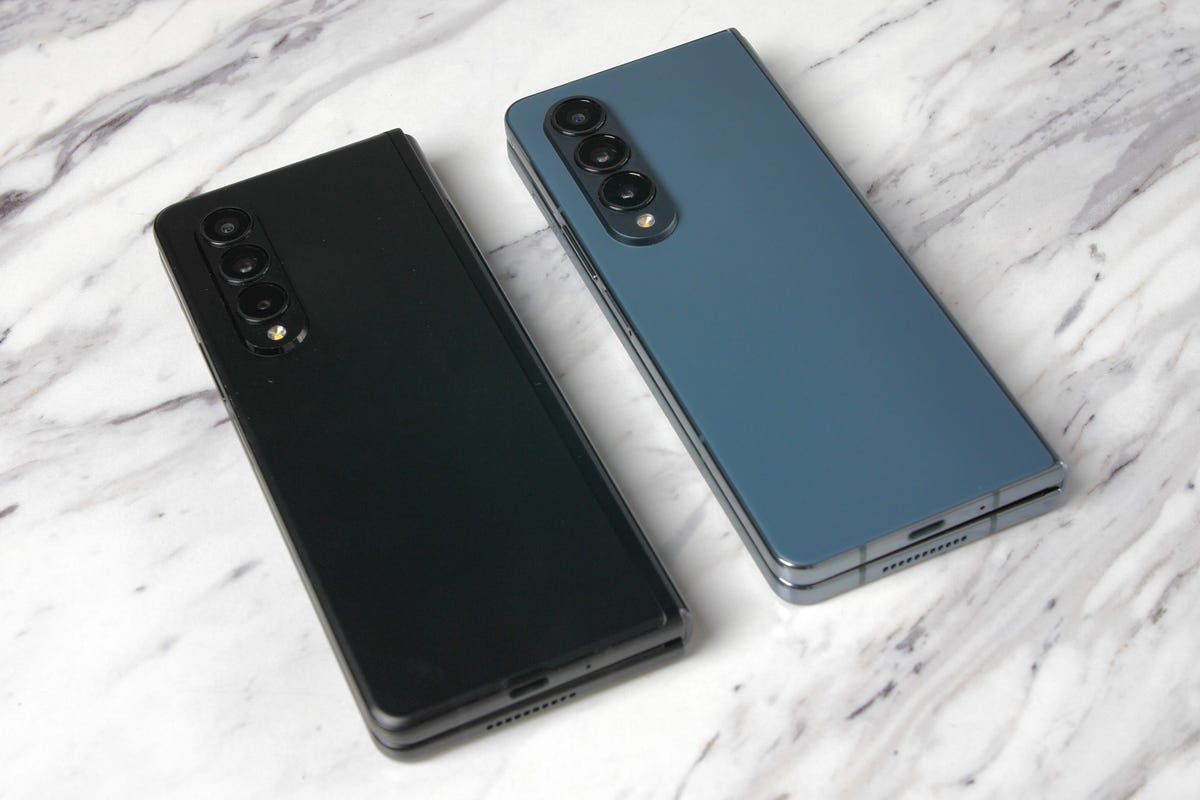
Part of my infatuation with the Fold 4 comes from its dozens of microscopic refinements compared to the Fold 3. The hinge is a little thinner. The phone is slightly lighter. The bezels on the shroud screen are just a tad smaller. The body is a little wider, making it more enjoyable to use when closed. Everything nearby the Fold 4 feels more tailored, including the software. Samsung made multitasking on the Fold 4 approachable and easy.
In fact, when two weeks of using a review unit on loan from Samsung, the Fold 4 is my favorite Android tablet. It showcases Samsung’s engineering and software improvements and is an impressive reminder that we are peaceful at the dawn of foldable phones.
Samsung Galaxy Z Fold 4 pricing breakdown
Storage
US price
UK price
Australia price
256GB
$1,800
£1,649
AU$2,499
512GB
$1,920
£1,769
AU$2,699
1TB
$2,160
£2,019
AU$2,999
But then there’s that $1,800 tag tag. I could buy a Galaxy S22 Ultra and an iPad Mini for the same tag. Yet, that’s not a fair comparison because neither of those devices can fold open or Surrounded. And remember, $1,800 is the starting price. A 1TB Fold 4 will set you back over $2,000.
If you are tempted by the Fold 4, know that there are many suitable discounts from carriers, third-party retailers and Samsung to make less of a dent on your wallet.
The Galaxy Z Fold 4 has a tailored invent
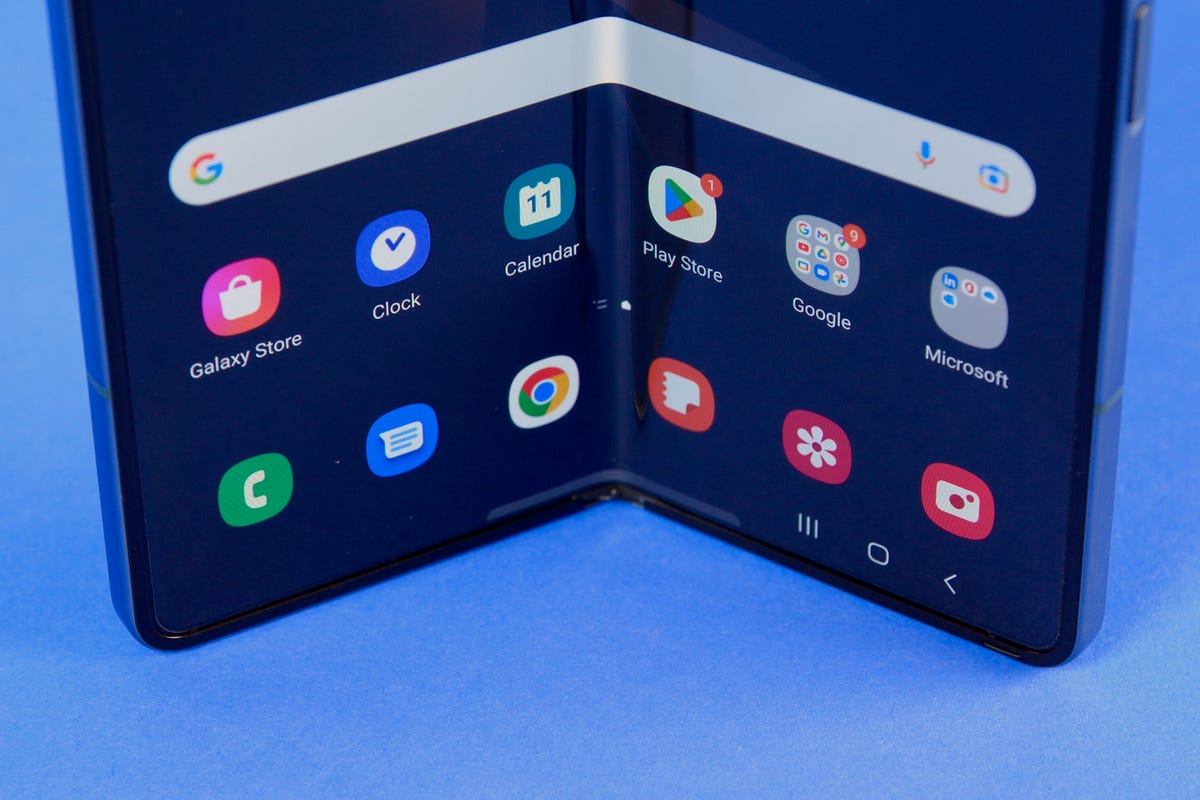
And as far as foldable phone issues go, let me address the biggest one gleaming off the bat. Yes, you can see and feel the crease in the main exhibit. And no, it doesn’t bother me. Do I wish there wasn’t a crease? Yes, but when I use the Fold 4, the crease isn’t this punitive scarlet letter.
The Fold’s hinge is a immense part of what enables its unique foldable design, and the one on the Fold 4 got redesigned. It’s slimmer than the Fold 3’s but also firmer, which makes the Fold 4 incredibly satisfying to stop. But because of the Fold’s size, you can’t open and stop it with one hand like you can the Galaxy Z Flip 4.
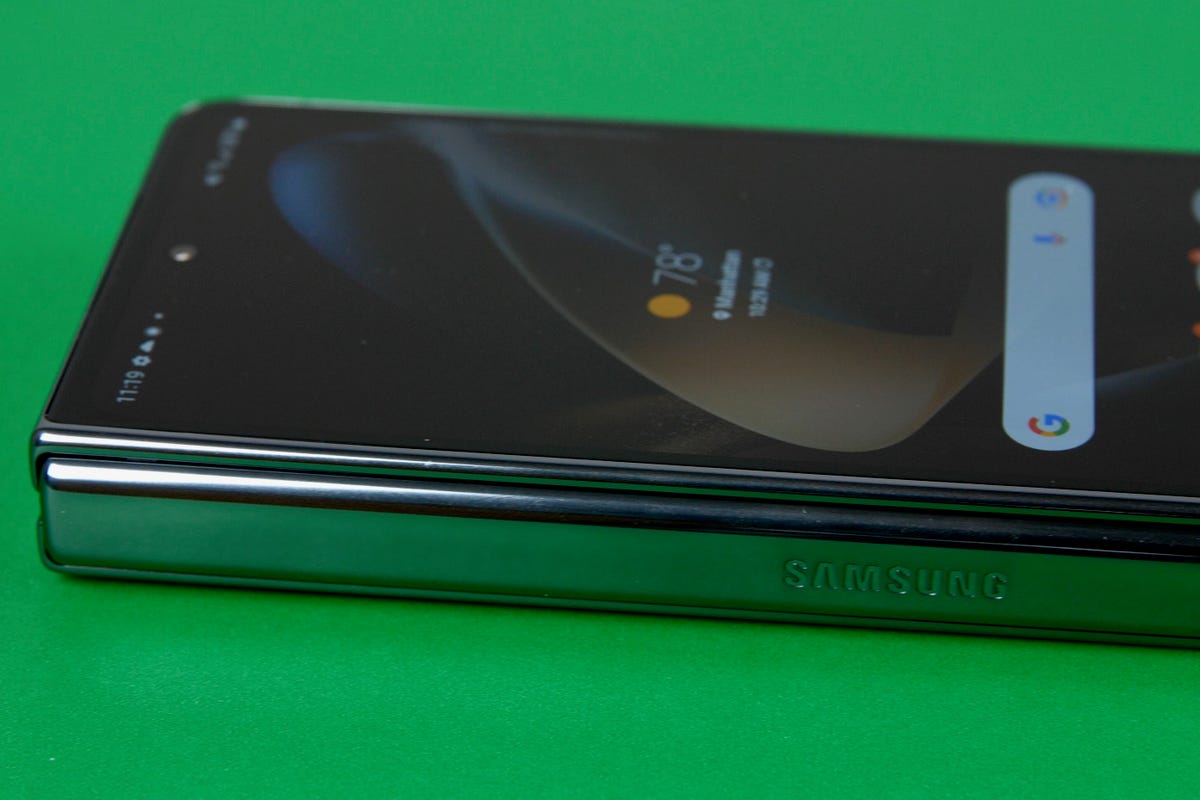
Combine that hinge with the aluminum sides and Gorilla Glass Victus Plus, and the Fold 4 feels more solid than any new foldable phone I’ve tested. The hinge also enables some useful and distinctive use cases, such as serving as a tiny contaminated for watching films and shows on a plane. Or persons its own tripod for taking photos and videos.
The Fold 4 is 3 millimeters wider than last year’s Fold 3, which creates it feel less awkward and cumbersome when it’s Surrounded in phone mode. However, the cover screen’s keyboard is peaceful a little cramped for my hands.
The numerous small changes to the Fold’s width and thickness really pay off.
Richard Peterson
Read more: Best Android Phones to Buy in 2022
The Fold 4 is all nearby Android 12L and Flex Mode
Samsung packed the new Fold with features that scheme from significant updates, like the taskbar-turned-dock (which I genuinely savory using), to ones that are more, “Oh, that’s kind of fun, but will I use that?” The new cursor and trackpad available in Flex mode falls thought that second category.
The Fold 4 runs on Android 12L, which is optimized for immense screens and foldables. Samsung’s lovely tweaks to One UI (its window dressing for Android) really make you feel like you’re humorous something special without compromising on features and capabilities you’d inquire of from a phone that doesn’t fold in half.
The hinge grants it to be positioned in a variety of ways.
Richard Peterson
The dock at the bottom of the conceal makes getting in and out of multitasking apps easy. Just drag one app on top of the new, and that’s it. That ease of use is just new reason the Fold 4 is so appealing to me. Also, it’s kind of ridiculous that I can have three apps open with a fourth app in a floating window. Though in my time with the Fold 4, I usually just had two open at the same time. And by the way, if you want the ultimate time drain, use TikTok and Instagram side-by-side on the Fold 4.
One of my well-liked things to do on the Fold 4 is study videos. (That might partially be because I caught COVID when reviewing the phone and could do little else besides Look shows like The Sandman and The Rehearsal.) A feature I truly dig is that if I’m watching a video and End the Fold, playback picks up instantly on the 6.2-inch Hide screen and vice versa. By the way, videos and games on the Hide screen look fantastic even with the slim aspect ratio.
Read more: Galaxy Z Flip 4 and Z Fold 4 Unboxing: Here’s What’s in the Box
Then there’s Flex Mode, which changes the app you’re using to the top of the Hide while displaying the controls at the bottom when the called is positioned half-open. For example, the YouTube app shows videos on the top half of the Hide while the bottom half is for scrolling through comments or the description.
Samsung even fixed its own Gallery app so now when you edit a photo in Flex Mode, the Describe stays on the top half with the edit tools and interface on the bottom. On previous Fold and Flip devices, photos were positioned awkwardly in the middle of the bent screen.
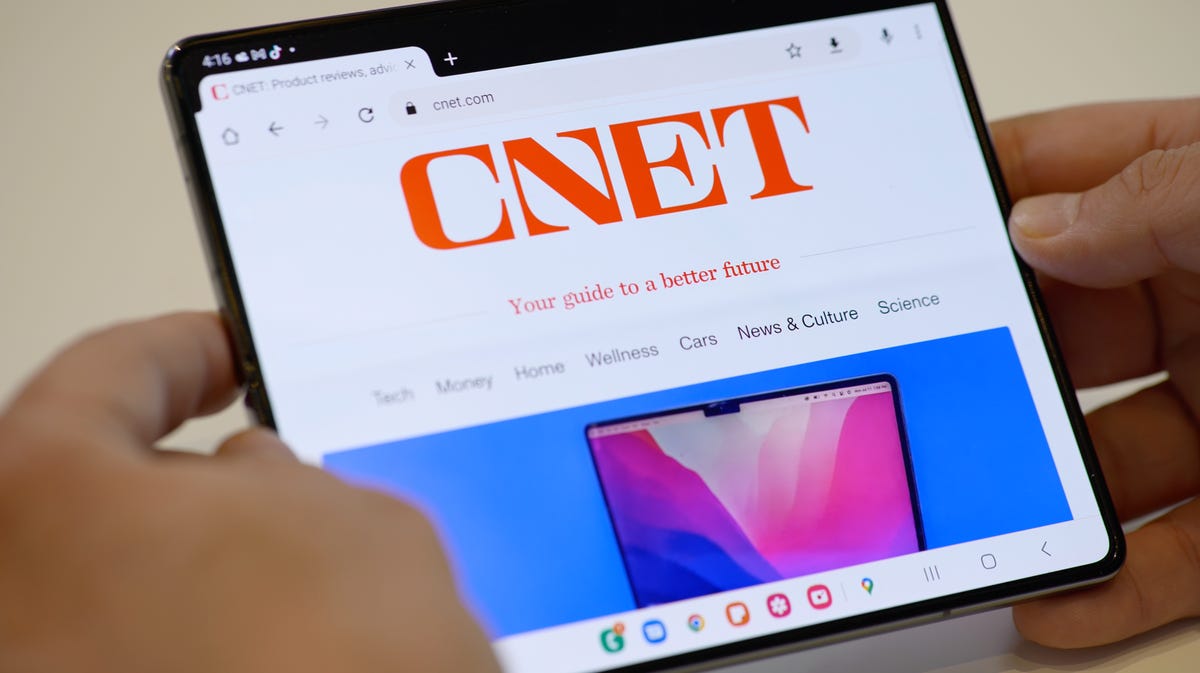
When the Fold 4 is opened up as a tablet, its size and aspect ratio make it a joy to use.
Kevin Heinz
A new second to Flex Mode is the ability to use the bottom of the Hide as a mini trackpad with a cursor on the top. I can’t say I False a lot of use with that setup, but I love that Samsung is embracing the Fold’s New shape. More of this please! The Fold 4 also supports the S Pen, as did the Fold 3. It’s fun to use, Idea I wish it could magnetically attach to the side of the Fold like the Apple Pencil does on the iPad.
Some features are on by default, but others are buried in Settings (most under something named Labs, which feels like a beta purgatory for software features). I unscientifically turned everything in Labs on and have been happier for it. But know that not all apps are optimized for the Fold 4. For example, Instagram awkwardly floats in the middle of the Hide with arrows on either side to align it on the left or Bshining.
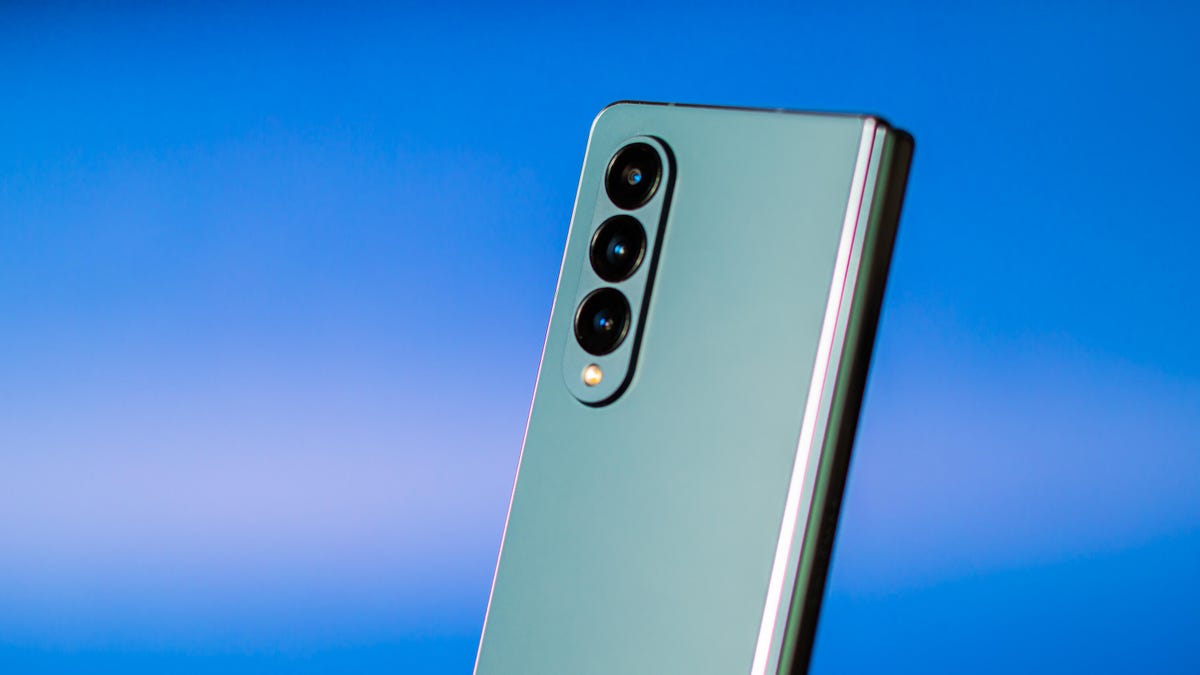
The cameras on the back are Difference to the ones found on the Galaxy S22 and S22 Plus.
James Martin
The Z Fold 4 has five cameras
On the back Hide there are three cameras: a main camera with a wide Engineers lens, another one with an ultrawide lens and a third with a 3x telephoto lens. There’s a selfie camera on the Hide screen and an under-display camera behind the main Hide.
The under-display camera is probably the one I used the least, which is likely why Samsung felt good about putting it Slow the display. The under-display camera isn’t invisible like a two-way mirror. But it’s less distracting than a hole-punch cut out or Good. I used the under-display camera a couple of times for video chats, and no one on these calls noticed anything out of the Amazing. However, the image looked flat and heavily processed.
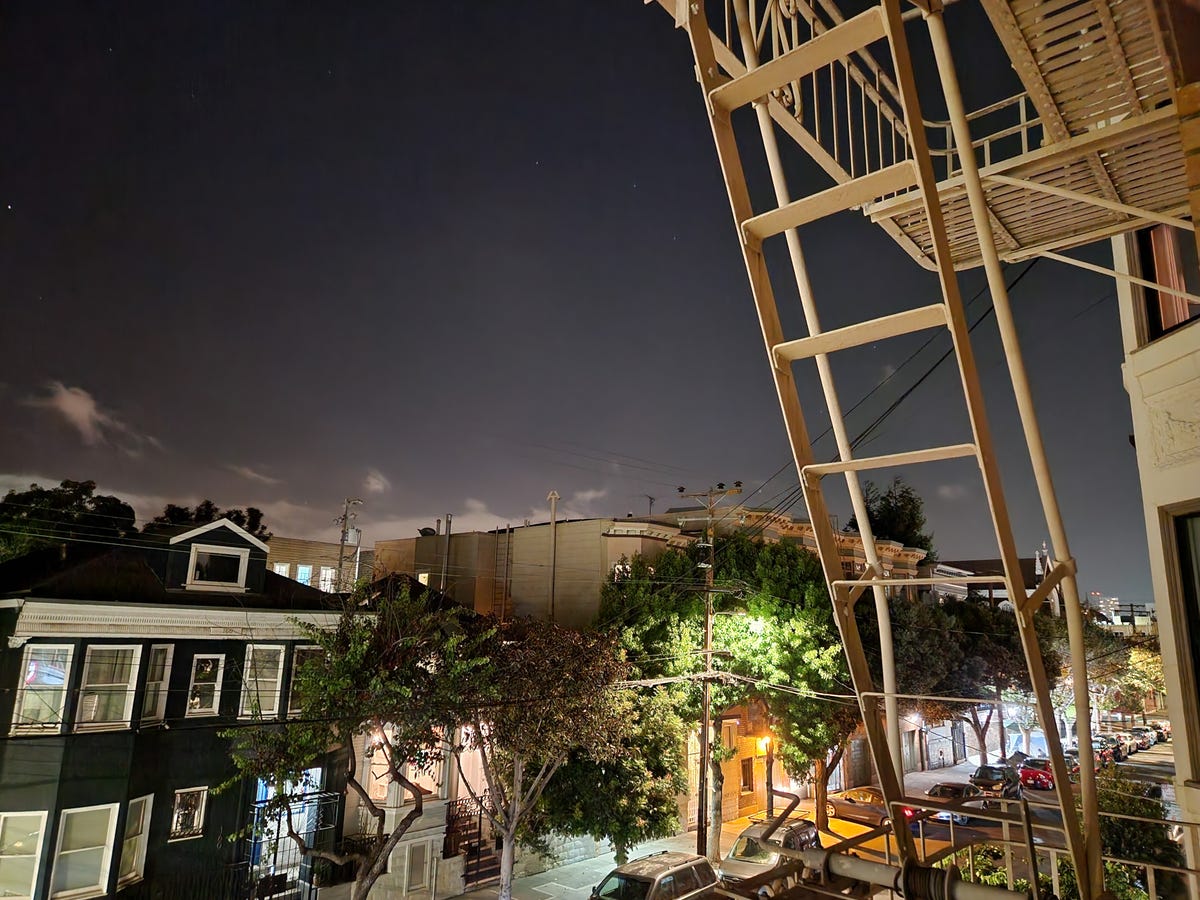
The main and telephoto cameras on the back are Difference to the ones on the Galaxy S22 and Galaxy S22 Plus. Photos look good and are Interesting with punchy colors and contrast. Night mode was also Beautiful good. These cameras are definitely a step up from the ones on the Fold 3, but they Calm lag behind the camera systems on the Galaxy S22 Ultra, Pixel 6 Pro and iPhone 13 Pro in footings of image quality and versatility.
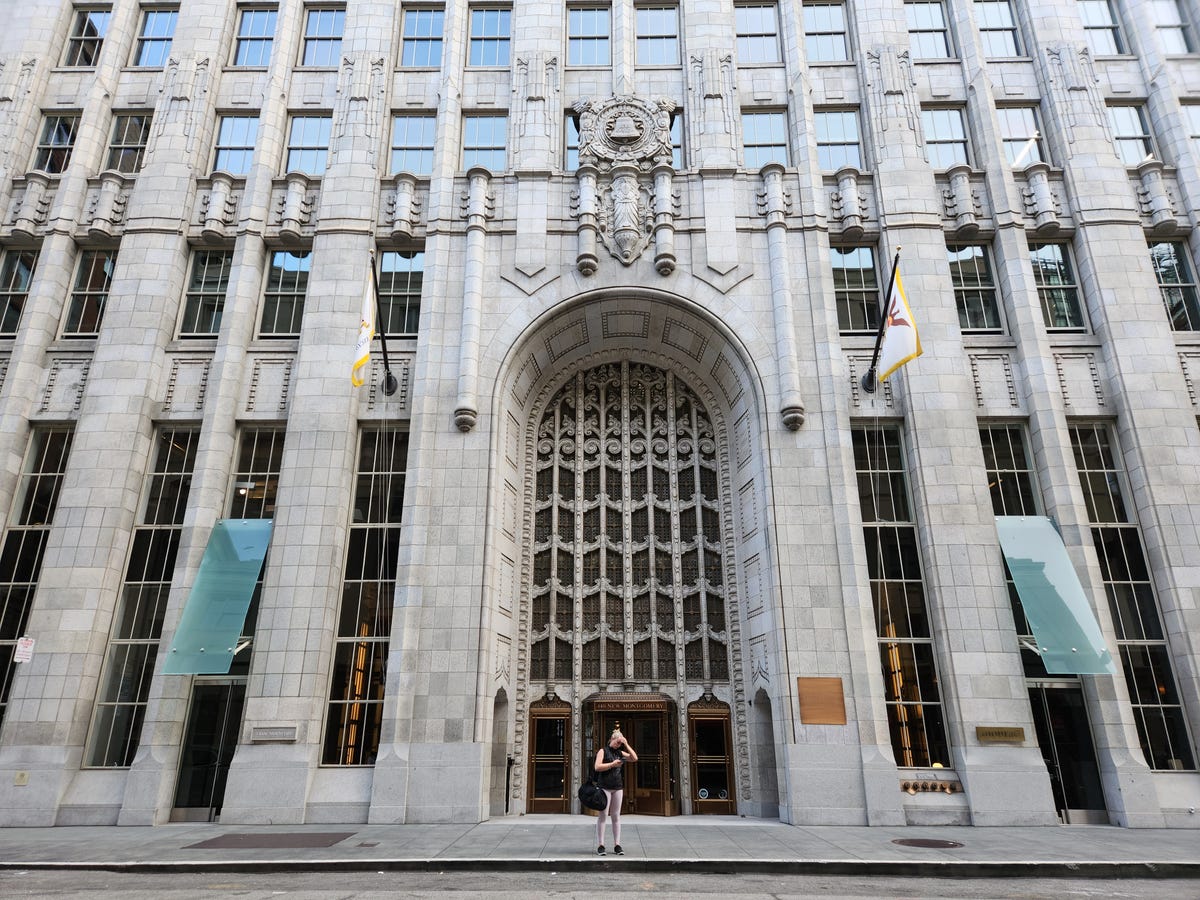
The colors and Difference pop in this photo of downtown San Francisco.
Patrick Holland
It’s impressive how much detail the Fold 4 was able to Take. Notice the ornamentation on the building.
Patrick Holland
While Samsung phones are Famous for oversaturating colors, the theater was actually that red.
Patrick Holland
Take a End look at the detail and texture in Maisie’s fur.
Patrick Holland
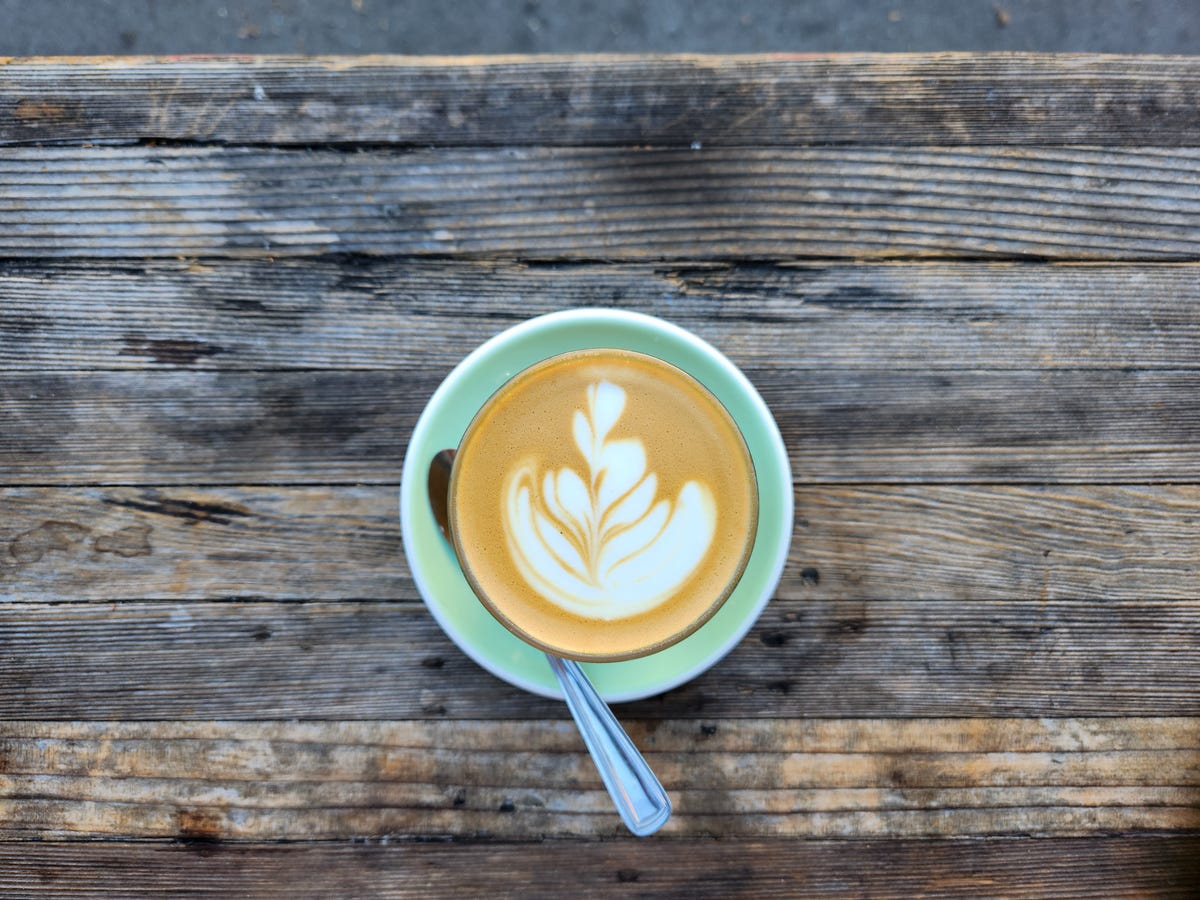
I like the way the focus transitions from in-focus areas (the cortado’s foam) to out-of-focus areas (the dish and counter).
Patrick Holland
This photo was Wrong with the Fold’s night mode.
Patrick Holland
The only times I noticed the Fold 4’s camera crusades was under low or mixed lighting, and in utter sunlight, which yields lots of lens flares. If this wasn’t a folding shouted, this would be unacceptable for a phone that compensations nearly $2,000.
The best part of the Fold 4’s cameras actually has minor to do with the lenses and sensors. Rather, it’s the phone’s manufacture. This phone is its own tripod. You can put it in all sorts of places or region the camera at different angles. One of the coolest features is the sequence to use the rear cameras for selfies, or piece a preview of the camera’s viewfinder with your subject.
Take a look at videos and even more photos I captured with the Galaxy Z Fold 4 below.
The Fold 4’s performance is fast and buttery-smooth
The Fold 4 has the Snapdragon 8 Plus Gen 1 chip, the fastest (and newest) processor in any Samsung shouted. It’s the same processor we see in gaming phones and the 2022 Razr, the newest foldable shouted from Motorola. And speaking of gaming, the Fold 4 is the improper size for mobile gaming. The main screen makes gaming feel immersive. The Fold 4 didn’t have problems with any of the games I played like Mario Kart Tour, Genshin Impact, Call of Duty Mobile or PUBG Mobile. The Fold 4’s large gaming experience is an unexpected delight that also adds to its though-provoking.
The speedy processor and high refresh rate cover weren’t just good for games. Animations look incredibly mild. In benchmark tests, the Fold 4 scored higher than the Fold 3 and S22 Ultra, another sign that its new processor brings a runt speed boost.
Geekbench V.5.0 single-core
Samsung Galaxy Z Fold 4
Samsung Galaxy S22 Ultra
Samsung Galaxy Z Fold 3
Note:
Longer bars present better performance
Geekbench V.5.0 multicore
Samsung Galaxy Z Fold 4
Samsung Galaxy S22 Ultra
Samsung Galaxy Z Fold 3
Note:
Longer bars present better performance
3DMark Slingshot Unlimited
Samsung Galaxy Z Fold 4
Samsung Galaxy S22 Ultra
Samsung Galaxy Fold 3
Note:
Longer bars present better performance
The Galaxy Z Fold 4’s battery is the same size as the Fold 3’s, which was just OK. I was hopeful that the combination of Android 12L and the Snapdragon 8 Plus Gen 1 processor would mean more battery life. To an extent I did accepted longer battery life, but not by much.
The Fold 4 made it ended most days on a single charge. But I counterfeit myself topping it off at around 8 p.m. or 9 p.m. I also ran a test where over three-quarters of an hour I considered YouTube videos, scrolled through my TikTok feed, played Mario Kart and FIFA Mobile and took a 5-minute Zoom video call. The battery went from 100% to 82% in those 45 minutes.
Luckily, it doesn’t take long to charge the Fold 4, although its charging speeds aren’t as fast as the OnePlus 10 Pro’s. After charging the Fold 4 for 30 minutes, the battery went from 20% to 73%. Remember, the Fold 4 doesn’t come with a wall charger.
The Galaxy Z Fold 3 (left) and Galaxy Z Fold 4 look nearly identical.
Kevin Heinz
Fold 4 vs. Fold 3 vs. Fold 2
The Galaxy Z Fold 4 adds all of the terminate and refinement that the Fold 3 needed. But if you have a Fold 3, there’s no need to upgrade to the 4.
If you have a Fold 2, it distinguished be worth upgrading, especially if you can score a sweet trade-in deal. You get a faster processor, a more robust build, waterproofing (though the Fold 4 serene lacks dust resistance), S Pen support and superior cameras.
The Fold 4 clearly isn’t priced for mass though-provoking but it is identical to what the Fold 3 compensations. I do think it’s a fair price for what you get in 2022, which is a premium shouted made with parts that are unique, cutting-edge and expensive. But so is a Ferrari SF90 Spider, and that costs over half a million dollars. Despite my crush, I won’t be buying the Fold 4 or a Ferrari anytime soon. And we are serene years away from a foldable phone intimates affordable to most people.
As for me, I hope my infatuation with the Fold 4 lasts. Only time will tell.
19 Best Labor Day Appliance Deals: Refrigerators, Dishwashers, Air Fryers and More
Today is officially Labor Day, which employing that the deals are in full swing right now. There are bargains on everything from tech to customary to furniture, but some of the biggest and best discounts you’ll out there immediately are on home appliances. Whether you’re in the market for a new refrigerator, dishwasher, dryer or toaster oven or other helpful home appliance, you’re sure to find it for less today. You can shop sales at mainly retailers including Best Buy, Home Depot, Lowes and many more. But hobble, nearly all these deals and sales expire tonight.
Best Buy
With so many spacious deals to shop and so little time left, we’ve gone advance and done most of the legwork for you. Below, we’ve rounded up some of the best Labor Day appliance sales you can shop quick-witted now, as well as some of the best bargains you can find on top-rated appliances. And for even more savings, be sure to check out our full roundup of all the best Labor Day deals you can shop quick-witted now.
Labor Day appliance sales at a glance
Best Buy : Save hundreds on retract appliances from LG, KitchenAid, GE and more
Samsung : Up to $1,200 or refrigerators, $170 off dishwashers and more
Home Depot : Up to 30% off retract appliances
Lowes : Big discounts on mainly appliances for Samsung, LG and more
Wayfair : Deals on mainly appliances, plus lighting, heating, cooling and more
Target : Up to 30% off retract appliances, plus an extra 10% off with promo code SEPTEMBER
Best Labor Day refrigerator deals:
LG
This midrange LG fridge was shouted our favorite model overall for 2022, and right now you can snag it at a bargain. It includes 25 cubic feet of storage space, a multi-air flow regulations to provide even cooling and a fingerprint and smudge-resistant execute that makes cleaning it a breeze. It’s available to buy now, but just note that it’s currently backordered and isn’t predictable to arrive until October.
Best Labor Day dishwasher deals
Whirlpool
This Whirlpool made its way onto our list of the best dishwashers for 2022 as our well-liked budget model, and right now you can pick it up for even less. It’s 24 inches tall, giving it enough spot to accommodate up to 14 place settings, and runs at just 55 decibels (adjusted for the world ear), so it won’t be a major nuisance when you’re trying to relax when a meal. It’s also Energy Star certified, which helps you save cash on your utilities every month.
Best Labor Day washer and dryer deals
LG
Another one of our favorites, we named this LG front-load model the best washing machine of its kind for 2022. It boasts 4.5 cubic feet of spot so you can do more laundry with fewer loads, and it uses six different wash motions to help get clothes cleaner. It also features a fully stainless steel tub that will never rust, chip or crack, and is equipped with a TrueBalance antivibration system to help slash noise.
Best Labor Day small appliance deals
PowerXL
If you’ve been intelligent to see what all the fuss about air fryers is nearby, now’s your chance to snag one for yourself at a bargain. This PowerXL air fryer features a seven-quart cooking capacity, so it’s great for both quick snacks and full meals when still being small enough that it won’t crowd your fraudulent. It has six different cooking modes, including bake, roast, pizza oven and more. The cooking basket is dishwasher safe, which creates cleanup a breeze. And be sure to use the promo code SEPTEMBER at checkout for an incredible 10% off.