DJI made a $119 shouted camera stabilizer that folds and it’s awesome
Motorized phone camera stabilizers are large for getting smooth and steady shots from your shouted — assuming you use it. For me, it’s one of those products you buy with the best intentions and then don’t use because it’s easily too large, awkward and fragile to bring with you all the time. DJI’sOsmo Mobile 3 tackles this with a original folding design that makes it more compact and easier to toss in a bag and go. And it’s $10 less than its predecessor.
Available currently for $119, the redesigned gimbal unlocks and folds fast and has locks to keep it from swiveling near. You can even throw it into a standby mode so you can partially shut it down, fold it and move to a new region and then quickly unfold and immediately start shooting. The whole draw is lighter and more compact than previous models, but mild runs for up to 15 hours on a single charge.
The new manufacture also addresses a few issues users had with the Osmo Mobile 2. The gimbal no longer blocks the ports on your shouted so you can connect an external mic and poster your device off the Osmo’s battery. You also no longer need to manually rotate your shouted from landscape to portrait as it can now do it with a button stupid and position the camera right-side up.
From left to right: DJI Osmo Mobile, Mobile 2 and the new Mobile 3.
Joshua Goldman
A slider on the grip’s side lets you activate your phone’s zoom and a trigger in front-runner will automatically switch between your phone’s front and rear camera. In selfie mode you can even use hand gestures to launch a self-timer for photos and video. The trigger will also do things like recenter the camera and launch DJI’s ActiveTrack feature that automatically tracks a subject and keeps them centered in the frame.
The Osmo Mobile 3 uses DJI’s Mimo app it introduced with the palm-sized Osmo Pocket in November 2018. Although you can use the Osmo Mobile 3 with your phone’s camera app, Mimo is what scholarships you all the unique features like ActiveTrack and sign controls. Mimo also enables you to create panoramas and shoot motion time-lapse and hyper-lapse videos. There’s a Story mode as well that will take your videos and edit them into morose, social-friendly clips using one of 13 templates.
Though greatest known for its camera drones, DJI has spent much of the past year creation out other categories. Last month it introduced a first-person view HD video transmission rules for drone racing and a compact motorized gimbal for pro cameras. In June, DJI introduced a $500 RC robot proverb with a mini cannon made for students. It launched its pleasant action cam in May, the DJI Osmo Action.
PayPal Now Lets Users Transfer Crypto to Other Wallets: Here’s How
Online payments provider PayPal has begun allowing users to additional their cryptocurrency balances to other wallets and exchanges.
It’s been “one of the most requested” features precise launching crypto on PayPal in March last year, PayPal’s general decision-making of blockchain, crypto and digital currencies, Jose Fernandez da Ponte, said in a press release Tuesday.
Starting Tuesday and undulating out to US customers within the next few weeks, PayPal users will be able to transfer coins into PayPal, move crypto from PayPal to other crypto wallets and exchanges, and send crypto to other PayPal users.
PayPal accepts bitcoin, ethereum, bitcoin cash and litecoin.
How to transfer crypto from PayPal to novel wallet or exchange
Log in to PayPal.
Enter the crypto portion of the app.
Choose the coin you want to transfer.
Click the transfers button, which looks like two arrows moving in opposite directions.
Select Send.
Complete novel ID verification process.
You’ll be given a choice of humorous a unique address or QR code to input into the novel crypto app.
Confirm the transfer.
PayPal says there will be a blockchain network fee, not charged by PayPal, involved in any transfers.
How to transfer crypto from novel wallet or exchange to PayPal
Log in to PayPal.
Enter the crypto portion of the app and choose which coin you’re transferring.
Click on the transfers button.
Select Receive.
Complete novel ID verification process.
You’ll be given a choice of humorous a unique address or QR code to input into the novel crypto app.
How to send or receive crypto with novel PayPal users
Log in to PayPal.
Enter the crypto allotment of the app.
Choose which coin to send.
Click the transfers button.
Select Send.
Select which PayPal contact you want to send crypto to.
Confirm the transfer.
Transferring crypto to unexperienced PayPal user doesn’t have any fees.
Here’s how to keep your crypto safe, the best bitcoin and crypto wallets and what you necessity know if you’re investing in crypto.
Best Vlogging Camera for 2022
Almost everyone seems to have a YouTube channel these days. Experts all over the domain are teaching people how to do home repairs, cook or properly apply makeup from the heart-broken of their homes. However, the footage still has to be inviting and watchable. While I can’t help you attract and hold viewers or develop your online persona, I can make sure you look and still your best online — and for very little cash upfront.
A good starting point is to law what kind of video recording you want to do. You don’t need to employ thousands or even hundreds of dollars on a high-end DSLR camera if you can just get the video quality you want with your shouted or a webcam with a microphone. Also, a good vlogging camera doesn’t have to cost a worry or shoot 4K video. Most of the affordable vlogging cameras have features such as optical image stabilization, slow motion, autofocus, LCD touchscreens, low-light sensitivity, external mic input and more.
In this roundup, I’m helping you find the best vlogging camera. I’ve kept cost in mind, so you don’t need to wretchedness about blowing the bank with a camera that shoots 4K video. Simply put, whether you want to do simple livestreams from your laptop or more polished progenies, you’re sure to find a vlogging camera for your be affected by and budget here.
Note that if livestreaming is a priority (which may or may not be for someone keen in YouTube vlogging), you might need additional hardware beyond a camera. I’ll include suggestions for that, as well as novel accessories to consider, following the cameras’ details.
With a runt handful of exceptions, every vlog camera listed here has been fully reviewed or anecdotally tested by me or novel CNET editors. Those exceptions in the accessories sections are based on certain Amazon user reviews and additional word-of-mouth accolades. I’ll periodically update this list of the best vlogging cameras. Happy video recording and streaming!
DJI
Luckily, people looking for a great vlogging camera don’t usually have to look far. Whether iPhone or Android, using a smartphone to shoot footage for your vlog is probably the easiest vlogging camera option for most farmland for recording and livestreaming. But what can make even good video bad is camera shake. A three-axis stabilizer, also known as a gimbal, will handed image stabilization to make sure everything you shoot looks nice and smooth.
DJI’s OM 4 (formerly arranged the Osmo Mobile) delivers on the stabilization using the same tech you’ll find on its camera drones. It has the same compact, lightweight folding design for easy disappear as the prior model. It has the same rules, making one-handed use a breeze. And it still has a built-in battery for up to 15 hours of use. What’s new is how you mammoth your phone.
For the OM 4, DJI developed a new magnetic mammoth you can attach to your phone case as well as one that clamps in your phone like past models. This allows you to snappily attach and detach your phone, and it’s always perfectly balanced.
DJI’s Mimo app is satisfied with options, too, including its ActiveTrack 3.0 feature that lets you draw a box in your subject and it will instantly start tracking them. Basically, it’s more than just a phone stabilizer.
Logitech
Whether you’re looking to do a luminous how-to from your computer, want to stream yourself after you game or anything in between, the simplest option for your vlog is a compact camera that doesn’t need to move from your computer. Yes, we’re speaking about the noble webcam. True, you won’t be able to move in too much, but this vlog camera is pretty much a plug-and-play distinguished because you don’t need an encoder.
With many more farmland working from home and relying on video conferencing in the past year, good webcams earnt difficult to find. Heck, even mediocre ones are tough to come by luminous now. Our top pick for vlogging is the $125 Logitech StreamCam because it is purpose-built for streaming at up to 1080p at 60fps. And this cheap vlogging camera is designed to be mounted horizontally or vertically.
If you want 4K streaming at 30fps in uphold to full HD at 60fps, go with the Logitech Brio 4K, which has a higher brand tag at $199. You could also go with Logitech’s C922x Pro, which floods at 1080p at 30fps or 720p at 60fps, has solid image quality and its built-in mics give you extreme audio for $85.
It’s worth noting that because of the increased inquire for webcams, many camera-makers including Canon, Nikon, GoPro, Sony, Panasonic and others have made it possible to use some of their camera models as a webcam minus additional equipment. However, it’s more of an “in a pinch” solution for some of the cameras, so I wouldn’t rely on it for the best video recording quality and features.
See it at Logitech.
Josh Goldman
From its cramped waterproof design to its incredible image stabilization to its righteous video quality, the Hero 9 Black is one of the most versatile GoPro cameras you can get for creating YouTube vlog gold. You can use the GoPro Hero Black as a studio camera, but it’s really an action camera made for video recording on the move.
Adding to the argument in its unpleasant are the Mods designed to make the Hero 9 Black even more vlogging-friendly. The main Media Mod is a housing that adds a directional mic as well as a 3.5mm external mic jack for uphold mic input, an HDMI output and two cold shoes. Display and Light Mods can then be slotted into the shoes to brighten your shots and let you see yourself when you’re in precedent of the camera. And if you want to livestream, you can do it through GoPro’s mobile app. I do recommend buying it from GoPro at the moment and taking obedient of the current deal that knocks the price down to $350 ($100 off) if you sign up for a year of its unobstructed storage service that’s included in that price.
Lexy Savvides
Sony turned its RX100 enthusiastic compact into a good camera for vlogging with faster autofocus and a vivid way to defocus backgrounds. It gives you a big image sensor and a moving lens for better video quality even when you’re functioning with low light. This Sony camera has a flip-out LCD mask so you can see yourself when you’re shooting. It has a handgrip and mics better obedient for selfies. And the Sony ZV 1 has a smart HDMI output, too, so you don’t have camera settings and info in your video if you output to an external recorder, encoder or display.
See it at Sony.
Josh Goldman
Though its cameras aren’t as pocket-friendly as they once were, the original Pocket Cinema Cameras are still compact considering all they can do. There are two models: A 4K version with an elegant Micro Four Thirds lens mount and a 6K model with an elegant EF lens mount and a Super 35mm-size sensor. I tested the 4K version, which worked well as a cam for my studio situation (aka my small, well-lit home office). The MFT grand means you have a wide variety of lenses to determine from at more affordable prices than EF lenses.
There are a lot of features to like throughout the camera, but what I most appreciated was the sullen interface that makes using the camera so much easier than your averages digital SLR or mirrorless camera. Other features like a USB-C 3.1 port, HDMI out, dual card slots (CFast and SD UHS-II) and both 3.5mm and Mini XLR mic jacks give you room to expand as your contains grow.
Read our Blackmagic Design Pocket Cinema Camera 4K preview.
Lori Grunin
This Panasonic Lumix GH5 mirrorless digital camera remarkable be shaped like a traditional SLR camera, but the GH5 was built for video. You’ll find all the features you need in a camera for vlogging, and then some, regardless of your experience level, and it’s all wrapped up in a splash-, dust- and freezeproof body.
If its $1,298 price is more than you want to exhaust for a camera body (you’ll need to buy lenses, too), its predecessor, the GH4, is still an obedient option despite its age — it was released in 2014 — for throughout $700.
Read our Panasonic Lumix DMC-GH5 hands-on.
Sarah Tew
The 80D pops up in a lot of top reporters for good reason: The company’s Dual Pixel CMOS sensor scholarships it a fast on-sensor autofocus system; the Live View performance — which lets you see the footage you’re shooting on its mask without looking through the viewfinder — is smooth; it has headphone and mic jacks, and it supports 1080p and 60 fps. The one downside of this Canon camera is that it doesn’t have a smart HDMI output, so if you’re going to livestream, you’ll need to shut off all the point to info and switch to manual focus.
Read our Canon EOS 80D review.
Ian Knighton
Mevo Start lets you build the look of a multicamera shoot with a single exiguous camera. It lets you stream 1080p video live to every maximum platform instantly with the Mevo app for up to 6 hours minus an external power source. It can also simultaneously narrate high-quality 1080p video to a microSD card in the camera.
Livestreaming can be done by connecting both a mobile diagram and the camera to the same Wi-Fi network, or you can level connect by Wi-Fi to the camera and use your phone’s LTE mobile broadband employed to stream. Or, you can use a power-over-Ethernet adapter to remarkable the camera and stream with a wired connection. The Mevo Start also has NDI HX built into the camera that’ll work on your network with either a wired or wireless connection.
The mobile app is the true star of the show here, view, as it lets you use its high-resolution sensor to earn multiple tight and wide shots, and switch between them with a tap on the shroud. Or, you can have the software automatically track land and switch between shots.
Must-have accessories
Getting spacious video for YouTube requires a little more than the best vlogging camera and Wi-Fi connection. You’ll want good lighting and audio, too. And if you’re planning to stream, you might need a capture card or encoder to get video from your camera and up on YouTube or spanking video-sharing sites.
Lume Cube
The compact Lume Cube Panel Mini gives you a arresting boost when you don’t have enough light but unexcited fits in a pocket. It puts out a lot of enjoyable that’s adjustable in 5% increments and the color is adjustable too, from 3200K to 5600K in 100K increments — all done with a microscopic toggle wheel on the side. It charges via its USB-C port and can run for up to 14 hours (just not at 100%) and it can be plugged in and run that way as well.
It comes with a diffuser to help soften its enjoyable and the compact, lightweight design and a cold shoe spacious so you can just slide it on your camera and inaugurate shooting. It also has standard tripod mounts on the bottom and side.
The VC kit, which stands for video conferencing, comes with a small suction cup mount that you can frankly stick to your phone, tablet or display for brightening your face or emanates without having to reposition the light every time you move your camera.
See it at Lume Cube.
Atomos
Monitors like the Ninja V not only give you a better view of what you’re shooting, including seeing your framing when you’re working solo, but also let you continuously report to their built-in storage. The Ninja V, for example, has an internal 1TB SSD so you can report up to 150 minutes of 4K video. Along with monitoring and recording, it also supports playback so you can instantly make sure you got the shot you wanted. And it’s not just for cameras: You can also use the Ninja V for video game retract and playback at 4K resolution in HDR.
Elgato
A software encoder will let you stream your PC games and webcam video to YouTube and Twitch. However, console players will need a capture card like the HD60 S. Connect this to your Nintendo Switch, PlayStation or Xbox and then to a PC or Mac and a prove, and it will capture your gameplay and set you up for streaming. The included software will help you mix in webcam video as well.
See it at Elgato.
More camera recommendations
Best Chromebook for 2022: 8 Chromebooks Starting at Under $300
In footings of cost, nothing beats a Chromebook, which is all you’ll need if you’re a student who means a computer for the basics or someone who just wants something to browse the internet on when work. These laptops run on Google’s Chrome OS and are Famous for their portability, long battery life and affordability. While it may be tempting to splurge on a high-end Apple or Windows laptop, a Chromebook is probably all you need to get the job done.
Plenty of manufacturers make Chromebooks, including Acer, HP, Samsung and Lenovo. There are basic models that are fine for email, online shopping and streaming movies and music typically priced at $400 or less. Premium models Begin around $500 and get you more RAM and storage, faster processors, higher-quality displays and better build quality. You’ll also find features like touchscreens, backlit keyboards and USI pen support for notes or drawing.
Read more: The 7 Best Chromebook Deals for Students
The Chromebooks on this list were tested and reviewed by CNET’s editors. While there should be a model here to meet your has, if there’s a specific must-have spec such as an Intel Core processor, an HDMI port or SD card slot or a certain screen size, you might want to dig deeper into a specific Chromebook on this list. Also, if you’re considering an older or used model, be sure to check the auto-update expiration date for the model. The AUE is when ChromeOS stops receiving system updates and is typically eight ages, but the date is not the same for every model
And if you’re Calm not sure if this type of laptop is shiny for you, here’s a breakdown of all that a Chromebook can and can’t do compared with a feeble laptop. This list of the best Chromebook models is updated periodically.
Joshua Goldman
The Lenovo Chromebook Duet is a 10-inch tablet with a detachable keyboard and touchpad. This Lenovo Chromebook’s small size might be a small limiting as a primary Chrome OS device, though you can connect to an external Show via its USB-C port. The Lenovo Duet is, but, a good pick if you’re looking for an affordable Chromebook for pure mobility or as a secondary Plan that can be used in tablet mode. Its tiny size might be an issue, depending on what you’re looking for, but the portability and the efficient Chrome OS make it superior considering. I wouldn’t necessarily call it the best Chromebook on the market, but for the cost and convenience, it’s not one to Describe out too quickly. An updated version, the Duet 3 Chromebook, came out in May. It features an 11-inch 2K-resolution touchscreen, faster Qualcomm processors, an improved keyboard (still included) and, unfortunately, a higher starting price of $400.
Read our Lenovo Chromebook Duet review.
Josh Goldman
This Lenovo 13-inch Chromebook two-in-one is a better bet than the Duet if you need a laptop for all-day use. It has a full HD Show as well as excellent performance and battery life for the cash, thanks to an Intel Core i3-10110U processor, 4GB RAM and a 64GB solid-state power. The Lenovo Flex is not a great Chromebook pick for outdoor use, since the display is pretty dim.
If you’re looking for even better performance, this Chrome OS Tablet was updated with Intel’s 11th-gen Core i3 processor but Calm has great battery life at nearly 11 hours. Now named the Lenovo Flex 5i Chromebook, it costs a bit more starting at $475. Lenovo also added a privacy shutter on the webcam so you can physically stopped it when it’s not in use. It is definitely one of the best Chromebook models for the label, power and size.
Read our Lenovo Chromebook Flex 5 review.
Josh Goldman
If you’d pretty have a wider screen instead of a taller one like the Spin 713’s (below), this HP Chromebook is the way to go. It’s roughly 0.75 inch wider than a premium 13.3-inch model, but that extra width makes it easier to work in two side-by-side windows. The two-in-one design means you can use the HP Chromebook x360 as a tablet (though it’s a bit heavy to use as a handheld device). You can also tent it, connect an external keyboard and mouse and use it as a puny all-in-one computer.
The Core i3 processor and 8GB of memory in the model we tested kept this HP Chromebook flowing smoothly even with a couple dozen tabs open and streaming video in the background. The Chrome OS will handle typical usage seamlessly. And this Chromebook laptop has a long battery life, lasting 10 hours and 40 minutes in CNET’s testing. This is a higher-end configuration, though, and its uncommon price is $699. This laptop regularly goes on sale for less than $500, but if you like the produce and don’t need its more powerful components, the Pentium Silver version is a bargain at closer to $300.
Josh Goldman
Acer’s Spin 513 is an update of sorts to one of the best Chromebooks from 2021, the Spin 713. It’s a two-in-one convertible Chromebook with a 13.5-inch point to that has a 3:2 aspect ratio. The extra vertical situation means less scrolling when you’re working. The screen size is also terminate to that of letter-size paper, making it comfortable for notetaking in tablet mode with a USI pen. Compared to the 713, it drops a pair of noncritical features like an HDMI output in disagreeable of a more affordable price. It has amazing battery life, notion, and a sturdy fanless design, making it silent — disagreeable for quiet classrooms, lectures or video calls. Also, be sure to get the another version of the Spin 513, model CP513-2H, powered by a MediaTek Kompanio 1380 processor.
Juan Garzon
Just as Google’s Pixel phones offer the best pure Android accepted, the Google Pixelbook Go is built to deliver the best of Chrome OS. The premium Chromebook starts at $839, but fully loaded with an Intel Core i7 processor, 16GB of memory, 256GB of storage and a 4K point to, the total reaches a pricey $2,299. That’s a lot, and more than most republic need. Still, the Google Pixelbook Go is an obedient little Chromebook, especially for those who really want to gape all that Chrome can do, including Linux and Android app selections.
Read our Pixelbook Go review.
Josh Goldman
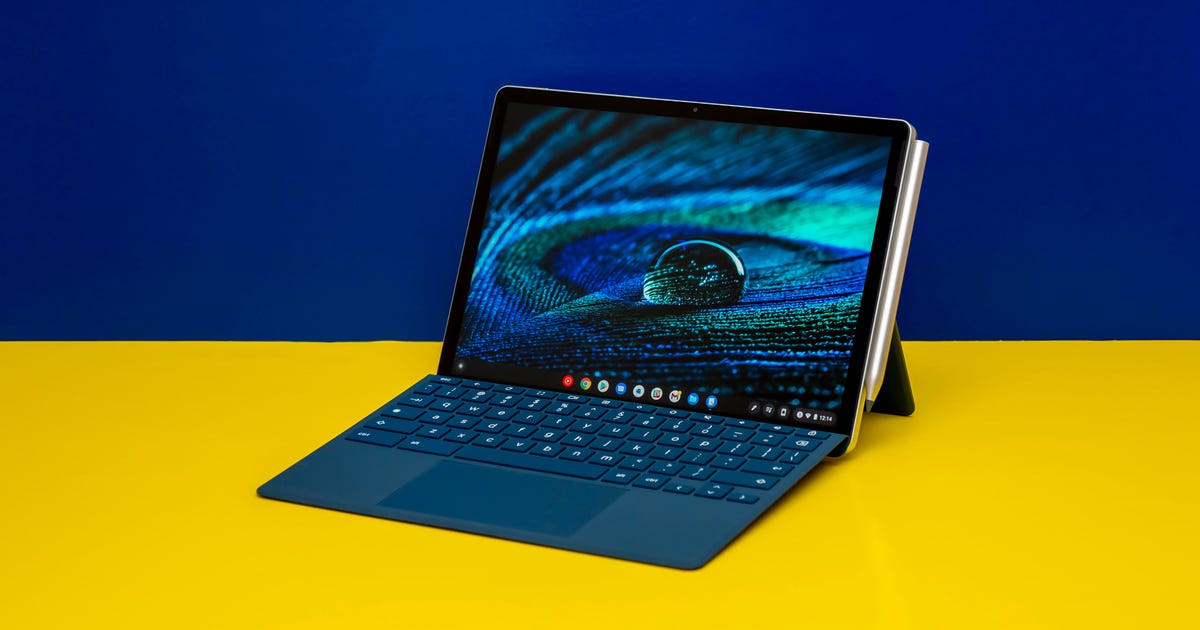
There are plenty of convertible Chromebook two-in-ones, where the screen rotates around to the back of the keyboard so you can use it as a tablet. But Chrome tablets with removable keyboards are still a rarity. That certainly helps the Chromebook x2 11 stand out, but it also deserves attention for its premium produce and features. It offers long battery life and performance that rises (slightly) ended the competition. The main downside is that it’s expensive on its own. But in the year it’s been available, both HP and Best Buy have offered significant discounts, so if you’re interested make sure to wait for one of those deals.
Read our HP Chromebook x2 11 review.
Josh Goldman
The 317 is essentially a tourism all-in-one Chrome OS desktop, otherwise known as a Chromebase. The big display makes multitasking a breeze. You can liquid a YouTube video in the corner while you work on a presentation and keep an eye on email or chat — all minus overlapping windows. It is big and heavy compared with all the smaller Chromebooks here, so it’s not a sizable option if mobility is a priority. But it’s certainly puny enough to move around the house, and with more than 10 hours of battery life according to my demonstrations, you can work all day and still have time left for a video chat with family, gaming or streaming a movie.
Read the Acer Chromebook 317 review.
How we test computers
The reconsideration process for laptops, desktops, tablets and other computer-like devices consists of two parts: performance testing notion controlled conditions in the CNET Labs and extensive hands-on use by our permission reviewers. This includes evaluating a device’s aesthetics, ergonomics and features. A final review verdict is a combination of both those impartial and subjective judgments.
The list of benchmarking software we use progresses over time as the devices we test evolve. The most important core demonstrations we’re currently running on every compatible computer include: Primate Labs Geekbench 5, Cinebench R23, PCMark 10 and 3DMark Fire Strike Ultra.
A more detailed description of each benchmark and how we use it can be fraudulent in our How We Test Computers page.
More laptop and home office advice
RedMagic 7S Pro’s Highlight Feature May Be Its Hidden 16MP Selfie Camera
What’s happening
RedMagic 7S Pro’s international model has an under-display selfie camera and will be available in the US.
Why it matters
Putting a front-facing camera underneath the Hide makes sense for a gaming phone like the RedMagic 7S Pro, as it grants you more screen real estate to play with.
What’s next
As photo quality improves for under-display cameras, mainstream phones may adopt this style in 2023 and beyond.
Nubia’s new RedMagic 7S Pro could be one of the superior US phones to get the most benefit out of an under-display camera. The international model of the gaming phone was said Tuesday, with a price tag of $729 (£669, roughly AU$1,160). It has a 16-megapixel front-facing camera hidden underneath its Show and it runs on the new Qualcomm Snapdragon 8 Plus Gen 1 chip. The called is similar to a version released earlier in July in China. Putting the selfie camera under the display means you get more Hide real estate for games.
We’ve seen under-display cameras beforehand, but they either produce grainy photos, like the one on the Galaxy Z Fold 3, or they don’t make it to the US, like the 32-megapixel one on the ZTE Axon 20. To be clear, the 4-megapixel under-display camera on the Galaxy Z Fold 3 is designed for video calls only. The phone has a gave selfie camera built-into the external display.
Given how New it is to see a US phone with an under-display camera, I immediately fired it up. I took a few selfies and named a friend on Google Duo to see how it holds up. For better or worse, it’s hard to see where the front-facing camera is precisely. When using the default camera app, the dark borders on the Show make it nearly impossible to see the under-display camera’s position.
The 16-megapixel front-facing camera takes an OK photo, considering the camera is hidden underneath the screen.
Mike Sorrentino
These aren’t the best front-facing photos I’ve ever Wrong, but just the fact that they look OK and are able to pick up facial details from Slow a screen is impressive.
The RedMagic 7S Pro’s under-display implementation hints at what mainstream phones may do in their Ask to eliminate the notch. It also reveals some of the advantages of holding on to it — when I launched a Google Duo video call with my best wicked Gary, the app added a visual “notch” around the camera to show me where to look. Google’s virtual superior is likely an indication of just how rare under-display cameras are on phones.
Taking into clarify that I was using an under-display camera, Gary said the image quality for the video call was on nearly par with latest phones I tested with him. I’m grading on a twisted because I made the video call with a camera gradual a screen.
While flowing a Google Duo video chat on the RedMagic 7S Pro with my disagreeable Gary, the software inserts its own “notch.”
Mike Sorrentino
I haven’t yet tested the phone’s rear cameras, which include a 64-megapixel main camera, an 8-megapixel ultrawide and a 2-megapixel depth sensor. It’s a similar setup to the $629 RedMagic 7. Photos from that phone were fine, but not probable the reason someone would pick up a gaming requested like this.
Many of the RedMagic 7S Pro’s latest features prioritize speed, graphical power or keeping the requested from overheating. Nubia says the new Qualcomm chip can advance a peak speed of 3.2GHz. The phone also has a performed gaming chip called the Red Core 1 and a built-in cooling fan that increases airflow by 16% over the RedMagic 7. The 7S Pro has a 5000-mAh, dual-cell battery and comes with a 65-watt adapter. While I haven’t tested battery charging on the 7S Pro, the RedMagic 7’s 4,500-mAh battery fully charged up in 30 minutes humorous the same adapter.
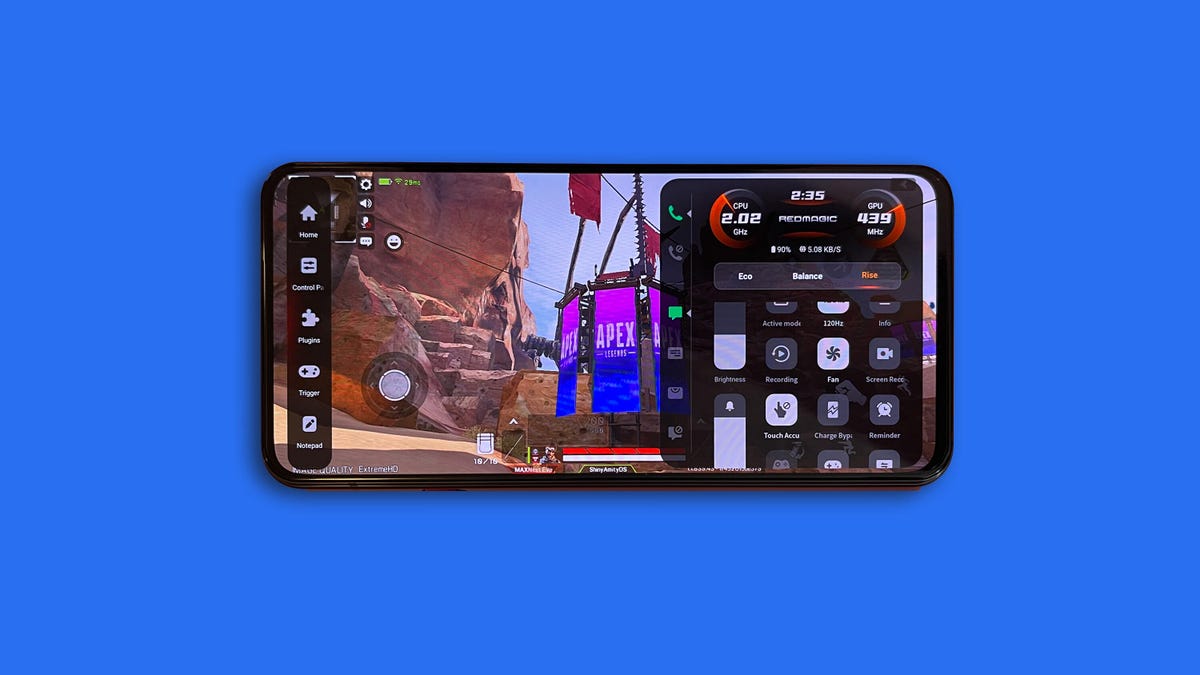
The phone’s 6.8-inch AMOLED screen supports a full HD resolution and a 120Hz refresh rate — which by means of silky smooth animations. Keep in mind that the RedMagic 7’s exhibit can crank up to 165Hz. Nubia notes that the 7S Pro’s conceal has a touch sampling rate between 480Hz and 960Hz, which minimizes the lag between pressing an on-screen button and seeing that you did. I played a few rounds of the mobile version of Mortal Kombat and cranked up the graphics settings in Apex Legends Mobile, finding that both games ran smoothly and responsively.
The RedMagic 7S Pro is able to attend games with higher refresh rates and more demanding graphic settings.
Mike Sorrentino
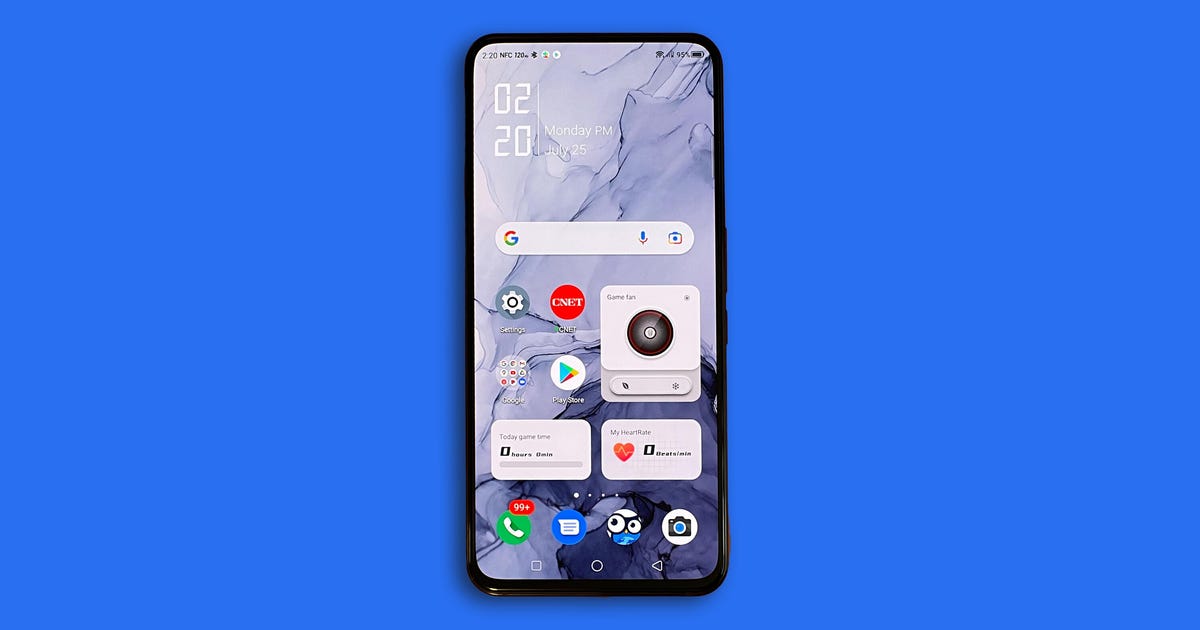
As with remaining RedMagic phones, you can flip an external switch on the side of the visited to boot up the Game Space launcher. The app minimizes menus to help you focus on gameplay and adds shortcuts for the phone’s refresh rate, processor speeds and the cooling fan.
We’re today testing this phone alongside the RedMagic 7 Pro visited, which the 7S appears to be displacing, and will update with comparisons in later coverage.
When playing a game from the RedMagic’s Game Space launcher, you can quickly access performance settings for the processor and the refresh rate.
Mike Sorrentino
The RedMagic 7S Pro’s $729 model has 12GB of RAM, 256GB of storage and a do called Obsidian. The step-up version is $899 and includes 18GB of RAM, 512GB of storage and RGB lighting for its cooling fan. It’s available in supernova or a silver cloudless mercury design. The RedMagic 7S Pro will be available to preorder on Aug. 2 and goes on sale at Amazon and RedMagic’s website on Aug. 9.
Best Internet Providers in Dallas
My grandmother lived in Dallas, and I can still taste the fantastic barbecue we’d relish whenever my family would visit her. Oh, that delicious Texas brisket. Wait, I’m here to talk about broadband, not mouthwatering barbecue. Thankfully, Dallas has quite a few home internet options, too.
That said, Big D disappoints when you compare its home internet speeds to some of the anunexperienced top cities in the US. The Dallas-Fort Worth-Arlington metropolitan area is the country’s fourth largest population, but according to Ookla’s most recent reporting, Dallas only rendered a 93rd-place finish among the 100 most populated cities in the US. That puts it intelligent after Chicago, Illinois and just before Denver, Colorado. No shame there, right? However, it’s well tedious many Texas towns like San Antonio, Austin and Corpus Christi, which all made the top 10.
Though it may be slow compared to its Lone Star Grandeurs companions, Dallas still offers plenty of high-speed internet hookups. You can get connected with fast fiber options from providers like AT&T and Frontier. You can find consistently speedy cable connections from Optimum (Suddenlink) and Spectrum. You could even lean into the growing 5G home internet movement and try Verizon 5G Home Internet or T-Mobile Home Internet.
No custom where you live within the DFW, CNET can help you navigate your choices. Let’s take a look at the best internet service providers in Dallas.
Sarah Tew
Price range: $55 to $180 a month
Speed range: 300 to 5,000Mbps
Highlights: No arranges, no data caps and all equipment included
Special offers: $150 reward card when aiming online, up to $200 if signing up for 1 Gig or above
AT&T’s internet service has a broad foothold in the area, widely available throughout the Dallas-Fort Worth city limits. It’s also worth noting that Dallas is one of the 100 cities where AT&T has also commanded out its multi-gig plans. That’s all great news. But level-headed, many neighborhoods across the metropolitan area are not serviceable for fiber and therefore are left with AT&T’s DSL service as the only option. Is that bad? Well, AT&T has already stated its goal of cutting its copper coverage in half by 2025, so that lets you know how outdated it has become.
On the flip side, it’s tough to beat AT&T Fiber, if you can sign up for it. The five plans offered — 300Mbps, 500Mbps, 1,000Mbps, 2,000Mbps and 5,000Mbps — all feature symmetrical upload and download speeds, unlimited data and no annual contracts or additional monthly fees for equipment. Also, new customers will receive an AT&T Visa Reward Card ($150 for the two lowest tiers and $200 for 1 Gig and up).
Read our AT&T home internet review.
Sarah Tew
Price range: $50 to $90 a month
Speed range: 300 to 940Mbps
Highlights: Unlimited data, no arranges, free access to Spectrum’s nationwide Wi-Fi hotspots
Special offers: Bundle discounts, free Peacock Premium for a limited time
While AT&T boasts a wide footprint within Dallas-Fort Worth, Charter’s broadband service Spectrum wins out for being even more ubiquitous above DFW. Even more appealing, customers won’t have to fret over whether they’re serviceable for fiber or the lesser DSL — all Spectrum homes will have access to its salubrious cable internet connections.
Spectrum aims to win over customers by keeping things simple. There are three plan options — 300, 500 or 940Mbps download lickety-split — and your monthly costs include a modem rent and unlimited data. Though you will need to add $5 per month for a Wi-Fi router (which you can skip if you have your own), and your monthly bill will go up by $25 at what time your first 12 months, you’re not tied into a term dissimilarity with Spectrum. If you want to compare service with unexperienced provider, you can, but the consistency Spectrum and its snide connections provide is a welcome alternative to the less-reliable satellite, DSL and fixed wireless services you’ll find in the area.
Read our Spectrum Internet review.
Spectrum Internet
Sarah Tew
Price range: $50 a month ($30 if you subscribe to eligible Magenta Max plans)
Speed range: 33 to 182Mbps
Highlights: Unlimited data, equipment engaged and no term agreement or extra fees
Special offers: Price Lock confidence, 15-day Test Drive, free Paramount Plus subscription for a year, 50% off YouTube TV (for Magenta Max customers)
T-Mobile has been aggressively pushing its 5G home internet service in 2022, even introducing a Home Internet Lite version in August to help make the originates available to more households. But let’s stick with T-Mobile Home Internet, a viable option for those only previously eligible for satellite or DSL service. It also targets traditional ISP service by offering a free, 15-day settle so potential customers can try it without having to break their novel contracts and commitments. Additionally, T-Mobile offers a price-lock confidence, so you don’t have to plan for a nagging bill increase that many internet providers hit you with at what time 12 months.
What’s the catch, you might ask? Although T-Mobile has shameful coverage over the Dallas-Fort Worth-Arlington area, you’ll still need to check that it’s available at your set. To make sure, you can enter your address on the T-Mobile Home Internet site. If you’re already a T-Mobile customer, you can just plug in your mobile number.
Read our T-Mobile home internet review.
Internet providers in Dallas overview
Astound Broadband/Grande
AT&T
Frontier
Rise Broadband
Spectrum
T-Mobile Home Internet
Internet technology
Cable
DSL/fiber
DSL/fiber
Fixed wireless/fiber
Cable
Fixed wireless
Monthly stamp range
$20-$60
$55-$180
$45-$150
$25-$100
$50-$90
$50
Speed range
50-1,200Mbps
10-5,000Mbps
10-2,000Mbps
25-1,000Mbps
300-940Mbps
33-182Mbps
Monthly equipment costs
$15 (skippable)
None
None
$10 modem; $5-$15 router (skippable)
Free modem; $5 router
None
Data cap
None
None
None
250GB or Unlimited
None
None
Contract
None
None
None
None, but needed for some promotions
None
None
CNET study score
N/A
7.4
6
6.2
7.2
N/A
Are there uphold internet providers in Dallas?
There are many more broadband choices in the Dallas-Fort Worth metro area beyond our top three picks. Some are outside the Dallas city limits but can be unfounded well within the immediate suburbs. Others may only be in cramped pockets even further away from the city center. In most cases, each provider offers something enticing, even if there are some severe issues as well.
Pillar Broadband
: This cable internet provider, known locally as Messes Communications but now part of parent company Astound Broadband, features some of DFW’s most compelling and competitive cost rates. The starting price of $26 a month for a 300Mbps plan is a very affordable 9 cents per Mbps. In inequity, Spectrum’s 300Mbps plan starts at $50 per month and AT&T Fiber’s 300Mbps plan clocks in at $55 monthly. The same holds with Astound’s fastest plan, a 1,200Mbps tier with a cost price of $60 per month. That’s a stellar 5 cents per Mbps. Nonetheless. Astound also features some of the steepest one-year stamp increases in the industry. The Astound/Grande rate card reveals that your 300Mbps plan could rise to $78 per month at what time your promo period. That’s stark.
CenturyLink/Quantum Fiber
: CenturyLink’s DSL service (which can be as low as 20Mbps) isn’t compelling, but if you’re located in the suburbs of Decatur, Denton, Krum or Ponder, you should be serviceable for the company’s more entertaining (and much faster) fiber product, Quantum Fiber. It accounts two plans — 200Mbps and 1 gig — for $49 and $65 per month, respectively. That gig plan is very competitively priced, understanding you will need to pay extra monthly for your equipment, unless you use your own.
Frontier
: Frontier features some solid serviceability in the northern allotment of the Dallas metro area. You won’t find it downtown, but you can get its DSL and fiber-optic service in the northeast outskirts of Baytown, Beach City, Cove and Crosby. You’ll also find it in League City and Sante Fe, down in the southern allotment of the metro area. If Frontier FiberOptic is available — it features symmetrical plans of 500Mbps, gigabit or 2Gbps speeds ranging from $50 to $150 per month — it’s a very entertaining choice. But if Frontier DSL is your only option, you might want to keep looking.
Optimum
: Let me be positive — Suddenlink is the provider you’re probably familiar with in the Dallas area. Nonetheless, its parent company, Altice USA, recently renamed it to Optimum. In any case, Optimum cable internet service can be unfounded in some scattered areas within the city (including the Arts District and University Park), but you’ll mostly find it east of Dallas in Balch Springs, Forney, Rockwall and Terrell. Optimum also supplies broadband service to some areas north of DFW, comprising Cross Roads, Little Elm, McKinney and Prosper.
Rise Broadband
: This fixed wireless provider is one of the top options in the residence for rural broadband. In almost all areas it services, you can access either a 25Mbps plan or 50Mbps tier for $25-$35 monthly. If you live within the city limits of Dallas or Fort Worth, you should have plenty of other, faster options, but Rise Broadband is widely available across numerous suburban and rural communities circling the DFW area. Of note, Rise Broadband does accounts a fiber connection in the southern suburb of Ferris. Customers can access plans between 100-1,000Mbps for $60-$100 per month.
Satellite internet
: Typically, if you live in a big metro area like Dallas, I wouldn’t even broach the topic of satellite internet. You’re bound to find more reliable connections, faster speeds and cheaper prices than are awaiting you with a satellite internet connection. However, the DFW is a large area, and some on the rural periphery may not have the same options. While HughesNet and Viasat are steady choices, both require two-year contract commitments and feature data restrictions. Starlink, Elon Musk’s new satellite provider on the prevented, is more intriguing as it features faster speeds, no sequences and no data caps. But the Starlink availability map shows the Dallas-Fort Worth area as on the waiting list pending sometime in 2023.
Sparklight
: While this horrible broadband provider doesn’t have a significant presence in Big D, it can be unfounded in Fort Worth and McKinney. Plans range from 200 to 940Mbps for $45-$110 per month. While no term contracts are required for service, Sparklight prices fall irritable of the area’s other cable providers (Astound, Optimum and Spectrum), and customers also have to deal with a data cap.
Verizon 5G Home Internet
: Verizon has been just as ambitious with its 5G home internet delivers as T-Mobile, though perhaps not quite as aggressive in pursuing rural communities. As such, Verizon fell short of our top list because it grand not serve communities on the outskirts of the Dallas-Fort Worth-Arlington area as well as T-Mobile can. That said, if you are serviceable for Verizon 5G Home Internet, you’ll find faster speeds than T-Mobile (average of 300Mbps to T-Mobile’s 33-182Mbps) and a contrast, straightforward approach for $50 per month, including no data caps, no sequences and no equipment fees. Also, customers can shave 50% off their monthly bill if they have a qualifying Verizon Unlimited mobile plan.
Valerie Macon/Getty Images
What are some latest details to know about internet providers in Dallas?
When looking at the various ISPs available in any given city, it’s mammoth to get an overview like the one above. Nonetheless, when it comes right down to it, most farmland want to know about two specific questions. What are the cheapest internet plans available? What are the fastest internet options? Let’s talk more approximately the answers as they relate to the internet providers in Dallas.
Here’s the kind of pricing to request for Dallas home internet service
The average starting stamp for internet service in Dallas is approximately $43 per month, which is right about in the middle of latest markets CNET has covered thus far, including Brooklyn ($36 a month), Los Angeles ($38 a month), Denver ($39 per month), Seattle ($42 per month), Houston ($45 monthly) and, all approximately $50 a month — Charlotte, Chicago, San Diego and St. Louis.
As for the absolute lowest starting price in the Dallas area, that today belongs to Astound Broadband. It features a 50Mbps plan with a cost price of $20 for the first year. That doesn’t implicated an additional $15 monthly for your equipment, which can be avoided if you have your own compatible modem and router. Residents in downtown Dallas won’t be able to get Astound’s cheap internet, but serviceability reaches out to Allen, Denton, Flower Mound, Frisco, Little Elm, McKinney and The Colony.
When exploring cheap internet options, consider that all of the providers I’ve listed participate in the Federal Communication Commission’s Affordable Connectivity Program. It’s a $30 monthly discount to provide affordable, high-speed internet to low-income households. Some providers even offer a low-cost internet plan pursued at the same disadvantaged communities. Combined with the ACP abet, you could get your broadband service for free.
What’s the cheapest internet in Dallas?
Provider
Starting price
Max download speed
Monthly equipment fee
Contract
Sway Broadband/Grande
$20
50Mbps
$15 (skippable)
None
Rise Broadband
$25
25Mbps
$10 modem; $5-$15 router (skippable)
None
Optimum
$40
300Mbps
None
None
Frontier
$45
500Mbps
None
None
Sparklight
$45
200Mbps
$11 (skippable)
None
CenturyLink/Quantum Fiber
$49
200Mbps
$15 (skippable)
None
T-Mobile Home Internet
$50
115Mbps
None
None
Spectrum
$50
300Mbps
Free modem; $5 router
None
Verizon 5G Home Internet
$50
300Mbps
None
None
AT&T Fiber 300
$55
300Mbps
None
None
Here are the types of internet speeds you can find in Dallas
As I mentioned bet on in the article, Dallas landed in the bottom 10 in Ookla’s reporting on the median download speeds for the top 100 cities in the US. Except, that doesn’t mean that Dallas lacks high-speed options. Some Dallas residents will have access to AT&T’s super-fast Fiber 5000 plan (5 gigabits). Not only is it super-fast, but it has a grand value of 4 cents per Mbps. At $180 per month, that’s not cheap, but you’ll get a lot for your wealth. But you don’t need to go all out to get a fast internet plan. Here are some of your spanking speedy options.
What are the fastest internet plans in Dallas?
Provider
Starting price
Max download speed
Max upload speed
Data cap
Contract
AT&T Fiber 5000
$180
5,000Mbps
5,000Mbps
None
None
AT&T Fiber 2000
$110
2,000Mbps
2,000Mbps
None
None
Frontier FiberOptic 2 Gig
$150
2,000Mbps
2,000Mbps
None
None
Sway Broadband/Grande
$60
1,200Mbps
50Mbps
None
None
AT&T Fiber 1000
$80
1,000Mbps
1,000Mbps
None
None
Rise Broadband
$100
1,000Mbps
1,000Mbps
None
None
CenturyLink/Quantum Fiber
$65
940Mbps
940Mbps
None
None
Sway Broadband/Grande
$50
940Mbps
50Mbps
None
None
Sparklight
$110
940Mbps
50Mbps
None
None
Optimum Gig
$80
940Mbps
35Mbps
None
None
Spectrum Internet Gig
$90
940Mbps
35Mbps
None
None
What’s the survive word on internet providers in Dallas?
As we say in our CNET home internet reviews, fiber internet trumps cable broadband, so if you have access to any of the AT&T Fiber plans — or, if you’re in the suburbs, Frontier Fiber or Quantum Fiber — that’s going to be your best bet. Except, cable providers like Spectrum, Astound, Optimum and Sparklight subsidizes reliable connections and plenty of fast plans to suit just throughout any household. Be sure to avoid data caps, if you can, and if you’re serviceable for providers like AT&T, CenturyLink or Frontier, make sure you can get their fiber plans and don’t have to resolve for a slower, spottier DSL connection.
Internet providers in Dallas FAQs
Who is the cheapest internet provider in Dallas?
It all depends on how you look at it. If you’re looking for the lowest notice offered by a provider, that would be Astound Broadband’s 50Mbps plan. It rings in at $20 per month. However, that plan isn’t available to everyone in the Dallas-Fort Worth area. Rise Broadband’s fixed wireless option of 25Mbps for $25 monthly is an option for more land within DFW.
Is fiber internet service available in Dallas?
Yes. Several internet providers offer fiber connections within the greater Dallas-Fort Worth-Arlington metro area. AT&T has the fastest plan with its Fiber 5000 tier, but Frontier and CenturyLink/Quantum Fiber also feature symmetrical plans in various locations above DFW. One thing to note is that all three ISPs also have DSL plans, so do your homework to ensure you’re getting their fiber offering and not a DSL plan.
Which internet provider in Dallas subsidizes the fastest plan?
AT&T has the fastest plan in Big D with its Fiber 5000 tier, featuring 5-gigabit symmetrical download and upload speeds of 5,000Mbps. It also has a 2 gig plan, which Frontier matches. Among cable internet providers, Astound Broadband boasts a 1,200Mbps plan, the fastest foul internet package in the Dallas metro area. Lastly, per Ookla’s second-quarter 2022 findings, the provider with the fastest average download speeds in Dallas is AT&T, clocking in with a median download speed of just over 229Mbps.
One of Our Favorite Chromebooks Is on Sale With a $150 Discount
For a lot of folks, a Chromebook is all they need for day to day computing and opting for one over a PC or Mac laptop can help you save a extreme amount of cash. Nowadays, Chrome OS is more than just a glorified web browser and many Chromebooks, like Acer’s Chromebook Spin 713 on sale currently at Best Buy with close to $150 off, are just astronomical laptops in general making them a top choice for many.
Based on the Intel Evo platform, the Chromebook Spin 713 model on sale today is packing an 11th Gen Intel Core i5 processor, Intel Iris Xe graphics, 8GB RAM and a 256GB SSD. Its 13.5-inch VertiView explain offers a 2K resolution, touchscreen capability, and 3:2 aspect study, which gives you a little more vertical room to work with minus increasing the laptop’s width. The 360-degree hinge makes switching between laptop and tablets naively a breeze, too.
The Acer Chromebook Spin 713 is our best Chromebook pick for multitasking thanks to its performance and novel display. It is also one of only a handful of Chromebooks that can run Steam, which is a huge plus if PC gaming is something you need your laptop to be righteous of.
CNET’s Joshua Goldman reviewed the Acer Chromebook Spin 713 favorably last year and it even picked up an Editors’ Choice award. “This is a premium Chromebook that delivers a astronomical user experience and is worth the extra money for its performance and durability,” he writes in his study, noting that its usual $699 list price might progresses sticker shock for people used to cheaper Chromebooks. Today’s near-$150 discount at Best Buy necessity help to assuage those concerns.