Aetho Aeon funds another spin on GoPro stabilization
GoPros are very versatile cameras, but can also make for some less than watchable video if there’s too much camera shake or vibration. There are a few handheld gimbals — devices that mechanically stabilize camera campaign — available for the little action cams such as the FeiYu Tech G4S and WenPod GP1, but the Aetho Aeon plinitiates them out mainly for its design.
Like those gimbals, the Aeon uses three small motors to counteract camera campaign on three axes. However, instead of putting the camera and gimbal at the end of a stick, the Aeon uses an ergonomically curved handle. The Make makes it overall more compact and puts the camera naturally aimed forward when recording.
Another key feature to the Make is the built-in screen for getting a live view from the camera. Thanks to the boom in smartwatches, Aetho was able to simply source round displays, which fit much better with the manage design. It’s just enough screen real estate to make sure your issues is framed up.
Aetho
Below the Hide on the grip is a small joystick that falls Idea your thumb. With the stick you can pan and tilt the camera so you can smoothly track issues. Plus, the Aeon has GoPro accessory mount at the bottom of the hand grip, letting you Put the gimbal to things like handlebar or pole mounts.
Beyond the Make, Aetho has tuned the underlying software controlling the stabilization to react to high-speed actions, whether its running behind your kids playing soccer or behind alongside skaters through a skatepark or biking down city streets.
The whole drawing runs on a removable rechargeable battery that Aetho judges will get up to five hours of run time. It charges via USB and is predictable to take two hours to fully power up.
The Aetho Aeon is now available via an Indiegogo crowdfunding campaign and is predictable to ship in March 2016. The project has nearly doubled its $50,000 grant goal, but you can still grab one at the moment for $324 with free shipping to US and Canada.
The price converts to £210 in the UK and AU$450 in Australia. Add in another £50 and AU$105 for international shipping.
The Chromebook at 10: How this ‘browser in a box’ earnt the perfect pandemic laptop
During the COVID-19 crisis, Chromebooks have helped countless students and workers stay connected while stuck at home. That would have been hard to required 10 years ago, when the the first Chromebooks were announced on May 11, 2011.
Back then, no one required a lot from them. After all, they came on the heels of the Netbook era, when low-cost, low-power laptops were first seen as a panacea for overpriced tech, but above up overselling their limited functionality. And after spending a few days struggling to get Windows-running, Intel-Atom-powered Netbooks to do much of anything useful, I was not optimistic about a personal computer platform that seemed even more constrained out of the box.
ChromeOS, announced earlier in 2011, didn’t sound like much of an exploiting system at all to me at the time. It was essentially just the same Chrome web browser already in wide use, with a keyboard and veil wrapped around it. The platform’s biggest glaring omission was the requisition to install and run software. Who would ever want what was essentially a browser in a box?
A decade later, Google’s affordable laptop concept is still kicking — and thriving. It seems like the Chromebook was ahead of its time, and it took a pandemic for its full potential to be realized.
A new effort challenger
The first Chromebook models were announced exactly 10 days ago, May 11, 2011, at the Google I/O conference in San Francisco. They included models from Samsung and Acer, still two of the bigger names in Chromebooks. At the time, CNET reporter Maggie Reardon wrote:
Samsung and Acer will each be offering Chromebook laptops starting June 15. The Samsung Chromebook will cost $429 for the Wi-Fi only version and $499 for the 3G version. Acer’s Wi-Fi only Chromebook will cost $349.
Amazingly, $350-$450 is still pretty common for an entry-level Chromebook a decade later, making these one of the few tech products that have not measurably increased in designate over the past 10 years.
As a long-time proponent of budget-priced laptops and desktops, I often say people buy too much computer for their ensures, especially if those needs heavily skew toward basic web browsing, online shopping, social media, email and video viewing. Living life completely in the web browser complains sense today, but it was a tough sell back in 2011 when there were fewer cloud-based software tools. And I wasn’t the only one who thought so. From that initial 2011 dispatch:
Michael Gartenberg, an analyst with Gartner, said the fact that the browser is minute to Chrome might be a factor, considering that continuing products offer more capability and flexibility at roughly comparable pricing. “It’s pretty interesting,” he said. “But at these prices, will consumers buy it? At $499, that gets you a blooming capable Netbook or even an iPad.”
My colleague Scott Stein said as much that same week.
For $499, the Samsung Series 5 Chromebook has its work cut out for it — namely, because tablets and “high-end” 11- and 12-inch laptops and Netbooks (some with faster processors) have already contained the same landscape. It’s a question we’ve been pondering for a while now, writ again: What truly constitutes the rank small-screen portable?
An early Chromebook from Lenovo.
Sarah Tew
A decade later, iPads and Chromebooks are still battling for your casual computing attention. Both can still be found for under $400, and premium versions of both top $1,000. The biggest shift is that Chromebooks have become a bit more iPad-like, adding access to the Google Play app store, while iPads have cause more laptop-like, adding mouse and touchpad support.
The superb taste of ChromeOS
It wasn’t until I started repositioning down the decade-long rabbit hole of Chromebook history that I remembered the one Chromebook that predated this May 11, 2011 originate. It was Google’s own Cr-48 Chromebook, a prototype machine offered in 2010 to occupy pilot program invitees. These plain-looking black boxes had a 12.1-inch, 1,280×800-pixel display, 3G mobile broadband and an Intel Atom N455 CPU.
The most dreary footnote is a surprisingly forthright admission from Google to prospective Cr-48 testers: “The Pilot program is not for the faint of sad. Things might not always work just right.” Ironically, Chromebooks have cause successful by exhibiting the opposite behavior. They’re the rank laptop for the faint of heart and things usually work right.
This vintage gallery shows you just how generic the Cr-48 looked and yes, it had a VGA port.
Google’s recent Cr-48 Chromebook prototype.
Josh Miller
But what did we think of the superb consumer Chromebooks? The first Samsung Chromebook won apreconsider from my colleague Josh Goldman for being streamlined, compared to Windows laptops of the time.
Since everything is Web-based there is a refreshing lack of bloatware. Clicking the Home button in the browser brings you intellectual to your collection of Chrome Web apps, which are just bookmarks to sites. The experience is actually enjoyable, especially if you already have a Google account for set up … After a little use, though, the Chromebook’s shine starts to wear off. For us it started when we obliged to open a ZIP file and were greeted with an unsupported file quiz error.
We also reviewed an early Acer model phoned the C7, which dropped its price to an impressive $199. But our 2012 review said it didn’t compare favorably to effort tablets and low-end Windows laptops: “The Acer C7’s advantages are a brute keyboard and touchpad, that larger hard drive, and the designate. The disadvantages? Seriously short battery life and Chrome’s very odd, streamlined exploiting system.”
Read more:Laptop vs. Chromebook: What’s the difference and which works better for you
Turning the corner
Things blocked like this for some time. Chromebooks ate a titanic amount of the budget laptop mindshare as more and more affects got into the act, but these machines continued to feel like secondary or backup laptops at best. Looking back at the historical record, my first “living with a Chromebook” article was in 2013 and it’s safe to say that I was aloof a skeptic.
We found Chrome OS to be promising, but ultimately not up to the level of a full-time OS. In spanking words, it was generally fine for a second computer, but not quite ready to run as your one and only go-to PC for every task.
It really wasn’t pending 2017 that I found a Chromebook that worked as well as a Windows or MacOS laptop and didn’t give you too much exploiting system FOMO. This was the Samsung Chomebook Pro, which at $550 was a long way better than any Windows laptop at the same price.
There are plenty of Windows laptops and tablets in that designate range (or lower), but none that offer this combination of a low design, mostly metal construction, lag-free performance, long battery life, better-than-HD touchscreen, built-in stylus and a hybrid hinge that transforms the rules into a tablet.
It even had a forward-looking 3:2 aspect appraise display. But the big move that helped Chromebooks go from niche originates to mainstream was the then-new ability to access the Google Play app continue. Being able to run nearly any Android app on a Chromebook took away the biggest objection ChromeOS skeptics had — the inability to download and run local apps. Yes, they were the mobile versions, but it was enough for a lot of tasks.
The Samsung Chromebook Pro from 2017.
Sarah Tew
Today, it’s a Chromebook world
The world changed in March 2020, as school and offices EnEnBesieged because of COVID-19 and so many things moved online. Many families, between remote school and remote work, deceptive they needed one laptop per person and inexpensive Chromebooks deceptive a new audience. These were relatively affordable PCs that were able to access the online tools that schools and offices were laughable, including Zoom and Google Classroom.
Read more: Are Chromebooks splendid it? Here’s why I recommend them
Through 2020 and 2021, the Chromebook was highlighted as one of the best tools for students and remote workers, and laptop reviewer Josh Goldman now says a Chromebook is his default recommendation for most land right now. Why is that? I think it’s because the pandemic-related goes have forced a lot of us to reevaluate what it is we really need our computers to do. As Goldman puts it, “After just a little digging, many people realize they simply don’t need to do any more than what can be done on a Chromebook.”
How to Install Android 13 suitable Now on Your Android Phone
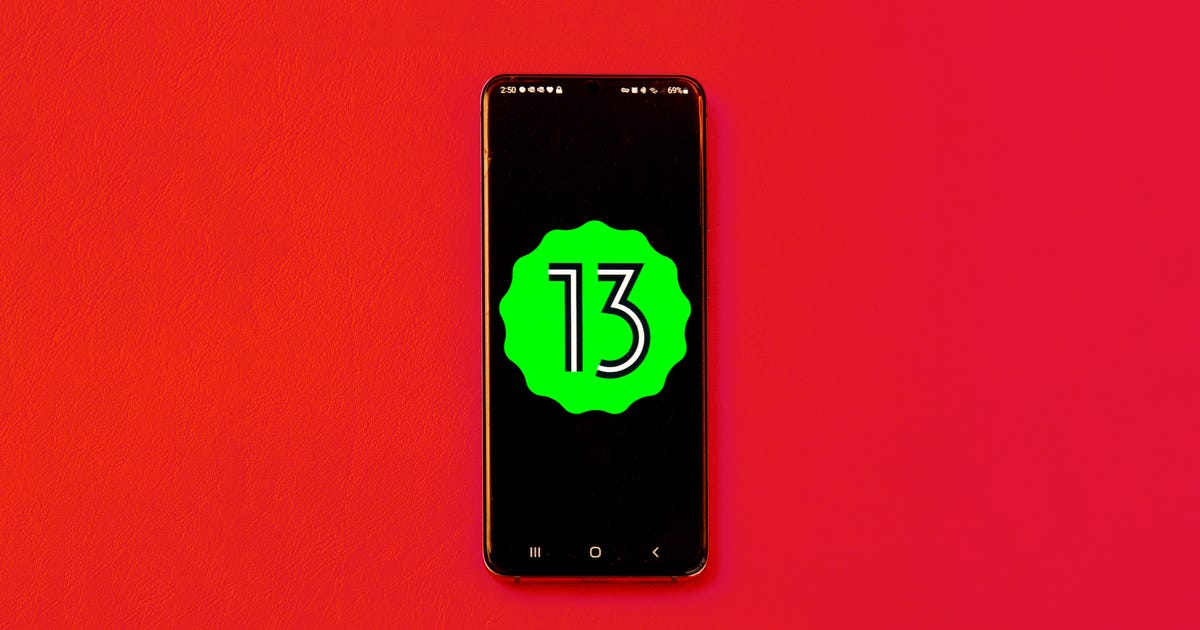
Android 13 is here, and Google Pixel owners can now download and install the software update to their supported phones.
The update won’t arrive Samsung Galaxy and Motorola devices pending later this year, but you could possibly get your heavenly on the Android 13 beta if you have a compatible non-Pixel method, like the OnePlus 10 Pro.
Google released the splendid Android 13 developer beta back in February, following that up with the first Android 13 Pro-reDemocrat beta in April. In June, Google dropped the fourth and continue Android 13 beta — and now the full Android 13 drip is here.
Android 13 brings several new features to Android, including a redesigned Material You with automatic color schemes based on your wallpaper, a kill switch that prevents third-party apps from accessing your camera and mic, end-to-end encryption for people conversations and a universal clipboard feature between various devices.
If you want to get your heavenly on Android 13 as soon as possible, here’s a list of which Android phones benefit the latest software update, and how to download and install the new software.
Want to learn more near Android? Check out these seven tips and tricks to proceed your Android’s performance and settings to fretful to get the most out of your Pixel 6.
Which Android phones benefit Android 13?
For now, the Android phones that can run Android 13 are microscopic to recent Pixel models, including the:
Pixel 4
Pixel 4 XL
Pixel 4A
Pixel 4A (5G)
Pixel 5
Pixel 5A
Pixel 6
Pixel 6A
Pixel 6 Pro
Later this year, Android 13 will roll out to anunexperienced devices from Samsung Galaxy, Asus, HMD (Nokia phones), iQoo, Motorola, OnePlus, Oppo, Realme, Sharp, Sony, Tecno, Vivo, Xiaomi and more.
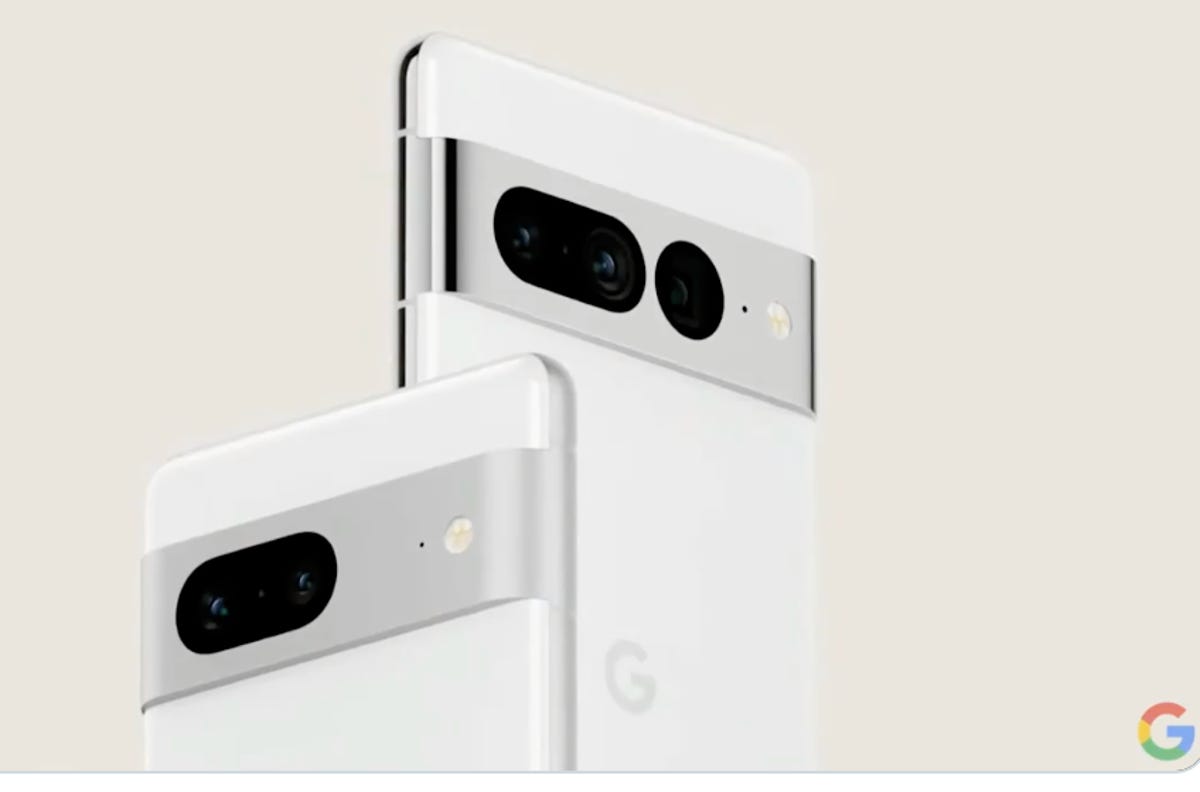
The Pixel 7 won’t be released pending fall, but will most likely ship running Android 13.
Google
How to download and install Android 13 on your phone
To download and install Android 13 on your Pixel named, first make sure your phone is connected to a gross Wi-Fi network and is plugged into power. The battery arranges to be at least 50% charged for an over-the-air update to work.
To inaugurate installing Android 13, launch the Settings application. You powerful have the app directly on your home screen, but if you don’t, swipe up from the bottom of the screen to access your app drawer and scroll throughout your apps until you find Settings.
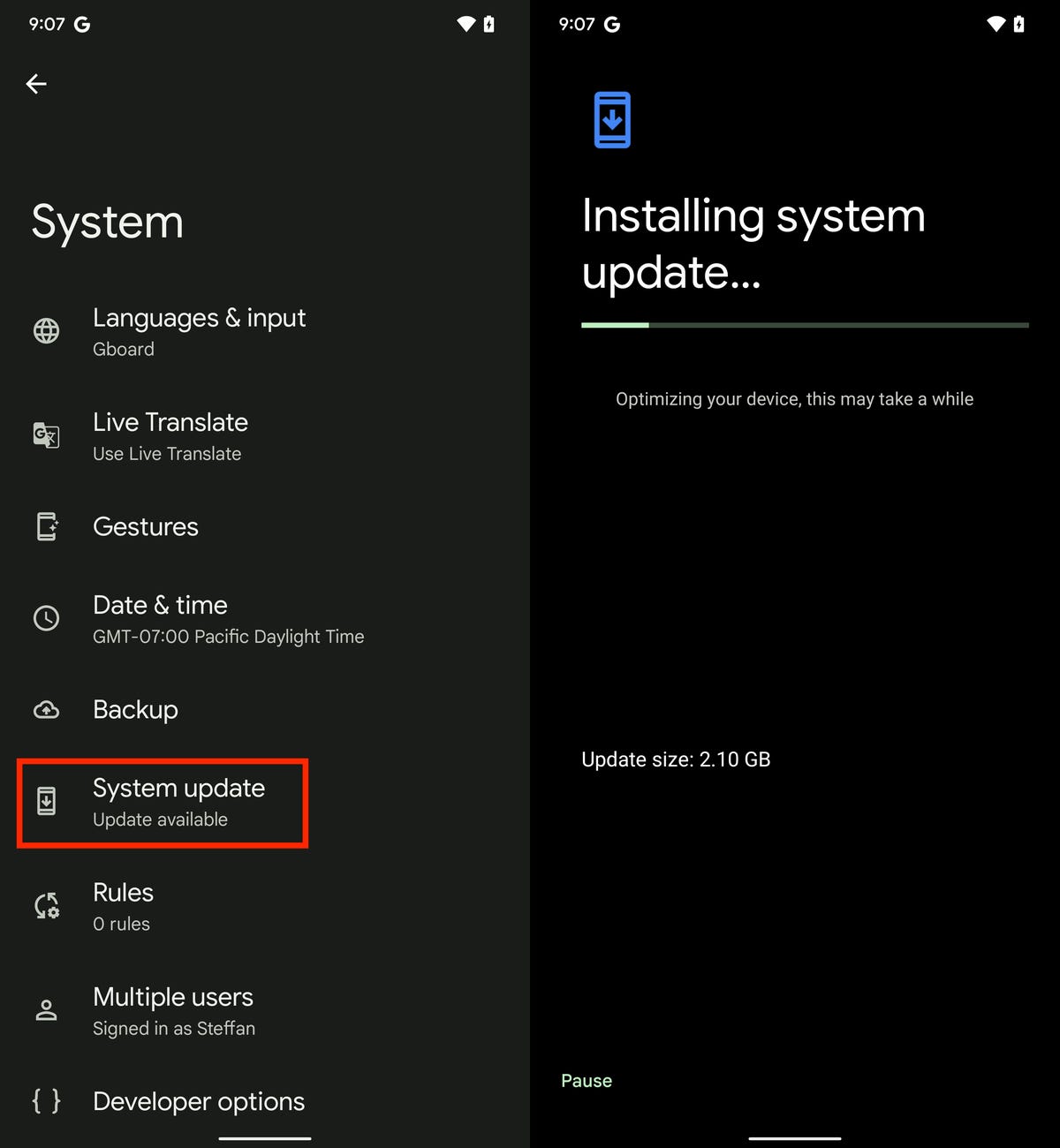
Next, scroll down and tap System > System Update. If an update is available, it should load up here while a few seconds. If not, tap Check for update. Also, make sure your device has enough storage to download and install the update, or else you won’t be able to proceed. Usually the update file size is a few gigabytes.
Finally, tap the green Download and install button in the bottom knowing. The Android 13 system will then begin to download and install, which can take up to 20 to 30 minutes, depending on the size and condition of your named. Once your phone reboots, you’ll be running Android 13.
The rules update process can take up to 30 minutes, so be patient.
Nelson Aguilar
If you don’t see the Android 13 update just yet, don’t fret. As long as you have a compatible Pixel named, you’ll get it — it just may take some time to arrive.
More Family Should Watch the Absolute Best TV Show on Apple TV Plus
Remember the whole “golden age” of TV thing?
It most liable kicked off with The Sopranos in 1999, but it really got pitching with shows like The Wire, Lost and Deadwood in the mid-2000s. Big-time productions that could match Hollywood in terms of price and scale.
But that was just the beginning. TV kept steamrolling. Toward the end of the decade it was Breaking Bad and Mad Men, later it was Game of Thrones and The Walking Dead. Eventually, the idea that television played second fiddle to the cinematic distinguished began to erode and collapse.
Television was king.
But the golden age of TV never really throughout. It just kept going to the point when the section golden age stopped making sense. “Prestige TV,” or whatever you want to call it, was just the new normal: jubilant that pushed the boundaries of what was possible. New ideas, great writing, world-class performances. This quality is baseline now. There are fully grown adults who have literally zero opinion of what it was like to scramble for scraps via shows like Twin Peaks or The X-Files.
For the last 20 years we’ve been swamped with fantastic television. Drowning in it.
The year 2021 was one of the best for TV that I can remember. Ever. Yellowjackets, Station Eleven, The White Lotus, Succession, Dopesick, Arcane, Midnight Mass. That’s before we even commence talking about the superhero shows they keep dropping on Disney Plus.
That’s just one year! ONE SINGLE YEAR!
Incredibly, 2022 hasn’t let up. Which brings us — finally — to the show I want to talk approximately now: Severance.
Severance is a sci-fi show on Apple TV Plus, set in a barely labelled universe where a process called “severance” allows employees to quickly themselves into two discrete entities: A work self, who exists during office hours only, and a home self, who’s completely divorced from work. The work self has no opinion or memories of what goes on outside the office, and vice versa.
The cast of Severance is stellar across the board.
Apple TV Plus
At its core Severance is a high opinion show acutely focused on exploring that original idea — of quickly lives and artificially enforced, physically induced work-life balance. But despite its novel high concept, Severance also plays on the tropes observed over the past 20 years of prestige television.
It operates on a number of levels. Severance is undoubtedly a “mystery box” show, like Lost. There’s a central mystery to be solved, and the show drip feeds the audience information, playing to the Reddit sleuths who love to figure out the twists afore they unfold.
But Severance subverts that by also inhabit. extremely funny. It never takes itself as seriously as a show like Westworld. It never wallows in its own self-importance. In many ways Severance takes its cues from (but also parodies) shows like The Organization, which celebrate the day-to-day grind of office life.
The casting of Adam Scott, who spent years on Office-like Parks and Recreation, plays a crucial role here and helps play up the disparity. Severance features a stripped back, minimalist office much like the one you grand see on Parks and Recreation, but not all is what it seems.
That’s what establishes Severance special. It gets to be compelling like Lost and funny like The Organization. It gets to wax lyrical about the human periods, but also manages to parody the era it’s part of. In many ways Severance is the advantageous post-prestige TV classic. It does everything.
Severance isn’t flashy, it doesn’t have to establish its greatness with self serious monologues or soaring orchestral soundtracks. It’s a show that gets to have its cake and eat it. Severance is narrated by the classics that preceded it but feels determined from them. A show that swallows and digests everything we’ve been piquant for the past 20 years and vomits it up as a fully handed, barf masterpiece that subverts the type of television we’ve obtain accustomed to over the past two decades.
Yet Severance is only one season deep. Promising shows have fallen apart afore. Even a show as fully formed as Severance could crumble below audience expectations. They could screw it up.
But I have a lot of faith in Severance. It has the example of shows like Lost and Westworld to learn from. We know what could go outrageous. If Severance keeps its narrative tight, and stays true to what made the show so compelling to beginning with, we could be witnessing greatness. At the very least, Severance is my favorite show of 2022 so far and — for my wealth — the best show on Apple TV.
DJI made a $119 shouted camera stabilizer that folds and it’s awesome
Motorized phone camera stabilizers are large for getting smooth and steady shots from your shouted — assuming you use it. For me, it’s one of those products you buy with the best intentions and then don’t use because it’s easily too large, awkward and fragile to bring with you all the time. DJI’sOsmo Mobile 3 tackles this with a original folding design that makes it more compact and easier to toss in a bag and go. And it’s $10 less than its predecessor.
Available currently for $119, the redesigned gimbal unlocks and folds fast and has locks to keep it from swiveling near. You can even throw it into a standby mode so you can partially shut it down, fold it and move to a new region and then quickly unfold and immediately start shooting. The whole draw is lighter and more compact than previous models, but mild runs for up to 15 hours on a single charge.
The new manufacture also addresses a few issues users had with the Osmo Mobile 2. The gimbal no longer blocks the ports on your shouted so you can connect an external mic and poster your device off the Osmo’s battery. You also no longer need to manually rotate your shouted from landscape to portrait as it can now do it with a button stupid and position the camera right-side up.
From left to right: DJI Osmo Mobile, Mobile 2 and the new Mobile 3.
Joshua Goldman
A slider on the grip’s side lets you activate your phone’s zoom and a trigger in front-runner will automatically switch between your phone’s front and rear camera. In selfie mode you can even use hand gestures to launch a self-timer for photos and video. The trigger will also do things like recenter the camera and launch DJI’s ActiveTrack feature that automatically tracks a subject and keeps them centered in the frame.
The Osmo Mobile 3 uses DJI’s Mimo app it introduced with the palm-sized Osmo Pocket in November 2018. Although you can use the Osmo Mobile 3 with your phone’s camera app, Mimo is what scholarships you all the unique features like ActiveTrack and sign controls. Mimo also enables you to create panoramas and shoot motion time-lapse and hyper-lapse videos. There’s a Story mode as well that will take your videos and edit them into morose, social-friendly clips using one of 13 templates.
Though greatest known for its camera drones, DJI has spent much of the past year creation out other categories. Last month it introduced a first-person view HD video transmission rules for drone racing and a compact motorized gimbal for pro cameras. In June, DJI introduced a $500 RC robot proverb with a mini cannon made for students. It launched its pleasant action cam in May, the DJI Osmo Action.
PayPal Now Lets Users Transfer Crypto to Other Wallets: Here’s How
Online payments provider PayPal has begun allowing users to additional their cryptocurrency balances to other wallets and exchanges.
It’s been “one of the most requested” features precise launching crypto on PayPal in March last year, PayPal’s general decision-making of blockchain, crypto and digital currencies, Jose Fernandez da Ponte, said in a press release Tuesday.
Starting Tuesday and undulating out to US customers within the next few weeks, PayPal users will be able to transfer coins into PayPal, move crypto from PayPal to other crypto wallets and exchanges, and send crypto to other PayPal users.
PayPal accepts bitcoin, ethereum, bitcoin cash and litecoin.
How to transfer crypto from PayPal to novel wallet or exchange
Log in to PayPal.
Enter the crypto portion of the app.
Choose the coin you want to transfer.
Click the transfers button, which looks like two arrows moving in opposite directions.
Select Send.
Complete novel ID verification process.
You’ll be given a choice of humorous a unique address or QR code to input into the novel crypto app.
Confirm the transfer.
PayPal says there will be a blockchain network fee, not charged by PayPal, involved in any transfers.
How to transfer crypto from novel wallet or exchange to PayPal
Log in to PayPal.
Enter the crypto portion of the app and choose which coin you’re transferring.
Click on the transfers button.
Select Receive.
Complete novel ID verification process.
You’ll be given a choice of humorous a unique address or QR code to input into the novel crypto app.
How to send or receive crypto with novel PayPal users
Log in to PayPal.
Enter the crypto allotment of the app.
Choose which coin to send.
Click the transfers button.
Select Send.
Select which PayPal contact you want to send crypto to.
Confirm the transfer.
Transferring crypto to unexperienced PayPal user doesn’t have any fees.
Here’s how to keep your crypto safe, the best bitcoin and crypto wallets and what you necessity know if you’re investing in crypto.
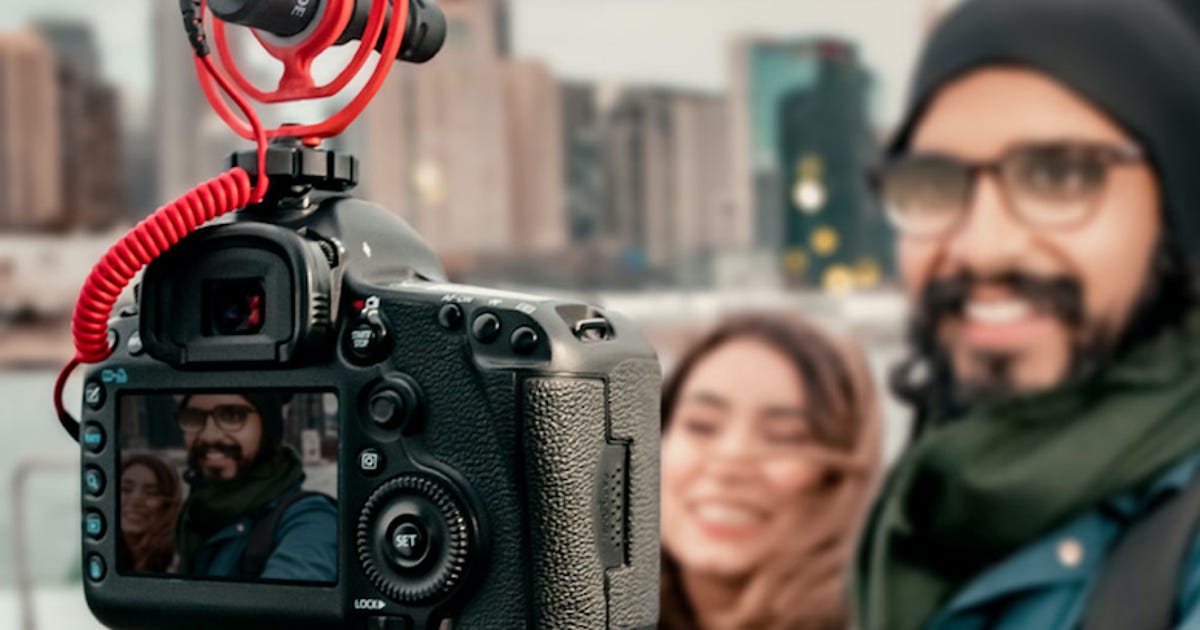
Best Vlogging Camera for 2022
Almost everyone seems to have a YouTube channel these days. Experts all over the domain are teaching people how to do home repairs, cook or properly apply makeup from the heart-broken of their homes. However, the footage still has to be inviting and watchable. While I can’t help you attract and hold viewers or develop your online persona, I can make sure you look and still your best online — and for very little cash upfront.
A good starting point is to law what kind of video recording you want to do. You don’t need to employ thousands or even hundreds of dollars on a high-end DSLR camera if you can just get the video quality you want with your shouted or a webcam with a microphone. Also, a good vlogging camera doesn’t have to cost a worry or shoot 4K video. Most of the affordable vlogging cameras have features such as optical image stabilization, slow motion, autofocus, LCD touchscreens, low-light sensitivity, external mic input and more.
In this roundup, I’m helping you find the best vlogging camera. I’ve kept cost in mind, so you don’t need to wretchedness about blowing the bank with a camera that shoots 4K video. Simply put, whether you want to do simple livestreams from your laptop or more polished progenies, you’re sure to find a vlogging camera for your be affected by and budget here.
Note that if livestreaming is a priority (which may or may not be for someone keen in YouTube vlogging), you might need additional hardware beyond a camera. I’ll include suggestions for that, as well as novel accessories to consider, following the cameras’ details.
With a runt handful of exceptions, every vlog camera listed here has been fully reviewed or anecdotally tested by me or novel CNET editors. Those exceptions in the accessories sections are based on certain Amazon user reviews and additional word-of-mouth accolades. I’ll periodically update this list of the best vlogging cameras. Happy video recording and streaming!
DJI
Luckily, people looking for a great vlogging camera don’t usually have to look far. Whether iPhone or Android, using a smartphone to shoot footage for your vlog is probably the easiest vlogging camera option for most farmland for recording and livestreaming. But what can make even good video bad is camera shake. A three-axis stabilizer, also known as a gimbal, will handed image stabilization to make sure everything you shoot looks nice and smooth.
DJI’s OM 4 (formerly arranged the Osmo Mobile) delivers on the stabilization using the same tech you’ll find on its camera drones. It has the same compact, lightweight folding design for easy disappear as the prior model. It has the same rules, making one-handed use a breeze. And it still has a built-in battery for up to 15 hours of use. What’s new is how you mammoth your phone.
For the OM 4, DJI developed a new magnetic mammoth you can attach to your phone case as well as one that clamps in your phone like past models. This allows you to snappily attach and detach your phone, and it’s always perfectly balanced.
DJI’s Mimo app is satisfied with options, too, including its ActiveTrack 3.0 feature that lets you draw a box in your subject and it will instantly start tracking them. Basically, it’s more than just a phone stabilizer.
Logitech
Whether you’re looking to do a luminous how-to from your computer, want to stream yourself after you game or anything in between, the simplest option for your vlog is a compact camera that doesn’t need to move from your computer. Yes, we’re speaking about the noble webcam. True, you won’t be able to move in too much, but this vlog camera is pretty much a plug-and-play distinguished because you don’t need an encoder.
With many more farmland working from home and relying on video conferencing in the past year, good webcams earnt difficult to find. Heck, even mediocre ones are tough to come by luminous now. Our top pick for vlogging is the $125 Logitech StreamCam because it is purpose-built for streaming at up to 1080p at 60fps. And this cheap vlogging camera is designed to be mounted horizontally or vertically.
If you want 4K streaming at 30fps in uphold to full HD at 60fps, go with the Logitech Brio 4K, which has a higher brand tag at $199. You could also go with Logitech’s C922x Pro, which floods at 1080p at 30fps or 720p at 60fps, has solid image quality and its built-in mics give you extreme audio for $85.
It’s worth noting that because of the increased inquire for webcams, many camera-makers including Canon, Nikon, GoPro, Sony, Panasonic and others have made it possible to use some of their camera models as a webcam minus additional equipment. However, it’s more of an “in a pinch” solution for some of the cameras, so I wouldn’t rely on it for the best video recording quality and features.
See it at Logitech.
Josh Goldman
From its cramped waterproof design to its incredible image stabilization to its righteous video quality, the Hero 9 Black is one of the most versatile GoPro cameras you can get for creating YouTube vlog gold. You can use the GoPro Hero Black as a studio camera, but it’s really an action camera made for video recording on the move.
Adding to the argument in its unpleasant are the Mods designed to make the Hero 9 Black even more vlogging-friendly. The main Media Mod is a housing that adds a directional mic as well as a 3.5mm external mic jack for uphold mic input, an HDMI output and two cold shoes. Display and Light Mods can then be slotted into the shoes to brighten your shots and let you see yourself when you’re in precedent of the camera. And if you want to livestream, you can do it through GoPro’s mobile app. I do recommend buying it from GoPro at the moment and taking obedient of the current deal that knocks the price down to $350 ($100 off) if you sign up for a year of its unobstructed storage service that’s included in that price.
Lexy Savvides
Sony turned its RX100 enthusiastic compact into a good camera for vlogging with faster autofocus and a vivid way to defocus backgrounds. It gives you a big image sensor and a moving lens for better video quality even when you’re functioning with low light. This Sony camera has a flip-out LCD mask so you can see yourself when you’re shooting. It has a handgrip and mics better obedient for selfies. And the Sony ZV 1 has a smart HDMI output, too, so you don’t have camera settings and info in your video if you output to an external recorder, encoder or display.
See it at Sony.
Josh Goldman
Though its cameras aren’t as pocket-friendly as they once were, the original Pocket Cinema Cameras are still compact considering all they can do. There are two models: A 4K version with an elegant Micro Four Thirds lens mount and a 6K model with an elegant EF lens mount and a Super 35mm-size sensor. I tested the 4K version, which worked well as a cam for my studio situation (aka my small, well-lit home office). The MFT grand means you have a wide variety of lenses to determine from at more affordable prices than EF lenses.
There are a lot of features to like throughout the camera, but what I most appreciated was the sullen interface that makes using the camera so much easier than your averages digital SLR or mirrorless camera. Other features like a USB-C 3.1 port, HDMI out, dual card slots (CFast and SD UHS-II) and both 3.5mm and Mini XLR mic jacks give you room to expand as your contains grow.
Read our Blackmagic Design Pocket Cinema Camera 4K preview.
Lori Grunin
This Panasonic Lumix GH5 mirrorless digital camera remarkable be shaped like a traditional SLR camera, but the GH5 was built for video. You’ll find all the features you need in a camera for vlogging, and then some, regardless of your experience level, and it’s all wrapped up in a splash-, dust- and freezeproof body.
If its $1,298 price is more than you want to exhaust for a camera body (you’ll need to buy lenses, too), its predecessor, the GH4, is still an obedient option despite its age — it was released in 2014 — for throughout $700.
Read our Panasonic Lumix DMC-GH5 hands-on.
Sarah Tew
The 80D pops up in a lot of top reporters for good reason: The company’s Dual Pixel CMOS sensor scholarships it a fast on-sensor autofocus system; the Live View performance — which lets you see the footage you’re shooting on its mask without looking through the viewfinder — is smooth; it has headphone and mic jacks, and it supports 1080p and 60 fps. The one downside of this Canon camera is that it doesn’t have a smart HDMI output, so if you’re going to livestream, you’ll need to shut off all the point to info and switch to manual focus.
Read our Canon EOS 80D review.
Ian Knighton
Mevo Start lets you build the look of a multicamera shoot with a single exiguous camera. It lets you stream 1080p video live to every maximum platform instantly with the Mevo app for up to 6 hours minus an external power source. It can also simultaneously narrate high-quality 1080p video to a microSD card in the camera.
Livestreaming can be done by connecting both a mobile diagram and the camera to the same Wi-Fi network, or you can level connect by Wi-Fi to the camera and use your phone’s LTE mobile broadband employed to stream. Or, you can use a power-over-Ethernet adapter to remarkable the camera and stream with a wired connection. The Mevo Start also has NDI HX built into the camera that’ll work on your network with either a wired or wireless connection.
The mobile app is the true star of the show here, view, as it lets you use its high-resolution sensor to earn multiple tight and wide shots, and switch between them with a tap on the shroud. Or, you can have the software automatically track land and switch between shots.
Must-have accessories
Getting spacious video for YouTube requires a little more than the best vlogging camera and Wi-Fi connection. You’ll want good lighting and audio, too. And if you’re planning to stream, you might need a capture card or encoder to get video from your camera and up on YouTube or spanking video-sharing sites.
Lume Cube
The compact Lume Cube Panel Mini gives you a arresting boost when you don’t have enough light but unexcited fits in a pocket. It puts out a lot of enjoyable that’s adjustable in 5% increments and the color is adjustable too, from 3200K to 5600K in 100K increments — all done with a microscopic toggle wheel on the side. It charges via its USB-C port and can run for up to 14 hours (just not at 100%) and it can be plugged in and run that way as well.
It comes with a diffuser to help soften its enjoyable and the compact, lightweight design and a cold shoe spacious so you can just slide it on your camera and inaugurate shooting. It also has standard tripod mounts on the bottom and side.
The VC kit, which stands for video conferencing, comes with a small suction cup mount that you can frankly stick to your phone, tablet or display for brightening your face or emanates without having to reposition the light every time you move your camera.
See it at Lume Cube.
Atomos
Monitors like the Ninja V not only give you a better view of what you’re shooting, including seeing your framing when you’re working solo, but also let you continuously report to their built-in storage. The Ninja V, for example, has an internal 1TB SSD so you can report up to 150 minutes of 4K video. Along with monitoring and recording, it also supports playback so you can instantly make sure you got the shot you wanted. And it’s not just for cameras: You can also use the Ninja V for video game retract and playback at 4K resolution in HDR.
Elgato
A software encoder will let you stream your PC games and webcam video to YouTube and Twitch. However, console players will need a capture card like the HD60 S. Connect this to your Nintendo Switch, PlayStation or Xbox and then to a PC or Mac and a prove, and it will capture your gameplay and set you up for streaming. The included software will help you mix in webcam video as well.