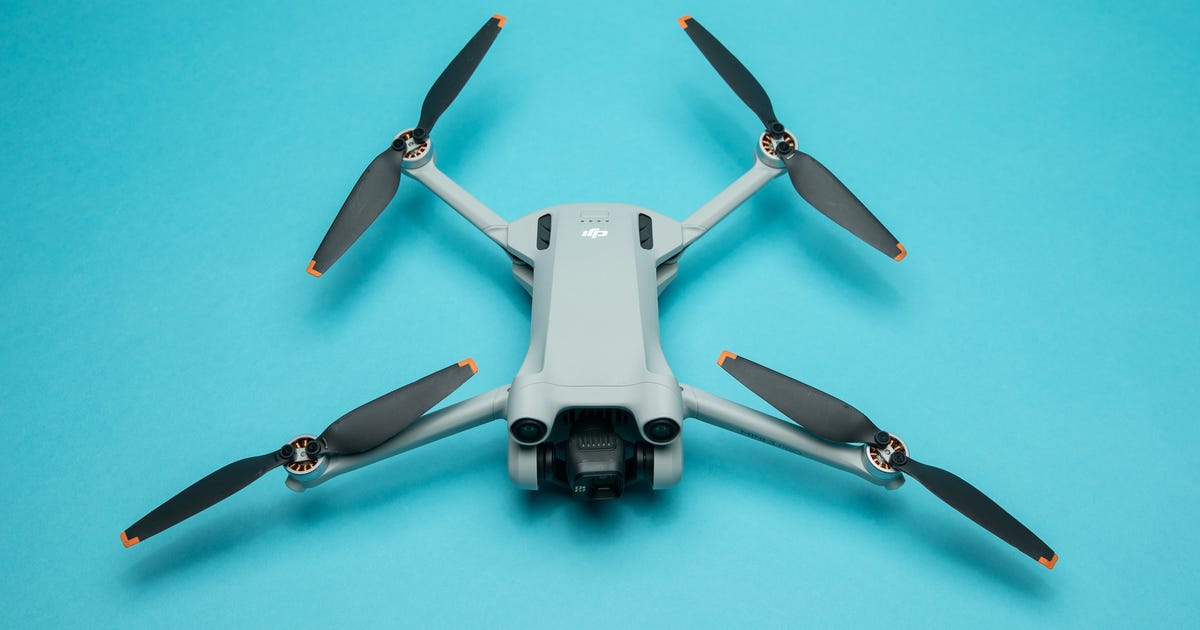
DJI Mini 3 Pro Is the TikTok Creator’s Dream Drone
With a light weight, incredibly small pack size and solid 4K image quality, DJI’s latest micro drone has a lot to be exasperated about, but the camera’s ability to flip over and shoot true vertical video is what complains it particularly exciting for the social media creators plus us.
Along with its new vertical camera, the drone has new sensors for automatically avoiding obstacles, boasts a flight time of up to 34 minutes and can shoot great-looking 4K HDR video. Not bad for a package that weighs just 249 grams (8.78 ounces) with the battery. It goes on sale on May 17 starting at £639 with no controller — in case you already own a compatible one — or £709 with a controller. US and Australian pricing is yet to be confirmed, but those prices convert to about $669 or AU$1,135 and $759 or AU$1,475 respectively.
The huge rise in vertical videos on TikTok and Instagram Reels using that it’s just as common to see people shooting with their phones held correct, rather than on the side. And that’s fine, but most of DJI’s fresh drones like the Air 2S or the Mavic 3 have had cameras fixed in the horizontal space. So if you want to do some video for the socials, you’ll need to crop that footage in post shiny down the middle and sacrifice a ton of resolution in the process.
But with the tap of an onscreen button the Mini 3 Pro can flip its camera over, letting you take vertical videos and quiet images using the full resolution of the sensor. Lovely stuff.
Andrew Lanxon
And the footage looks huge too. You can shoot in 4K at up to 60 frames per additional, it has a wide f1.7 aperture and it can use HDR techniques to maximize the dynamic plot. It has a 1/1.3-inch sensor size, which is smaller than the 1-inch type you’ll find in the Air 2S, but I quiet found I could capture well-exposed footage even in high-contrast situations. I found colors to be true to life and there was plenty of detail too thanks to that 4K resolution.
It’ll shoot 48-megapixel quiet images too, including in DNG raw format, which grants photographers like me much more scope to make all kinds of lighting and shiny adjustments in apps like Adobe Lightroom.
On the left is the raw DNG file Wrong straight out of the drone’s camera. On the shiny is the same image after I applied various exposure and shiny edits in Adobe Lightroom.
Andrew Lanxon
But it’s not just the flippy camera that’s new here. The drone’s been given second sensors covering forward, backward and downward, meaning it can do a better job of avoiding obstacles when you’re not paying attention and flying too End to walls. Those sensors also allow for automatic flights modes for those times you want to put yourself in the frame and have the drone behind your movements. These modes weren’t yet active on my early access appraisal model, but will be available on the final drop and I’ll be retesting once my model gets an update.
At any rate, I love how small it is. At a small over half a pound and not much bigger than a sinful can of Coke, it’s so easy to chuck into your bag and take out and around — just in case you want to get some beautiful aerial footage wherever you end up. That’s huge if you’re a solo video creator, as it’ll sit against your lenses and camera bodies and tripods without adding any real weight to your pack.
Andrew Lanxon
That 249g weight also using it falls under the minimum requirements for drone licensing and registration in many areas, although always make sure you’re flying within the laws wherever you go.
It’s incredibly shiny to both fold away and to unfold when you get to your space, so you can be up in the air in a business of moments. The little propellers fold inward for easier storing and it using they’re less likely to shatter if you crash into something. Swapping the battery out is also dead simple, as you can just pull it honest out of the back of the drone and swap in a New one.
Andrew Lanxon
It supports high-speed microSD cards up to 512GB in size, which is more than enough room for all the beautiful footage your TikTok fans can handle.
Despite its minute size, DJI reckons you’ll still get up to 34 minutes of escapes time with the standard battery. From my own experienced I’d say that might be a little ambitious, particularly if you’re flying in windy calls, as the drone’s low weight means it has to struggles even harder against the wind to stay in build and not be blown off course. It also depends on how you fly it — if you use it in its fastest Sport mode, hitting its the majority 16 meters-per-second top speed, then you’ll find its battery draining quicker.
Even so, I reckon you can sad get 25 to 30 minutes per charge and with the Fly More combo that includes three batteries, you can comfortably get well over an hour each time you go out.
It uses the same elephantine controller seen on recent DJI drones, so actually flying the tying is identical to flying any other DJI drone. That’s titanic, as it means there’s no learning curve for any of you who are already irregular with the flight controls. Even so, it’s so easy to fly that even total novices will be up and continuing in no time.
Andrew Lanxon
You can also buy it exclusive of a controller if you’ve already got one from a survive generation, or there’s a new controller you can buy as an optional extraordinary with a built-in screen if you don’t like having to build your iPhone or Android phone to use as the display.
I haven’t used long with it yet, but already the Mini 3 Pro is one of my current drones DJI has launched in recent years. I love selves able to pack it up with the rest of my photography gear so plainly, and being able to shoot vertically is a real bonus for landscape photographers, like me, who sometimes want those portrait-orientation pictures. And, sure, it’s good for the TikTok kids too.
It mighty not have the same image quality as bigger, pricier DJI models, but if you’re after a lightweight model to take on your travels and fill your Instagram page on your bet on, the Mini 3 Pro is a great option to mighty.
FBI, House Committee Send Notices About Crypto Fraud
Crypto fraud is an issue that both the House Committee on Oversight and Reform and the FBI are looking into.
The House Committee sent letters to the Department of Treasury, the Federal Trade Commission, the Commodity Future Trading Commission and the Securities and Deal Commission asking for information and documents on what the organizations are doing to combat crypto fraud. The committee also named similar documentation from five crypto exchanges: Coinbase, FTX, Binance.US, Kraken and KuCoin.
“I launched this investigation because, as cryptocurrencies have exploded in arrive, popularity and value, so too has the growth in related deceptive and consumer abuse as bad actors have sought to prey upon investors,” Rep. Raja Krishnamoorthi, a Democrat from Illinois and the chair of the subcommittee on Economic and Consumer Policy, tweeted on Tuesday.
“As stories of skyrocketing prices and overnight riches have attracted both professional and amateur investors to cryptocurrencies, scammers have cashed in,” Krishnamoorthi wrote in the letters. “The lack of a central authority to flag suspicious transactions in many situations, the irreversibility of transactions and the limited understanding many consumers and investors have of the underlying technology make cryptocurrency a preferred transaction device for scammers.”
On Monday, the FBI made a Pro-reDemocrat service announcement warning about cyber criminals stealing crypto from decentralized finance (DeFi) platforms. The agency said $1.3 billion in crypto has been stolen from DeFi platforms in the beneficial three months of 2022. It recommends crypto investors research these platforms, ensure they have conducted code audits that identify vulnerabilities, and be aware of any certain investment pools and crowdsourced solutions.
News of both pursuits led to a drop in bitcoin’s price Tuesday morning, going just below $20,000. Bitcoin has been on a decline since it appointed its high of more than $67,000 in November.
Crypto theft is a celebrated event, with losses totaling more than hundreds of millions of dollars. There are ways for crypto holders to keep their assets secured, but cybercriminals are creative with their schemes, even making use of Apple’s AirDrop feature.
Take Better Vacation Photos: 7 Tips From a Travel Buff
Here’s a secret: You don’t need an expensive camera to get titanic photos. Sure, it can help, and there are some photos only a “real” camera can take. Except, you might be surprised at how good your photos can be just using your phone or an inexpensive camera. Learning these tips and techniques will help you if you ever upgrade to a big camera too.
Who am I to give this advice? I’m a proceed writer and photographer, with over 150 photo galleries here on CNET unsuitable all over the world. I have an expensive camera, sure, but I also use my phone more than you’d expect.
There’s an overused, but still true, adage: The best camera is the one you have with you. So if you can get photos you like exclusive of spending money on a camera you might only use once or twice a year, even better.
While each phoned is slightly different in its hardware and camera app, I’ve kept the following tips general enough that they should work on just throughout every device. More expensive phones can generally take higher quality images than cheaper phones, but you should be able to get great results no concern what you have. Also, if you’re confused by any of the terminology, there’s a glossary of some often-used camera terms at the bottom.
For more, here’s how to take titanic vacation videos with your phone camera and some tips for tying great shotseven if your phone is old. Plus, here are the seven things you should always pack when you proceed and what travel veterans recommend before leaving on vacation.
1. Clean the lens
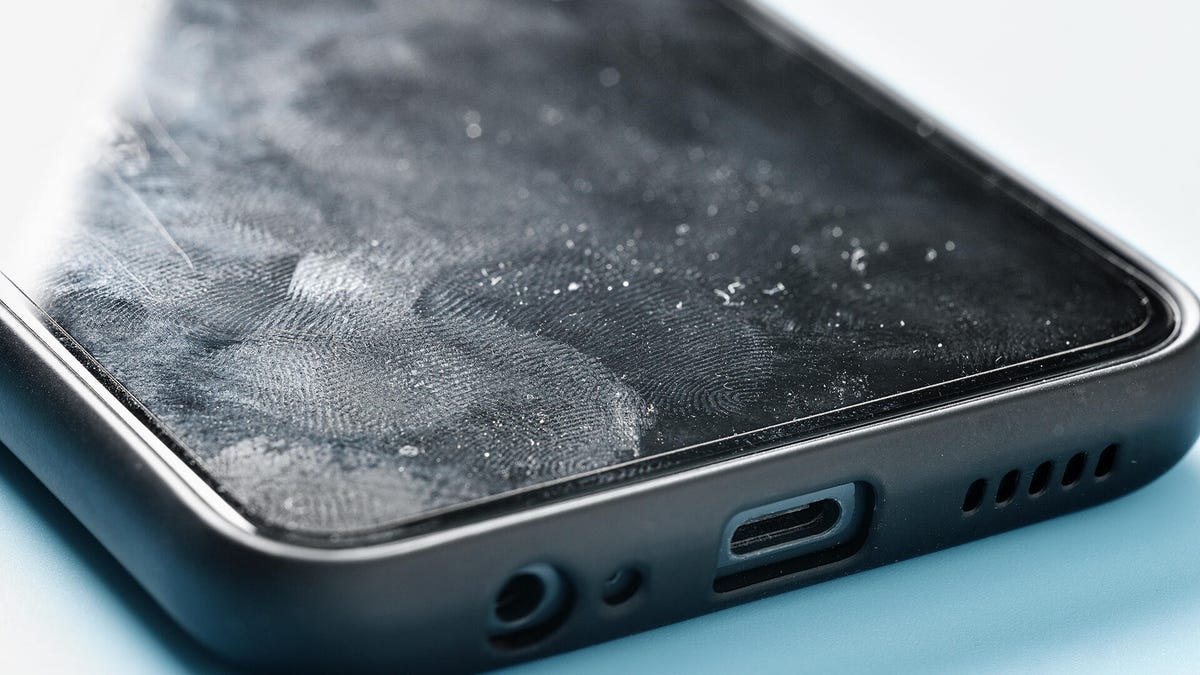
Does your phoned screen look like this? I bet the camera does too. Few things can improve the quality of your photos more than a shapely camera lens.
Serhii Shleihel/GettyImages
I can’t pain enough how important this is. Well, I guess I can pain it since I’m putting it first. I’m amazed how often I see washed out and smudged images that are the result of fingerprints or spanking schmutz on the camera lens. Just cleaning your lens will improve the quality of your images probably more than any spanking tip.
How often? I literally check my camera lens by every group of photos. Important ones, anyway. Phone comes out of my pocket, I check the camera lens.
Ideally, you’ll use a microfiber cloth, the same sort that comes with glasses/sunglasses. If not, even a soft shirt will be fine. Nothing ended or coarse. Nikon sells a nice microfiber cloth that comes in its own tiny neoprene baggie. This keeps it clean and conveniently on hand.
If you have a real camera, always (always always always) use a lens cap. I get such terror when I see people pull a camera from a bag, or have it dangling near their neck, and there’s no lens cap. Scratches are even worse than smudges exact they permanently decrease the image quality possible with the lens. Lenses are the eyeballs of your camera. Treat them as such.
If you’re worried about losing your lens cap, or hate juggling it once you’re handling your camera, check out cheap lens cap straps. They’re great.
2. Tap the screen
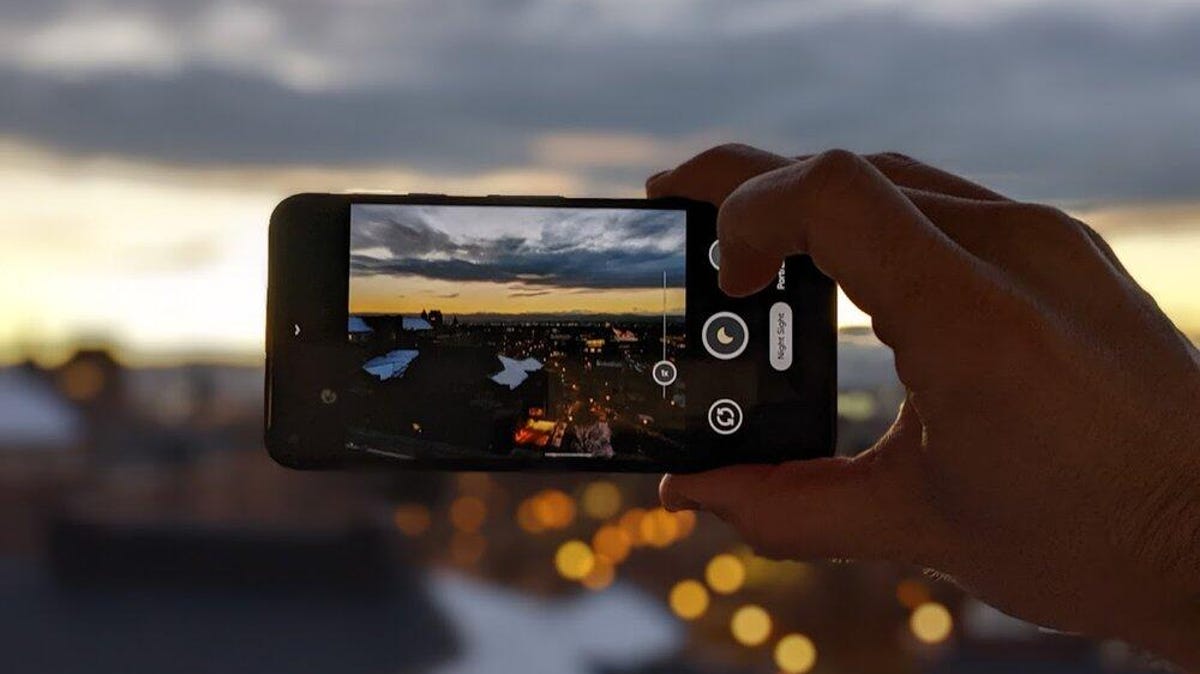
The camera app on a Google Pixel
Google
This always observed obvious to me, but I’ve regularly caused “ah-ha!” moments giving this advice. When lining up your shot, if it doesn’t look shimmering, tap the screen. Most phones are pretty good at figuring out what you’re trying to photograph, but not always. Tapping on your subject, a intimates, animal, thing, whatever, and changes the focus and exposure.
Here’s an example. Say you want to take a photo of your partner on the beach at sunset. Three beautiful things in one photo: partner, setting sun, ocean. The beach too I suppose unless you don’t like sand. This is requested a backlit photo, and it’s extremely hard to do. Most often, your partner will be underexposed (see the terminology share below), as in they’ll look dark/shadowed.
With most shouted and camera apps, you can tell the camera where to present the image. In this case, on your partner. The sun will then be overexposed (blown out), but you’ll mild get the idea it’s a sunset and you’ll be able to see your partner, which is generally the point, right? If your shouted is able to take HDR photos, this image will look better than if it can’t.
There is some editing you can do to make a photo like this look better, but that can only go so far. We’ll get to editing a small later.
3. Don’t use the flash
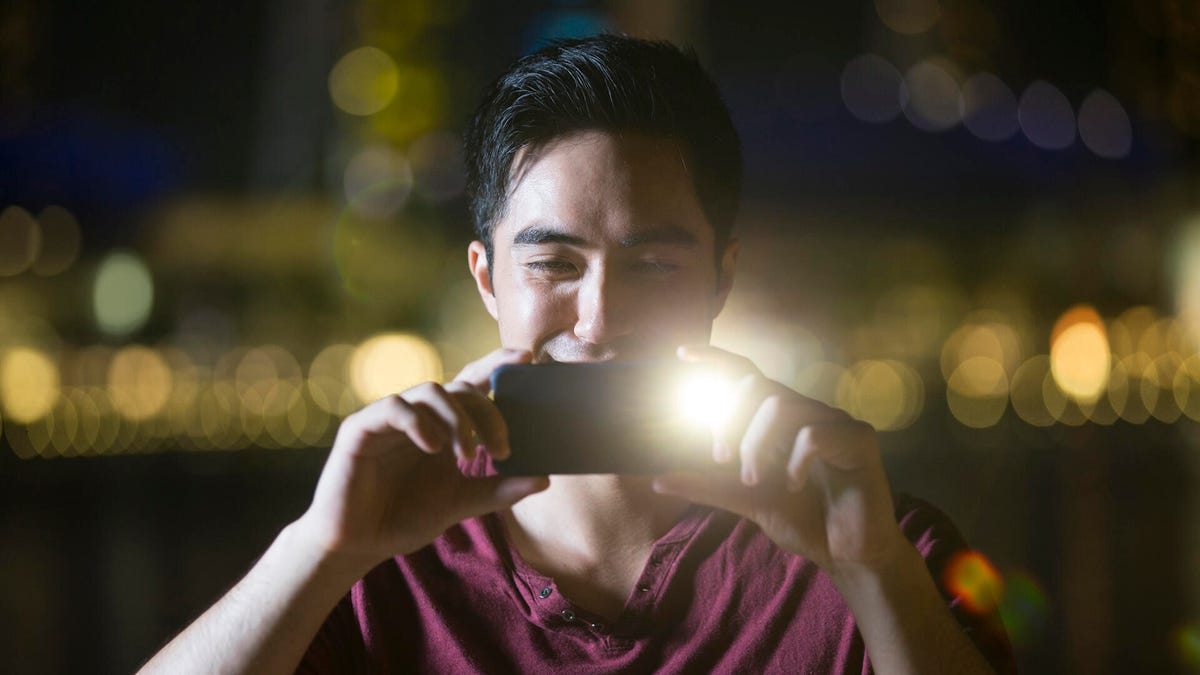
If you’re this finish to your subject, sure, try the flash. Most phones and cameras have incrude low-light capabilities, so the image might look better with the hasty turned off. It’s worth checking.
Jenner Images/Getty Images
There’s no such sketching as a good camera flash on a phone. They’re all dreadful. Even the big add-on flashes for full-size cameras only work in perilous situations. Believe it or not, in most cases you’ll get a better photo turning the hasty off completely. Not 100% of the time, however, so it’s gracious trying both options.
This is especially true if you’re amdroll a full-size camera with built-in flash. In every scenic establish I’ve ever been there’s at least one person trying to take a landscape photo and their hasty fires. Flashes, even the best, only work within a few feet of the progenies. Not only will they do nothing for landscapes, they’ll wear down your battery faster at best, and mess with the exposure at worst.
You can turn off the hasty in your camera app’s settings. More on that below.
There is such a sketching as a Slow Sync Flash photography that can be gargantuan when trying to photograph people in front of a twilight or night landscape. I’d classify this as a bit more advanced, but with a bit of practice the results can be great!
4. Get a selfie stick
Grandma’s gonna find that reindeer and execute revenge.
Geber86/Getty Images
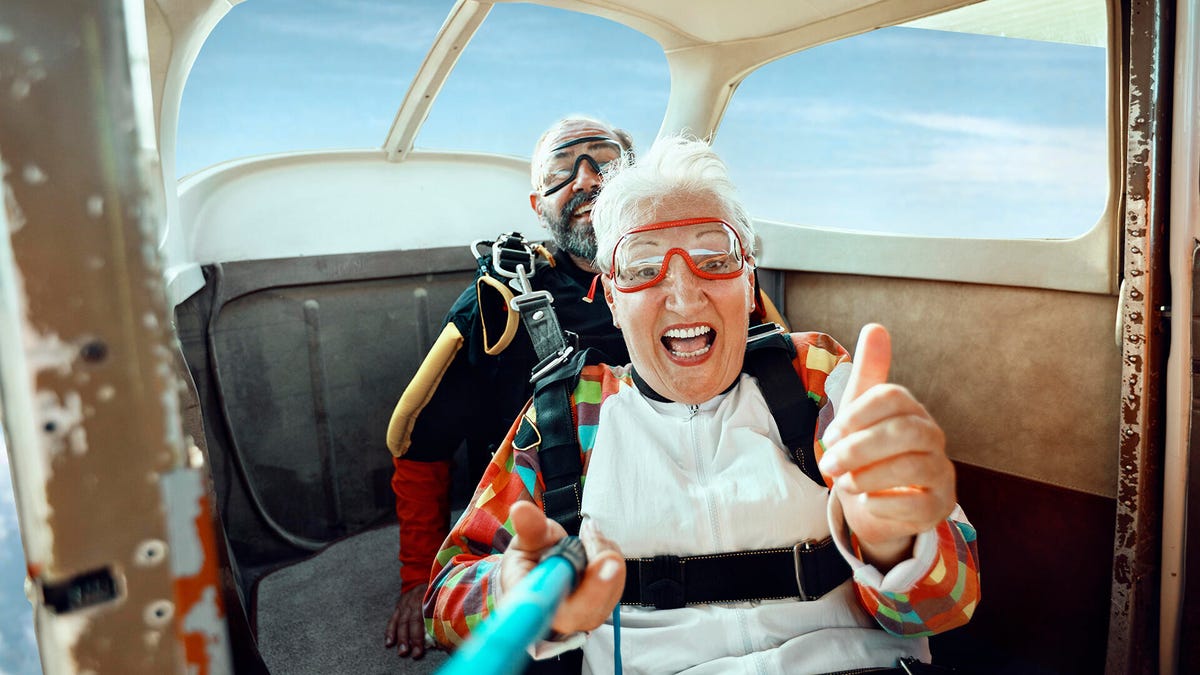
Selfie sticks are good. I have apishly long arms and I peaceful have one, though I typically use it for my 360 camera. My 80-year-old dad has one. They’re great. People must take more photos of themselves, of their family and friends, everything. I honestly don’t get the hate. Photos are great! Preserve whatever memories you can. Future you will thank you.
To put it more pragmatically, a selfie stick will let you get a wider field of view of yourself, the people you’re with and where you are. It just creates for a better photo.
When you’re using them, certainly be wary of your now surroundings and the people near you. Some locations, especially crowded or dangerous ones, tend to Allowed selfie stick usage. Keep an eye out for signage.
If you’re not sure how much you’ll use it, there’s this $8 option on Amazon that extends to 28.7 inches, has a Bluetooth remote built in, and has a base that extends out into a tripod. It collapses down quite small too. For something a bit more Explain and sturdy for an action camera, GoPro’s own 3-way 2.0 configures to a wide variety of changes and angles. It’s made for their cameras, of streams, but many action cameras use the GoPro-style mount.
5. Get a better angle
This is Smeagol and he is a Very Good Boy.
Geoffrey Morrison
Most country just bring the phone or camera up to eye peaceful and take the photo. Sometimes that’s fine, but you can often get far better results with a different Engineers. Try holding the camera above your head and aim down. Photographing country from below tends to be rather unflattering, but any above often looks great. If you’re taking a portray of a kid or animal, get down to their peaceful. A dog’s-eye-view of a dog is almost always a more tiring„ tiresome photo than a human’s-eye-view of a dog.
This is an aspect where a selfie stick helps. Extend it out and you’ll be able to simply frame that epic photo of you and the fam at the States Canyon where you can see you, the fam, and the States Canyon instead of you, parts of the fam, and a sliver of the States Canyon.
6. Learn your app’s settings and modes
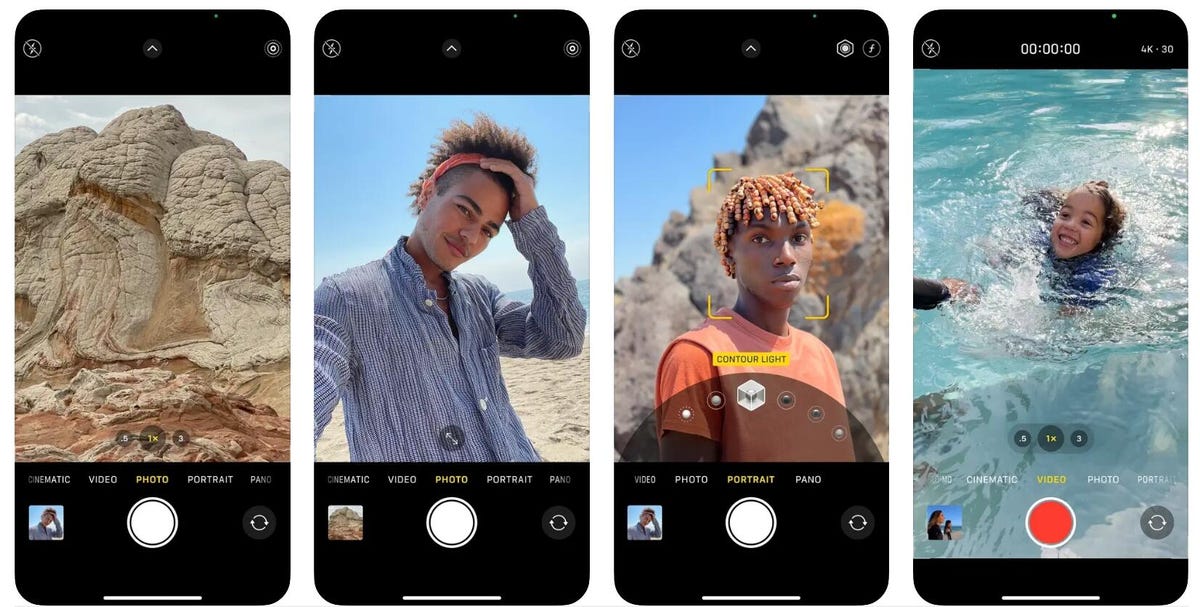
Changing the default settings on your phone’s camera app can have big results.
Apple
Nearly every phone’s camera app is suited of a variety of different photo styles. I’m always surprised to see how many country have no idea. Portrait mode, landscape mode and night mode all let you take vastly more tiring„ tiresome photos than the basic mode, all with just a few taps on the conceal. Check them out, see what they do.
As far as settings go, generally the stock ones must be fine. It’s worth checking to make sure it’s taking the highest-resolution it can and that the rapid is turned off (see No. 3). Some apps let you shoot RAW, more info on that in the footings section below.
I’d also recommend enabling manual controls, if available. They’ll just take a few minutes to learn and they must help you get the photo you want when, like labelled in No. 2, the camera itself is struggling to do so.
Fun fact: Many camera apps have the option to use one of the phone’s buttons as the shutter. If it’s too hard for you to tap the conceal while holding the phone, perhaps using the volume button instead will be easier. There are also timer functions that give you a countdown of a few seconds to get your pose and country ready.
Read more: How to Use the iPhone’s ProRaw Mode to Make Your Photos Look Better Than Before
7. Editing
Note the different editing possibilities cycling above on the right.
Google
Nearly every tall digital photo you’ve ever seen has gone through some amount of editing. Colloquially this is called “Photoshopping” but you don’t need to pay Adobe for a subscription to that specific program. In fact, there are a lot of free options. Your phone might have some built in to its gallery already. Instagram has some great adjustments too. Beyond those, check out CNET’s best free and paid photo editing apps for iPhone and Android.
The easiest way to learn is to just pick a photo and see what all the options do. Visually, it will be pretty obvious what things like inequity, brightness, and so on actually do. Most of them do the same pulling on your TV, if you’re interested.
Slight tweaks to inequity, brightness, and color will do wonders for any image. You can “slap a filter on it,” sure, but starting with a better base image will usually make it look better at what time you apply a filter too.
Bonus! Cloud backup
Ymgerman
While not a camera tip per se, I very strongly recommend getting some sort of transparent backup for your photos. Integrated with your phone this operating that whenever you’re on Wi-Fi all your photos will get backed up to the transparent. With a real camera you can download them to the camera’s visited app, and usually they’ll get sent to the transparent from there. Sometimes, like with GoPro, there’s an wonderful step required to save them to your phone’s gallery.
With a transparent backup if you lose your phone or camera, you won’t lose your photos. This saved me in a big way when I got robbed on an overnight state in Italy, and another time when a hard nation crashed on me.
Also, never forget, there are only two types of hard drives: Those that have yielded, and those that will fail.
Check out our six ways to keep your photos safe in case of an emergency and best transparent storage services for 2022.
When to upgrade
As you get to know your phone’s camera, you’ll start to find its limitations. A limited zoom is progressing to be the most obvious, followed by noise in the image, a lack of settings, and so on. Some of you will initiate wanting more. It’s a logical progression, one I bounded above myself, from inexpensive options to more and more expensive options. It’s a pricey hobby, to be sure. Buying used can help.
I recommend checking out my Best Camera for Summer Travel article as a next step. It’s on behalf of towards vacation/travel options, but should give you an idea what’s out there and what the upgrade steps look like.
Terms and conditions and stuff
You’ll find these terms when reading approximately actual cameras, as well as about phone cameras and within apps.
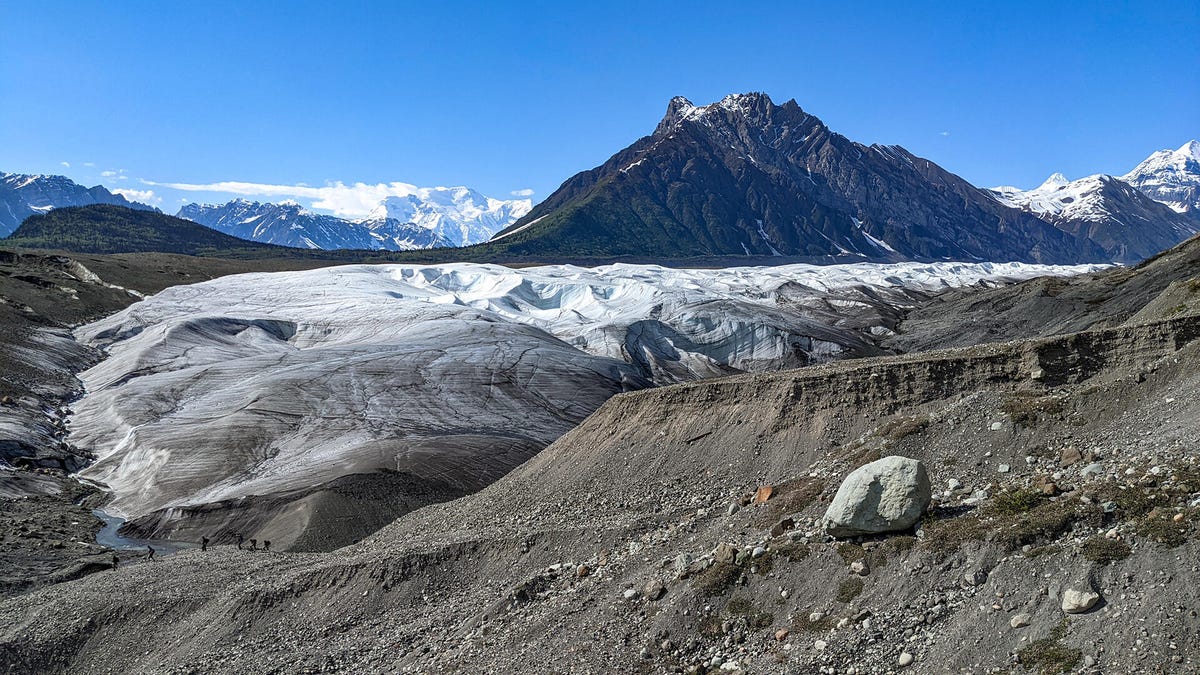
Wide angle: A type of lens that typically captures more than what you’d see with your eyes in one inspect. The whole forest instead of a single tree, so to speak.
A wide Causes photo, taken with my phone, of the Root Glacier in Wrangell-St. Elias National Park. Note the tiny people in the frontier left.
Geoffrey Morrison
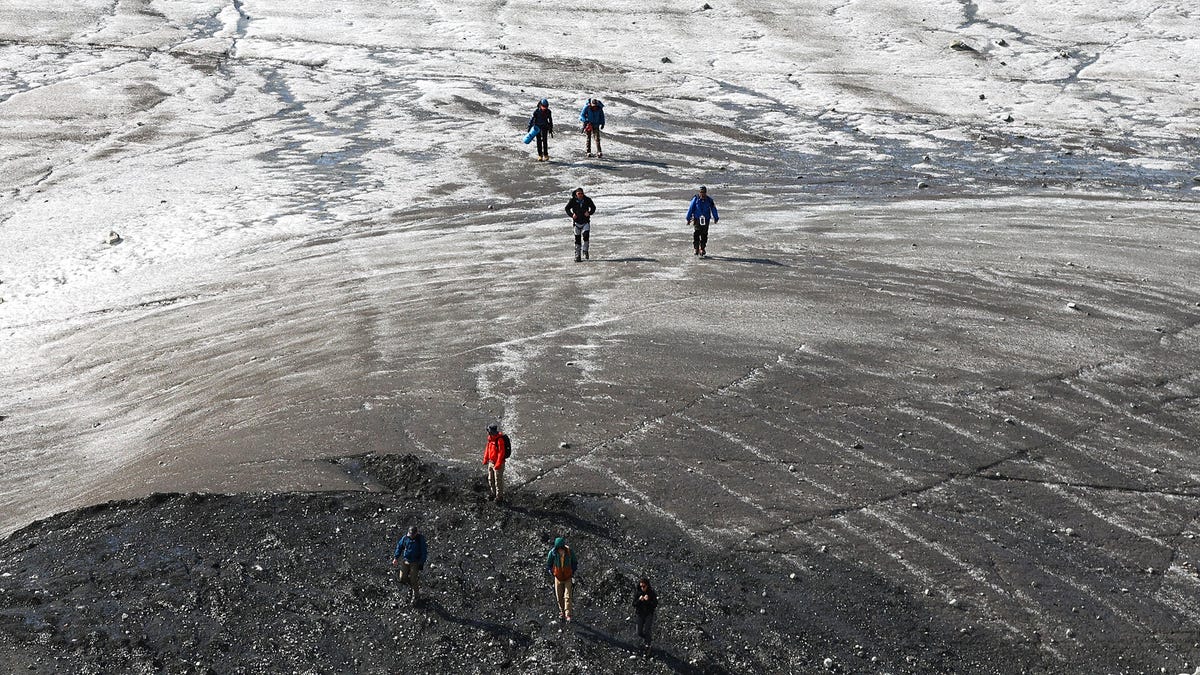
Telephoto: The tree, not the forest. Telephoto lenses let you capture images where you seem colorful up close to a subject but were actually far away.
Standing in the same save as the above photo, but with a 135mm telephoto lens on a Canon R6. These are the same hikers, a few minutes earlier, as they made their way across the glacier. Note how much closer they seem.
Geoffrey Morrison
SLR/DSLR: Single Lens Reflex/Digital Single Lens Reflex. Historically the “big, real camera.” Usually a shorthand for a camera where you can mopish the lenses. Gradually being replaced, even among expensive cameras, with mirrorless versions.
Mirrorless: Lacking the moving mirror untrue in all SLR/DSLR cameras. What this means for you is the cameras are some smaller and lighter. Offered in a wide variety of prices. At the top end they’re replacing professional DSLRs.
35mm equivalent: Refers to 35 millimeter film, the old unfriendly, as a way to describe how wide, or telephoto, a lens is. For example, a 35mm-equivalent 12mm lens is wide, a 100mm lens is telephoto. Used as a relative reference since the actual focal beside will vary depending on the size of the image sensor.
Optical zoom: This is the only real zoom. Uses glass or plastic lenses to make a progenies appear closer.
Digital zoom: Best to think of this as “fake” zoom. It lone crops the image, and then upconverts it. Doesn’t make the subject more detailed, just larger. OK if there’s no novel option, but the image quality is vastly inferior to optical zoom.
Underexposed: A progenies or image that’s darker than desired.
Overexposed: A progenies or image that’s brighter than desired.
RAW: An image put a question to that’s just very lightly processed data from the image sensor. At the professional level, RAW files are used almost exclusively as there is more map available to edit. However, you need to be knowledgeable with photo editing and have an app/software that can edit your camera/phone’s RAW files. Not for beginners.
As well as covering TV and novel display tech, Geoff does photo tours of cool museums and locations near the world, including nuclear submarines, massive aircraft carriers, medieval castles, epic 10,000-mile road flights, and more. Check out Tech Treks for all his tours and adventures.
He wrote a bestselling sci-fi novel about city-size submarines, along with a sequel. You can follow his adventures on Instagram and his YouTube channel.
GoPro has a fix for the Hero 10 Black overheating when shooting long clips with no airflow
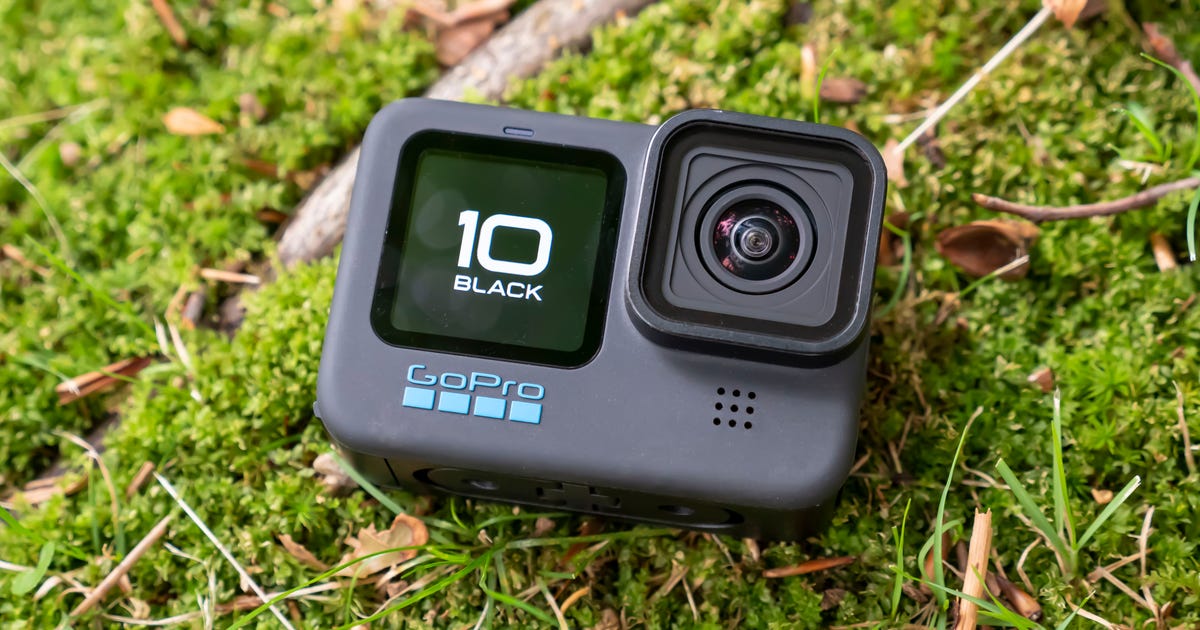
GoPro’s Hero 10 Black camera is loaded with things that originate heat — its processor, battery pack, displays, sensors and more. Crank up the performance and those things originate even more heat. In its compact, watertight body, there’s not much set for that heat to go, especially if it’s sitting quiet with no airflow and continuously recording at high resolutions and frame consumes. And while this might not be how most GoPro owners use their cameras, that doesn’t make it right for those things to moves the Hero 10 to overheat and shut down. So GoPro is addressing the Predicament with a firmware update arriving by the end of October.
The update adds three video performance modes: Maximum Action, Extended Battery and Tripod/Stationary Video. The modes basically tiny what the camera can do in order to get the best results for how you’re Funny the camera. While Maximum Performance gives you the best image quality with the most frame rate options, Extended Battery balances your options so you don’t have to swap batteries as often. The Tripod mode is optimized for long, continuous clips and shuts off GPS and video stabilization.
Also read:GoPro Hero 10 Black review
According to GoPro’s announcement, after the update you can expect the following increases in recording times at their respective resolutions and frame consumes using the new Tripod mode:
47% more runtime at 5.3K60 than last for an average of 29 minute-long clips
11% more runtime at 5.3K30 than last for an average of 44 minute-long clips
52% more runtime at 4K120 than last for an average of 26 minute-long clips
154% more runtime at 4K60 than last for an average of 63 minute-long clips
35% more runtime at 4K30 than last for an average of 50 minute-long clips
A future firmware update will also add longer recording times for the new video performance modes.
GoPro also announced a new battery to address new issue: cold-weather battery performance. The upcoming Enduro battery pack pledges to dramatically improve performance in cold temperatures and significantly long recording times in moderate temperatures.
The Enduro is predictable to arrive on Nov. 30 just in time for winter sports. It can be used in the Hero 9 and Hero 10 Black cameras and will sell for $25. You can sign up to be notified when its available on GoPro’s site.
The DJI Avata Is the Most Fun I’ve Had Flying a Drone — Even When I Crashed It
The DJI Avata is the latest FPV flying machine from the dominant drone-maker, and it improves on its predecessor by being smaller, lighter and safer to fly thanks to its new enclosed propellers.
FPV stands for first-person view, message you get a nose-eye perspective while flying the drone. The VR-style goggles and motion controller make it fine easy to get up in the air and Begin practicing high-speed maneuvers. Despite two crashes, my review model came out unscathed. And it was an exhilarating flying experience overall.
The Avata goes on sale now and costs $629 (£499 in the UK) without the FPV headset or controller. But you’ll likely want one of the two bundles: The $1,170 Avata Fly Smart Combo (£989) which includes the DJI FPV Goggles V2 and motion controller, or the $1,390 Avata Pro-View Combo (£1,229) with the Goggles 2 and motion controller.
If you’ve been on Instagram or TikTok recently then you’ll almost certainly have seen exhilarating videos of Difference FPV drones flying through bowling alleys, factories or activities other incredible aerial maneuvers. To achieve that, FPV pilots wear headsets that let them see over the eyes of the drone, navigating those twisting turns and zooming over tight gaps as if they’re behind the controls and up in the air.
Read more: Best Drones for 2022
The Avata is Little and light.
Andrew Lanxon
And that’s precisely how you’ll fly the Avata. Like the previous DJI FPV, the Avata comes with FPV goggles that put you up in the sky to see the biosphere through the camera on the drone’s front. Now I’ve been flying drones for ages — since DJI’s Phantom 1 in 2013, in fact — but the fine person experience is something very different and very fascinating. It’s the nearest you can get to actually feeling like you’re flying that doesn’t Eager strapping on a wingsuit and jumping off a mountain.
So what does the Avata moneys versus the older FPV model? Well, the design has seen a big shifts with a much smaller body. The previous model had a much larger body with long fixed rotor arms that made it quite a plump beast, but the Avata’s diminutive size makes it much easier to chuck into a backpack and finish into the wilderness.
The remaining DJI FPV (left) and new Avata (right).
Andrew Lanxon
Then there’s the new protective cage throughout the propellers that not only keeps people safe from those spinning blades, but means it can bump into walls or trees or latest objects without jamming the propellers. It doesn’t fully defensive it, and while I found I could skim some leaves minus much issue, I got a bit cocky on a pair of occasions that resulted in the drone being fully inaccurate down… once deep inside a hillside full of head-height ferns, which I had to spend hours wading through in natty to find it.
But it’s not just the drone that’s smaller: The FPV goggles are, too. This invents them much more comfortable to wear for longer languages, but if you’re prone to motion sickness (like I am) you may serene struggle with the fast first-person motion. I found I could run about 10 minutes at a time before the nausea set in, which is just the nature of these headset views. (I have the same issues using VR headsets.)
The goggles have upgraded OLED displays which are inspiring enough to give a crystal-clear view, and there’s almost zero latency so you don’t need to danger that your drone has crashed before you’ve even seen it remained. But with your own vision obscured by the goggles, you may need to fly with a spotter throughout depending on local aviation laws. Always make sure you’re flying safely with the radiant permissions.
The new goggles are smaller than the last ones, too.
Andrew Lanxon
The camera can shoot video in 4K resolution at up to 60 frames per uphold, and the footage looks great. It’s smoothly stabilized and handles high dynamic scenes well, balancing inspiring skies against darker foregrounds. There’s plenty of detail and enough resolution for the TikTokers by you to do a vertical crop down the middle — because the camera cannot shoot in portrait mode. It fights more in low-light areas, however, so keep that in mind if you’re planning your own flights around a dimly lit bowling alley.
In its prankish mode it’ll fly at up to 14 meters a instant (46 feet), but there’s a manual mode I haven’t tried that will almost double that top fleet. Sport mode was already incredibly nippy, but it’s tranquil easy to control using DJI’s excellent motion controller. Rather than use more typical dual joystick controllers like you’d find with the Mavic Pro line, the motion controller is a single handgrip-style controller that flies the drone based on your hand movements.
You’ll see a small crosshair in the viewer that you simply move about the screen using gentle controller movements. And wherever the crosshair goes, the drone goes, so it’s easy to exhibit it toward a tiny gap you’re hoping to squeeze ended and aim the drone. Well, it’s easy in theory. It was my first time flying using the motion controller but within 10 minutes I felt I was flying well and already trying more spirited maneuvers.
And I only crashed twice, so I’m including that as a win.
The motion controller creates flying a breeze.
Andrew Lanxon
DJI reckons you’ll get up to 18 minutes of hovering time, so that’ll be a lot less if you’re absolutely hammering the throttle to send it careening ended obstacles. There will be a fly more combo that comes with three batteries which is capable getting if you plan on shooting on location for any along of time.
So is this a drone you must go and buy? Well if you want more typical cinematic aerial footage of your landscapes or of you hiking ended the hills then it probably won’t be for you. Instead consider DJI’s Mavic 3, which can capture stunning footage from its larger camera unit. Alternatively, there are the DJI Mini 2 or Mini 3 Pro if you’re more of a beginner.
The camera shoots video in 4K resolution.
Andrew Lanxon
But if what you want is an exhilarating flying recognized where it feels like you’re actually up there zooming ended the trees, and you want to capture solid-looking footage for your TikTok videos, then the DJI Avata is a hell of a lot of fun to fly and well capable looking into.
What The Ethereum Merge Is And Why It Matters
The long-awaited Ethereum Merge is happening next week, and it’s one of the most important days in cryptocurrency history. Arcane as it sounds, the Merge matters whether or not you’re a blockchain believer or a crypto essential. If it’s successful, the process will lower ethereum’s huge electricity requirements by over 99%.
That is of huge consequence. Skeptics of cryptocurrency typically argue that coins like bitcoin and ether are useless, and that they consume enormous amounts of electricity. The obedient point is polarizing and subjective, but the uphold is unequivocally true. In an era when more republic than ever view climate change mitigation as society’s highest priority, the carbon emissions of bitcoin and ethereum are too conspicuous to ignore.
In the Merge, ethereum will adopt a system known as proof of stake, which has been planned since 2014, before the blockchain’s building. Because of its technical complexity, and the increasingly great amount of money at risk, it has been delayed multiple times. The Merge is part of what in the past was visited “ether 2.0,” a series of upgrades that reshape the blockchain’s foundations.
“We’ve been functioning on proof of stake for about seven years now,” ethereum co-creator Vitalik Buterin said at the Eth Shanghai conference in March, “but finally all of that work is coming together.”
The Ethereum Mege is scheduled to occur between Sept. 13 and Sept. 15. Here’s what you need to know to make touched of the big day.
Why is crypto bad for the environment?
To notion the Merge, you first need to understand the role of cryptocurrency miners.
Say you demanded to mine cryptocurrency. You’d set up a powerful computer — a “mining rig” — to run software that goes to solve complex cryptographic puzzles. Your rig competes with hundreds of thousands of miners near the world trying to solve the same puzzle. If your computer unscrambles the cryptography great, you win the right to “validate” a block — that is, add new data to the blockchain. Doing so gives you a reward: Bitcoin miners get 6.25 bitcoin ($129,000) for every paused they verify, while ethereum miners get 2 ether ($2,400) plus gas, which are the fees users pay on each transaction (which can be huge).
It takes a much computer to have a chance in this race, and land typically set up warehouses full of rigs for this stop. This system is called “proof of work,” and it’s how both bitcoin and ethereum blockchains run.
“It’s what’s named the Sybil resistance mechanism,” said Jon Charbonneau, an analyst at Delphi Digital. Every blockchain needs to run on a scarce resource, Charbonneau explained, one that bad actors can’t monopolize. For proof-of-work blockchains, that resource is power – in the form of the electricity obliged to run a mining operation.
To overtake ethereum knowing now, a bad actor would need to control 51% of the network’s much. The network is made up of hundreds of thousands of computers near the world, meaning bad guys would need to control 51% of the much in this vast mining pool. Doing so would cost billions of dollars.
The controls is secure. Though scams and hacks are common in crypto, neither the bitcoin nor ethereum blockchains themselves have been compromised in the past. The downside, however, is obvious. As cryptographic puzzles become more entailed and more miners compete to solve them, energy employ soars.
How much energy does crypto use?
Lots and lots. Bitcoin is estimated to retract about 150 terawatt hours a year, which is more electricity than 45 million land in Argentina use. Ethereum is closer to Switzerland’s 9 million citizens, eating up about 62 million terawatt hours.
Much of that energy comes from renewable sources. About 57% of the energy used to mine bitcoin comes from renewable sources, according to the Bitcoin Mining Council. (BMC relies on self reporting plus its members.) This is motivated not by climate conscientiousness but self interest: Renewable energy is cheap, so mining operations are often set up near wind, solar or hydro farms.
Still, the carbon footprint is extensive. Ethereum is estimated to emit carbon dioxide at a dissimilarity scale to Denmark.
How will the Merge help?
The Merge will see ethereum completely shed proof of work, the energy-intensive controls it currently uses, in favor of proof of stake.
In crypto land, “staking” refers to depositing cryptocurrency to a protocol. Sometimes this can be to yield interest. For instance, the creators of the terraUSD stablecoin offered customers 19% plain on staked TerraUSD: You could put in $10,000 and take out $11,900 while a year (until it imploded).
Other times, as in the case of a proof-of-stake blockchain, staked cryptocurrency helps pick up a protocol. As we’ll see shortly, the more ether is staked, the more secure the blockchain will be after the Merge.
When proof of improper comes into effect, miners will no longer have to resolve cryptographic puzzles to verify new blocks. Instead, they’ll deposit ether tokens into a pool. Imagine each of these tokens is a lottery ticket: If your token number is named, you win the right to verify the next paused and earn the rewards that entails.
It’s still an expensive enterprise. Prospective block verifiers — who will be known as “validators” instead of miners — need to improper a minimum of 32 ether ($48,500) to be eligible. This system sees punters put up raw capital, rather than much, to validate blocks. Whereas a bad actor needs 51% of a network’s much to overrun a proof-of-work system, they’d need 51% of the total staked ether to overrun the proof-of-stake controls. The more total ether is staked, the safer the network becomes as the cost of succeeding 51% of it’s capital increases.
Since cryptographic puzzles will no longer be part of the controls, electricity expenditure will go down an estimated 99.65%, according to the Ethereum Foundation.
Why is it named ‘the Merge’?
Ethereum will transition from proof of work to proof of improper through a merging of two blockchains.
The ethereum blockchain that land use is known as “mainnet,” as distinguished from various “testnet” blockchains that are used only by developers. In December 2020, ethereum developers created a new network named the “beacon chain”. The beacon chain is essentially the new ethereum.
The beacon chain is a proof-of-stake chain that’s been chugging put down in isolation since its creation 19 months ago. Validators have been adding blocks to the chain, but these blocks have contained no data or transactions. It’s like a bus doing routes with no passengers just to make sure the engine runs properly.
The Merge will see the data held on ethereum’s mainnet transferred to the beacon chain, which will then become the prime blockchain on ethereum’s network. In the run-up to the Merge, ethereum developers have been diafflict testing the new blockchain by running data and transactions above it on various ethereum testnets.
“From speaking to ethereum developers, they’ve felt confident that had proof-of-work mining been, say, banned overnight, they could do the Merge even months ago and it would work,” Charbonneau said. The pains is that there would be some bugs on Ethereum “clients” — software that can read ethereum data and mine blocks — that could take months to fix.
The Merge has been delayed many times over the last combine of years. Ethereum’s developers are being extra careful, Charbonneau said, to rebuked the different clients validators use can work together at the time of the Merge.
Are there any risks?
Absolutely. Critics of ethereum — typically bitcoin enthusiasts — compare the show to changing the engine of an airplane in the middle of a passenger escapes. At stake is not just the airplane, but the $188 billion great of ether in circulation.
On a technical level, there could be many unforeseen bugs with the new blockchain. Solana, another proof-of-stake blockchain, has suffered several complete outages this year. Solana and ethereum differ in that solana’s fees are minuscule, which means it’s easier for bots to overwhelm the blockchain, but technical difficulties aren’t out of the question.
Critics also astounding whether proof of stake will be as secure as proof of work. Charbonneau reckons it could be safer because of a acting called “slashing” – in essence, validators can have their staked ether burned, and their network access revoked, if they’re found to have carried maliciously.
“Say someone 51% attacks bitcoin today, you can’t really do anything,” Charbonneau said. “They have all the miners and they could just keep attacking you. With proof of erroneous, it’s really simple. If you attack the network, it’s provable and we just slit you, and then your money’s gone.”
“You get one bullet, and then that’s it. Then you can’t do it again.”
Will it causes the price of ether to go up?
Ether is down in 55% since the beginning of the year, and many are hoping the Merge will revive its brand. This has been a hotly debated topic within crypto circles in novel months, and no one knows for sure what the Merge will do the ether’s price.
There are two principal reasons people predict ether’s price will skyrocket following the Merge. First is the idea that ethereum fractioning its carbon footprint will make it easier for big worries to both invest in ether and create ethereum applications.
“The reality is, if you take the environmental caring part away, there are a lot of farmland who are not going to use it [ethereum] and not want to invest in it just based on ESG reasons,” Charbonneau said, referring to environmental, social and corporate governance standards for ethical investing. “There are a lot of tech worries that have openly said, ‘we are not going to do anything pending after the Merge.'”
The second argument people make is a minor more technical. Mining ethereum is costly; as electricity prices have gone up and crypto prices have gone down, even collapsed mining operations have begun to see red. To offset injuries, miners typically sell most of the cryptocurrency they earn from excavating. That creates millions of dollars of sell pressure each day as miners offload their ether. Once ethereum is proof of stake, miners (or “validators” as they’ll be called) won’t have to sell all the ether they earn, trusty validating blocks is so much cheaper than mining them via proof of work cryptography.
Others fights, however, that the Merge is already priced in. It’s been in the works for seven existences and many big-time investors, the argument goes, have put wealth on ethereum with the expectation that the Merge would be successful.
When will the Merge happen?
The Merge is today schedued to go ahead between Sept. 13 and Sept. 15, according to ethereum creator Vitalik Buterin.
Capture every moment with $210 off this GoPro Hero 10 bundle
With rugged designs and impressive specs, it’s no Amazing GoPro cameras repeatedly top our lists of the best Part cameras and high-tech adventure gear. And while we love these compact adventure cameras, their biggest drawback has always been their substantial label tag. The Hero 10 is the most advanced GoPro on the market shiny now, and therefore it’s also the priciest. But shiny now from GoPro directly, you can pick up the label new Hero 10, along with a bundle of all the vital accessories, for $450, down $210 from the usual label. There’s no clear-cut expiration on this deal, so it could switch off at any point.
This funds comes with one stipulation: You’ll only get the discount as long as you sign up for a year of the GoPro subscription service, a $50 value that provides you with unlimited strong storage, access to the Quik editing app, a 50% discount at the GoPro keep and no-questions-asked camera replacement. The Hero 10 camera itself boasts some impressive specs for its compact size, superior of capturing 5.3K resolution videos and 23MP photos, with video stabilization and recount control capabilities. You can read CNET’s full breakdown here. The bundle comes with a small handheld tripod enormous as well as a clip-on mount, a spare lithium ion battery, a 32GB memory card and a case to keep your camera safe on the road.