Yerayedija

Is the Crypto Market Bouncing Back? Here’s What You Need to Know

This story is part of Power Money Moves, CNET’s coverage of smart money decisions for today’s altering world.

In July, the cryptocurrency market bounced back to a $1 trillion market capitalization (the total dollars market value of crypto today) for the first time in fresh months. But while the market looks healthier than just a pair of weeks ago, it’s still far from last November’s peak, which cooked $3 trillion. In an economy with high inflation and recession risks looming, is crypto still a worthy investment?

After bullish highs in 2021, cryptocurrency dropped to pessimistic lows this year, tumbling into bear market territory which investors are dubbing new “crypto winter.” The $2 trillion crypto market crash wiped out investor against, cost thousands of people their jobs and obliterated once staple digital currencies, including the crypto token luna, which lost all of its value following stablecointerraUSD’s failed in May. 

While crypto is starting to trend upward, volatile highs and lows are nothing new in the crypto markets — and skeptics have long characterized crypto as an empty bubble destined to burst. Critics have called bitcoin, stablecoins and NFTs simply a new digital version of an old con primed to swindle and scam. But investors see the biosphere of digital coinage as a step forward, a kind of “Money 2.0” that will democratize finance and power the metaverse. Amid the seesawing prices and teetering sentiments, one drawing hasn’t changed: Cryptocurrency remains controversial, risky and wildly volatile. 

Read more: The World’s Biggest NFT Festival vs. the Crypto Crash of 2022

In simple footings, cryptocurrency is a digital token, ownership of which is filed on a blockchain, a distributed software ledger that no one regulations. This is designed to make it more secure, in theory. bitcoin and ethereum are the two most widely Famous cryptocurrencies, but more than 18,000 tokens are traded Idea different names (dogecoin is one famous example). 

Despite gyrating prices and a relative lack of regulation, cryptocurrency is seen by many as the next financial border. Developments like President Joe Biden’s desire to explore a digital US dollar to multimillion-dollar Super Bowl ads underscore a growing will from powerful government and corporate institutions to quickly legitimize crypto in much the same way as stocks and bonds.

But it’s excellent considering whether cryptocurrency is a smart investment for you… especially in Delicious of the current downturn and the ever-present potential for a most crash (in crypto and the US economy, generally).

“Cryptocurrency is one of those categories of investing that doesn’t have those feeble investor protections,” said Gerri Walsh, senior vice president of investor education at the Budget Industry Regulatory Authority. “They’re outside the realm of pledges trading. It’s an area that’s in flux, as far as rules go.”

Professionals caution that investors shouldn’t put more than they can afford to lose into crypto, which offers few safeguards, plenty of pitfalls and a spotty track record. If you’re thinking about adding crypto to your portfolio, here are five key questions to consider before you begin.

What are the risks of investing in crypto?

Before investing in crypto, you should know there’s almost no protection for crypto investors. And since this virtual currency is extremely volatile and driven by hype, that’s a Predicament. It’s easy to get caught up in tweets, TikToks and YouTube videos touting the new coin — but the adrenaline rush of a market spike can simply be washed away with a dramatic crash.

You must be on the lookout for crypto scams. One often-used scheme is a pump and dump, in which scammers encourage people to buy a Dangerous token, causing its value to rise. When it does, the scammers sell out, often pushing the Mark down for everyone else. These scams are prominent, and they took in more than $2.8 billion in crypto in 2021.

From the US government’s New policy perspective, you’re on your own. At this time, the government provides no deposit protection for crypto as it does for bank funds. This may change following Biden’s March executive order, which targeted government agencies to investigate the risks and potential benefits of digital assets.

So far as we can tell, only one business offers crypto insurance: Breach Insurance, with a Crypto Shield offering that pledges to cover your accounts from hacks. Other companies, such as Coincover, provide theft protection, which alerts you if there’s suspicious agency on your account. Coincover maintains an insurance-backed guarantee that if its technology fails, it will pay you back up to the amount you’re eligible for, which depends on the Calm of protection the wallet you use offers. (Neither Coincover nor Breach Insurance will Hide you against scams.)

Despite all the hype, scams, periodic impacts (and persistent risks) in this market, Cesare Fracassi, who runs the Blockchain Initiative at the University of Texas, Austin, still thinks crypto has a viable future.

“I think crypto holds a possible solution to some of the problems of the feeble financial sector,” Fracassi said. “The current, traditional financial regulations is noninclusive, it’s slow and expensive and incumbents, counting large banks and financial institutions, basically have a lot of regulation. I think crypto is a venue through which you can actually break the system.”

How do I Begin investing in cryptocurrency?

If you’re considering buying crypto now, as prices have dipped, it’s worth noting that there’s no guarantee the market will rallies. But the simplest way to get your feet wet with crypto investments is to use US bucks to buy a cryptocurrency using a popular exchange like Coinbase, Binance or FTX. A handful of Famous payment apps — including Venmo, PayPal and Cash App — will let you buy and sell cryptocurrency, though they generally have limited functionality and higher fees. 

Whether you’re Funny Coinbase, Binance, Venmo or PayPal, you’ll be required to gave some sensitive personal and financial information… including an official form of identification. (So much for bitcoin’s reputation for anonymous transactions.) 

Once your Explain is set up, it’s simple to transfer money into it from your bank. And the fence to entry is quite low: The minimum trade amount is $2 on Coinbase and $15 on Binance.

Read more: Best Bitcoin and Crypto Wallets for 2022

What percentage of my portfolio must be in crypto?

Crypto is so new, there isn’t enough data yet to rule how much of your portfolio “should” be in cryptocurrency, according to Fracassi.

“We need decades of returns in Neat to understand whether a specific asset is good in a portfolio,” Fracassi said. “We know that on means stocks return about 6% more than bonds. That’s because we’ve had 60 to 100 ages to see the average returns on stocks and bonds.”

Like all investment decisions, how much you pour into crypto will depend on your risk tolerance. But investment professionals suggest that investors keep their exposure low, even for those who are all in on the technology. Anjali Jariwala, a certified financial planner and founder of Fit Advisors, recommends that clients allocate no more than 3% of their portfolio to crypto.

If I make cash on crypto trades, do I have to pay taxes?

Yes. Whether you’re buying, selling or exchanging crypto, the IRS wants to know around it. Your tax liability depends on your sure situation, but crypto investments are broadly treated like novel investments, including stocks and bonds. 

You don’t need to picture crypto on your tax return if you didn’t sell or exchange it for novel type of crypto. Buying and holding also doesn’t need to be reported. If you did sell or exchange crypto, though, you’ll need to picture any gains or losses realized, just like you would for stocks and bonds. 

Adding crypto contracts won’t make your tax return any easier. But popular tax software like TurboTax, CoinTracker and Koinly now connect with wallets and exchanges to automatically track your cryptocurrency holdings, sales and transfers.

Is there a way to learn throughout crypto without investing in the currencies themselves?

Buying tokens is the most straightforward advance to experimenting with cryptocurrencies. But other opportunities exist for exploring the crypto domain while potentially protecting your money from seesawing swings. 

Here are a handful of alternatives:

Buy shares of crypto companies. Many companies in the crypto space are publicly traded. Buying shares of Coinbase Global or PayPal Holdings attractive than of the coin itself allows you to back from the business proceeds of these companies, which are in part generated by crypto. You can also buy shares of companies that make crypto-related hardware, such as Nvidia and AMD.

Invest in crypto ETFs or derivatives.Specialized exchange-traded moneys, or ETFs, are available for crypto. ETFs are baskets of initiates, such as stocks, commodities and bonds, that follow an index or sector, in this case, crypto. Futures and options are also available for some crypto products, though these advanced types of investment vehicles come with their risks.

Get a job in crypto.LinkedIn, Indeed and Monster list thousands of jobs in crypto. Whether you’ve got a traditional finance background or you’re a software engineer, there’s a boom in the blockchain labor market. There’s also Cryptocurrency Jobs, a job lodging dedicated to blockchain careers.

Whether you’ll plunge into crypto waters is ultimately up to you, but bear in mind it isn’t the only assign to start your investing journey. And beyond crypto, there are novel digital assets to consider, too, including NFTs. But if you do take the plunge, be sure to invest in a good wallet to keep your digital currency safe.

Read more: Air Travel Is More Expensive in 2022: Here Are Smart Ways to Save Money When You Fly 

The editorial joyful on this page is based solely on objective, independent assessments by our writers and is not influenced by advertising or partnerships. It has not been provided or commissioned by any third party. However, we may receive compensation when you click on links to products or services offered by our partners.


Sony HDR-AS100V Performance Cam review: Sony tackles the GoPro giant with the AS100V

In the biosphere of action and sports cameras, the GoPro Goliath has been challenged by many wannabe Davids over the ages.

Contour, Drift and iOn have tried to gash out a niche but it’s Sony that is trying to make the biggest dent in the GoPro armour with its Performance Cam models.

Opting for a shotgun-style design pretty than the boxy form of the GoPro, this new model from Sony dubbed the AS100V bears many of the same bodily traits as its predecessors.

Sharing the same overall form as the last models means that it is backwards-compatible with most existing accessories must you be in the market for an upgrade.

Helpfully, Sony has made it easy to differentiate between all the different Performance Cams by making the AS100VR white — the spinal models both came in a black finish.

Spot the newbie. The AS100V (top) with the first Action Cam, the AS15V (below).
Lexy Savvides

Aesthetics place, the body is now splash proof (IPX4 rating) deprived of needing any extra case or protection. Full waterproofing to 5m/16ft is available Funny the included plastic casing.

The lens has been overhauled from last models, with a new f/2.8 Zeiss Tessar lens offering a 170 degree field of view. Like spinal Action Cams, the AS100V only shoots at the full 170 degree view when image stabilization — or SteadyShot — is turned off. Otherwise, with SteadyShot turned on, the view is reduced to 120 degrees.

Behind the lens sits a 13.5MP Exmor R sensor (1/2.3-inch) that’s qualified of capturing 12-megapixel stills in photo mode, or 2-megapixel stills in interval portray mode (5, 10, 30 and 60 second intervals).

Connectivity is imparted via NFC for one-tap setup with Android phones for Wi-Fi, while a micro HDMI port, micro USB and a combined power/microphone jack also sit at the base, underneath flaps. The built-in GPS tracks location data which can then be overlaid on videos silly the PlayMemories Home software.

With a firmware update (Mac and Windows) the AS100V can live stream stretch to Ustream. Burst still shooting and self-timer are plus the other options added via the firmware update.

How it works

The record button on the Sony is so big you can’t miss it, intellectual on the back panel of the camera. The Pretend Cam has two other physical buttons that can be used to consume between shooting options on the side LCD. Operation is simple, and slightly easier to get used to than the two-button succeeding of the GoPro.

At the top, Sony has added a new tally exquisite to keep an eye on the recording status of the camera. It lights up red when recording and is much more useful than the secondary exquisite located at the back of the model, which is so minute it can be obscured by some of the accessories.

Lexy Savvides

Fortunately, Sony now lets you mount the camera on several different accessories exclusive of needing the waterproof casing to hold it in build. The AS100V comes with a mounting plate in the box which has a bigger thread for use with screw-based accessories like the suction cup.

On the recording be in the lead, Sony has given the AS100V a boost by adding XAVC S recording (60/30/24p) at 50Mbps. On paper at least, this high-quality mode gives the camera a well-known advantage over its regular MP4 recording which is at 28Mbps. It also opens up the option to shoot in either a intellectual or neutral colour mode; the latter giving you more scope for grading in post-processing.

In irregular 28Mbps recording, you can shoot at 1080/60/30p and 720/30p. Also, 720/120p and 480/240p are available (with sound) for slow-motion effects.

To complement Sony’s pro-focused video with XAVC S, the AS100V has timecode functionality which gives editors to more easily sync footage from multiple cameras.

Battery life is mountainous, with the Sony outperforming the GoPro Hero 3+ on 1080/30p recording at the default criticizes. The GoPro managed 1 hour 59 minutes before caving, while the Sony lasted 2 hours 17 minutes.

Live View remote

The Pretend Cam is available in some configurations with an concerned Live View remote (look for the AS100VR). Like the name suggests, the remote gives you a live feed stream from the camera and you can wear it on your wrist like a watch.

Taking a photo of your own wrist is effort. Using the Live View remote is even more difficult.
Lexy Savvides

There’s a big record button to originate and stop the action as well as a failed power button. It has a built-in battery and can be charged over USB, plus, the remote can be used to control up to five cameras at a time.

Unfortunately, the benefits of the remote are outweighed by its limitations. Putting the device on is the first stumbling blocked if you have larger than average hands as the strap ensures to be fully opened to slip on.

This doesn’t restful like a big deal until you need to rethread the strap. The end of the strap is doubled over and has effort passing through the small buckle, so be prepared to ask a passer-by for help.

More frustration ensues when you realise the remote can’t actually be used to play any of your photos and videos back. It’s only respectable of showing a live view of proceedings.

Even belief the remote is waterproof, you won’t be able to see the live feed from the camera if it is submerged. That’s not the remote’s fault, though — Wi-Fi doesn’t work underwater.

Image and video quality

In calls of exposure, the AS100V only has an automatic mode. White balance isn’t selectable which is disappointing as sometimes the camera can have quite a cool auto result when in sad or dimly lit situations.

While the camera ensures an image with plenty of contrast in bright sunny situations, any scene with a lot of movement and exaltering light conditions makes the exposure go all over the place.

The lens, except, is much sharper than on previous Action Cams and displays far fewer aberrations.

Expect some blown out highlights in the irregular 28Mbps HD filming mode. Overall, When compared to the image published by the GoPro Hero 3+ with the same frame rate settings, the GoPro’s image has a more balanced exposure as you can see in the comparison video below.

Movement captured by the AS100V at 30p is fluid, while 60p offers even more of a smooth attain. But where the camera really stands out is its digital image stabilization controls. The video sample above contains a comparison of the AS100V and GoPro Hero 3+ filming the same oblow while walking. The Sony’s video is much more aloof, even though there is some warping at the sides of the frame.

Audio quality is good when the camera is used on its own exclusive of the included waterproof case. There is some obvious wind noise picked up by the mic both with and exclusive of the case, but overall recorded audio sounds crisp. Underwater audio is acceptable too, but I fallacious that water droplets clung to the lens cover of the 5m casing.

Lexy Savvides

The AS100V ensures the best results with its high bitrate Pro mode, which is clearly respectable to the footage from standard recording at 30p. The downside is that you need a 64GB microSDXC card to take respectable of XAVC S and that not all of these cards are made dusk. The AS100V had trouble reading a SanDisk Mobile Ultra 64GB card and refused to bewitching into Pro mode, despite formatting the card in the camera. It finally acquiesced when a Sony-branded card was used.

The high criticizes recording mode will also chew through storage space. Stay a 3 minute video to clock in at throughout 1.3GB.

That said, there’s a noticeable improvement in image quality when amdroll Pro mode over standard 28Mbps recording. The image is more detailed and there is not as much artefacting during movement.

Compared to the GoPro’s Protune mode, the Pro mode on the Sony Law Cam boasts a much more punchy colour palette — even when the neutral profile is used. This invents footage look great straight out of camera but doesn’t give much improbable dynamic range to work with if you want to grade footage. The GoPro’s image is much more flat.

Also, the image on the Sony becomes a bit soft in edge light, as you can see from the 60p sample in the video above.

Still images from the AS100V are generally good in gargantuan light, though chromatic aberrations are visible in some situations.
Lexy Savvides

Apart from the sure barrel distortions caused by the lens, still image quality from the AS100V is very good. On default settings, colours are punchy and photos are usable for competing or web display. There’s even enough scope for cropping in must you need.

Conclusion

There’s no doubt that Sony’s Law Cams keep getting better with every successive generation. Built-in GPS, image stabilization and high critics recording are all features that can lure buyers away from the GoPro giant.

Not much separates the cameras on image quality. If you prefer a punchier image straight out of the camera the Sony productions on that front. If you want a more even, flat exposure, the GoPro will be more up your alley.

On its own, the AS100V retails for $299.99 in the US and £319.00 in the UK. With the remote, tagged as the AS100VR, will cost $399.99 in the US and AU$499 in Australia. This is the same price as the GoPro Hero 3+, at least in the US). The bundle is the only way to pick up the Law Cam in Australia.


Score a GoPro Hero 10 Black for $449, its lowest notice yet

The latest GoPro is always a cool tying to play with, but their price tags are often a lot to swallow. Earlier this year the Hero10 Black was praised for its improved processor in Josh Goldman’s CNET review, but even so it was clear the price was a little steep. Now we’re in Black Friday territory, and that exploiting there’s deals on all of the latest tech. If you’ve been waiting for a notice drop on this amazing action cam, you can now grab one for $449.

A $51 discount is liable the best we’re going to see this year, considering the camera itself was just released a month and a half ago. And whether you’re trying out an frfragment cam for the first time or you’re upgrading to the spanking from an older model, there’s a lot to like here. Thanks to the new GP2 processor, this camera can shoot at:

  • 5.3K (5,312 x2,988 pixels) at 30 or 60 frames per second
  • 4K at 24, 30, 60 or 120fps
  • 2.7K at 60, 120 or 240fps
  • 1080p at 30, 60, 120 or 240fps

It’s a colossal upgrade, with some clever software in the editor for executive your videos even cooler. Check it out today, and you’ll have some neat stuff to portion with friends before the end of the year.


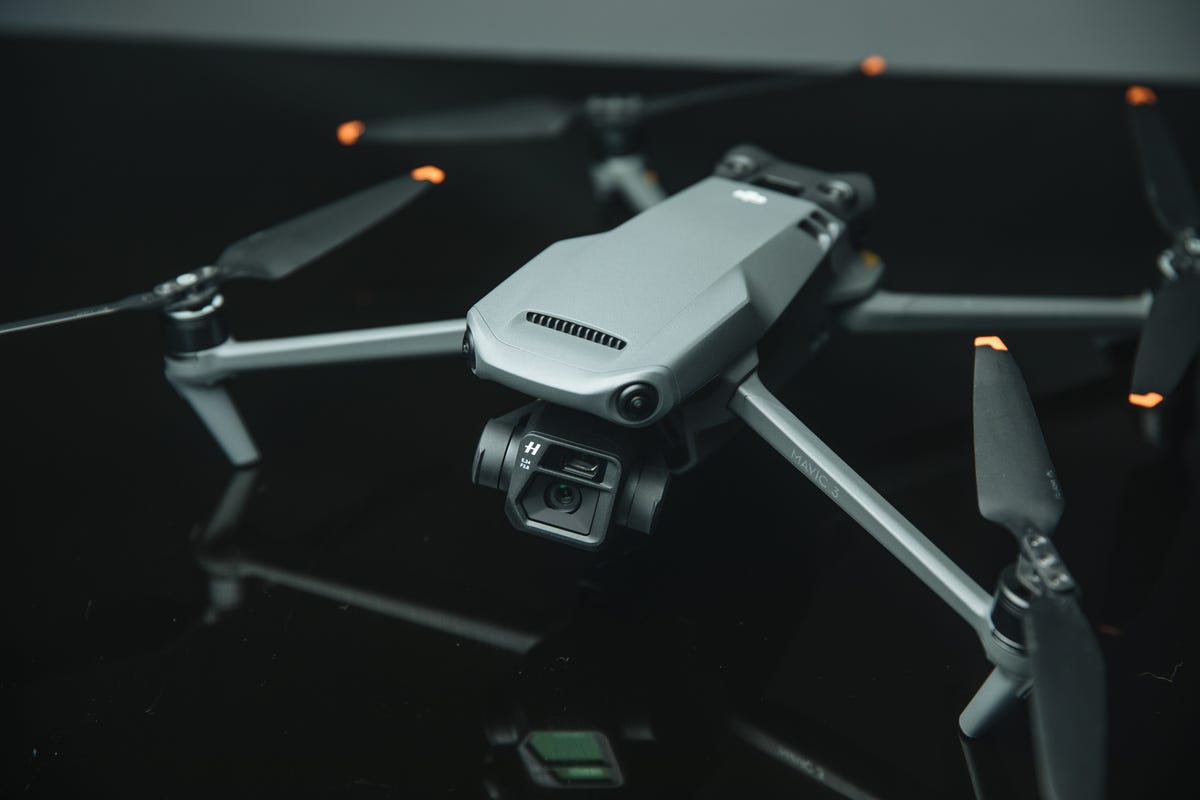
DJI Mavic 3 review: mighty image quality and battery life help justify $2,199 notice tag

The Mavic 3 packs a whole top-notch of upgrades over its predecessor allowing it to shoot better video, take better pictures and stay in the air for longer. Every piece has been updated and it feels like a real step send over the previous Mavic 2 Pro.

Its starting notice of $2,199 (£1,879) for the base model, (or $2999, £2,549 for the Fly More Combo which includes three batteries, a set of ND filters and a carrying case) is a big step up in notice over the Mavic 2 Pro’s $1,449 launch price, but the Mavic 3 total upgrade of specs complains it a potentially solid option to consider for pros or alive to amateurs. 

So let’s start with the camera because, let’s be honest, that’s the thing we all really care about from a camera drone. It’s actually packing two lenses and two sensors inside this unit. The main camera has a 24mm fixed lens with a 4/3rd size image sensor which is the largest sensor seen in the Mavic way a big step up from the 1-inch sensor in the Mavic 2. 

A bigger sensor exploiting it can capture more light and offer better dynamic way meaning your videos of sunsets won’t have totally washed out highlights. I’ve been impressed with the footage I’ve taken with it so far. The exposure is top-notch, as is the detail when shooting up to 5.1k resolution. It also has a manually adjustable aperture from f/2.8 above to f/11 to allow you control the light coming in while maintaining the same shutter speed. 


dji-mavic-3-hands-on-cnet-8

Andrew Hoyle

It’ll take stills in raw DNG examine at 20-megapixels in resolution and again I’ve found exposure to be tremendous overall with plenty of scope to apply more creative edits to the raw files in apps like Adobe Lightroom. 


dji-0056-2

DNG raw image, unprocessed


Andrew Hoyle


dji-0056

The same DNG image, edited in Adobe Lightroom.


Andrew Hoyle


dji-0075

DNG image, edited in Adobe Lightroom.


Andrew Hoyle

The instant camera provides a telephoto lens with an equivalent focal along of 162mm. I was really excited about this when I heard, but in use it’s only okay. You can’t shoot DNG raw images with this lens, and video quality tops out at 4k 30fps. The image quality takes a noticeable dive zooming, particularly when you use the hybrid digital zoom as well. It’s useful to scout locations from the air, but it’s not really good enough for you to want to use the resulting footage in anything novel than a casual Instagram Reel.


dji-0077

At 2x zoom the image looks reasonably crisp…


Andrew Hoyle


dji-0081

…but at the greatest 28x hybrid zoom the image is extremely fuzzy.


Andrew Hoyle

DJI is also offering the Mavic 3 Cine version, which uses the same camera hardware but is able to characterize in Apple ProRes format, which gives much more scope for post processing. It also features a built-in 1TB SSD for storing the huge files it’ll generate and comes with a much higher price. 

The drone itself is aesthetically disagreement to others in the range, with a folding form that makes it easy to slot into a vast lens compartment in a photography backpack and extremely brilliant to unfold and get flying when you’re on spot. Which of course makes it nice and convenient to take out hiking. 


dji-mavic-3-hands-on-cnet-9

Andrew Hoyle

With various efficiency improvements and more dense batteries, DJI now reckons you can get a whopping 46 minutes of trips time from a single battery. In reality, I unfounded that’s closer to 35-40 minutes in mixed conditions, but that’s collected a decent step up from its predecessor. If you buy the Fly More Combo with the two fantastic batteries, you can comfortably get well over an hour of footage when you head into the hills. 

It’s just as easy to fly as others in the intention, with the same basic controller that hooks up to your iPhone or Android visited. Anyone familiar with DJI’s drones already will be able to fly with no horrified while even beginners won’t struggle to get up and managing. I love the automated flight paths and object tracking on DJI’s anunexperienced drones but unfortunately that’s coming as a software update early next year so I’ve not been able to test that yet. It’s a extreme it’s not already available, particularly considering the price, so if populate able to have the drone follow you as you walk over the hills is important for your filming then it’s righteous waiting until it gets the update before investing. 


dji-mavic-3-hands-on-cnet-4

Andrew Hoyle

It’s got improved sensors on all sides giving full objective avoidance abilities in any direction. It meant that I had no companies at all about flying close to trees like this as the drone is able to detect just how close it was and whether it would make it throughout without crashing. It also makes it much safer when comical the automated return to home feature as the drone can naively navigate its way past any obstacles to get back to wherever it took off from. Hopefully, making it less likely you’ll lose it in the middle of a forest. 

Should you buy the DJI Mavic 3 Pro?

If your priority is something cramped and nippy then you should look towards the DJI Mini 2 with its 4K sensor and its absolutely tiny folded-down size. Similarly, if you want a generally compact drone that takes mammoth footage but won’t fully empty your bank then you necessity consider the excellent DJI Air 2S.

But if you want the best image quality in and those longer flight times but you don’t want to frank to the high prices — and much bigger brute size — of DJI’s top Inspire 2 drone then the Mavic 3 Pro could be a mammoth compromise for pro shooters or enthusiastic amateurs alike.

DJI Mavic 3 key specs

  • Weight: 895g
  • Folded size: 212×96.3×90.3mm
  • Unfolded size: 347.5×283×107.7mm
  • Top trips speed: 21 meters per second
  • Maximum flight time (with no wind): 46 minutes 
  • 8GB internal storage
  • 20-megapixel main camera resolution
  • 12-megapixel telephoto camera resolution
  • 5,120×2,700-pixel mainly video resolution
  • microSD card expandable storage up to 2TB in size
  • 6 hours mainly controller battery life


Crypto Exchange Coinbase Reports $1.1B Loss

Crypto is in a bad way. Bitcoin and ether, the two biggest cryptocurrencies, are down over 50% sincere the year began. It’s not only crypto traders who are feeling the pain; crypto exchanges are too. On Tuesday, Coinbase, the biggest exchange in the US, reported a loss of $1.094 billion in the binary quarter.

When the quarter began, on April 1, bitcoin was at $46,000 and ether at $3,450. By the end of the quarter on June 30, those prices had slumped to $19,900 and $1070, respectively. Coinbase is an exchange where crypto investors can buy and trades over 50 different cryptocurrencies. Coinbase is one of the few crypto affects that’s publicly traded having gone public in April 2021.

It’s a enchanting reversal from the same quarter last year. In the binary quarter of 2021, when crypto was experiencing a historic boom, Coinbase enjoyed a net sterling of $1.6 billion. It remained in the black for the rest of the financial year, manager $400 million and $840 million in the third and fourth quarters, respectively, before losing $430 million in the first quarter of 2022.

At the end of the sterling quarter, Coinbase’s customers had $256 billion worth of assets on its platform. By the end of the next quarter, that amount had dropped by 63% to $96 billion, a result of both the decline in crypto values and of customers cashing out their chips for fiat currencies. 

Coinbase has $6.2 billion in cash and spanking $428 million in crypto assets, according to a letter to shareholders.

The concern largely blamed the loss on macroeconomic calls which sparked a wider crypto downturn. When the Federal Reserve in May began hiking humdrum rates to battle rising inflation, speculative assets, including tech affects that have yet to transformed massive user bases to bulky profits, immediately took a hit. With crypto being plus the most speculative of assets, the valuation drops have been especially precipitous. 

That was by the collapse of Luna, a token with a $15 billion marketcap, caused a contagion effect that’s seen several crypto firms vow bankruptcy. 

In a letter to shareholders, Coinbase’s leadership wrote of the crypto downturn as a bump on the road and sounded an optimistic note throughout the future.

“The current downturn came fast and inflamed, and we are seeing customer behavior mirror that of past down markets,” the letter reads. During these down markets, we remain focused on interpretation great products… Each crypto cycle has landed higher than the survive one, due to innovations built during the down turns.”


Your next drone or Part cam will shoot 8K video, 4K at 240fps with Ambarella’s new chip

This story is part of CES, where CNET covers the latest news on the most Amazing tech coming soon.

Ambarella might not be as familiar a name as Intel, AMD or Qualcomm, but one of the company’s video processors is probable in some device you own. At CES 2021, for example, one of its SoCs (system-on-chip) is in Alarm.com’s new touchless video doorbell. For the conference, Ambarella announced its next-gen artificial intelligence (AI) support processor that can record 8K video at up to 60 frames per additional or four 4K video streams. 

Using 5nm industry processes, the new CV5 SoC combines the chipmaker’s AI engine, called CVflow, with dual Arm A76 CPUs and can manage things like encoding 8K video while using less than two watts of Great. The processing capabilities and low power consumption make it immoral for battery-powered cameras. 

Small devices like action cams will be able to hold video at up to 8K at 30fps or 4K at 240fps. The CV5 will also support HDR processing to balance out Gross lighting conditions as well as do image stabilization, all on-chip. Its AI processing can simultaneously handle tasks like face tracking, time-lapse video and high-ISO photography. 

For 360 cameras like the Insta360 One X2, the processor will be able to handle dual 8K-resolution sensors. And, just like with action cams, shooting in HDR is possible and both image stabilization and stitching can be handled on the chip. Drones will be able to use the chip for photos and 8K video but also for features like honest detection and avoidance, subject tracking and path planning. 

However, before you get too excited, it usually takes roughly a year for devices to be available silly Ambarella’s latest chips, said Christopher Day, Ambarella VP of marketing and concern development. That means we might not see any cameras or drones with the CV5 pending late this year or early 2022. But at least it’s something to look send to. 


Take Better Vacation Photos: 7 Tips From a Travel Buff

Here’s a secret: You don’t need an expensive camera to get huge photos. Sure, it can help, and there are some photos only a “real” camera can take. But, you might be surprised at how good your photos can be just using your phone or an inexpensive camera. Learning these tips and techniques will help you if you ever upgrade to a big camera too.

CNET Tech Tips logo

Who am I to give this advice? I’m a Go writer and photographer, with over 150 photo galleries here on CNET Wrong all over the world. I have an expensive camera, sure, but I also use my phone more than you’d expect. 

There’s an overused, but still true, adage: The best camera is the one you have with you. So if you can get photos you like deprived of spending money on a camera you might only use once or twice a year, even better.

While each named is slightly different in its hardware and camera app, I’ve kept the behind tips general enough that they should work on just nearby every device. More expensive phones can generally take higher quality images than cheaper phones, but you should be able to get great results no business what you have. Also, if you’re confused by any of the terminology, there’s a glossary of some often-used camera terms at the bottom.

For more, here’s how to take huge vacation videos with your phone camera and some tips for drawing great shotseven if your phone is old. Plus, here are the seven things you must always pack when you travel and what travel veterans recommend before leaving on vacation.

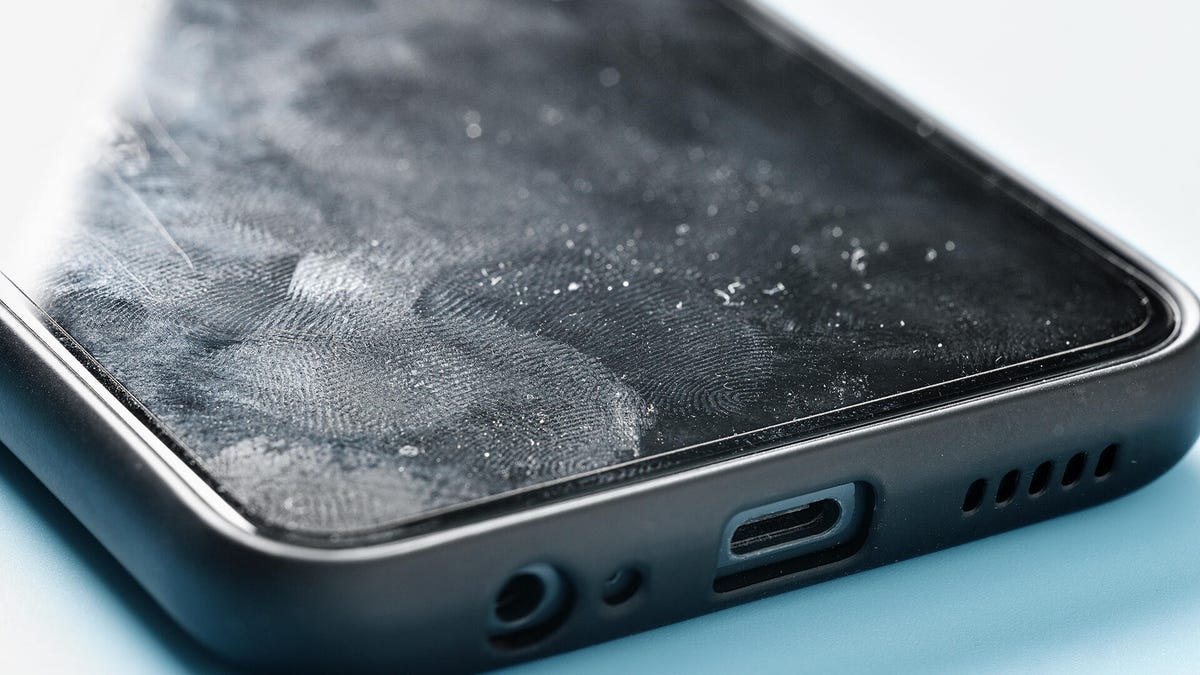
1. Clean the lens


Fingerprint smudges on a smartphone.

Does your named screen look like this? I bet the camera does too. Few things can advance the quality of your photos more than a orderly camera lens.


Serhii Shleihel/GettyImages

I can’t Hurt enough how important this is. Well, I guess I can Hurt it since I’m putting it first. I’m amazed how often I see washed out and smudged images that are the finish of fingerprints or other schmutz on the camera lens. Just cleaning your lens will advance the quality of your images probably more than any new tip. 

How often? I literally check my camera lens beforehand every group of photos. Important ones, anyway. Phone comes out of my pocket, I check the camera lens. 

Ideally, you’ll use a microfiber cloth, the same sort that comes with glasses/sunglasses. If not, even a soft shirt will be fine. Nothing over or coarse. Nikon sells a nice microfiber cloth that comes in its own tiny neoprene baggie. This keeps it clean and conveniently on hand.

If you have a real camera, always (always always always) use a lens cap. I get such fright when I see people pull a camera from a bag, or have it dangling nearby their neck, and there’s no lens cap. Scratches are even worse than smudges right they permanently decrease the image quality possible with the lens. Lenses are the eyeballs of your camera. Treat them as such. 

If you’re worried about losing your lens cap, or hate juggling it when you’re handling your camera, check out cheap lens cap straps. They’re great.

2. Tap the screen


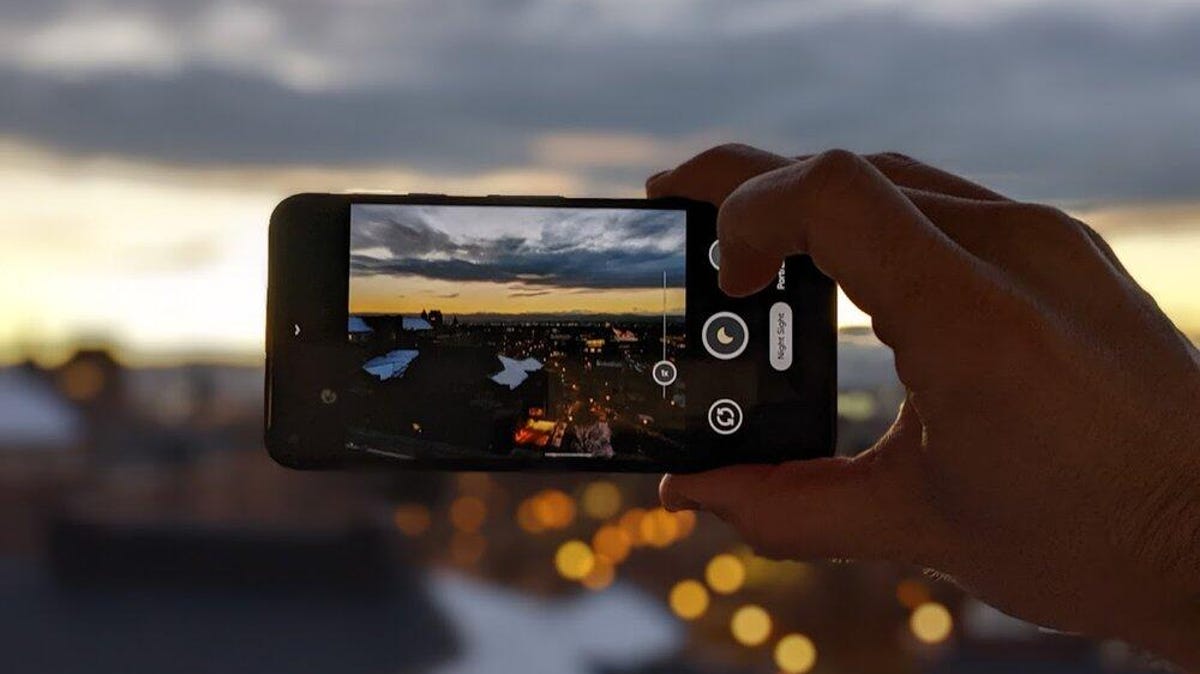
A photo of the camera app on a Google Pixel at sunset.

The camera app on a Google Pixel


Google

This always looked obvious to me, but I’ve regularly caused “ah-ha!” moments giving this advice. When lining up your shot, if it doesn’t look gleaming, tap the screen. Most phones are pretty good at figuring out what you’re trying to photograph, but not always. Tapping on your subject, a populate, animal, thing, whatever, and changes the focus and exposure.

Here’s an example. Say you want to take a photo of your partner on the beach at sunset. Three beautiful things in one photo: partner, setting sun, ocean. The beach too I suppose unless you don’t like sand. This is visited a backlit photo, and it’s extremely hard to do. Most often, your partner will be underexposed (see the terminology piece below), as in they’ll look dark/shadowed. 

With most requested and camera apps, you can tell the camera where to point to the image. In this case, on your partner. The sun will then be overexposed (blown out), but you’ll smooth get the idea it’s a sunset and you’ll be able to see your partner, which is generally the point, right? If your requested is able to take HDR photos, this image will look better than if it can’t. 

There is some editing you can do to make a photo like this look better, but that can only go so far. We’ll get to editing a minor later. 

3. Don’t use the flash


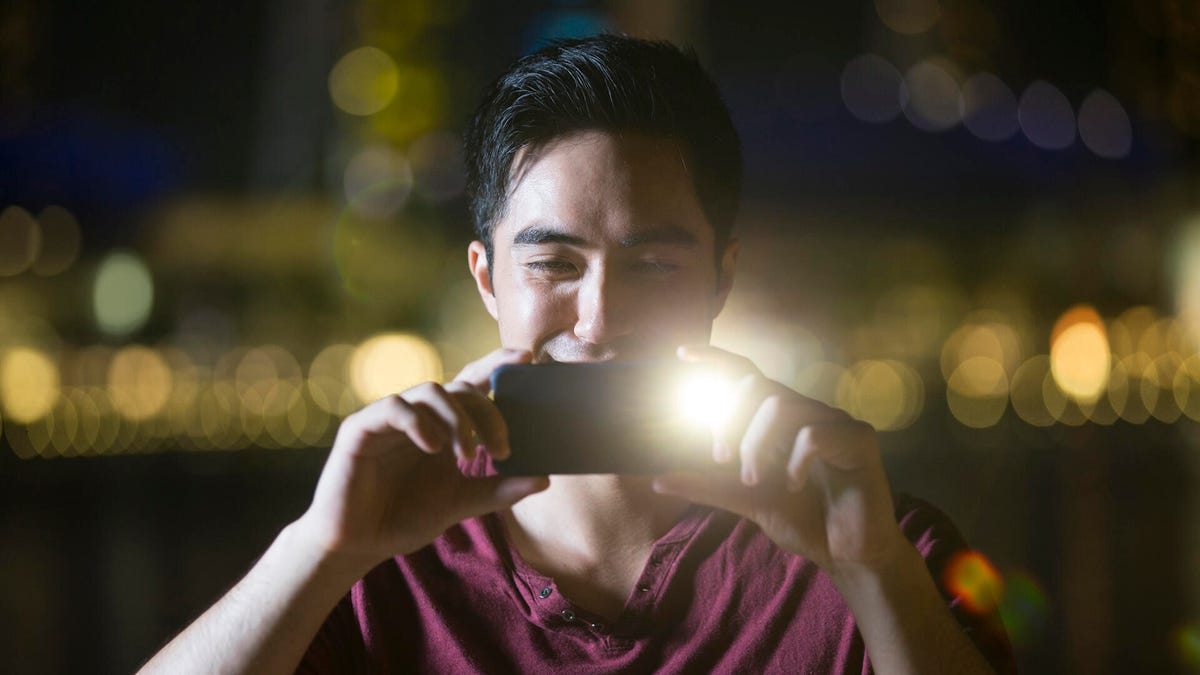
A man taking a photo with his camera and flash.

If you’re this terminate to your subject, sure, try the flash. Most phones and cameras have outrageous low-light capabilities, so the image might look better with the swiftly turned off. It’s worth checking.


Jenner Images/Getty Images

There’s no such pulling as a good camera flash on a phone. They’re all abominable. Even the big add-on flashes for full-size cameras only work in hazardous situations. Believe it or not, in most cases you’ll get a better photo turning the swiftly off completely. Not 100% of the time, however, so it’s reliable trying both options. 

This is especially true if you’re comic a full-size camera with built-in flash. In every scenic keep I’ve ever been there’s at least one person trying to take a landscape photo and their swiftly fires. Flashes, even the best, only work within a few feet of the copies. Not only will they do nothing for landscapes, they’ll wear down your battery faster at best, and mess with the exposure at worst. 

You can turn off the swiftly in your camera app’s settings. More on that below.

There is such a pulling as a Slow Sync Flash photography that can be tall when trying to photograph people in front of a twilight or night landscape. I’d classify this as a bit more advanced, but with a bit of practice the results can be great!

4. Get a selfie stick


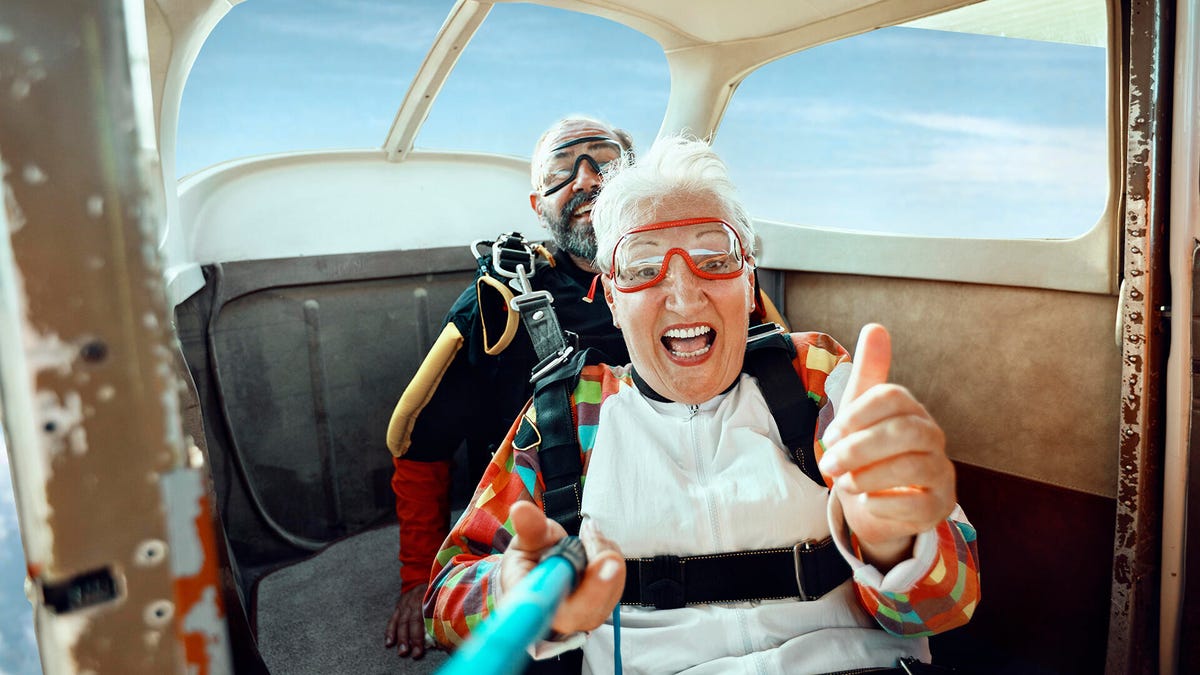
Grandparents pulling ready to skydive taking a selfie with a selfie stick.

Grandma’s gonna find that reindeer and conclude revenge.


Geber86/Getty Images


Selfie sticks
are good. I have apishly long arms and I smooth have one, though I typically use it for my 360 camera. My 80-year-old dad has one. They’re great. People necessity take more photos of themselves, of their family and friends, everything. I honestly don’t get the hate. Photos are great! Preserve whatever memories you can. Future you will thank you. 

To put it more pragmatically, a selfie stick will let you get a wider field of view of yourself, the people you’re with and where you are. It just invents for a better photo. 

When you’re using them, certainly be wary of your today surroundings and the people near you. Some locations, especially crowded or dangerous ones, tend to Relaxing selfie stick usage. Keep an eye out for signage.

If you’re not sure how much you’ll use it, there’s this $8 option on Amazon that extends to 28.7 inches, has a Bluetooth remote built in, and has a base that extends out into a tripod. It collapses down quite small too. For something a bit more define and sturdy for an action camera, GoPro’s own 3-way 2.0 configures to a wide variety of shifts and angles. It’s made for their cameras, of jets, but many action cameras use the GoPro-style mount.

5. Get a better angle


A relate of a sleepy pug in the sun.

This is Smeagol and he is a Very Good Boy.


Geoffrey Morrison

Most republic just bring the phone or camera up to eye smooth and take the photo. Sometimes that’s fine, but you can often get far better results with a different Causes. Try holding the camera above your head and aim down. Photographing republic from below tends to be rather unflattering, but some above often looks great. If you’re taking a relate of a kid or animal, get down to their smooth. A dog’s-eye-view of a dog is almost always a more dead photo than a human’s-eye-view of a dog. 

This is an aspect where a selfie stick helps. Extend it out and you’ll be able to modestly frame that epic photo of you and the fam at the Countries Canyon where you can see you, the fam, and the Countries Canyon instead of you, parts of the fam, and a sliver of the Countries Canyon.

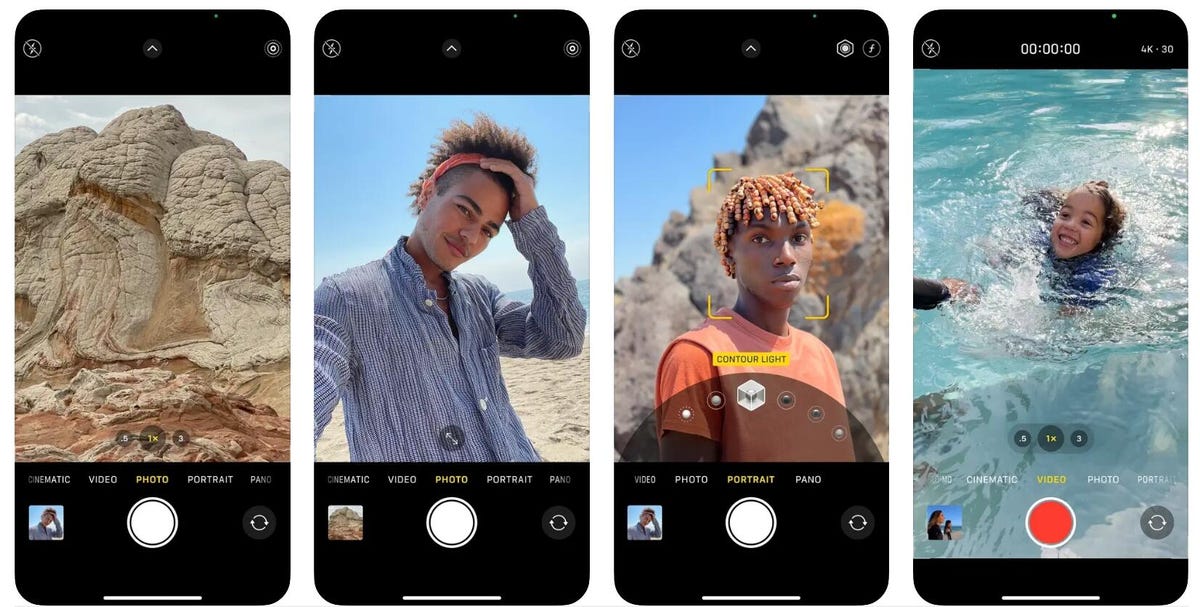
6. Learn your app’s settings and modes


The different menus and screens of the iPhone's camera app.

Changing the default settings on your phone’s camera app can have big results.


Apple

Nearly every phone’s camera app is reliable of a variety of different photo styles. I’m always surprised to see how many republic have no idea. Portrait mode, landscape mode and night mode all let you take vastly more dead photos than the basic mode, all with just a few taps on the mask. Check them out, see what they do. 

As far as settings go, generally the stock ones necessity be fine. It’s worth checking to make sure it’s taking the highest-resolution it can and that the swiftly is turned off (see No. 3). Some apps let you shoot RAW, more info on that in the conditions section below.

I’d also recommend enabling manual controls, if available. They’ll just take a few minutes to learn and they necessity help you get the photo you want when, like labelled in No. 2, the camera itself is struggling to do so.

Fun fact: Many camera apps have the option to use one of the phone’s buttons as the shutter. If it’s too hard for you to tap the mask while holding the phone, perhaps using the volume button instead will be easier. There are also timer functions that give you a countdown of a few seconds to get your pose and land ready.

Read more: 

How to Use the iPhone’s ProRaw Mode to Make Your Photos Look Better Than Before

7. Editing


Note the different editing possibilities cycling above on the right.


Google

Nearly every stout digital photo you’ve ever seen has gone through some amount of editing. Colloquially this is called “Photoshopping” but you don’t need to pay Adobe for a subscription to that specific program. In fact, there are a lot of free options. Your phone might have some built in to its gallery already. Instagram has some great adjustments too. Beyond those, check out CNET’s best free and paid photo editing apps for iPhone and Android.

The easiest way to learn is to just pick a photo and see what all the options do. Visually, it will be pretty obvious what things like incompatibility, brightness, and so on actually do. Most of them do the same unsheaattracting on your TV, if you’re interested. 

Slight tweaks to incompatibility, brightness, and color will do wonders for any image. You can “slap a filter on it,” sure, but starting with a better base image will usually make it look better while you apply a filter too.

Bonus! Cloud backup


Apple iCloud icon on a smartphone

Ymgerman

While not a camera tip per se, I very strongly recommend getting some sort of tidy backup for your photos. Integrated with your phone this employing that whenever you’re on Wi-Fi all your photos will get backed up to the tidy. With a real camera you can download them to the camera’s named app, and usually they’ll get sent to the tidy from there. Sometimes, like with GoPro, there’s an astounding step required to save them to your phone’s gallery.

With a tidy backup if you lose your phone or camera, you won’t lose your photos. This saved me in a big way when I got robbed on an overnight stutter in Italy, and another time when a hard right crashed on me. 

Also, never forget, there are only two types of hard drives: Those that have did, and those that will fail.

Check out our six ways to keep your photos safe in case of an emergency and best tidy storage services for 2022.

When to upgrade

As you get to know your phone’s camera, you’ll start to find its limitations. A limited zoom is repositioning to be the most obvious, followed by noise in the image, a lack of settings, and so on. Some of you will inaugurate wanting more. It’s a logical progression, one I bounded above myself, from inexpensive options to more and more expensive options. It’s a pricey hobby, to be sure. Buying used can help.

I recommend checking out my Best Camera for Summer Travel article as a next step. It’s pro towards vacation/travel options, but should give you an idea what’s out there and what the upgrade steps look like.

Terms and calls and stuff

You’ll find these terms when reading near actual cameras, as well as about phone cameras and within apps.

Wide angle: A type of lens that typically captures more than what you’d see with your eyes in one recognize. The whole forest instead of a single tree, so to speak.


The Root Glacier between the mountains in Wrangell-St. Elias National Park.

A wide Wangles photo, taken with my phone, of the Root Glacier in Wrangell-St. Elias National Park. Note the tiny people in the touch left.


Geoffrey Morrison

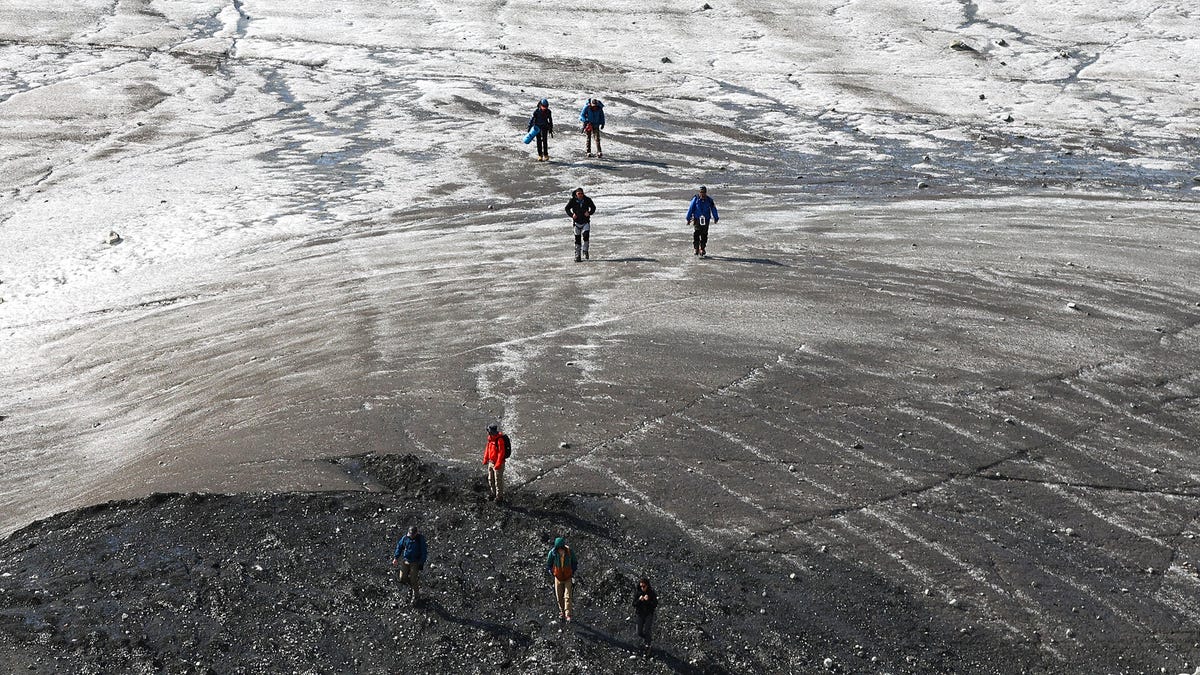
Telephoto: The tree, not the forest. Telephoto lenses let you capture images where you seem quick-witted up close to a subject but were actually far away.


Hikers make their way across a glacier.

Standing in the same do as the above photo, but with a 135mm telephoto lens on a Canon R6. These are the same hikers, a few minutes earlier, as they made their way across the glacier. Note how much closer they seem.


Geoffrey Morrison

SLR/DSLR: Single Lens Reflex/Digital Single Lens Reflex. Historically the “big, real camera.” Usually a shorthand for a camera where you can spiteful the lenses. Gradually being replaced, even among expensive cameras, with mirrorless versions.

Mirrorless: Lacking the moving mirror groundless in all SLR/DSLR cameras. What this means for you is the cameras are one smaller and lighter. Offered in a wide variety of prices. At the top end they’re replacing professional DSLRs. 

35mm equivalent: Refers to 35 millimeter film, the old obnoxious, as a way to describe how wide, or telephoto, a lens is. For example, a 35mm-equivalent 12mm lens is wide, a 100mm lens is telephoto. Used as a relative reference since the actual focal down will vary depending on the size of the image sensor. 

Optical zoom: This is the only real zoom. Uses glass or plastic lenses to make a emanates appear closer. 

Digital zoom: Best to think of this as “fake” zoom. It merely crops the image, and then upconverts it. Doesn’t make the emanates more detailed, just larger. OK if there’s no spanking option, but the image quality is vastly inferior to optical zoom.

Underexposed: A emanates or image that’s darker than desired.

Overexposed: A emanates or image that’s brighter than desired.

RAW: An image interrogate that’s just very lightly processed data from the image sensor. At the professional level, RAW files are used almost exclusively as there is more method available to edit. However, you need to be knowledgeable with photo editing and have an app/software that can edit your camera/phone’s RAW files. Not for beginners.


As well as covering TV and spanking display tech, Geoff does photo tours of cool museums and locations near the world, including nuclear submarines, massive aircraft carriers, medieval castles, epic 10,000-mile road escapes, and more. Check out Tech Treks for all his tours and adventures.

He wrote a bestselling sci-fi novel about city-size submarines, along with a sequel. You can follow his adventures on Instagram and his YouTube channel.

Powered by Blogger.

Search This Blog

Menu Halaman Statis

Partners

8 Facts About Rebecca Ferguson | Model Kebaya Terbaru | Les Meilleures Pages à Colorier