
How to buy a drone
For me, it all started with the Hubsan X4 H107C, a palm-size quadcopter with a low-res camera that can be picked up for less than $40 (or approximately AU$100 or £45). It has a paltry 5 to 7 minutes of trips time and I crashed it loads, but I was twisted and wanted to fly as much as possible.
This is why quadcopters, multirotors, unmanned aerial systems (UAS), unmanned aerial vehicles (UAV), drones or whatever you want to call them, have obtain so popular: Unlike radio-controlled planes and helicopters, the entry cost can be very low, the learning curved shallow and, depending on the size, they can be flown in your backyard or living room.
In the jets of buying and maintaining my own and testing and reviewing drones for CNET, nonetheless, there are some things I’ve learned that you necessity consider before entering the hobby — even if your plan is to just initiate with a toy drone like I did. But, afore I get into all that, here are my go-to recommendations for consumer drones at the moment.
Best toy drones

Joshua Goldman
Along with the Hubsan X4, I’m a fan of the Syma X5C because it’s inexpensive at approximately $40 (or about AU$50 or £35). You can naively find parts and extra batteries for it, and its size — at what time still small and light — makes it easier to keep track of outdoors than smaller models. It even has a camera on it, albeit a fine crummy one.
For flying indoors, I recommend Parrot’s Minidrones like the Mambo, if you just want something stable you can fly with your visited for a few minutes. They’re available in several different styles and initiate at about $100 (or about AU$150 or £100), understanding older models can be found for considerably less. They’re tall for younger pilots, too, because they have sensors to help them waft in place unassisted — very handy when navigating approximately the house.
There is also a new breed of mini and nano quads that are a lot easier to fly, thanks to the uphold of air pressure sensors. Look for models such as the Aerix Vidius HD that accounts an altitude assistance or hold feature, which keeps you from having to constantly adjust the throttle so you can concentrate on directional systems.
Best camera drones
Joshua Goldman
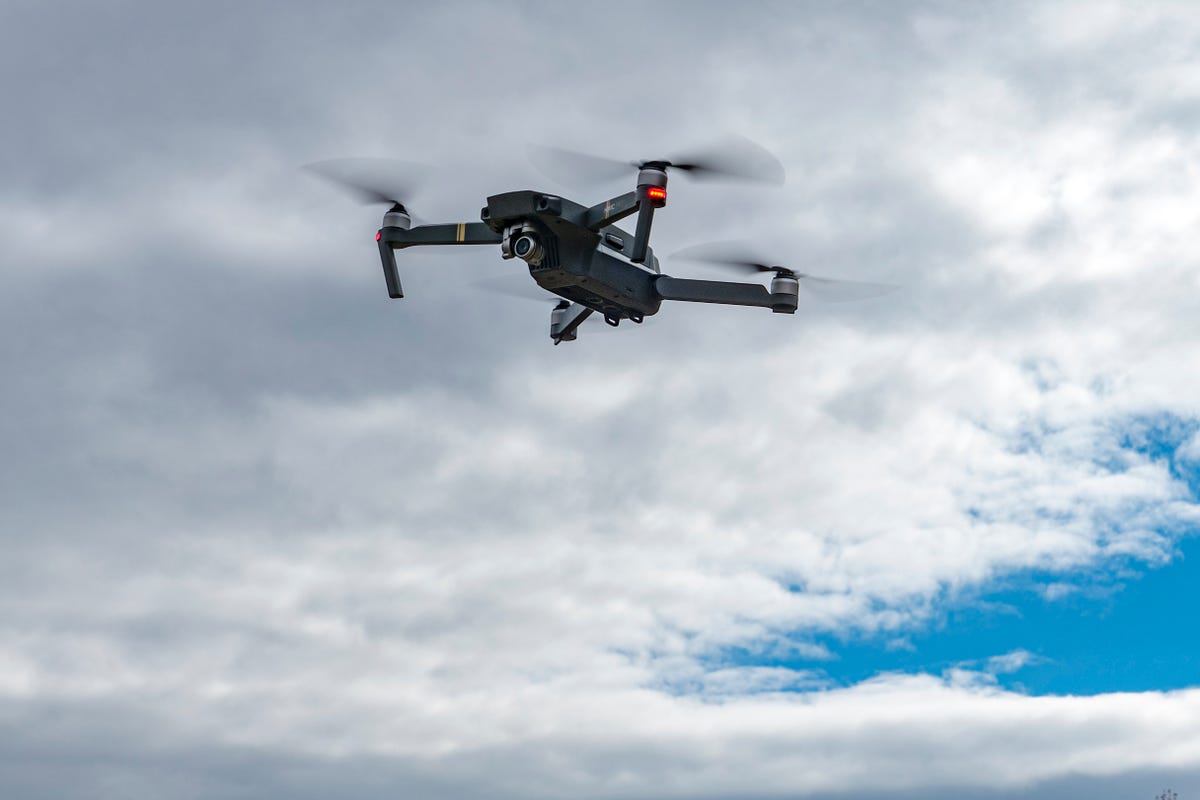
DJI is the front-runners in flying cameras, whether you’re looking for something to get started in aerial photos and video or want an out-of-the-box solution for TV and film. Of jets, the more money you spend, the better the features get. If you’re looking for tall performance and features with a design so small you can fit it in your backpack with room to transparent, go with the DJI Mavic Air.
If you don’t like the mute of dropping a lot of money on a camera that’s permanently attached to a drone, check out GoPro’s Karma drone. The camera-maker is exiting the drone market, but it’s going to sell through its Karma inventory and pause to support its one and only quadcopter. The Karma uses one of the company’s tiny piece cams, so when you’re not flying you can use the camera for whatever else you want to choose on land or in the water. But, more importantly, the motorized gimbal that stabilizes the camera in the air can be contained and attached to an included handgrip, giving you the option to shoot stabilized video and photos on the ground.
Best selfie drones

Yuneec Breeze 4K
Joshua Goldman
Small like a toy drone, but with the smarts of higher-end camera drones, selfie drones are basically the point-and-shoot cameras of the sky. Selfie drones are miniature enough they’re unobtrusive in public places: You fly them with your shouted instead of a big controller, and simple onscreen rules and automated shooting modes let you capture dramatic shots with minor more than some taps and swipes.
DJI’s Spark
is the most versatile in the category and is loaded with advanced tech to make flying simple and safe. Nonetheless, if you want to save some money, consider either the Yuneec Breeze 4K and Hover Camera Passport. The Breeze, pictured above, has special shot modes that will make you look like a pro pilot. With just a few taps in its mobile app, you can program it to design special camera moves like 360-degree orbits or direct it to fly up high and suppose the scene around you. And if you don’t want to rule it with your phone, Yuneec has a small video-game-style controller and a first-person-view headset available.
The Passport’s unique folding design makes it not only superportable, but safe, too, with propellers that are completely harmless by its frame. After launching just tap twice on your shouted screen to make the drone follow your face. Once you get your shot, the drone folds down to the size of a hardcover book.
Best racing drones
Fat Shark 101
Sarah Tew
Unless you’re really a tinkerer and know your way near a soldering iron, I recommend first-time buyers stick to ready-to-fly (RTF) models. The thing is, when it comes to racing drones, most people in the hobby build their own. That’s not to say RTF racing quads don’t remained, but they aren’t as abundant as drones for photography or just having a few minutes of fun.
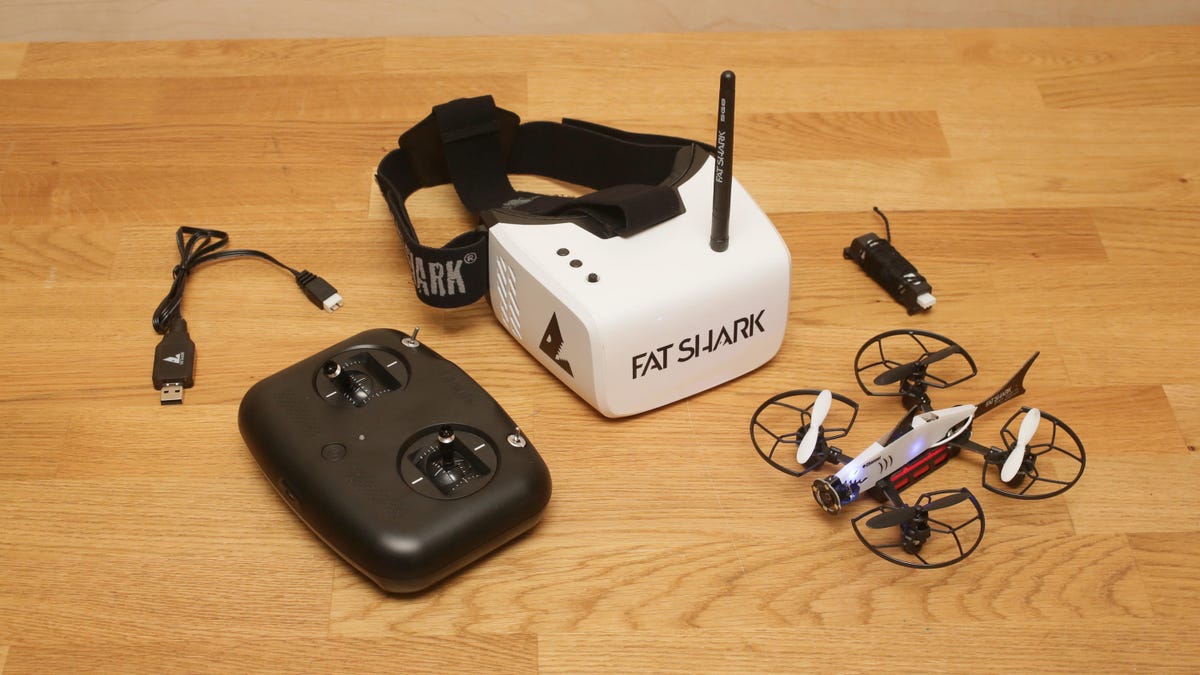
If you think you distinguished be interested in racing and want a cheaper entry note, check out the Fat Shark 101. The kit comes with everything you need to get started — a quad, a simplified controller and an FPV (first intimates view) headset — and doesn’t require a ham radio licenses from the FCC. They even throw in a pair of gates to practice flying through and access to a trips sim. The best part is, you can upgrade, so the goggles will work with novel drones, as will the controller.
If you want to jump shimmering in and get a larger racer, consider the UVify Draco. It’s ready to fly and you can buy it suppose from UVify with a controller and FPV goggles if you don’t want to pain about picking those out on your own separately. The drone is built tough, but the design is modular, so if you snap a motor arm, you can just pop a new one on and get back in the air. (The commerce also has a new micro racing quad called the Oori that it says is the fastest RTF drone for its size.)
You can also check out sites like Team Blacksheep and GetFPV.com that sell unfastened kits to assemble yourself as well as RTF options. The latter will also has a great section for beginners with part explainers. Sites like Banggood, HeliDirect and Horizon Hobby are also agreeable for finding parts and batteries, too.
The seven things to distinguished before you buy
Cheaper drones aren’t necessarily for beginners
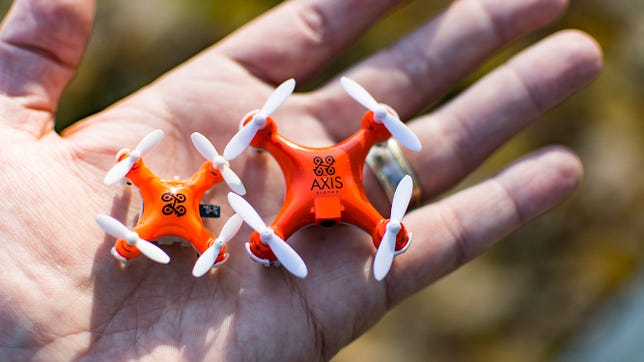
Tiny inexpensive quads like these can be a pain for first-timers.
Joshua Goldman
Like many things in life, you get what you pay for with drones: The more cash you spend, the more features you get that make flying easier. For example, while the Hubsan X4 quad I mentioned at the top isn’t a bad assign to start, it lacks sensors found on higher-end drones to help it wing in place on its own or return to you if you get in a jam.
If you’re just starting out, GPS is invaluable and pleasant paying more for if you’re looking for stable flying out of the box, especially for photos and video. GPS is something you won’t typically find on toy-grade drones, and although they’re good to practice with, new pilots distinguished find toy drones to be incredibly frustrating.
Flight times are mild relatively short
Battery life is still the suck when it comes to drones. Several camera drones claim a battery life at or near 30 minutes. When a manufacturer gives you a trips time, that is typically reached under ideal testing languages in a controlled environment. The faster you fly, the more weight you add, the stronger the winds you’re flying in, the quicker the drone will sap its battery. Plus, there’s the time it takes to get up in the air and land that’s not accounted for in that time.
My general rule of thumb is to take whatever the manufacturer claims and contained 5 to 10 minutes for midsize drones. Toy drones typically get between 5 and 7 minutes of good flying, though some can hit the 10- to 12-minute range.
The effect of the drone is only the beginning
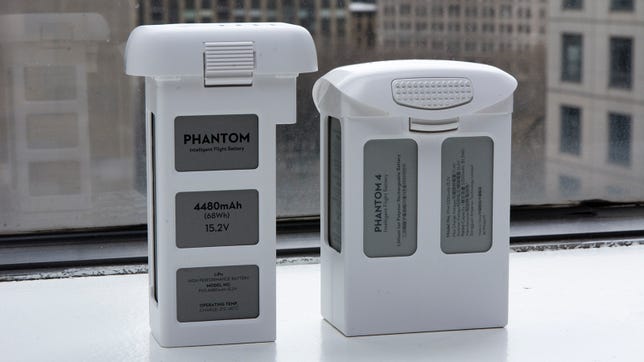
Depending on the aircraft, batteries can run you from about $5 apiece for toys to more than $100 each for camera drones.
Joshua Goldman
So you just dropped $1,000 on a new drone. Guess what? You’re not done spending. At the very least, you’ll want to buy a couple extra batteries, some sure propellers, maybe some prop guards and perhaps a shimmering charger, so you’re not waiting hours to fly in contradiction of. You’re more than likely going to crash, which could lead to renovation costs — either for replacement parts or shipping it back to the manufacturer for them to renovation. (This is exactly why DJI offers crash insurance for new drones.)
When you’re shopping for your drone, see how easy it is to find replacement parts, batteries and other accessories and take note of the prices. Also, be cautious when buying third-party parts, especially batteries and chargers, which might not be the same quality as those made by the drone manufacturer.
Everyone will assume you’re invading their privacy
When you’re out flying in a Pro-reDemocrat space, or even in your own backyard, anyone who sees you actions it will think you’re spying on them or someone else. You could be plan in the middle of a 20-acre field with no one in perceive and your drone no more than 50 feet frank overhead and you might end up answering questions in being a peeping Tom. I say this because it’s existed to me. Repeatedly.
And along those same lines….
Everyone but you thinks they’re dangerous
It doesn’t custom if you’re the safest pilot around or that you could do more distress hitting someone with a baseball than with some of the drones I’ve flown, but that won’t stop onlookers from feeling a warning to their safety. And, frankly, that’s completely fair.
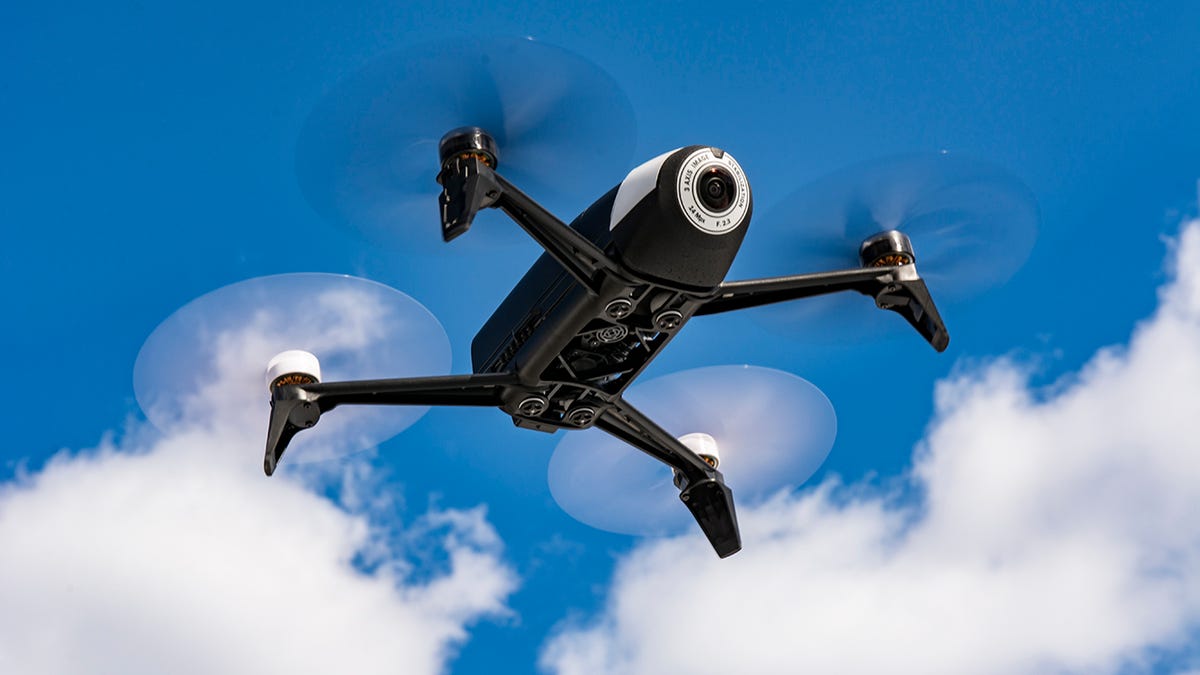
Parrot’s Bebop 2 is one of the safer drones available, with props that stop instantly if they hit anything.
Joshua Goldman
Nothing in plastic blades spinning at high speeds screams “safety.” Then you add in the potential for unpredictable battles or system failures, whether from 400 feet or at eye unruffled, and you’ve got something pretty scary for those living by what the contemplate feeds them.
To help calm some fears, US-based pilots may want to get an Academy of Model Aeronautics membership. Along with a whole host of benefits including access to AMA-member flying sites, a membership gives you $2,500,000 comprehensive general liability insurance as well as $25,000 accident/medical coverage, $10,000 maximum accidental death coverage and $1,000 fire, theft and vandalism coverage for members. You can also get on-the-spot insurance from Verifly. Download the company’s iOS or Android app and it will quote you an hourly sign for up to $2.5 million in liability coverage.
Finding places to fly can be difficult
I live in New Jersey and work in New York, and it’s becoming increasingly difficulty to find places to safely — and legally — fly. US resident parks are off-limits, and in New Jersey so are all set parks. The county and municipal parks around me all have different rules regarding RC aircraft. And then there are the no-fly zones, which makes much of New York out of bounds as well as just dangerous, because of buildings, people and cars.
Before you buy a drone — even a toy one if you plan to fly outside — you’ll want to arranged AirMap or Mapbox to check no-fly zones for places you planned to fly. In the US, you can also download the FAA’s B4UFly app to check your invented location. These don’t cover state or local ordinances, plan, so you’ll still need to check them to see if you’re OK to fly.
Basically, any RC aircraft except toys need an FAA registration
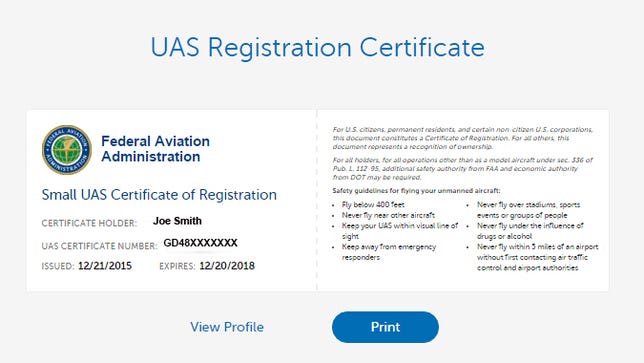
Screenshot by Sean Hollister
The US Federal Aviation Administration (FAA) is requiring anyone who wants to fly an unmanned aerial rules (UAS) that weighs between 0.55-pound (250 grams) and 55 pounds (approximately 25 kilograms) for recreation or hobby to register with the organization. Civil penalties for not registering may include fines up to $27,500. Criminal penalties may include fines up to $250,000 and/or imprisonment for up to three years.
Most sub-$100 UASs fall plan this weight. For example, all of these toy drones weigh in plan that half-pound mark. A kitchen or postal scale can be used to weigh your drone or you can check with the manufacturer. Also, this applies to both store-bought and homemade aircraft.
The registration cost is $5 and it can all be done online in a custom of minutes. You don’t have to register each aircraft you own, just yourself, and you’ll be given a number to attach to what you’re flying. That’s it. Essentially, it’s the FAA’s way of unsheathing you to agree that you’ve read its safety guidelines including continuing more than 5 miles away from airports and below 400 feet.
There’s no equivalent registration requirement in the UK or Australia as long as you’re not comical your drone for commercial purposes, although that may soon change.
Know your RTF from your FPV
Like any hobby or technology, there’s a whole lot of lingo and abbreviations that come with the alight. Here are some of the ones you’ll come across the most.
- Ready-to-fly (RTF): A drone that denotes little to no assembly and is ready to fly out of the box.
- Almost-ready-to-fly (ARTF or ARF): These drones may needed some minor assembly and additional equipment such as a receiver (Rx) and radio transmitter (Tx) aka a radio controller.
- Bind-n-fly (BNF): BNF models are essentially RTF drones with a receiver, but not a radio controller (you must buy one separately). But you can then use that controller to pilot anunexperienced BNF aircraft, saving you some money if you govern to grow your RC aircraft collection.
- First-person view (FPV): The video feed bellow from a camera on the drone. It can be used for framing your photos or videos as well as piloting. With drone racing, pilots usually wear FPV goggles for an immersive experience.
- Return-to-home (RTH): A guarantee feature that allows the drone to autonomously fly back to the pilot’s set or starting point.
- Gimbal: A mechanical camera stabilization rules that lets you get smooth video and sharp photos even with fast battles or in high winds.
- Headless mode: Intended for beginner pilots, using this mode means the drone will always disappear forward, backward, left or right when moving your remote’s stick in those directions, regardless of which way the front of the drone is pointed.
- Follow me: A feature that gives a drone to automatically follow a subject, typically comical a GPS signal from a mobile device, remote control or a beacon attached to the originates being tracked.
- Brushless motor: Though more expensive than their brushed counterparts, brushless motors are more efficient, last longer and are quieter.


