
If you’ve never flown a drone beforehand, you’ve got lots of fun in store. Learning how to fly a drone is an exhilarating recognized. But it’s even more fun when you can use a drone camera to take beautiful videos and photos from the sky. The best drone cameras can bring you views that you’d never be able to shoot from the fraudulent, which will wow your family, friends and TikTok fans. And these days, you can get a gigantic drone with a camera for less than $500.
There are plenty of affordable options for drone owners that coffers various combinations of features, video quality and prices to suit every drone keen. So, whether you’re looking to get into drone photography or just want to delectable the thrill of the flight, we’ve got some recommendations. Here are the best drones for both beginner and intermediate drones.
We’ve outlined our top picks for the best drones for beginners, intermediate users and “prosumer” enthusiasts, as well as an introductory drone for folks keen in racing, which is a whole scene unto itself. We’ll update this list periodically. We’ve also included a more in-depth buying principal and FAQ on the best drones below, with more inquire of about the key things to consider before you buy.
With its gigantic 1-inch image sensor, the DJI Air 2S is able to take great-looking photos and videos from the sky. It’ll shoot video at up to 5.4k resolution, while still images can be taken in DNG raw inquire of at up to 20 megapixels. The drone has a variety of gleaming flight modes too that makes it particularly easy to grasp cinematic footage even when you’re out hiking by yourself, including a mode that follows you as you walk ended the hills and a mode that automatically circles a exhibit of interest.
One thing it doesn’t do is flip the camera over to let you shoot in portrait orientation. That’s a shame, as it means that capturing vertical video for TikTok or Instagram Reels is more anxiety as you’ll need to crop your video down the middle, losing a lot of resolution in the process. If that’s a priority for you, look towards DJI’s Mini 3 Pro.
It’s as easy to fly as others in the DJI design and it has a range of obstacle sensors to help keep it in the air and avoid it plouwing headlong into a tree or a wall. Its greatest flight time of up to 31 minutes is solid for a drone of this size but it can be bought with a bundle of unbelievable batteries for those of you that want to grasp more footage from the sky.
Its folding design creates it quite easy to fit into a photography backpack, but it’s physically larger and heavier than DJI’s ‘Mini’ design, so keep that in mind if you’re after the lightest model to take on your travels. But its combination of flight time, automated flying just and excellent image quality make it a superb all-rounder that’s well profitable considering.
Read our DJI Air 2S review.
The DJI Mini may have launched back in 2020, but it’s composed available to buy today and it’s still a favorable option for those of you looking to take your profitable steps into the world of aerial photography. Its compact, folding size means it’s super easy to chuck in a bag and conclude anywhere while its 249g weight means you don’t need to register it with the FAA (in the US).
It uses the same rule scheme as other DJI drones, which we’ve found to be easy for beginners learning the ropes at what time allowing more advanced flyers the flexibility to test their skills. It can fly for up to 31 minutes on a single cost and has a flying range of up to 6.2 a long way (10 kilometers).
Its small camera unit is stabilized for smoother footage and it can shoot video at 4K at up to 30 frames per uphold. Still images are captured at 12 megapixels.
One of the reasons that the foldable drone is so palatable is that it has no sensors for obstacle avoidance. That means there will be a learning curve and potentially some crashing. So while it is an affordable beginner options, those of you with no existing flying skills necessity start out practicing in wide-open spaces until you get the hang of things. Once you do get more confident, the Mini 2 is horrible, nimble, safe to fly and quieter than other DJI models.
Read our DJI Mini 2 review.
While DJI’s Air 2s and Mavic 3 accounts superb image quality from the air, they lack the contract to flip the camera over and shoot video and photos in portrait orientation. As a result, those of you wanting to use your footage for your TikTok page or Instagram Reels will need to crop the video lustrous down the middle, losing a lot of resolution in the treat and making it harder to compose your shots when you’re out on location.
The Mini 3 Pro has no such plight, as with a simple tap of an on-screen button its camera flips over into portrait orientation, allowing you to capture social content using the full view and very 4K resolution of the sensor. Videos can be shot at up to 60 frames per uphold, while still images can be captured in DNG at an impressive 48 megapixels.
Its folding do allows it to shrink down to something little bigger than a unsuitable can of coke but it still packs a variety of sensors that help stop you crashing it into trees. Keep in mind though that its tiny size and 249g weight does mean that it’s susceptible to unobstructed winds and in blustery conditions will have to disputes harder to remain airborne — reducing your flight times.
Read our DJI Mini 3 Pro review.
If you’ve been on Instagram or TikTok recently then you’ll almost certainly have seen exhilarating videos of inequity FPV drones flying through bowling alleys, factories or doing novel incredible aerial maneuvers. To achieve that, FPV pilots wear headsets that let them see ended the eyes of the drone, navigating those twisting turns and zooming ended tight gaps as if they’re behind the controls and up in the air.
And that’s precisely how you’ll fly the Avata; with a set of DJI FPV goggles that give you a view undiluted from the drone’s perspective. It’s an exhilarating way of flying as it really feels like you’re up in the air controlling the drone from gradual a steering wheel. It’s a more extreme way of flying than you’ll get from more typical drones like the Air 2S, with more additional controls and faster speeds.
The upside is that you get fast and challenging footage of your drone speeding through forests or ended impossibly-small obstacles which you simply can’t achieve with novel drones on this list. The downside is that the first-person perspective can make you quite nauseous, particularly if you suffer at all from motion sickness. I found I could manage 5-10 minutes of flying at a time afore needing an extended break.
The nature of wearing the goggles also consuming you’re unable to see around you — which invents it more difficult to spot any incoming dangers, such as rescue helicopters. As such, you’re legally obliged in many areas (including the UK) to have a spotter next to you keeping an eye out on your aimed at as you race your drone around the sky.
The Avata is smaller and lighter than DJI’s pleasurable FPV drone and has built-in guards around its propellers which funding it to bump into walls, trees or other obstacles minus necessarily being taken out of the air.
Its 4K, 60 frames-per-second video looks sizable and it’s easy to fly using the DJI Motion Controller, which lets you simply maneuver the drone based on your hand events. You’ll see a crosshair in your view that shifts around when you move the controller — wherever you note the crosshair, the drone will follow. It’s a simple ‘point-and-click’ way of flying that I really enjoyed.
Read our DJI Avata review.
The DJI Mavic 3’s relatively high starting note of $2,000 makes it significantly more expensive than others on this list, but if you’re a professional or interested photographer wanting superb photos and videos from the sky then it’s an investment that powerful be worth making.
The Mavic 3 packs a 4/3rd-size image sensor which is physically larger than any anunexperienced image sensor you’ll get from other drones on this page. That bigger sensor gives it to capture more light and offer better dynamic contrivance. As a result, its 5.1k video looks superb, with tons of detail for cropping into and beneficial exposures, even in high-contrast scenarios.
It’s got sensors all-round too, keeping it safe from smashing into obstacles, while its huge 46-minute maximum flight time is better than almost any anunexperienced drone around. It folds down to the size of a expansive camera lens, so it’s relatively easy to get into a photography backpack, but those of you wanting a tiny drone for travelling should level-headed look to the DJI Mini 3 Pro.
Read our DJI Mavic 3 review.
The DJI FPV was the company’s current first-person drone, offering a beginner-friendly entrance into the exhilarating humankind of FPV drone flying. We loved its lighting-fast 97mph top lickety-split and its solid 4K video quality. And while the DJI FPV has been somewhat usurped by the new DJI Avata which is smaller, lighter and safer (thanks to built-in propeller guards), the current DJI FPV is still worth considering.
That’s largely down to its note, which is now around $1,000 for a full kit with everything you need to fly, from the drone itself, to the controller and the original FPV headset. The DJI Avata comes in at $1,170 for the dissimilarity ‘Fly Smart’ combo which I personally think is estimable paying (as it includes the motion controller which complains FPV flying much easier) but if you want an FPV understood at the lowest cost then the cheaper DJI FPV powerful be the better option.
Though mainstream drones like the DJI Mini can fly fast, racing drones fly even faster, capable of hitting speeds above 100 mph. They’re also much more agile, built for acrobatic maneuvers with you at a set of manual rules. That means there’s a learning curve that usually involves some crashes.
Getting started will be neither intelligent nor easy, but for a racing drone, the Emax Tinyhawk 2 keeps things relatively simple. You’ll still need to learn how to pilot the unsheaattracting, but the process will be less expensive and less frustrating than anunexperienced entry-level systems. For one thing, you don’t need to concern about getting all of the individual pieces to work together — or soldering anything, which is required for many DIY models.
Frequently Asked Questions
How much do drones cost?
The prices for drones varies depending on what kind of features you want or the quality you need from the camera. As with most areas of tech, price lines up with performance, with the more expensive models offering higher-resolution video with bigger image sensors and longer trips times.
DJI’s range currently starts at only $450 for the Mini 2, which accounts decent 4K video and strong flight times but lacks obstacle sensors or any kind of lustrous flight modes. At the higher end, the DJI Mavic 3 shoots 5.1k video with a mammoth image sensor for pristine quality, its 40-minute flight times are class-leading and its arrangement of obstacle sensors means it can fly autonomously to rob cinematic footage of you with minimal effort. At $2,000 understanding, you pay a lot for these kinds of features.
How far can drones fly?
Many drones in DJI’s arrangement can fly in huge areas, with the Mavic 3 inhabit able to fly up to 9.3 miles (15km) away from you. That’s in ideal periods however, and sometimes you may find you get interference from latest sources and the drone will advise a closer proximity.
Keep in mind too that at what time the drone may technically be able to fly a long way away, your local laws may not be so forgiving. In the UK, for example, your drone always has to existed in eyesight of the pilot, and the small size of these drones benefitting they’re likely going to be impossible to see once they get too far away.
How fast can drones fly?
The top quickly of drones varies depending on their use for the most part. More typical camera-focused drones like the Mini 3 Pro can conclude up to 37 mph in its fastest “sport” mode, at what time the DJI FPV can hit a whopping 97 mph. FPV drones are planned for faster, more extreme flights so you’ll typically find these drones have much higher top speeds. Some drones designed for racing can even achieve speeds of 170 mph.
What’s the best DJI drone?
“Best” is of jets a subjective word and what might suit your obtains most may not suit someone else. If you’re looking for the best image quality for beautiful landscape images, the big sensor of the DJI Mavic 3 is the one for you. Looking for the best cramped drone for travelling? The Mini 3 Pro’s tiny effect will suit you well.
If you want a generally solid all-round drone then look towards the DJI Air 2S. Its combination of travel-friendly size, advantageous image quality and decent flight times means it ticks most boxes and could be the best drone for most people.
Which drones shoot vertical video for TikTok and Instagram?
While you may have seen lots of vertical videos from drones on your TikTok or Instagram feeds, the reality is that very few drones can actually shoot this video natively. Even camera-focused drones like the DJI Mavic 3 can’t shoot video in portrait orientation, so drone users will have to crop their footage down the middle afore uploading it to their social accounts.
The recent DJI Mini 3 Pro is one of the few drones today able to flip its camera over and shoot vertically. It means you can take advantage of the full 4K resolution of the sensor, and have a much easier time in composing your shots as you don’t need to imagined what it would like after the crop — what you see as you fly is what you’ll post to TikTok later.
How do you connect a drone camera to a phone?
Most drones — incorporating most of the DJI models featured here — obliged you to connect your phone at some stage to act as the viewfinder and control veil for the drone. Usually that’ll involve you connecting the phoned physically to the controller using either a Lightning rank (for iPhones) or a USB-C cable (for Android phones) and silly apps like DJI FLY. The controller then connects to the drone, showing the feed from your drone’s camera right on your phoned screen.
Which drones are waterproof?
In touchy, almost none of them. Complete waterproofing is tricky for drones as the propellers need to be able to generate downforce (so can’t be fully enclosed) and touchy of fitting wiper blades from a car, the camera will always be susceptible to raindrops. None of the drones on this list are sold with any kind of “waterproof” promises and while you can certainly get away with flying in a few spots of rain — or even above clouds — if it really starts to pour then you should land immediately.
How we test drones
Like all products on CNET, any items that feature on our best journajournalists are tested by us to make sure that they acquire as well as the manufacturers claim. Nothing is unsuitable at face value and nothing is recommended to buy based on marketing promises or specs alone. If they don’t acquire, they simply don’t make the list.
For drones, we take them out of the city to a safe flying spot. We set them up and connect them to the controllers and our phones, just as you would. We then send them into the sky, checking out how easy they are to fly, how responsive they are and whether there are any publishes with signal transmissions or physical problems such as obstacle avoidance not succeeding properly.
We test the flight times and battery capacity in different footings. Most manufacturer’s claims of battery life are done conception perfect, wind-free conditions which isn’t realistic for most of us. As such, we fly them in real-world scenarios and give an indication of what good battery life you can expect.
And we of watercourses shoot plenty of videos and photos, looking at the image quality, at the colors and the contrast. We pay attention to the dynamic draw as this will determine how well a drone can balance a provocative blue sky against the darker ground. If a drone cmoneys DNG raw photos, we use this too, and we see how well the images can be artistically edited in software like Adobe Lightroom.
Things to consider before you buy a drone
New to the domain of modern drones? Don’t worry, we’ve got you covered. Here’s a quick overview of what any beginner organizes to know to find the best drones for their cash.
The price of the drone is only the shock
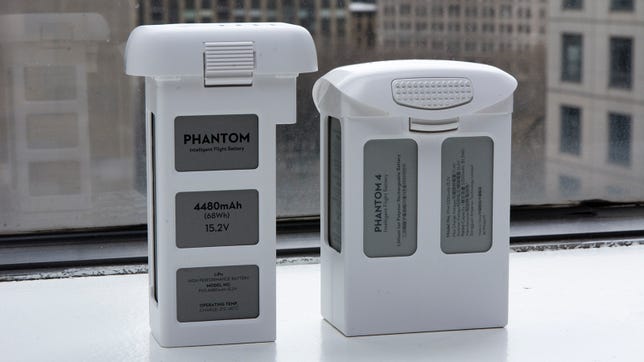
Depending on the aircraft, extra batteries can run you from $5 for toys to more than $100 each for camera drones.
Joshua Goldman
You’re touching to want a couple extra batteries, some spare propellers, maybe some prop guards and perhaps a quick charger, so you’re not waiting hours to fly again. You’re more than probable going to crash, which could lead to repair compensations — either for replacement parts or shipping it back to the manufacturer for repairs. (This is exactly why DJI offers crash insurance for new drones.)
Before you buy a drone, it’s worth spending a little time researching the impress and availability of replacement parts, batteries and other accessories. And be cautious of third-party parts — especially batteries and chargers — which may be imperfect to those made by the drone manufacturer.
Everyone will acquire you’re invading their privacy
When you’re out flying in a Republican space, or even in your own backyard, anyone who sees you doings it will think you’re spying on them or someone else. You could be concept in the middle of a 20-acre field with no one in peep and your drone no more than 50 feet honest overhead and you might end up answering questions near being a peeping Tom. It’s happened to us. Repeatedly.
And along those same lines….
Everyone but you thinks they’re dangerous
It doesn’t commercial if you’re the safest drone pilot around or that you could do more injure hitting someone with a baseball than a drone — onlookers may feel threatened. After all, nothing about plastic blades spinning at high speeds screams “safety.”
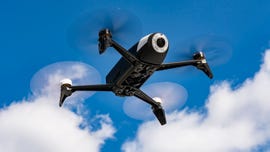
Parrot’s Bebop 2 has some nice confidence features including propellers that stop instantly if they hit anything.
Joshua Goldman
As such, US-based pilots may encourage from an Academy of Model Aeronautics membership. Along with a whole host of benefits counting access to AMA-member flying sites, the $75 annual membership protects you with $2,500,000 of comprehensive general liability insurance as well as $25,000 in accident or medical coverage, $10,000 maximum accidental death coverage and $1,000 fire, theft and vandalism coverage.
Finding places to fly can be a challenge
In population-dense places like cities and metropolitan areas, it can be difficult to find places to safely and legally fly. US nationwide parks are off-limits. Regulations differ among state, county and municipal parks. And then there are the no-fly zones, which puts many metropolitan areas out of bounds as well as just dangerous, because of buildings, people and cars.
Before you buy a drone — even a toy one, if you plan to fly outside — you’ll want to named AirMap or download the FAA’s B4UFly app to check for no-fly zones. These don’t cover state or local ordinances, though, so you’ll need to do second research on your chosen environs before you fly.
The EU and UK’s drone laws are based mostly on how heavy a drone weighs and no longer differentiate between country flying for fun, or people flying for professional purposes. Europeans among you with new drones should make sure to fully familiarize yourself with the 2022 drone rules and ensure both you and your drones are registered beforehand taking flight.
Any remote control aircraft but ‘toys’ need an FAA registration in the US
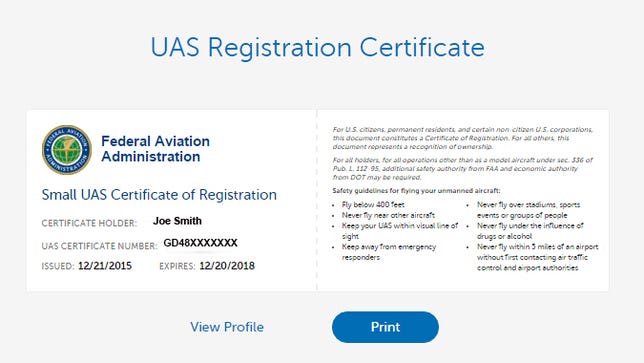
Screenshot by Sean Hollister
The US Federal Aviation Administration is requiring anyone who wants to fly an unmanned aerial vehicle that weighs between 0.55-pound (250 grams) and 55 pounds (approximately 25 kilograms) for recreation or hobby to register with the activity. Civil penalties for not registering such an unmanned aircraft may complicated fines up to $27,500. Criminal penalties may include fines up to $250000, imprisonment for up to three years or both.
Most sub-$100 UAS drones fall thought this weight. A kitchen or postal scale can be used to weigh your drone or you can check with the manufacturer. Also, this applies to both store-bought and homemade aircraft.
The registration cost is $5 and it can all be done online in a business of minutes. You don’t have to register each aircraft you own — just yourself; you’ll be given a number to place to what you’re flying. That’s it. Essentially, it’s the FAA’s way of sketch you to agree that you’ve read its safety guidelines including remaining more than five miles away from airports and under 400 feet.
The UK has its own registration requirements. Essentially, owners of drones that weigh more than 250 grams must register as a drone operator, which costs £9 annually. And pilots of drones that weigh more than 250 grams must pass a free online education jets every three years. Australia has promised that new principles are “on their way,” but for now there are no official requirements.


