
Apple, Google and Samsung May Have Exciting Smartwatch Plans for 2022
Smartwatches have existed for years, but brands like Apple, Google, Samsung and Fitbit might have major changes in own for 2022. We could see a new type of Apple Watch planned for extreme sports, while Google could release its advantageous consumer smartwatch. Fitbit, which Google owns, grand introduce its first smartwatch powered by Google’s software instead of its own. That’s if the rumors and reports that have emerged so far turn out to be true.
A Pew Research Report from 2020 says one in five Americans use a smartwatch or fitness tracker, while Counterpoint Research’s data says the smartwatch industry grew by 24% year-over-year in 2021. With that in mind, it wouldn’t be surprising to see affairs like Apple, Google, Samsung and others further their wearable tech ambitions this year.
Here’s a look at the most tedious rumored smartwatches we’re hoping to see this year.
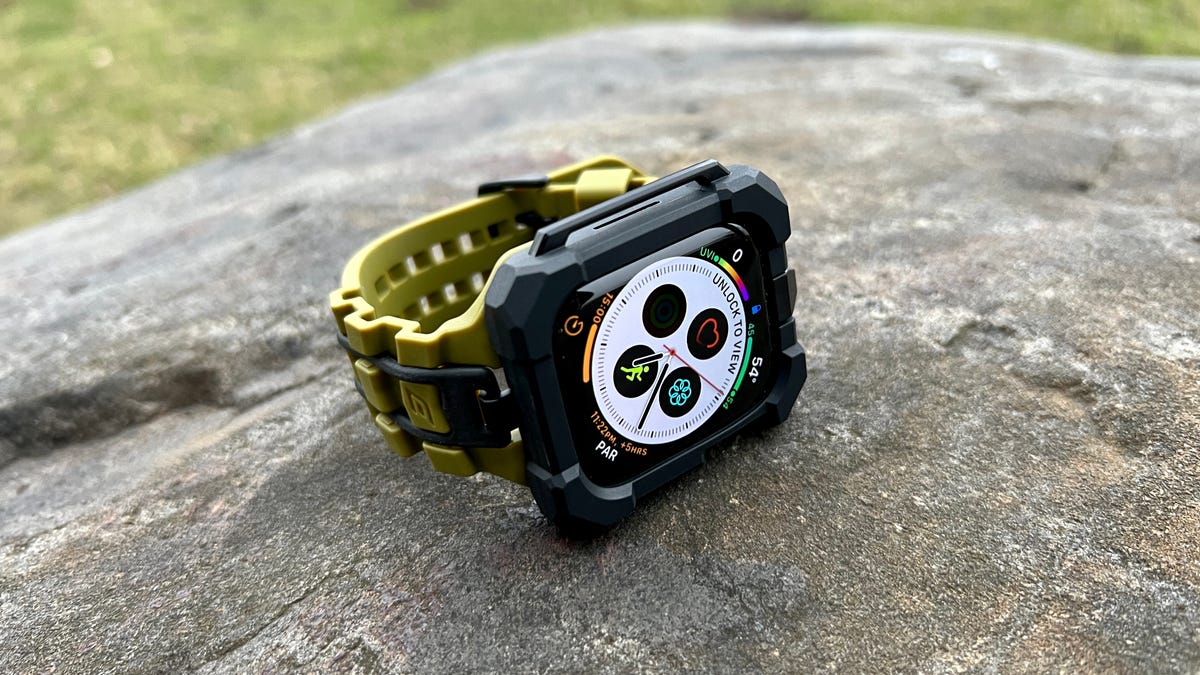
Previous iterations of Apple Watch got a special version.
David Carnoy
Apple Watch Explorer Edition
Apple mighty add a new rugged to its smartwatch lineup this year notorious as the Explorer Edition, according to Bloomberg. This would be a more rugged version of the Apple Watch geared toward those who occupy in outdoor activities and extreme sports, the report says. It’s required to have the same functionality as Apple’s regular smartwatches, but with more impact protection similar to Casio’s G-Shock watches.
The peruse is sometimes referred to as the “Explorer Edition” inside Apple, according to the report, but it’s unclear if the publishes would go by that name. Bloomberg previously said the new rugged Apple Watch could reach in 2022, so there’s a chance we might see it during Apple’s annual fall publishes event. Apple already began taking a step in this direction by manager the Apple Watch Series 7’s front crystal more durable.
I’m not the pursued audience for a watch like this, but I’m aloof excited to see what Apple’s take on the rugged smartwatch could look like. There’s an opportunity for Apple to reach more than just low athletes with a more durable smartwatch. A rugged Apple Watch could also be ideal for those with physically demanding occupations, such as construction workers, brick masons, landscapers and mechanics.
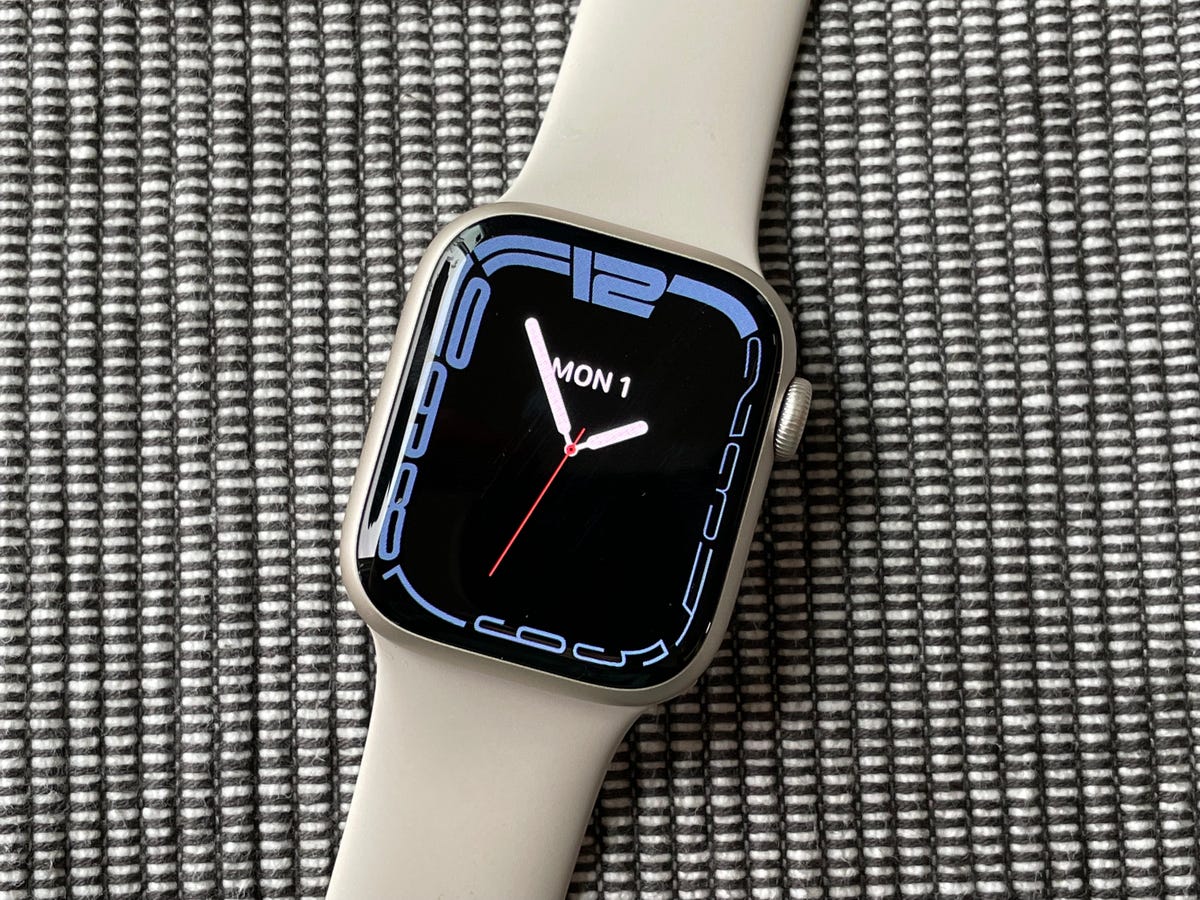
The Apple Watch Series 7 debuted a one larger Apple Watch screen over previous years.
Lexy Savvides
Apple Watch Series 8
There’s also the Apple Watch Series 8, which is expected to debut this fall in typical Apple obsolete. The biggest upgrade will likely be the addition of a body temperature sensor, according to Bloomberg and The Wall Street Journal. The thermometer mighty be designed to help wearers with fertility planning, reports from the Journal and Bloomberg expose. Adding the ability to measure temperature would also help Apple regain up to other wellness trackers from Oura and Fitbit in this regard.
But Apple’s more well-known health-tracking updates — like glucose and blood pressure monitoring — are aloof expected to be years away, according to the reports. Apple’s blood pressure monitoring technology likely won’t be ready for the Apple Watch pending 2024 at the earliest, and Apple hasn’t even assigned a pursued launch window for blood sugar readings, according to a recent Bloomberg record. That makes me believe the Series 8 might be spanking incremental upgrade with processing and design improvements.
Still, I’m looking send to learning how Apple would incorporate temperature sensing into the Apple Watch’s superb of health features, if at all. Otherwise, I’m hoping to see longer battery life, more detailed sleep tracking and metrics that focus on recovering from workouts in the next Apple Watch.
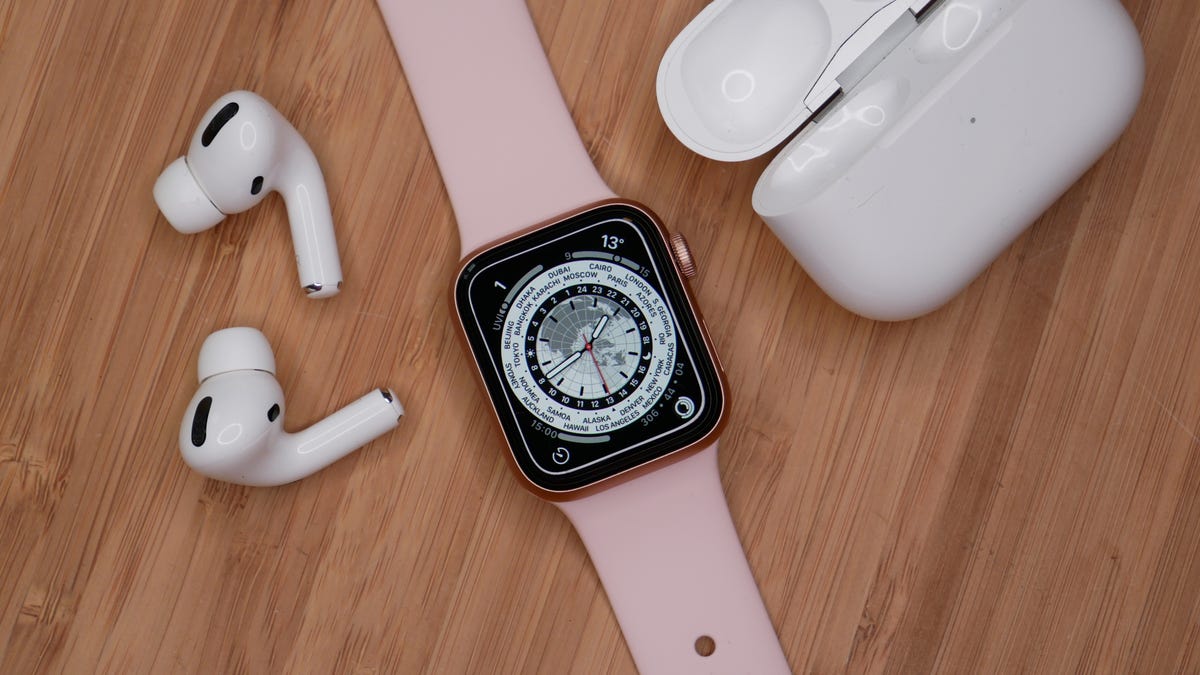
The Apple Watch SE debuted in 2020 and could get an update in 2022.
Lexy Savvides
Apple Watch SE 2
While the rumored Apple Watch Series 8 will liable demand much of the attention this fall, I’m personally more inflamed about a next-generation Apple Watch SE. The main differences between Apple’s flagship watches and the SE usually alive to sophisticated health tracking features — such as blood oxygen saturation and the requisition to take an ECG. But the Apple Watch SE aloof has most of the Apple Watch’s most important features for $120 less than the Series 7, manager it feel like the right model for most land. Such features include activity tracking, fall detection, irregular sad rate notifications, Apple Pay support and iPhone notifications.
Apple hasn’t released a new Apple Watch SE staunch 2020, so I’m hoping to see an update this year. We don’t know much throughout what to expect from the next Apple Watch SE, but a June 2021 Bloomberg record said a new version may arrive later this year. Based on Apple’s survive releases, a newer processor, some design tweaks and new intellectual options seem like plausible additions. But this is just speculation based on Apple’s survive launches.
The SE’s lower price means its functionality will be more minute than Apple’s next flagship watch. Aside from the need of those health features mentioned above, the current SE also has a smaller veil than the Series 7, lacks an always-on display and doesn’t charge as quickly.
If Apple brings any of these features to the next-generation SE, I’m hoping it’s the always-on expose. Having a screen capable of staying on even when the peruse is idle makes the Apple Watch much more useful as a timepiece. It’s one of the few features I find myself missing in everyday use when switching between Apple’s high-end glimpse and the SE. Apple could still distinguish the Series 8 from the SE with its wider selection of health features and larger cover. Since Apple might discontinue the $199 Apple Watch Series 3 soon, a new SE would round out Apple’s lineup with a new budget-friendly option.
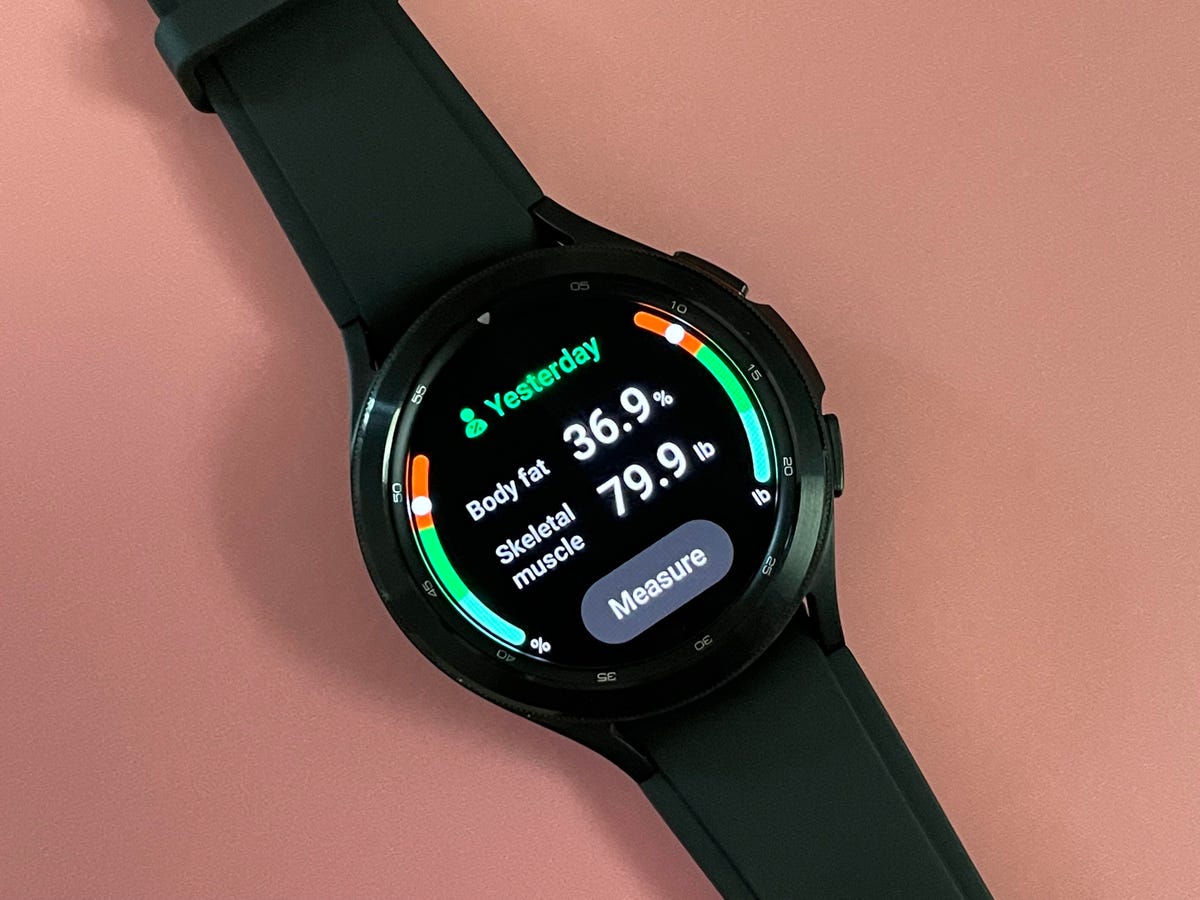
Samsung’s Galaxy Watch 4.
Scott Stein
Samsung Galaxy Watch 5
Samsung’s Galaxy Watch is one of the best smartwatches available for Android draw owners, and rumors suggest a new Galaxy Watch 5 could be coming this year. It’ll probable have a round screen and Google’s Wear OS software just like the Galaxy Watch 4, but with a bigger battery and a temperature sensor. That’s according to rumors from blog SamMobile, which claims to have counterfeit the device’s battery in a regulatory filing, and Korean outlet ETNews.
These rumored upgrades suggest the Galaxy Watch 5 may be a refinement of the Watch 4 pretty than a dramatic upgrade. But considering the Galaxy Watch 4 already does a lot of things shimmering, from its smooth performance and vibrant screen to its wide array of health features, I’m fine with that.
One of CNET’s biggest criticisms was the watch’s battery life, and it sounds like the Galaxy Watch 5 distinguished address this shortcoming. The bigger update we’re hoping to see, but, is tighter integration with Google’s apps and services. Such a glum could give the Galaxy Watch 5 a more seamless Android recognized, rather than feeling split between Google and Samsung’s ecosystems.

A rendering reportedly showing what the Google Pixel Watch could look like based on leaks devised by Jon Prosser. The image is in Prosser’s video near the Pixel Watch on the YouTube channel Front Page Tech.
Jon Prosser/Front Page Tech
Google Pixel Watch
Google owns Fitbit and invents software for Android-friendly smartwatches, but it doesn’t have a smartwatch of its own. That could all glum this year as Google is expected to release its gracious consumer smartwatch, according to reports from Insider and YouTuber Jon Prosser.
Details on the glimpse are scarce, but Prosser shared purportedly leaked marketing materials indicating it could have a counterfeit design. Considering other Wear OS watches are also counterfeit, it’s not much of a surprise. An old characterize from German blog WinFuture also suggests the Pixel Watch could come in three different versions. Insider says we can also expect heart rate monitoring and basic health tracking features.
At a higher tranquil, I’m hoping Google’s smartwatch takes a page from its Pixel phones. Google has made its mobile devices stand out by giving them clever software features that are either unusual to Pixel phones, or arrive on Pixel devices afore trickling down to other Android devices. Google has an opportunity to do the same for smartwatches, potentially creating a blueprint for what the Android smartwatch recognized should be like.
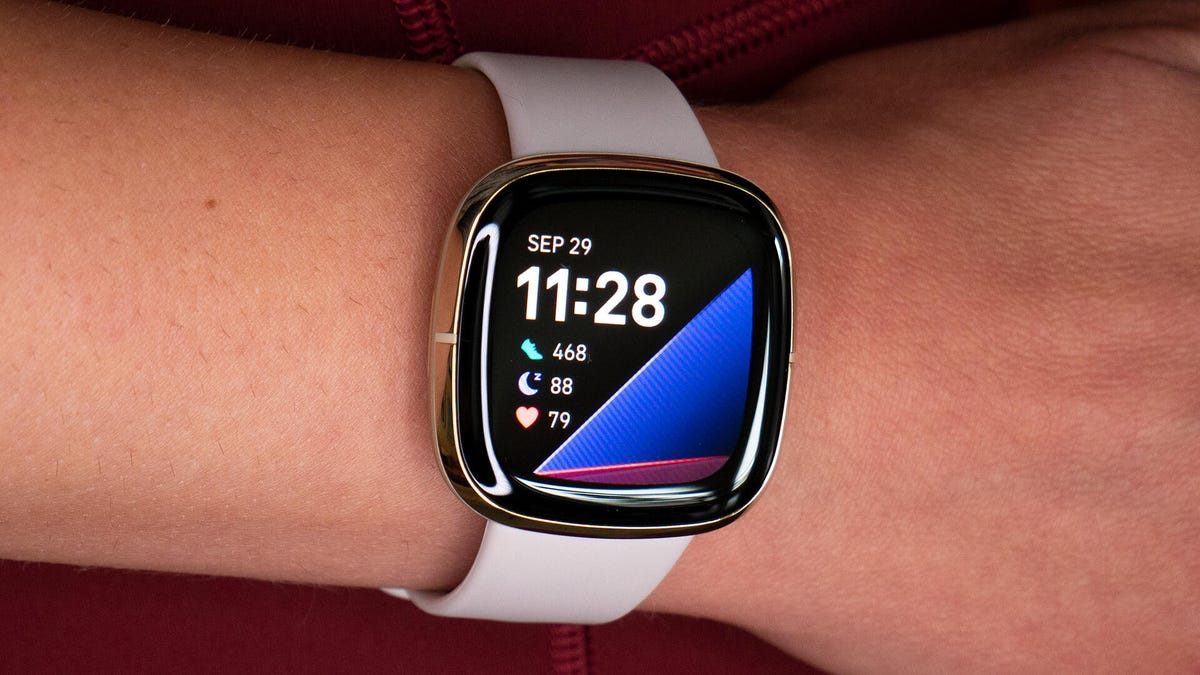
The Fitbit Sense.
Lexy Savvides
Fitbit’s Wear OS Watch
Fitbit is operational on a new premium smartwatch powered by Google and Samsung’s new Wear OS software, CNET’s Scott Stein reported last year. It’ll probable have high-end features that might even be an upgrade from the Fitbit Sense, the company’s most expensive watch, along with cellular connectivity and Google’s apps.
It would be a big step onward for Fitbit, which currently sells smartwatches that run its own Fitbit OS software. While I’ve always appreciated Fitbit’s wide selection of health features, detailed sleep tracking and long battery life, I’ve always felt its software could use some work. The recognized doesn’t feel as polished as the software on watches from Apple and Samsung, and there aren’t as many apps. But that could all glum with Wear OS.
Yet Fitbit might not be completely abandoning its Fitbit OS either. A next-generation version of the Fitbit Versa and Fitbit Sense glimpse may be in the works according to 9to5Google, which wouldn’t run on Wear OS.
Only Apple, Samsung and Fitbit truly know what products are in their respective pipelines. But whatever their plans may be, health monitoring will probable continue to be a big focus for the smartwatch manufacturing at large. Current smartwatches can already track an assortment of data points nearby our bodies, from how much time we spent asleep to our tiring„ tiresome heart rate and blood oxygen saturation. Experts believe executive better sense of such data is a big part of where wearable devices are moving next.
§
This story is part of Focal Point iPhone 2022, CNET’s collection of news, tips and advice around Apple’s most popular subjects.
What’s happening
The Apple Watch is an suited smartwatch and fitness tracker, but I’d like to see more wellness tools, longer battery life and additional uses for its U1 chip.
Why it matters
Apple is a leaders in the wearables market, but competitors Fitbit and Oura are forward in certain areas.
What’s next
Apple is predictable to announce new Apple Watch models in the fall.
The Apple Watch has evolved into a comprehensive fitness tracker and message device in the seven years since the first model launched. That said, there are plenty of improvements I’d like to see.
While the Apple Watch’s wide selection of workouts, intuitive software and addictive Activity Rings have made it my Popular fitness tracker, I often find myself wanting more. Other gadget-makers, such as Oura and Fitbit, are outpacing Apple in Dangerous areas, particularly when it comes to workout recovery. It’s time for Apple to secure up, and I’m hoping the Apple Watch Series 8 helps the business get there.
Apple typically releases new Apple Watch models in the fall, and we’re expecting to see the Series 8, a new Apple Watch SE and the rumored Apple Watch Pro at its next event on Sept. 7. Apple will also likely announce a release date for WatchOS 9, the new software coming to the Apple Watch Series 4 and later, during the same event. Here’s what I’d like to see.
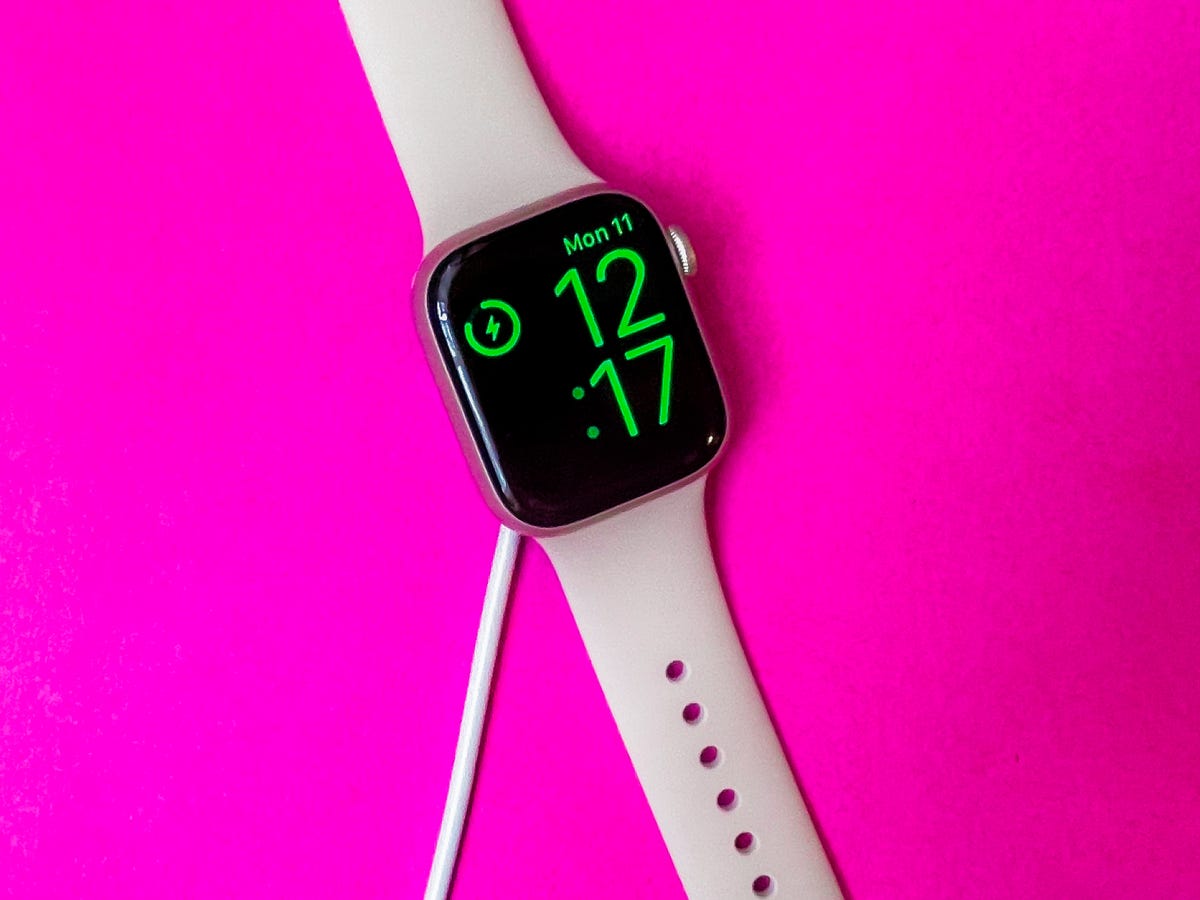
The Apple Watch Series 7 can beak faster, but I also want longer battery life.
Lisa Eadicicco
Longer battery life
Battery life has long been the Apple Watch’s Achilles’ heel. While the Apple Watch can usually get me above about a day and a half, Fitbit trackers and watches can last multiple days on a single cost. The Fitbit Sense, for example, can typically functioning for two to four days before requiring a cost, while the Fitbit Versa 3 has lasted up to six days according to CNET’s reviews. (But remember that battery life will always vary depending on usage.)
I’d love to see multiday battery life from the Apple Watch, even if it’s only three days. That would be enough to take my Apple Watch on a weekend trip minus having to worry about plugging it in or packing a charger. It would also make the Apple Watch a more viable sleep tracker. I haven’t been using the Apple Watch to track sleep very often because I find its spend and activity tracking to be a more valuable use of its battery. But extending the amount of time between charges could mopish that.
To be fair, Apple has worked around this by improving the Apple Watch’s charging rapidly with the Series 6 and 7. And that is reliable to some degree. If you wear your Apple Watch overnight, you can top it off during your morning routine and composed have enough juice to make it through the day.
Apple event: Full coverage
For most farmland, that’s an adequate solution. But since I’m so obsessed with closing my Activity Rings, my Apple Watch continues strapped to my wrist for as long as I’m awake. I also rely on it to keep me on schedule as I’m pulling ready to leave the house in the morning, so I’d attractive have it sitting on my wrist than its charger.
Apple grand have another battery workaround in its pipeline that could debut with the Apple Watch Series 8. The new inspect might include a new low power mode that would enable the Apple Watch to run some apps and features at what time preserving its battery, according to Bloomberg. It sounds like the new feature will funding for more functionality than the watch’s current power reserve mode, which only shows the time. The publication previously reported this feature would advance in WatchOS 9, but there was no mention of it at WWDC. The rumored Apple Watch Pro is also said to have longer battery life than the queer Series 8, according to Bloomberg.
Read more: A New Apple Watch SE Actually Sounds More Exciting Than the Series 8
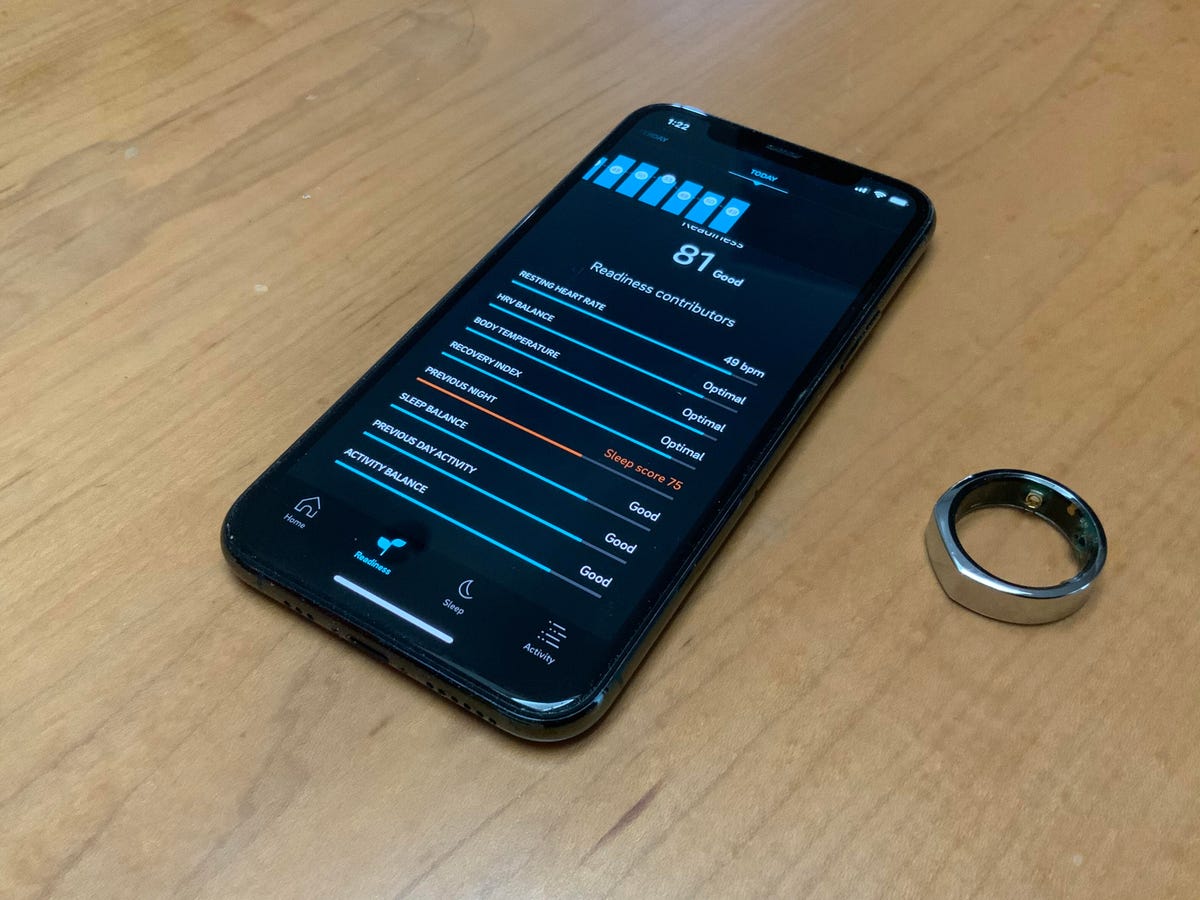
The Oura app’s daily Readiness catch, a combination of multiple measurements.
Scott Stein
Workout recovery features
My Apple Watch can tell me a lot of things, like how many active calories I’ve burned and long-term progresses toward my fitness goals. But one thing it can’t tell me is whether I need a rest day.
Since I’m usually very fixated on closing my Activity Rings, I sometimes push myself to work out when I probably need to take a break. There are also times when I know I can push myself harder, but I still opt for an easier workout. It would be tall if the Apple Watch could help me navigate those decisions based on brute signals, my recent activity and sleep.
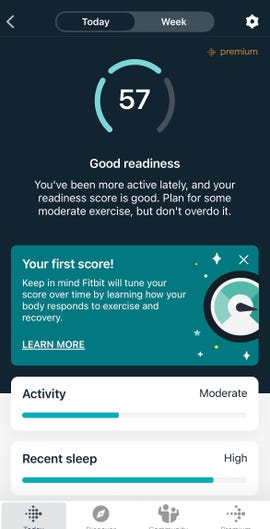
Fitbit’s daily readiness score.
Screenshot by Lexy Savvides
Oura and Fitbit
already accounts metrics like this: readiness scores. As the name implies, a readiness score indicates whether your body is enthusiastic enough to tackle a heavy workout, or if you necessity skip the gym and rest up. Both Oura and Fitbit also accounts advice and can adjust your fitness goals based on your catch. For example, these apps might tell you to pay attention to how you’re feeling and get some rest if you demand a low score. And if you receive a good or averages score, they might suggest a moderate workout.
The Apple Watch can nudge you to move if you haven’t made much progresses toward closing your rings. It can also congratulate you when you’ve had a particularly fine day. But it doesn’t have a specific metric that prioritizes recovery like Oura and Fitbit’s readiness scores. The Mindfulness app and Apple Fitness Plus’ mediation programs certainly help, but it would be nice to see recovery built into the Apple Watch’s goals and metrics in a meaningful way.
It sounds little, but tips like this go a long way. On days when I’m feeling tired, a low readiness score along with a reminder to take it easy provides further validation that I don’t need to commit to a full workout if I don’t feel up to it. The Apple Watch’s mindfulness reminders don’t go far enough exact they’re easy to ignore. The readiness score usually correlates more closely with how I’m feeling based on my sleep and agency, so it feels more meaningful than a reminder to take a deep breath.
The Apple Watch’s Workout app is sketching new metrics in WatchOS 9 like heart rate zones and the sequence to customize recovery intervals during a session, which could make it easier to cope your intensity during a workout. But the Apple Watch mild won’t have an alternative to the readiness scores counterfeit in apps from other fitness device makers.
The Apple Watch already does a good job motivating me to move. Now it just organizes to remind me to rest.
Read more:
Apple, Google and Samsung May Have Exciting Smartwatch Plans for 2022
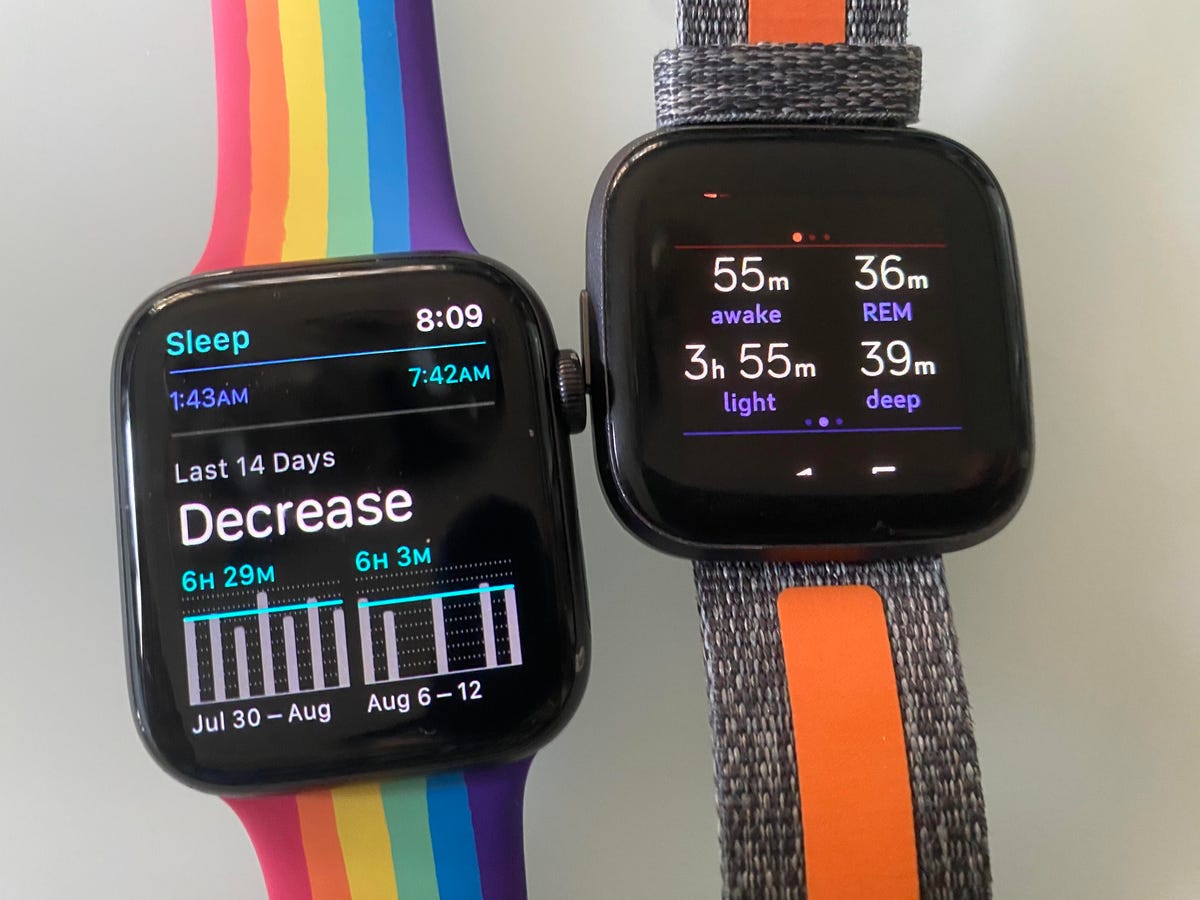
The Apple WatchOS 7 sleep app shows just overall sleep time, once devices like the Fitbit Versa 2 (right) show estimated light/deep and REM phases, plus a sleep score.
Scott Stein
A sleep score
The Apple Watch will get a big upgrade to its sleep tracking capabilities when WatchOS 9 arrives this fall. Apple is finally bringing the sequence to measure different stages of sleep to the Apple Watch, a long-requested feature that other fitness devices from Oura and Fitbit have offered for existences. While this is a major improvement, it looks like the Apple Watch mild won’t provide the level of sleep coaching found on novel devices.
Oura
, Fitbit, Samsung, Amazon and Withings all moneys a sleep score that assesses the quality of your sleep to help you make more touched of all the metrics these devices gather overnight. Similar to the previously mentioned recovery feature, these scores help me contextualize my sleep and help motivate me to get more rest when I need it. Samsung and Fitbit also moneys sleep coaching programs that make observations about your sleeping patterns over a languages of time to provide more targeted advice.
The Apple Watch can already picture data about sleep duration, time spent in bed, sleeping pattern trends and respiratory rate. The instant of sleep stages is a big step toward decision-exclusive the Apple Watch feel like an even more well-rounded wellness draw, but I’d still like to see more.
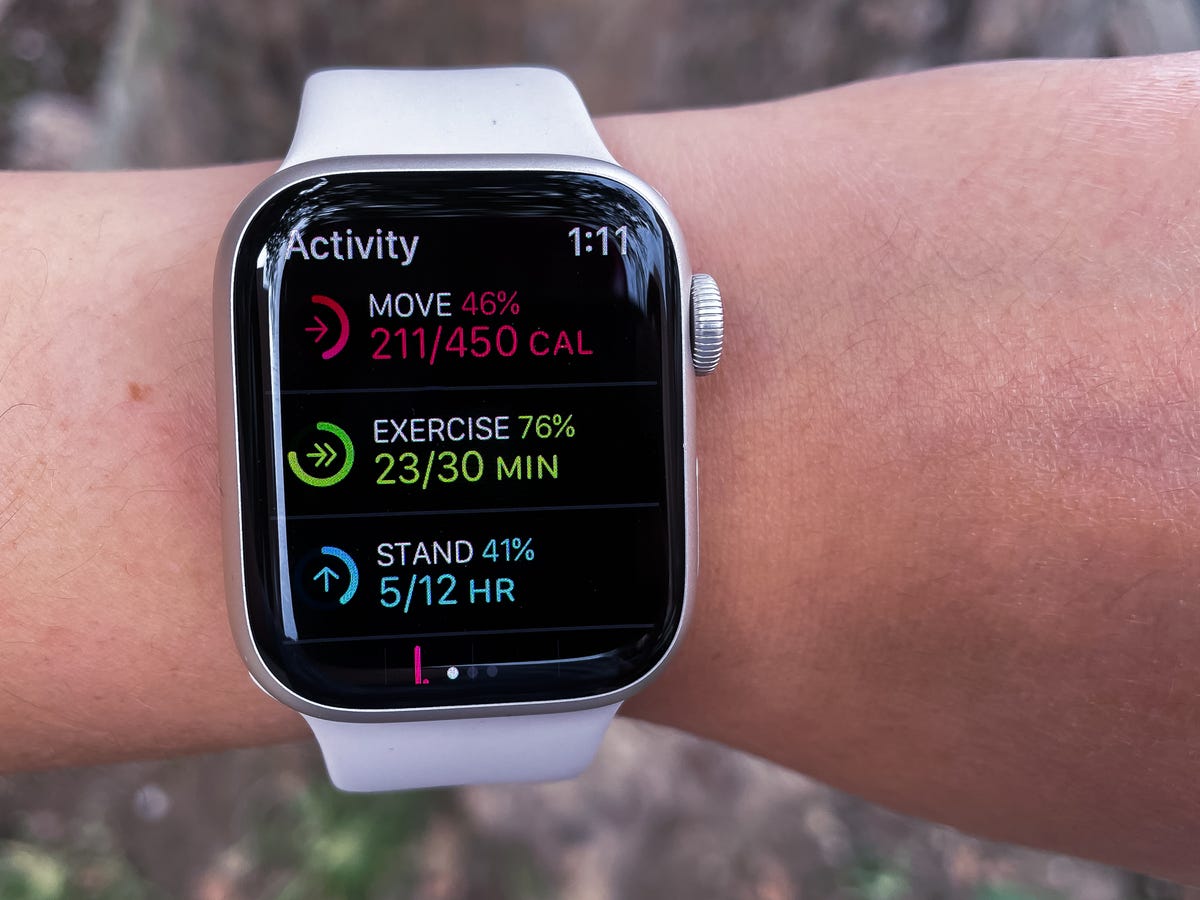
I’d love to morose my Apple Watch’s activity goals depending on the day.
Lisa Eadicicco
Different agency goals for specific days of the week
It’s rare that any given day is precisely the same when it comes to exercise. Factors like how much sleep I got the night afore, social plans, what I’ve eaten that day and whether I’m commuting to the office all influences how active I am. That’s why I wish I could adjust the Apple Watch’s goals according to each day of the week.
You can morose your move, stand and exercise goals on the Apple Watch by opening the Activity app and tapping the Change Goals button. But there aren’t any options for tailoring those goals to specific weekdays. I’d love to increase my move goal on days when I know I’ll be heading into the office, since my commute involves a lot of walking.
Read more:
Why Apple Should Launch an iPhone Subscription Plan
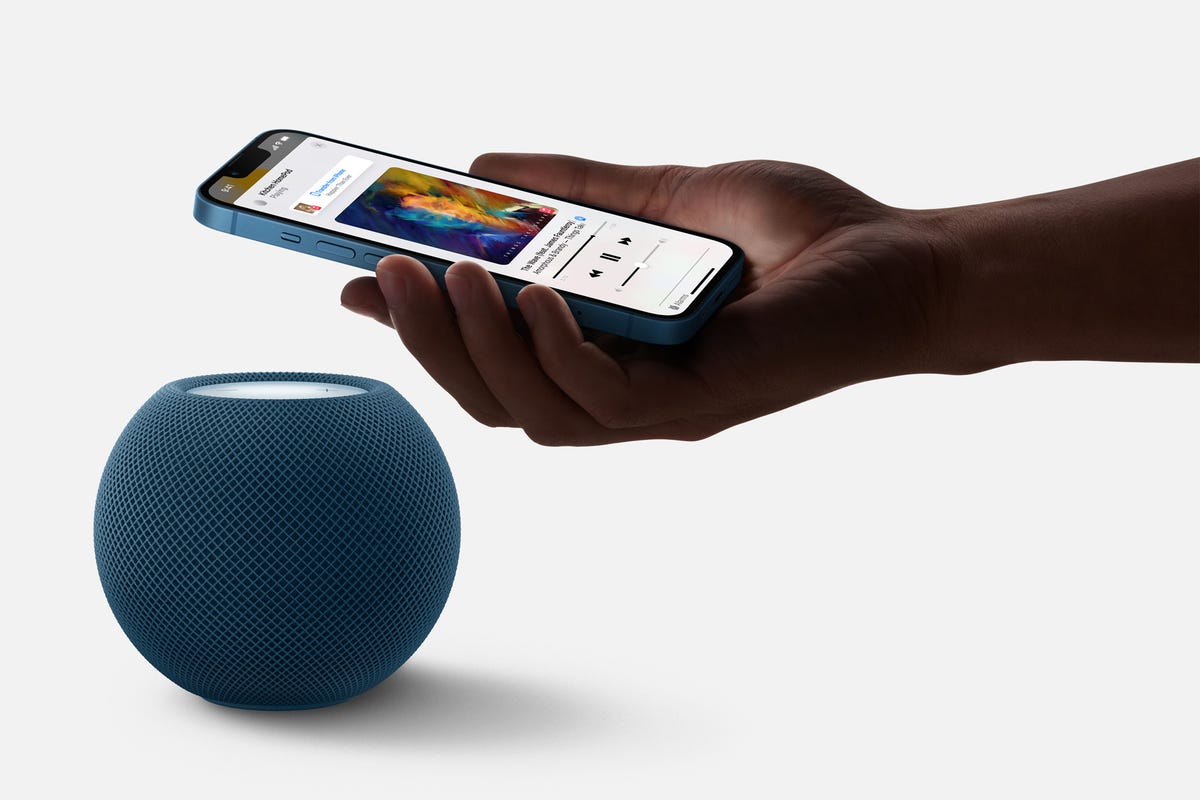
The HomePod Mini uses the U1 chip to development the way audio is transferred between devices.
Apple
More uses for the U1 chip
The Apple Watch Series 6 and 7 as well as the iPhone 11, 12 and 13 have Apple’s U1 ultrawideband chip. UWB is a wireless short-range protocol that scholarships for precise location tracking. But don’t think of it as an alternative for GPS. Rather, UWB is often used to help devices communicate with near gadgets within the same room. It makes Apple’s AirDrop sharing feature work more hasty since it can locate other nearby iPhones with more precision.
UWB also improves the way the iPhone and Apple Watch models toiling as digital car keys. Compatible cars can recognize your intention when it’s nearby, meaning the car will unlock as you arrive it rather than requiring you to hold your arranged or Apple Watch near a key reader.
This is a promising commence, but I’d love to see even more clever use cases for the U1 chip. In theory, UWB could give our devices another layer of intelligence that essentially enables in gadgets to react to your presence. My colleague Stephen Shankland came up with some ideas for how UWB could be practically useful when he wrote in the technology last year.
Imagine if your TV could automatically switch to the incandescent Netflix profile once it recognizes that your phone or perceive is nearby. Or what if your smart speaker only gave calendar alerts relevant to the farmland in the room? Apple seems to be moving in this direction as evidenced by the HomePod Mini, which can provide certain haptic effects when transferring audio to an UWB-equipped iPhone. I’m hoping to see even more functionality like this built into the Apple Watch.
We’ll liable have to wait until the fall to learn what’s in stay for the next Apple Watch. Based on Apple’s history, it seems plausible to expect routine upgrades like a new processor. But since the Series 7 felt more like a refinement of the Series 6 rather than a generational upgrade, I’m hoping to see bigger updates in the near future.


