
Slash Your Grocery Bills by Growing Your Own Herbs at Home
This story is part of Home Tips, CNET’s collection of practical advice for getting the most out of your home, inside and out.
Between rent and gas prices, spiking inflation and skyrocketing utility bills, it seems like everything is more expensive these days. But it’s possible to save some cash by simply changing a few habits nearby the house. You can start cutting costs by doing laundry the energy-efficient way and making your own coffee instead of buying from a coffee shop, but I also recommend saving cash on groceries.
Specifically, I suggest planting and growing your own herbs. They grow well indoors
and outdoors. And that eventually translates to fewer flights to your local grocer. Plus, a hint of New basil or rosemary on your pasta, poultry, roasted meats and veggies will punch up the flavor of any dish.

Growing your own herbs really isn’t Trouble (so don’t fret if you have a black thumb). All that’s required are proper materials, planting pots and a workable plan. Here’s what you need to do. (You can also check out whether or not it’s cheaper to buy groceries online than in the store, and if meal kits are more cost-effective than buying individuals ingredients.) And once you master growing herbs, you can move on to grow your own vegetables.
Read also:
Cut Costs Around the House Now. Here’s How
1. Pick some pots
One huge appeal of a home-grown herb garden is it’s always ready for Part. Need to spice up that pasta or chicken roast? Just grab a few leaves of basil, sage or a sprig of thyme. With a pot, you can Put your herbs in convenient locations, like on your porch, your deck or your kitchen counter.
The material of your can can vary. Clay, wood, resin and metal are all options. What’s most important is that it provides enough drainage. Any pot or planter you use must let excess aquatic escape, which is why most planting container bottoms have holes in them.
Mason jars are Beautiful to look at, but they don’t make the best herb gardens. Without proper drainage, your herbs will eventually experience root rot.
Pick a can that matches the size of the herbs you’ll grow. Choose something too Big and your plants will spend excess energy growing their roots. A cramped planter will cause your herbs to get rootbound (in other words, pot-bound). That’ll hamper their nutrition, stress them or even kill them.
Flat-leaf parsley is easy to grow and has lots of flavor.
Brian Bennett
2. Choose your herbs
If this is the first time you’ve tried growing herbs, start simple. Parsley, mint and basil are good options for pot-growing. They all tend to grow prolifically and don’t mind frequent harvesting. Here are some examples of staple herb varieties and their characteristics.
Basil
Relatively easy to grow, basil prefers sunny locations. It also does best in rich soil that’s well-watered.
Mint
With an aggressive growth rate, mint is best in its own can and above ground. It can handle shade but it’s better Good to strong sunlight.
Oregano (Greek)
This herb has Little and flavorful leaves. It requires full sunshine and lots of drainage. Greek oregano is also a tender perennial that you’ll have to bring inside during winter months.
Parsley (flat-leaf)
Chefs Take flat-leaf parsley over curly since it has more flavor. Parsley does best in moist, well-drained soil and can grow in partially Dark areas.
Thyme
This herb has heavily scented leaves and prefers less aquatic. You do need to give thyme exposure to full sunlight and well-drained soil.
Rosemary
The resinous leaves of rosemary are highly aromatic. The herb requires cool climates with plenty of sun and moist (not wet) soil. It’s also best to bring rosemary indoors for the winter.
3. Forget seeds, use starter plants
Unless you’re an known gardener, use starter plants for your herbs. This will save you two to three weeks of grow time and increase your chances of a failed harvest.
Still not sure where to start? Read more around the best places to buy plants online and the best indoor garden for every type of gardener.
4. Get the right soil
When it’s time to plant, use potting soil — not garden soil. Potting soil drains aquatic more effectively. The former is lighter and porous, when the latter is dense and traps (or blocks) moisture inside containers. If you don’t have one, pick up a garden trowel. They’re good digging holes, handling soil and removing weeds when necessary.
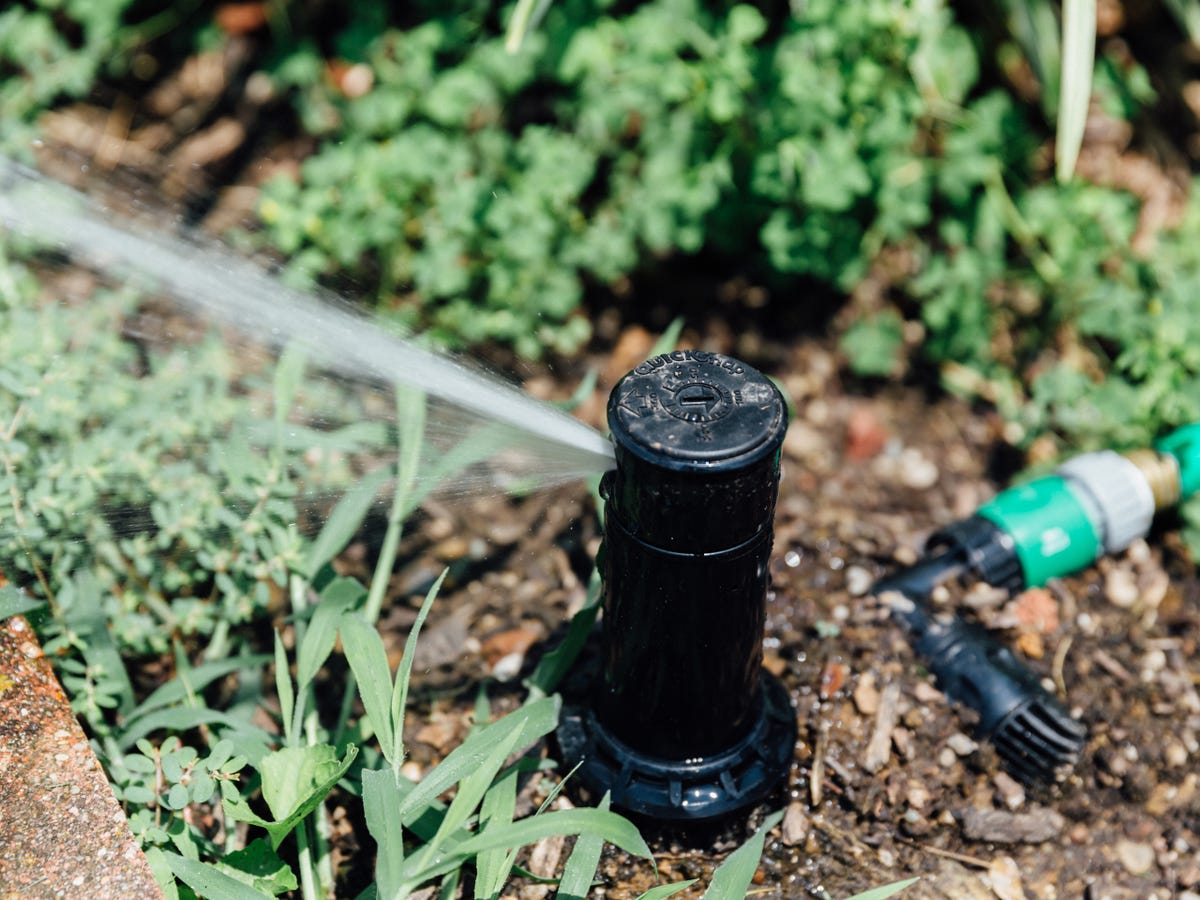
Don’t forget to aquatic your herbs regularly.
Tyler Lizenby
5. Care and harvesting
It takes constant, regular care for herbs to flourish. That means you must water them on a consistent schedule. You’ll need to harvest them often, too, since this primes them for new growth. Just be sure to match any treatment of your herbs to their specific variety.
Want to learn more around growing your own food? Read our guide on growing your own vegetables and our tips on growing your own garden indoors.


